Author: davis.5257@osu.edu (page 2 of 2)

The View that Rocks: The Geology of Mount Fuji

Guest post by Takuma Goto

In my ongoing explorations of the Japanese Maps Collection, Mount Fuji, or Fuji-san to speakers of Japanese, is perhaps the most prominent landmark in Japan. Given its significance in the Japanese geological, social, and spiritual landscape, in the present blog I have decided to focus on this great mountain.

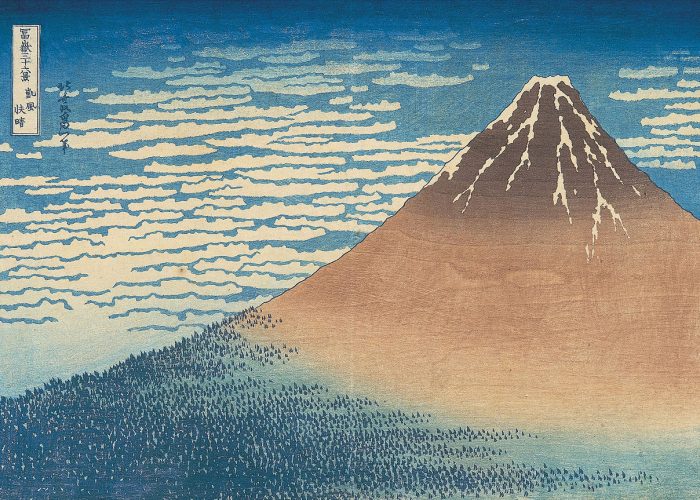
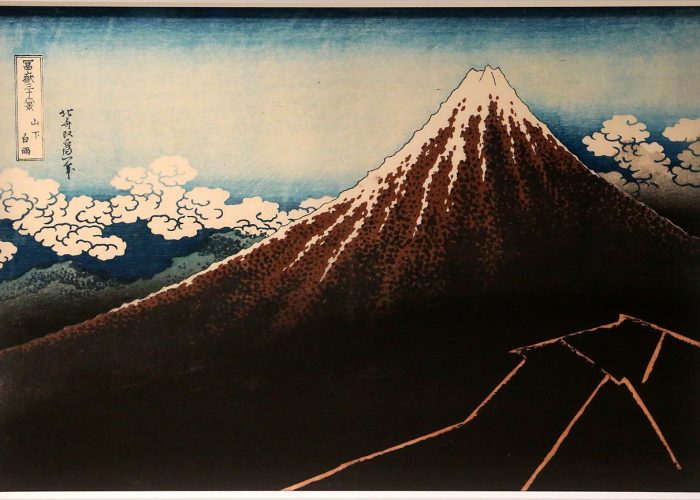
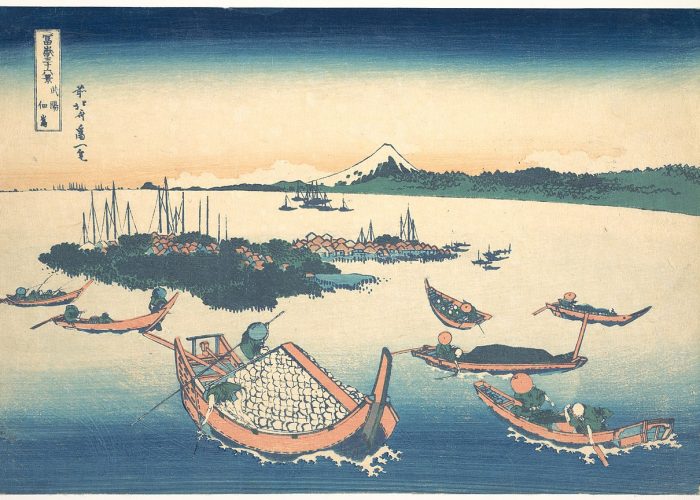
Examples of Hokusai’s Thirty-six Views of Mount Fuji from Wikipedia.org. ‘Fine Wind, Clear Morning’ (Gaifū kaisei 凱風快晴); Thunderstorm Beneath the Summit’ (Sanka hakuu 山下白雨); ‘Tsukuda Island in Musashi Province’ (Buyō Tsukuda-jima 武陽佃島 ); Shore of Tago Bay, Ejiri at Tokaido ( Tōkaidō Ejiri tago-no-uraryakuzu 東海道江尻田子の浦略図) 

Reaching an elevation of 3,776 meters, Mount Fuji is the highest peak in Japan as well as a major cultural symbol. This mountain, which is also a dormant volcano, is so important to Japanese culture that it has been canonized in Shinto mythology. For example, at the base of Mount Fuji is the city of Fujinomiya, where the goddess of the mountain, Konohanasakuya-hima (木花咲耶姫), is housed in a dedicated shrine called Fujisan Hongū Sengen Taisha (富士山本宮浅間大社). Mount Fuji is also a popular motif in classical literature, traditional crafts, and gardens. This mountain is well recognized world-wide from its extensive depictions in traditional woodblock printing, most notably Katsushika Hokusai’s Thirty-six Views of Mount Fuji (Japanese: Fugaku Sanjūrokkei, 富嶽三十六景, published from 1830-1835).

Continue reading

9 Resources for MA Students in East Asian Studies

Tomorrow, I will be sharing information about library resources with some of our MA students in OSU’s interdisciplinary program in East Asian Studies. My colleague, Chinese and Korean Studies Librarian, Professor Guoqing Li, will join me in covering some of our key library materials.

I made a handout (page 1, pictured left) focusing mostly on Japanese Studies resources, but also on broad topics like Copyright, Interlibrary services. and Zotero, which are instrumental for grad students, university instructors, and other scholars.

My plan is to distribute this handout to the MA students, but here is a digital version for anyone who’d like a copy. In addition, I’ve typed the contents of the handout below for added accessibility.

Continue reading

Exploring Japanese Maps – A Summer Project

Guest Post by Takuma Goto

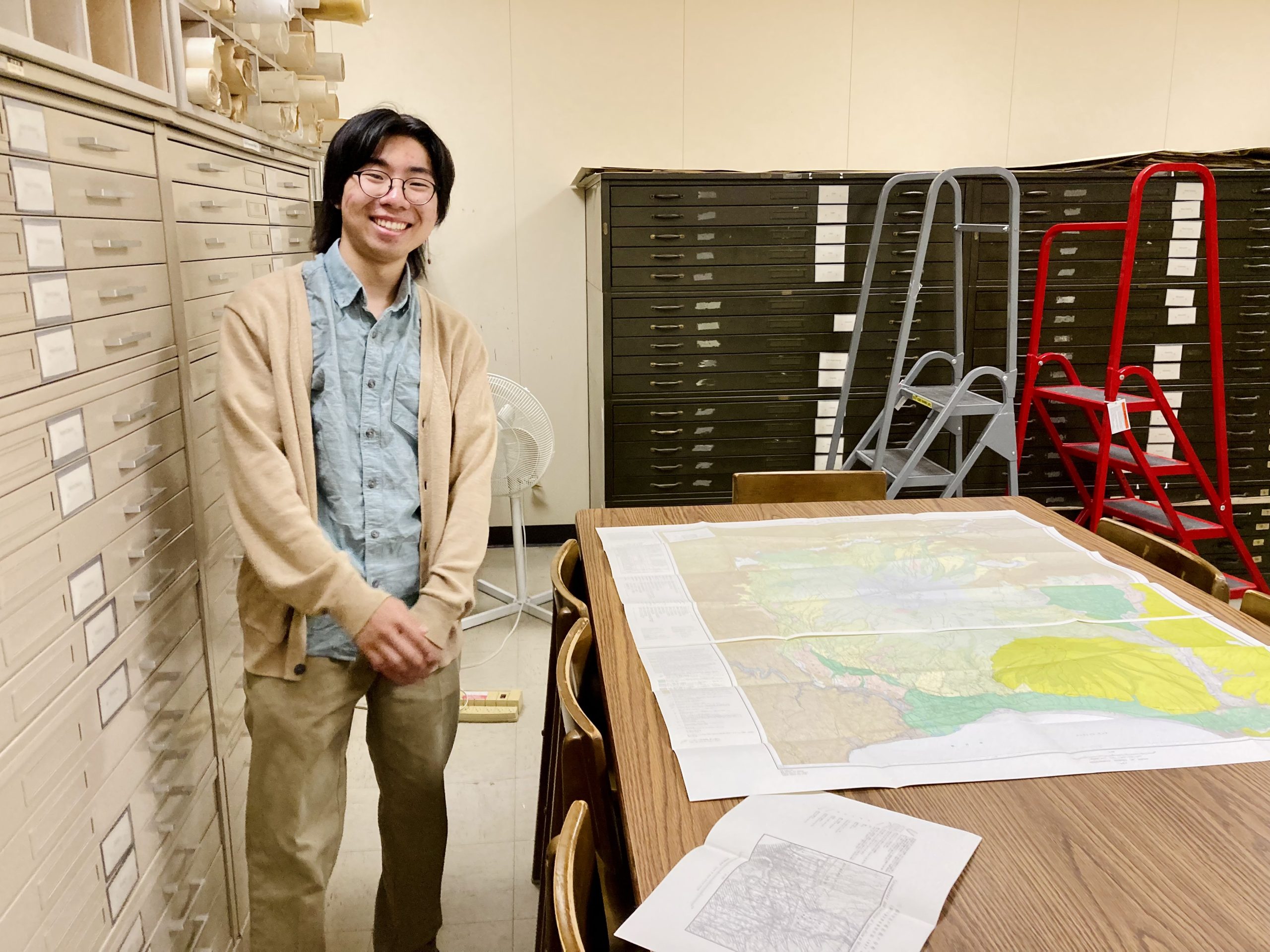
Student worker standing next to Japanese map in the Geology Library

Takuma Goto (Class of 2023) working with a Japanese map in the Geology Library

Hi! My name is Takuma Goto, and I am a 4th year OSU student majoring in Statistics and Spanish. As my name suggests, I am ethnically Japanese, and thanks to my parents’ efforts, I understand Japanese as well as English. This has given me the opportunity to work with the East Asian Studies Center alongside Geology and GIS librarians on a Japanese maps project at our University Libraries. My work is part of a larger project to (1) help surface culturally diverse materials for teaching and learning and (2) identify materials for potential digitization and cataloging on the Big Ten Academic Alliance Geoportal, a collaborative web site that facilitates access to GIS datasets, web services, and digitized historical maps in the “Big 10” university libraries. With this blog, however, I’d like to share some of my preliminary findings! 

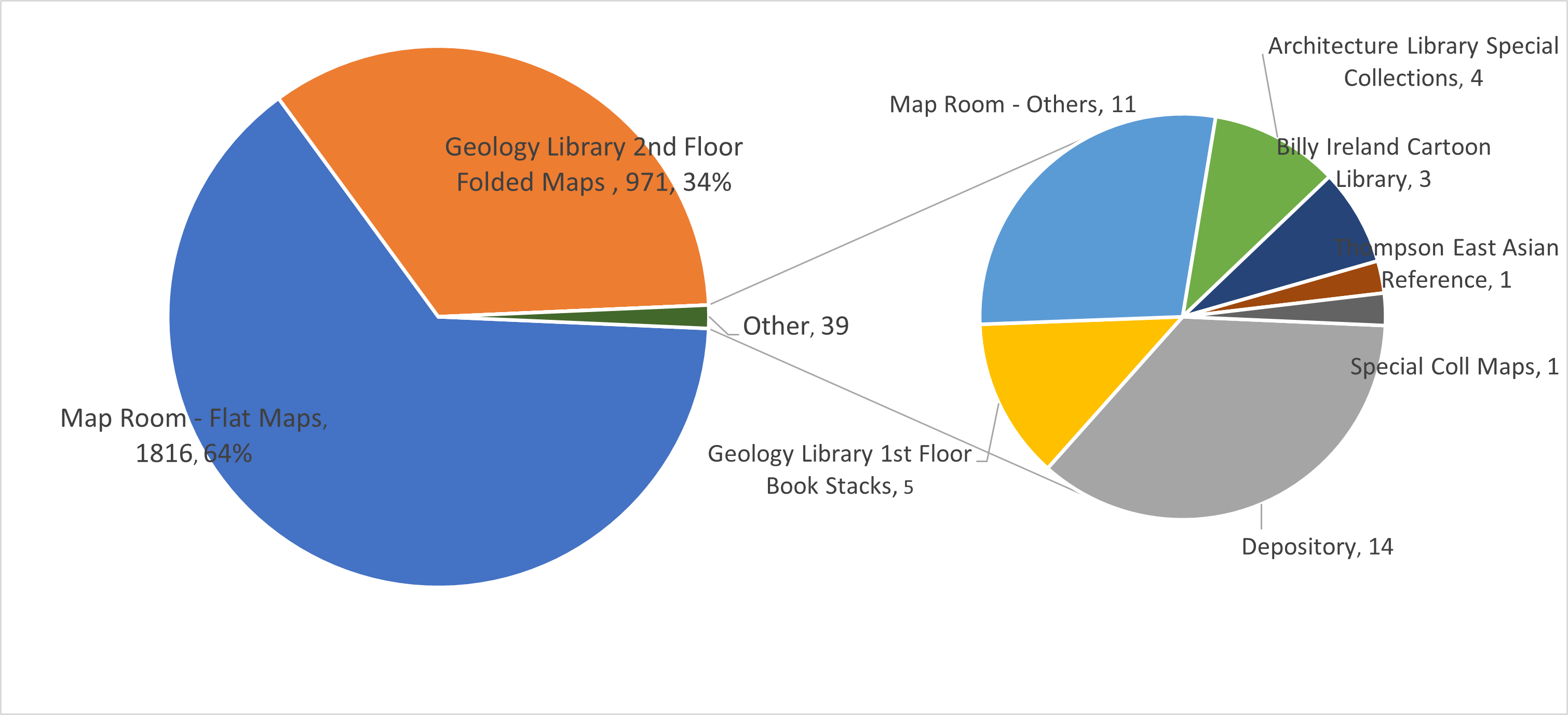
Pie chart Showing the Distribution of Japanese Maps by Location. Roughly 2/3 of the collection are in the maps room in Thompson Library, and 1/3 are in the Geology Library. The location of others are described in the blog.

Location of Japanese maps in the University Library System

Continue reading

Notes (and PowerPoint Slides) on Key Japanese e-Resources

In the current pandemic, our electronic resources are more important than ever. With this in mind, last month I collaborated with the Institute of Japanese Studies to offer an online workshop called “Remote Research and Teaching: Japanese E-Resources at OSU Libraries.

Now that the event is behind us (and I’ve had a chance to catch my breath!), I’d like to share the slides from the workshop here: https://go.osu.edu/2020DavisIJSWorkshop

Collage of eResources Slides

Preview of the eResources Slides from Fall 2020 IJS Workshop.
Available online at go.osu.edu/2020DavisIJSWorkshop

What do these slides cover? The following are some of the key resources (with relevant links and blogs) that were discussed at the workshop:

  • The KinoDen Digital Library for Japanese e-books (A new platform that we wrote about in a recent blog here);
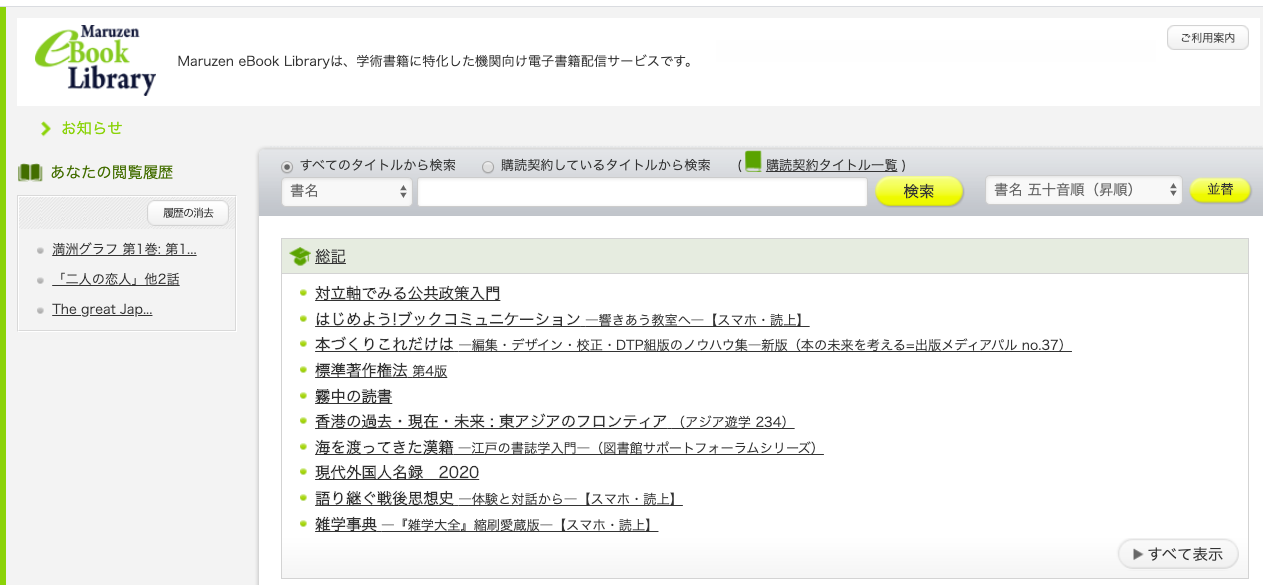
  • The Maruzen eBook Library (An even newer platform that we wrote about in the blog here);
  • The Japan Knowledge database, a major reference collection including dozens of top-rated dictionaries, encyclopedias, an economic weekly journal, some of the most important classics in Japanese Studies, maps, and more.
  • JKBooks, an electronic book platform that provides full-text access to various collections of historic publications containing specialized content.

Please be aware that most of these e-Resources are available to OSU users with login credentials through our University Libraries catalog.

For questions about any of these materials, please contact me, Ann Marie Davis, Japanese Studies Librarian, at davis.5257@osu.edu.

For our next blog, we hope to tell you more about JKBooks, one of the key e-Resources mentioned above.  Until then, please stay safe and stay tuned!

Credit: Many thanks to Nicholas Castle (Class of 2021), OSU Libraries student worker, for drafting this blog.

Maruzen eBook Library (MeL) Now on Trial at OSU Libraries

Update (posted September 1, 2020): Following the trial period described in this blog, OSU Libraries made the decision to permanently adopt the Maruzen eBook Library (MeL) platform, which can be accessed now at: https://library.ohio-state.edu/record=e1002576~S7. Continue reading for details on how to use this helpful new e-resource!

In an effort to increase the list of e-resources for research and teaching in Japanese Studies, we have set up an Extended Trial Reading Agreement for the Maruzen eBook Library (MeL), which will last until the end of May.  During this trial period, OSU users will be able to access over 56,000 Japanese ebook titles.

Also during this trial period, unlimited concurrent user access is possible, but printing and downloading are not. If you have specific printing and downloading needs – or any questions whatsoever about Japanese language e-resources –  please contact me, Ann Marie Davis, the Japanese Studies Librarian at OSU, at davis.5257@osu.edu

To get started using this online platform, click the link in the OSU catalog here: 

https://library.ohio-state.edu/record=e1002576~S7   

For tips on how to search for books in MeL and use the various platform functions, please refer to the Maruzen eBook Library cheatsheet.

If you see something you’d like to consider purchasing, please feel free to e-mail me. If you need MeL materials for your teaching or research projects, you can also fill out this form for eBook purchases, which goes straight to our OSU Library acquisitions office: 

http://go.osu.edu/resourcerequest2020


Announcing the Thomas Gregory Song Research Fellowship, Spring 2020

OVERVIEW:

The Ohio State University Libraries is pleased to announce the Thomas Gregory Song Research Fellowship for an independent research project that makes substantial on-site use of the Thomas Gregory Song (TGS) Papers in the Rare Books and Manuscripts Library (https://library.osu.edu/collections/ SPEC.RARE.0195/collection-inventory). Written predominantly in Japanese and English (with some documents in Korean), the TGS Papers include Song family genealogical records; personal photographs from Song’s childhood; an Oral History Interview; over 2300 blog posts; and personal correspondence, journals, and essays. The TGS Papers shed significant light on topics of World History, East Asian Studies, Asian American Studies, Asian diaspora, migration, and gender and sexuality studies. 

Applications are due by on Dec. 15, 2019 at 5:00pm.

Continue reading

New Acquisition: Day of the Western Sunrise — Film and Educator’s Toolkit

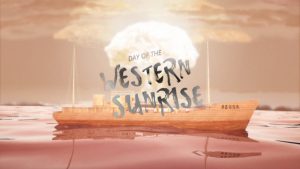
We are thrilled to announce the recent acquisition of the award-winning film, Day of the Western Sunrise, a powerful new resource for researchers and instructors of international studies, global and Japanese history, environmental studies, peace studies, atomic studies, and more! While the film is an excellent resource in its own right, it comes accompanied by an educator toolkit designed specifically for instructors of college and secondary education. 

Partnering with OSU’s East Asian Studies Center, we are equally excited to hold a viewing of this film, preceded by comments from the film’s writer, director, and producer Keith Reimink, at Hagerty Hall, Room 180, on the main campus. This event will take place on September 28, 2019 from 10:00am to 12:30pm.  For more details please visit https://easc.osu.edu/events/easc/sept28-film.


Day of the Western Sunrise Documentary Trailer from DALIBORKAfilms

The film covers the terrible consequences of a US hydrogen bomb test on the Bikini Atoll, which contaminated a Japanese fishing boat called the Lucky Dragon Five (Daigo Fukuryū Maru, 第五福龍丸) on March 1954.  The affair also saw the contamination of all 23 fishermen on board, each of whom subsequently suffered Acute Radiation Syndrom (ARS) in the aftermath. After living for months under observation and quarantine, all of the men recovered except for the boat’s chief radioman, Aikichi Kuboyama, 40, who died on September 23, 1954.  

The incident received media coverage throughout Japan and around the world, as startled onlookers awaited to learn the fate of fishermen who suffered from “atomic bomb disease,” as it was then known. Later that year, the legendary film Godzilla  (Gojiraゴジラ)  was released by Toho films, inspired in part by the terrible incident.  Although he had set out to make a conventional monster film, the screenwriter, Ishirō Honda, explained that after hearing about it, he “took the characteristics of an atomic bomb and applied them to Godzilla” (quoted by Ropeik, 2018).

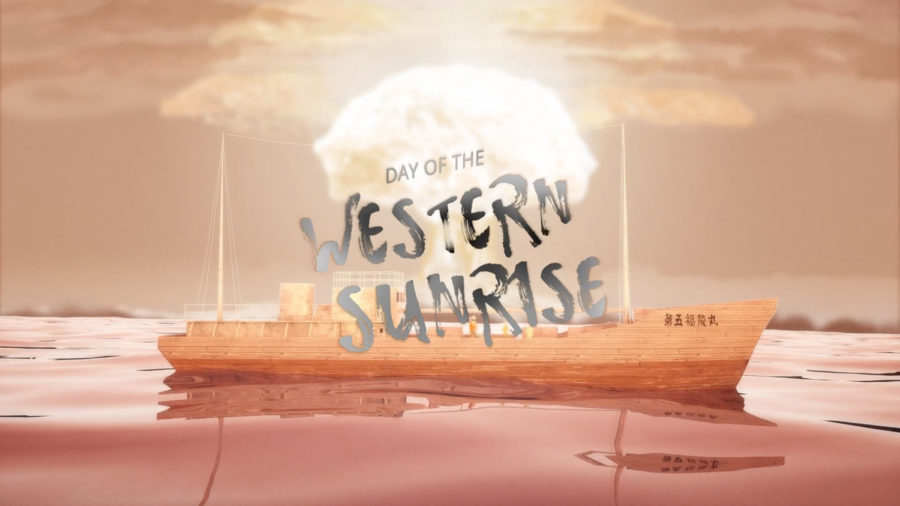
A still from the animated documentary, Day of the Western Sunrise, about 23 crew members of a fishing boat, who survived the atomic bomb test in the Bikini Atoll in 1954. (DALIBORKAfilms)

Keith Reimink, director and producer of the Day of the Western Sunrise, documents the ways in which nuclear technology changed the lives of the young men who were caught in the blast radius. His film captures rare oral interviews with remaining survivors as they near the end of their lives. His film juxtapositions these intimate interviews with handcrafted animations inspired by the famous kamishibai, or ‘paper theater,’ style of Japanese storytelling.


Film and Educator Toolkit: 

Day of the Western Sunrise: Daigo Fukuryū Maru = Nishi kara nobotta taiyō (Day of the Western Sunrise: 第五福竜丸 = 西から昇った太陽) , written and directed by Keith Reimink (Pittsburgh: Daliborka Films LLC, 2018)


Related Upcoming Lecture:

Bill Tsutsui Lecture — “Beyond the Man in the Rubber Suit: Godzilla, Postwar Japan, and the Global Imagination,” sponsored by EASC and OSU Libraries. (November 19, 2019)


Select sources at Ohio State on the Lucky Dragon, Bikini Atoll, and the atomic bomb:

Atomic Comics: Cartoonists Confront the Nuclear World by Ferenc Morton Szasz (Reno: University of Nevada Press, 2012)

Daigo Fukuryū Maru (第五福竜丸), written by Yasutarō Yagi (八木保太郎), directed by Kaneto Shindō (新藤兼人) (Tokyo: Asmik Ace Entertainment, 2001)

The Day the Sun Rose in the West: Bikini, The Lucky Dragon, and I by Oishi Matashichi (Honolulu: University of Hawai’i Press, 2011)

Deleuze, Japanese Cinema, and the Atom Bomb: the Spectre of Impossibility by David Deamer (New York: Bloomsbury, 2014)

Human Face of the Pacific, The Marshall Islands: Living with the Bomb, directed by Dennis O’Rourke and Tim Litchfield (Canberra: National Film and Sound Archive of Australia, 1983)

Narrative as Counter-Memory: A Half-Century of Postwar Writing in Germany and Japan by Reiko Tachibana (New York: State University of New York Press, 1998)

“U.S. Military Tests Nuclear Weapons at Bikini Atoll ca. 1946” (WPA Film Library, 1946)


Online Sources:

How the unlucky Lucky Dragon birthed an era of nuclear fear” by David Ropeik (Chicago: Bulletin of the Atomic Scientists, February 28, 2018)

“Gojira vs. Godzilla: Two nuclear narratives in one monster” by Lovely Umayam (Medium.com) Note: “This piece was written by Sayaka, a student at the Monterey Institute of International Studies, and published on Bombshelltoe on March 3, 2013.”

Newer posts