Tag: Primary Sources (page 1 of 2)

Diaries and Documents of Premodern Japan: Shiryō Sanshū

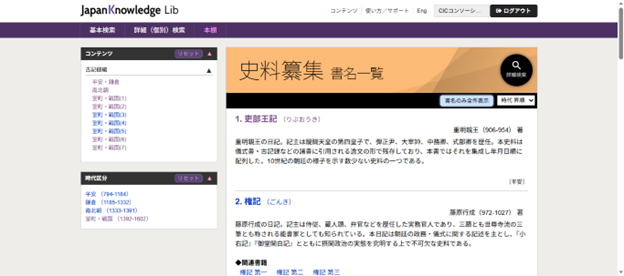
Front page of a website

Homepage of the JapanKnowledge collection of the Shiryo Sanshu.

As part of our ongoing effort to strengthen access to premodern Japanese historical sources, we announced earlier this fall the addition of the complete digital transcription of Heian Ibun (平安遺文). Building on that momentum, we are pleased to now offer access to the first unit of Shiryō Sanshū, newly available through the JapanKnowledge platform.

This initial release includes documents and diaries dating from the Heian, Kamakura, and Nanboku-chō periods, offering valuable insight into Japan’s premodern past. The collection features writings by prominent historical figures, including Prince Shigeakira (4th son of Emperor Daigo, 重明親王), Emperor Hanazono (花園天皇), Fujiwara no Teika (藤原定家), and Nakahara Momori (中原師守), among others. These diaries and journals allow researchers to explore the daily lives, thoughts, and concerns of court nobles and members of the imperial family.

The Shiryō Sanshū is a highly respected compilation of ancient diaries and documents, published by Yagi Shoten (八木書店), a Tokyo-based publishing house, between 1968 and 2020. The series encompasses more than 260 documents spanning from the Heian period through the Edo period. Each volume has been meticulously digitized, presenting both the original script and modern Japanese transcriptions. This dual-format approach enables full-text searching using both historical and modern character forms.
Continue reading

Expanding Premodern Japanese Sources: Heian Ibun Now Available

A website featuring a variety of Japanese texts, listed in chronological order.

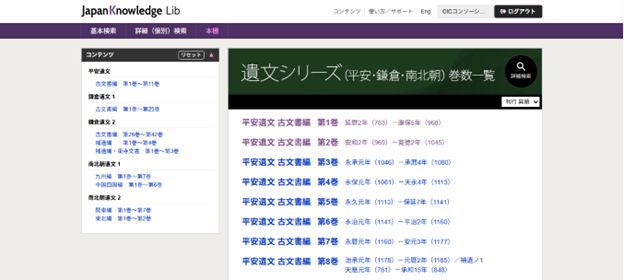
Front page of the Heian Ibun collection, which is included in the “Ibun Series” (遺文シリーズ) archive on JKBooks.

We are pleased to announce another significant addition to our growing collection of accessible archives and databases: the complete digital transcription of Heian Ibun (平安遺文), one of the largest and most comprehensive collections of Heian-period (794–1185) historical documents in the world. This digitization greatly expands research possibilities by providing full-text, searchable transcriptions of all included materials.

Heian Ibun was compiled by historian Dr. Rizō Takeuchi (竹内理三博士), who began assembling the collection in 1947. Over the course of approximately twenty years, he brought together more than 5,500 documents, publishing them across 11 volumes arranged largely in chronological order and spanning the entirety of the Heian period. In 1974, Dr. Takeuchi returned to the project to revise and reorganize the volumes into a new format.

These revised editions were later digitized and further updated by historians at the University of Tokyo, who have continued to make corrections and enhancements since 1996. The most up-to-date versions of these texts are now available digitally through the JKBooks platform on JapanKnowledge.

Continue reading

Kabuki’s Modern History, as Told by Postcards


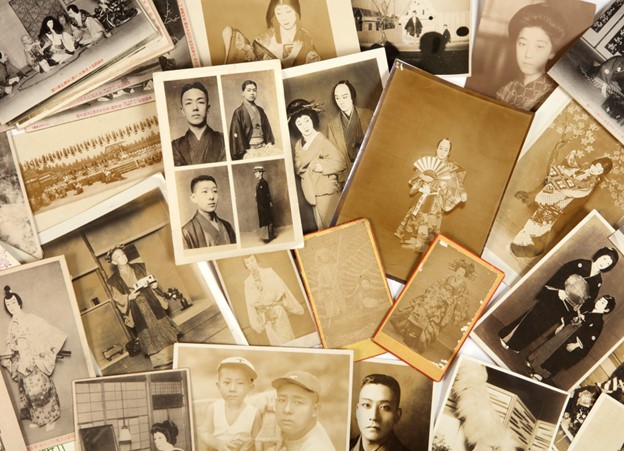
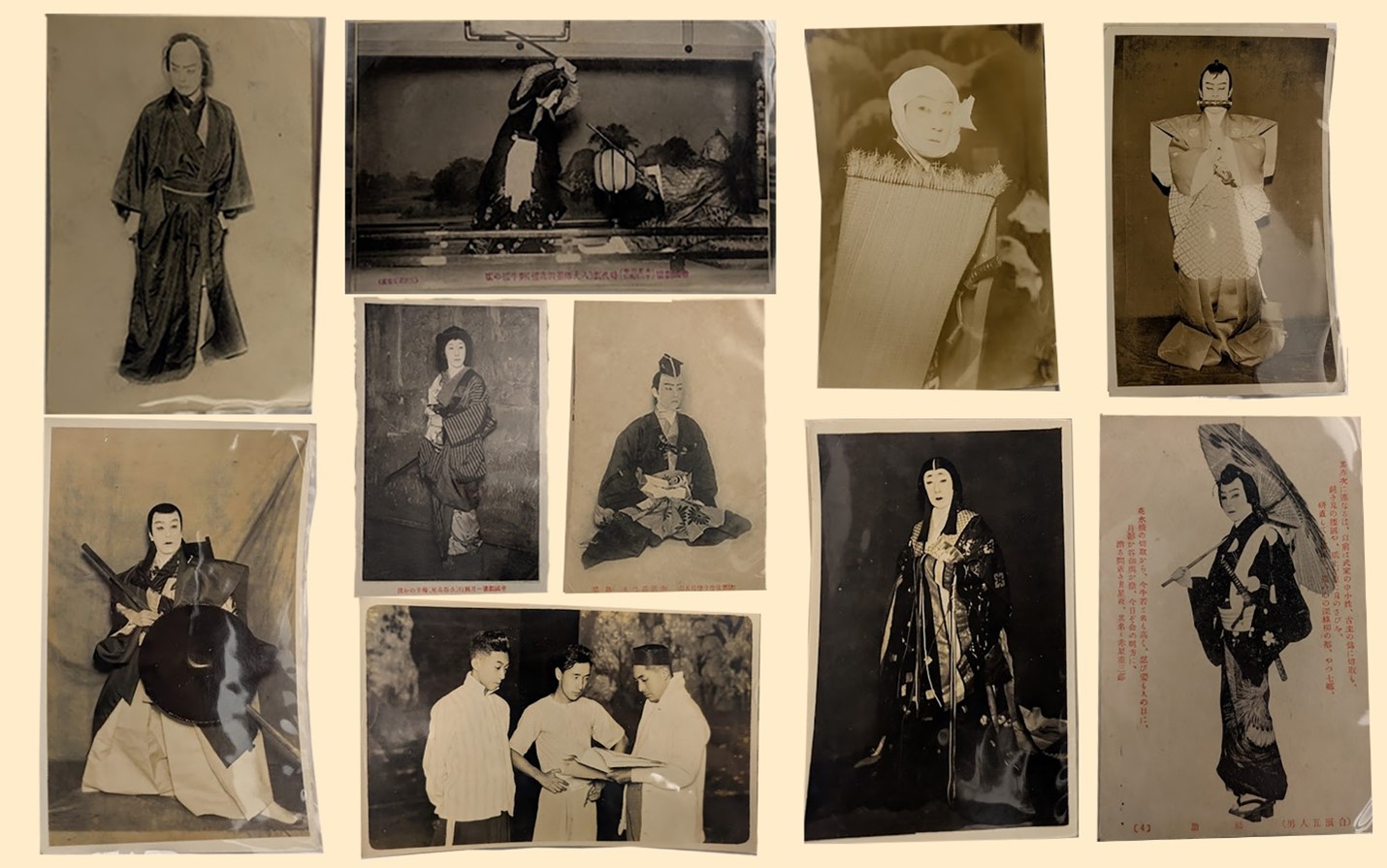
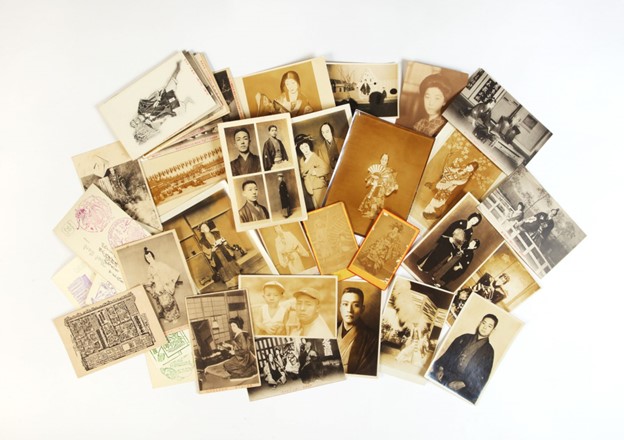
Today I would like to highlight one of our library collections that was featured in our recent atrium exhibit: an impressive set of 20th-century kabuki actor postcards. Featuring photographs of kabuki actors and plays—both onstage and behind the scenes—this collection contains over 2,500 postcards and is the largest we are aware of outside Japan. The contents date from the early Taishō period (1912–1926) to the 1980s and are in excellent condition overall, although some earlier cards show minor signs of wear or fading.

Portrait postcards like these became increasingly popular in Japan at the turn of the 20th century, when advancements in photography allowed printed cards to be produced at ever-faster rates. This meant that mass-produced images became prime collectibles for fans who visited kabuki theaters and other cultural sites. Soon, they surpassed the popularity of ukiyo-e woodblock prints, which had dominated the 19th century as one of the most sought-after Japanese collectibles of the era.

Continue reading

From Scrolls to Postcards: Rare Treasures of East Asian Art on Display

Guest post by Jayden Mitchell

A banner on the left side and a chair and two display cases on the left side

The Thompson Library exhibit ‘Mobility, Collecting and Diaspora’, a collection of East Asian objects related to performing arts, open until July 20, 2025.

We are proud to be part of the ongoing exhibition “Mobility, Collecting, and Diaspora: Preserving and Teaching East Asian History, which brings together remarkable artifacts from Japanese, Chinese, Korean, and Indonesian performance and fine arts. Located in the Thompson Library Special Collections Display Atrium, this exhibit represents an unprecedented collaboration between the Bliss M. and Mildred A. Wiant Collection of Chinese Art, and Chinese and Japanese collections from the Lawrence and Lee Theatre Research Institute, the Rare Books and Manuscripts Library, and the Herman J. Albrecht Library of Historical Architecture.

Continue reading

A Rare Acquisition: Yosano Akiko’s A New Translation of The Tale of Genji

The Japanese collections at OSU hold a wide range of contemporary and historic editions of the famous Genji Monogatari. Among these is a rare and historically significant set of A New Translation of The Tale of Genji (Shin’yaku Genji monogatari), published in 1912 by the renowned feminist writer Yosano Akiko (与謝野晶子, 1878–1942). Held in the Rare Books and Manuscript Library, this set represents a pivotal moment in the reception of Genji Monogatari, as Yosano boldly transformed the Genji Monogatari into a modern-language masterpiece that could be easily appreciated by all.


4 books

The four books that make up Shin’yaku Genji Monogatari.
Image courtesy of The Lavenberg Collection of Japanese Prints

Her translation was both a scholarly achievement and an uncommon intervention, offering a fresh poetic rendering of Genji at a time when it was largely studied through a male-centric academic lens. As a first edition, this set is exceptionally rare and an invaluable resource for scholars, students, and enthusiasts of Japanese literature.

Continue reading

(Un)Censored Wooden Printing Block from the Edo Period

Collage of wooden printing block, obverse and reverse, with features

Recently our library acquired a couple of wooden printing blocks that were used during the Edo Period (1603-1868). One of these, featuring a kabuki actor named “Matsumoto Koshiro,” forms part of the Japanese Theatre Collection and is held in the Lawrence and Lee Theatre Research Institute. Dated roughly from the 18th century, the object measures 165 x 340 x 20 mm and is double-sided, with the main image carved on the obverse, and a background and outline carved on the reverse.

Matsumoto Koshiro is a stage name that has been held by a distinguished line of kabuki actors since the early 18th century. Based on the carving of “Toyokuni-e” on the upper right side of the obverse, it is believed that one of Utagawa Tokyokuni’s skilled disciples created the original illustration upon which the wooden block carvings are based.

This wooden block also bears a mark of censorship: a seal carved onto a “wooden plug” (ireki, 入木) that was inserted into the block to indicate it had been approved by censors.

Continue reading

Announcing the Thomas Gregory Song Research Fellowship, Spring 2023

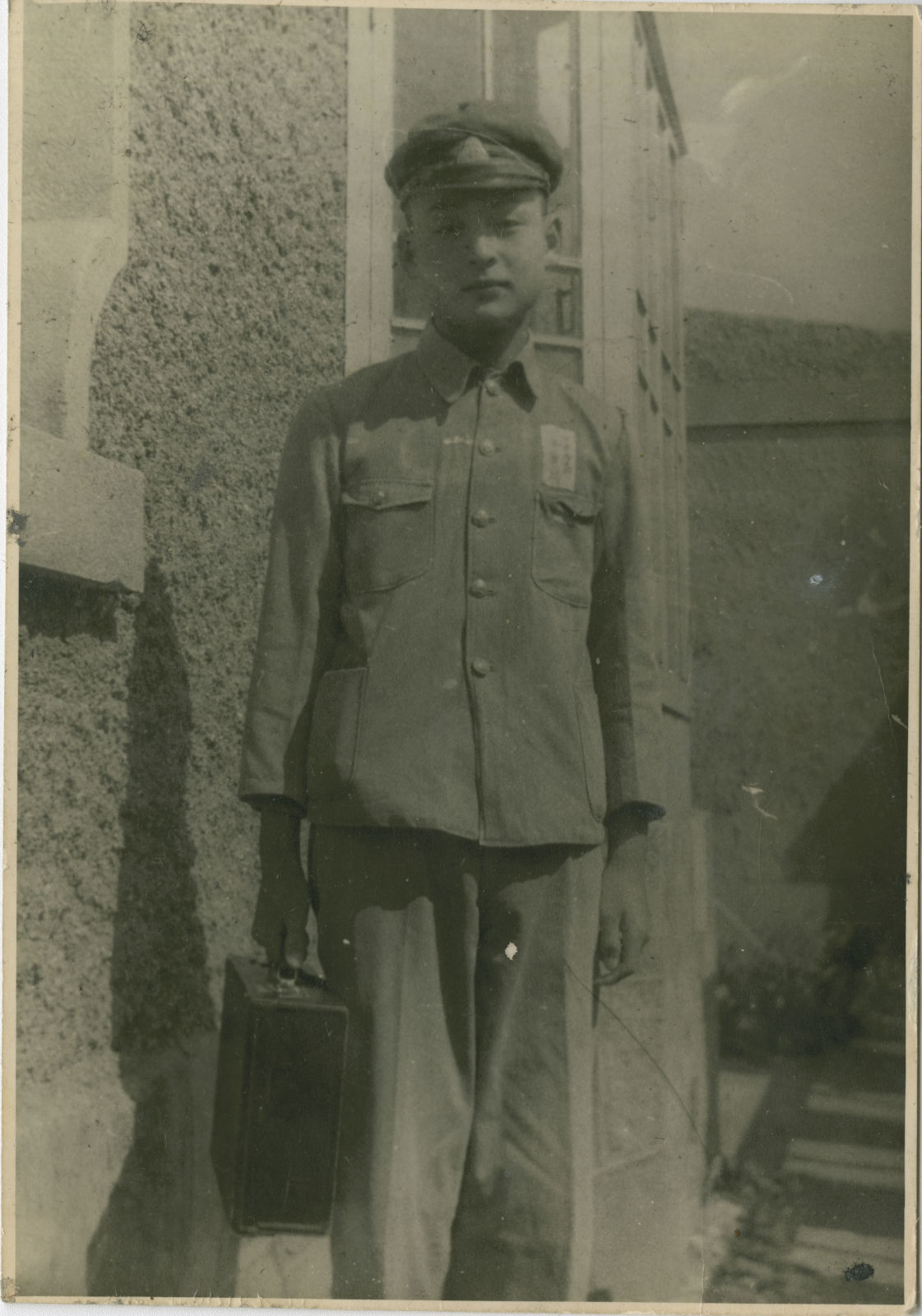
Thomas Gregory Song ca. 1940 in school uniform in Japan-occupied Dairen
(present-day Dalian, China). Image courtesy of Rare Books & Manuscripts Library

The Ohio State University Libraries is pleased to announce the Thomas Gregory Song Research Fellowship for an independent research project that makes substantial on-site use of the Thomas Gregory Song (TGS) Papers in the Rare Books and Manuscripts Library (https://library.osu.edu/collections/ SPEC.RARE.0195/collection-inventory). Written predominantly in Japanese and English (with some documents in Korean), the TGS Papers include Song family genealogical records; personal photographs from Song’s childhood; an Oral History Interview; over 2300 blog posts; and personal correspondence, journals, and essays. The TGS Papers shed significant light on topics of World History, East Asian Studies, Asian American Studies, Asian diaspora, migration, and gender and sexuality studies.  For more detailed information on the Song Family history and related collections held at the University Libraries, please visit the recently launched Thomas Gregory Song Family Exhibit.

Applications are due by on Dec. 15, 2022 at 5:00pm.

Continue reading

Learning from Woodblock Prints at OSU

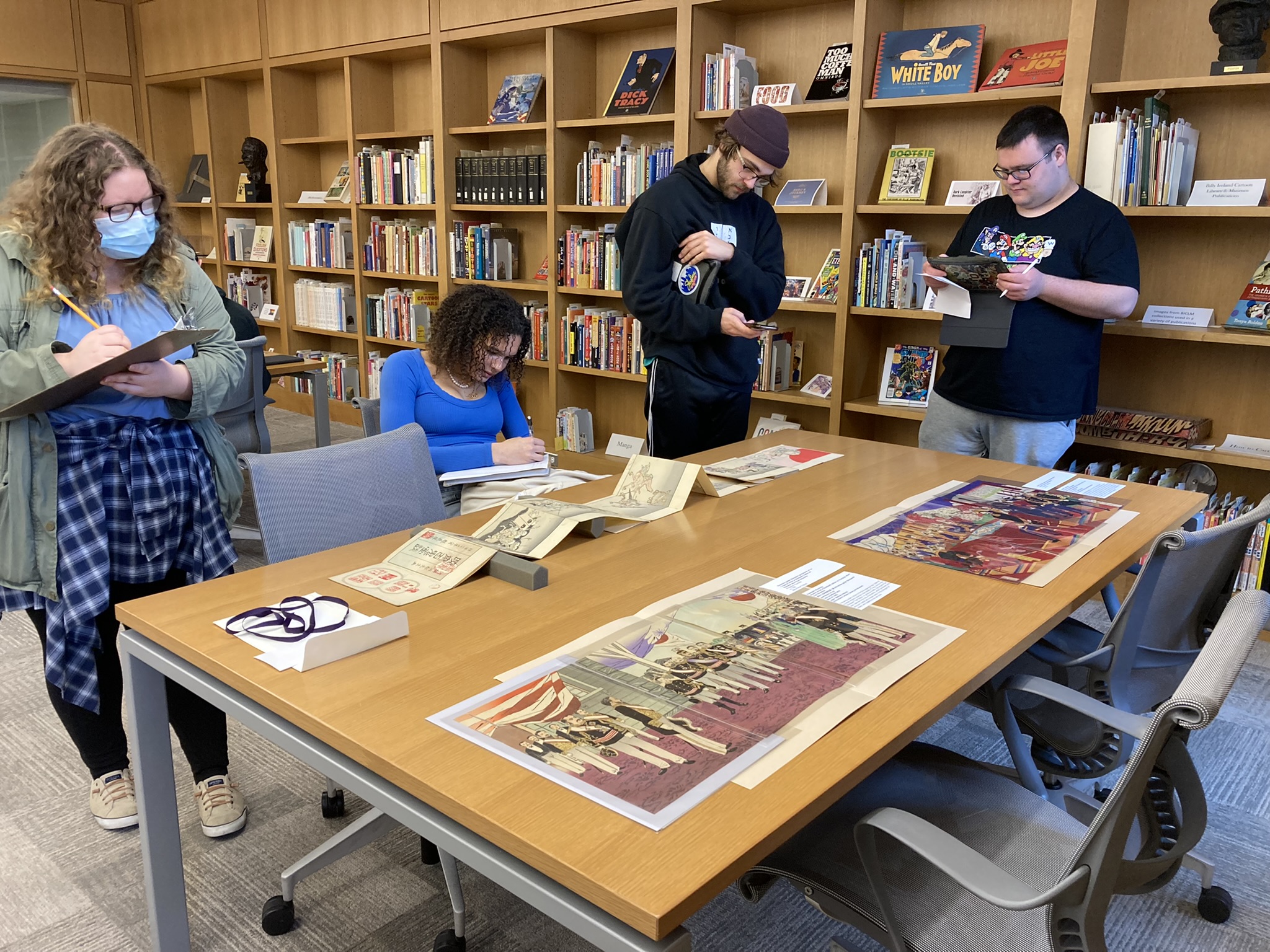
Within the depths of our libraries’ shelves, cases, and drawers lie hundreds of special materials you may have never have imagined were there! With so much to explore, today we’d like to bring your attention to our collection of woodblock prints and one of the many ways we enjoy sharing these materials with faculty and students.

Students of HISTART 2003 observing original Meiji-era prints
by artists Kyōsai, Kiyochika, and Toshinobu

As our reading rooms opened up again last year, we were thrilled to hold several open houses, featuring our manga collection as well as substantial holdings of  woodblock prints (many of which are considered precursors to contemporary manga). Held across the University Libraries in the Theatre Research Institute, the Rare Books and Manuscripts Library, and the Billy Ireland and Cartoon Library,  these historic prints were gathered and displayed together in the reading room of the Billy Ireland for students in Artistic Media and Techniques (HISTART 4005) last October and again for those in Art & Visual Culture of East Asia (HISTART 2003) in December and April.

Continue reading

Temperance in Tokyo – Unique Woodblock Prints from the Early Japanese Women’s Rights Movement

Following the Meiji Restoration (1868) and the new policies of modernization (kindaika) and Westernization (seiyōka), Japan began to import much more than material goods from the Western imperial powers. New concepts and ideologies soon made their way across the Pacific and freely entered the once “closed country.”   Riding this wave were Christian values and models of Western feminism, which in part were proselytized by the American teacher and temperance crusader Mary Greenleaf Clement Leavitt (1830-1912).

Title: “Inshu no Nariyuki.” Meiji Woodblock Print Leaves, Illustrated by Sasaki Toyoju.
Collection number SPEC.RARE.MMS.0127.
Counterclockwise: Angled view of the six prints, detail of a jovial tavern scene, drunken disorderly conduct from the main character confronting a Native American man, drunken disheveled main character robbing a man by the roadside

Inspired by Christian sermons about the destructive nature of alcohol,  Leavitt  helped found the Woman’s Christian Temperance Union (WCTU) in New York and Ohio in 1873.  Soon thereafter, her global crusade  led her as far as Japan and other countries including New Zealand, Burma, India, and Turkey, where female allies launched new chapters of the World WCTU.  Tired of the ill effects of alcohol on their domestic lives, women worldwide were drawn to the message of temperance and created an unprecedented transnational movement “for God, home and country.”

Continue reading

Introducing the newly available Manchuria Daily News Online English Database

Introduction

Japanese Studies at OSU Libraries is pleased to announce that the Manchuria Daily News Database is now available to the university community through the OSU library catalog.  The newly acquired database offers full access to the complete digital text of the Manchuria Daily News newspaper, published from 1908 to 1940.  The database thus offers an English-language archives of a rare newspaper that once provided the official Japanese interpretation of its presence in China in the early twentieth century. 


Image of the Database Home Page

Continue reading

Older posts