Guest Post by Brendon Baughn
The Ohio State University recently expanded its collection of shashi (社史, company histories) with the 2023 acquisition of three volumes from Meg Milk Snow Brand, Japan’s leading dairy producer. This addition brings the total number of Meg Milk–related shashi held by the University Libraries to seven and further strengthens OSU’s growing collection of materials related to agriculture, food production, and corporate development. The most recent volumes were donated during a campus visit by Meg Milk Snow Brand representatives, which included a tour of OSU’s main campus library, where the shashi are housed.
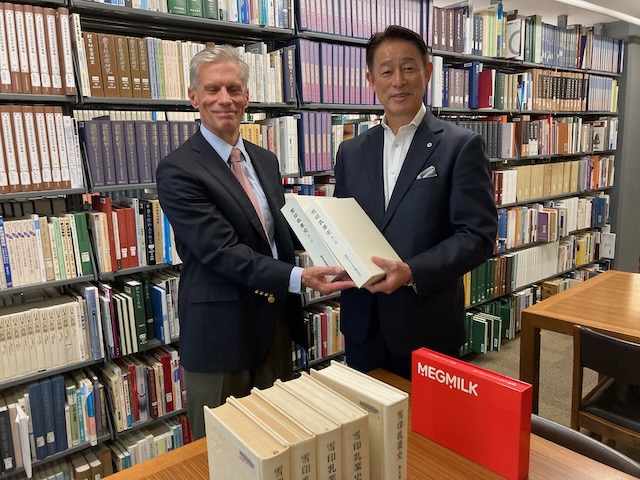
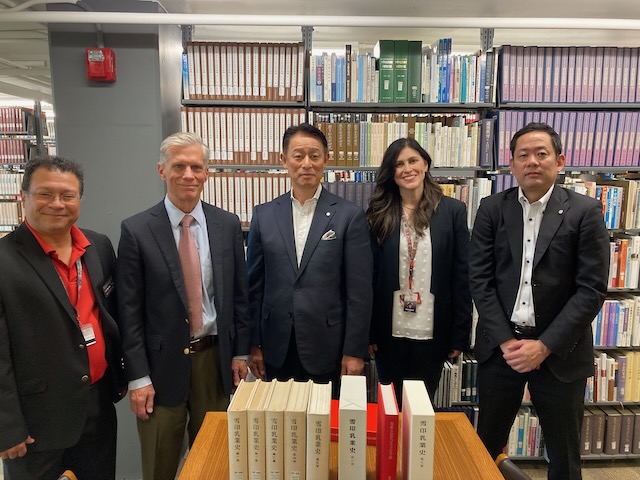
Images in the slider above show representatives from Meg Milk Snow Brand presenting the most recent volumes of their company’s history to The Ohio State University Libraries during a campus visit.
Entitled Yukijirushi Nyūgyō shi, the seven-volume Corporate History of Meg Milk Snow Brand chronicles the evolution of Japan’s modern dairy industry. Beyond tracing the company’s institutional history, these volumes document broader developments in milk processing technologies, as well as the establishment of legal and quality standards that shaped dairy production and consumption across Japan through the oil crisis of 1974.