Tag: literature

Diaries and Documents of Premodern Japan: Shiryō Sanshū

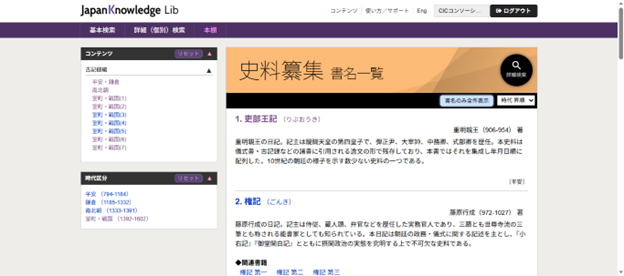
Front page of a website

Homepage of the JapanKnowledge collection of the Shiryo Sanshu.

As part of our ongoing effort to strengthen access to premodern Japanese historical sources, we announced earlier this fall the addition of the complete digital transcription of Heian Ibun (平安遺文). Building on that momentum, we are pleased to now offer access to the first unit of Shiryō Sanshū, newly available through the JapanKnowledge platform.

This initial release includes documents and diaries dating from the Heian, Kamakura, and Nanboku-chō periods, offering valuable insight into Japan’s premodern past. The collection features writings by prominent historical figures, including Prince Shigeakira (4th son of Emperor Daigo, 重明親王), Emperor Hanazono (花園天皇), Fujiwara no Teika (藤原定家), and Nakahara Momori (中原師守), among others. These diaries and journals allow researchers to explore the daily lives, thoughts, and concerns of court nobles and members of the imperial family.

The Shiryō Sanshū is a highly respected compilation of ancient diaries and documents, published by Yagi Shoten (八木書店), a Tokyo-based publishing house, between 1968 and 2020. The series encompasses more than 260 documents spanning from the Heian period through the Edo period. Each volume has been meticulously digitized, presenting both the original script and modern Japanese transcriptions. This dual-format approach enables full-text searching using both historical and modern character forms.
Continue reading

Expanding Premodern Japanese Sources: Heian Ibun Now Available

A website featuring a variety of Japanese texts, listed in chronological order.

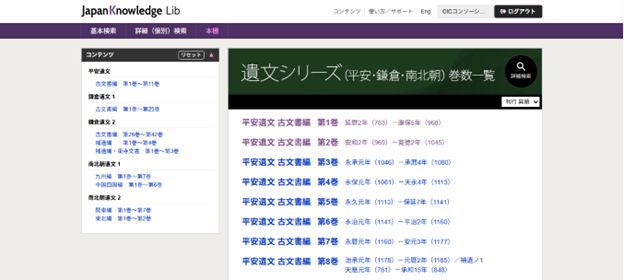
Front page of the Heian Ibun collection, which is included in the “Ibun Series” (遺文シリーズ) archive on JKBooks.

We are pleased to announce another significant addition to our growing collection of accessible archives and databases: the complete digital transcription of Heian Ibun (平安遺文), one of the largest and most comprehensive collections of Heian-period (794–1185) historical documents in the world. This digitization greatly expands research possibilities by providing full-text, searchable transcriptions of all included materials.

Heian Ibun was compiled by historian Dr. Rizō Takeuchi (竹内理三博士), who began assembling the collection in 1947. Over the course of approximately twenty years, he brought together more than 5,500 documents, publishing them across 11 volumes arranged largely in chronological order and spanning the entirety of the Heian period. In 1974, Dr. Takeuchi returned to the project to revise and reorganize the volumes into a new format.

These revised editions were later digitized and further updated by historians at the University of Tokyo, who have continued to make corrections and enhancements since 1996. The most up-to-date versions of these texts are now available digitally through the JKBooks platform on JapanKnowledge.

Continue reading

A Rare Acquisition: Yosano Akiko’s A New Translation of The Tale of Genji

The Japanese collections at OSU hold a wide range of contemporary and historic editions of the famous Genji Monogatari. Among these is a rare and historically significant set of A New Translation of The Tale of Genji (Shin’yaku Genji monogatari), published in 1912 by the renowned feminist writer Yosano Akiko (与謝野晶子, 1878–1942). Held in the Rare Books and Manuscript Library, this set represents a pivotal moment in the reception of Genji Monogatari, as Yosano boldly transformed the Genji Monogatari into a modern-language masterpiece that could be easily appreciated by all.


4 books

The four books that make up Shin’yaku Genji Monogatari.
Image courtesy of The Lavenberg Collection of Japanese Prints

Her translation was both a scholarly achievement and an uncommon intervention, offering a fresh poetic rendering of Genji at a time when it was largely studied through a male-centric academic lens. As a first edition, this set is exceptionally rare and an invaluable resource for scholars, students, and enthusiasts of Japanese literature.

Continue reading

The Shining Prints: Visualizing The Tale of Genji – Part 2

Welcome to Part 2 of this blog series exploring a duo of fascinating Tale of Genji reproduction artworks found in our Rare Books and Manuscripts Library.  In this half of the blog, I will introduce the Genji monogatari gajō and then offer an analytical commentary comparing this material to the iconic Genji monogatari emaki (discussed in Part 1) in their portrayal of Murasaki Shikibu’s original tale. Lastly, I will briefly introduce some of our Japanese comics related to the Genji mongatari and held in our extensive manga collection!

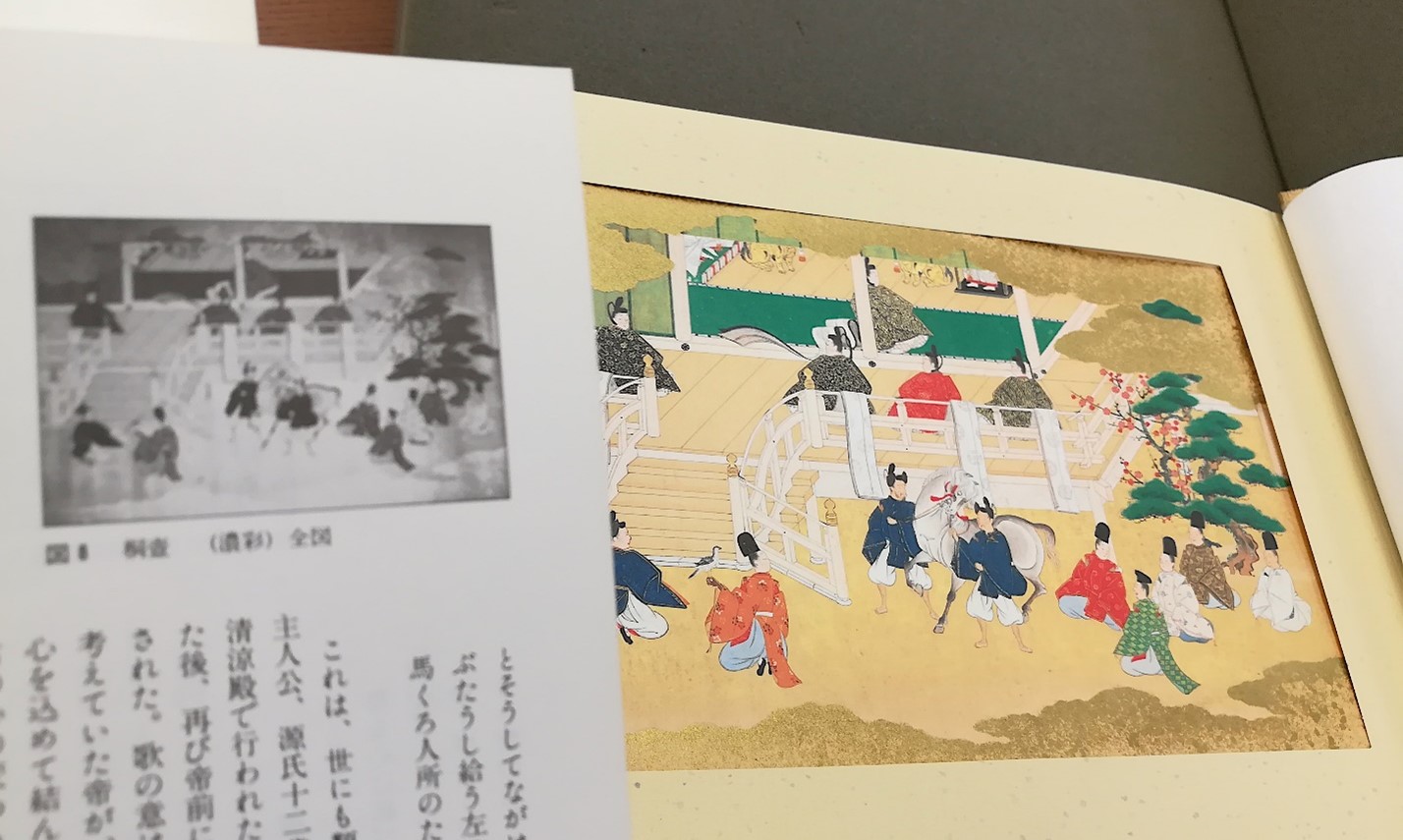
This sample from the Genji monogatari gajō shows Genji’s coming-of-age ceremony in the first chapter, “Kiritsubo” (I, “The Lady of the Paulownia-Courtyard Chambers”). Explanatory text (left) accompanies the prints.

Continue reading

The Shining Prints: Visualizing The Tale of Genji – Part 1

The Ohio State University Libraries are fortunate to have a wide range of fascinating Japan-related special collections. Several available are related to the famous classical Japanese novel, The Tale of Genji. Whether you are an established Genji scholar or a curious student, I would like to highlight some of our materials  that can provide an extraordinary visual guide to this classic tale. I have spent time with two works in particular for this essay: they are a set of reproduction prints of the iconic Genji monogatari emaki as well as a separate set referred to as the Genji monogatari gajō. This post will serve as part one in a two-part blog series about these iconic artworks!

Wood-block reproductions of the Genji picture scrolls,” ND1059.6 G4 W66 1994

The Tale of Genji (源氏物語, Genji monogatari), written by the female court attendant Murasaki Shikibu in the 11th century, is perhaps the most well-known and precious treasure of the Japanese literary tradition. This Heian-era (794-1185) classic is lengthy, character-driven, and full of vivid detail about the look and feel of the imperial Japanese court and aristocratic society. The tale follows the romantic life of Hikaru Genji, the “Shining” Prince, and depicts his many, mostly tragic relationships with women. Genji is the son of the emperor and a lower-ranking court lady known as the Lady Kiritsubo. While he is his father’s favorite child and is considered for imperial succession, he is ultimately removed from the imperial line and made a member of the Genji clan.  This protagonist earns the description “hikaru” (光る, shining or radiant) on account of his beautiful appearance and endearing qualities. However, these same infatuating traits set up the bulk of the conflict in the tale, as the myriad women Genji becomes intimate with invariably experience neglect and jealousy or other courtly drama of the polygynous aristocratic setting. The memorable and complex characters of the Shining Prince’s world have appealed to Japanese audiences for centuries, and it’s no surprise that scores of portrayals, homages, and allusions have popped up since the tale was written over a millenium ago.

Continue reading

Hakubunkan’s Taiyō (1895-1928) full text!

The Libraries’ subscription for access to Meiji-era issues of Taiyō (太陽), published by Hakubunkan (博文館) during 1895-1928, is now set up, with access available for Ohio State faculty, students and staff: http://library.ohio-state.edu/record=b7114669~S7

Taiyo 3:12 (June 1897) exhibited at Yamaguchi Prefectural Library


e-resour
Published by Hakubunkan during January 1895 to February 1928 in 34 volumes (531 issues; 175,000 pages), Taiyō (The Sun) was Japan’s first general interest popular magazine. Continue reading

Great East Japan Earthquake

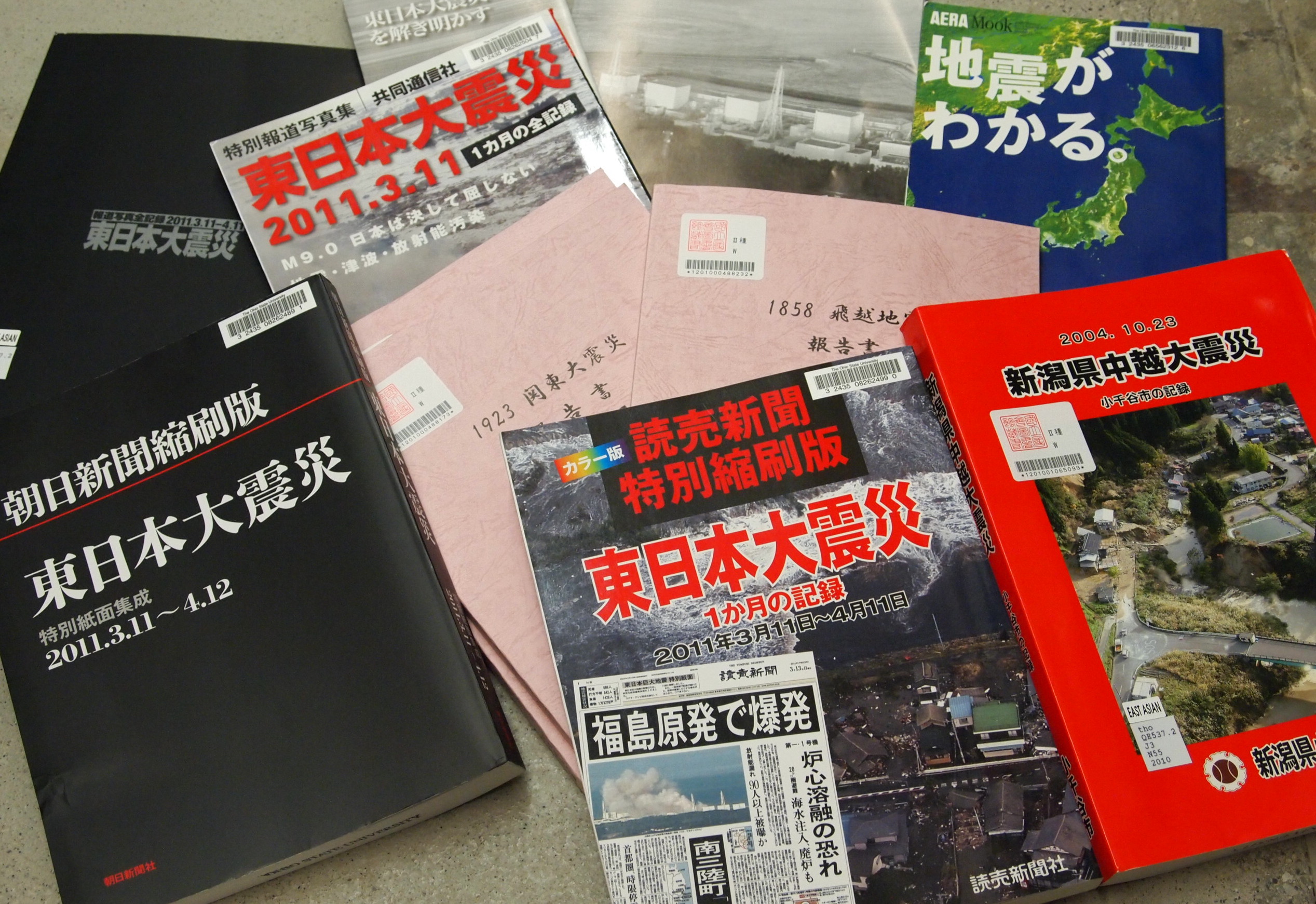
photograph of Japanese books about earthquakes

Last month the world observed the first anniversary of the devastating earthquake and tsunami on March 11, 2011. As time passes since the Great East Japan Earthquake (2011 Tōhoku earthquake and tsunami) some important and interesting records of this event are being added to the collection to support research. The National Diet Library has generously sent us some materials as part of their gift and exchange program, including in-depth studies of previous earthquakes and tsunamis in Japanese history. Recently I have also started to collect creative writings, such as poetry, fiction and literary essays, as well as personal accounts of those who survived. Continue reading