Category: Resources (page 1 of 4)

Two Maps of Mount Fuji: A Nook Exhibit in the Research Commons

Guest Post by Anqi Chen

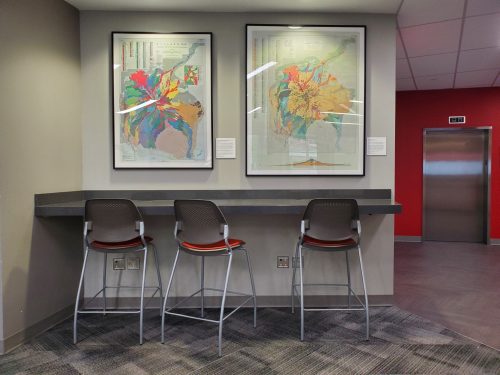
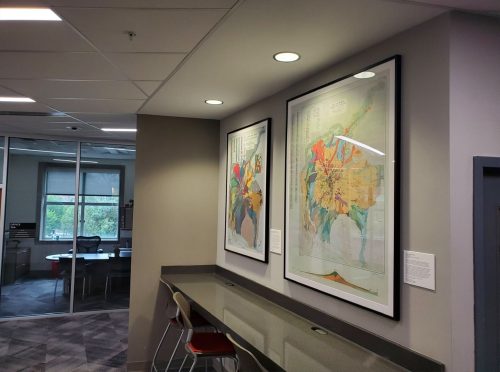
Located in a small corner of the Research Commons on the third floor of the 18th Avenue Library, a small display highlights two colorful examples from the Japanese collections held by The Ohio State University Libraries: geological maps of Mount Fuji, the highest peak in Japan and one of the country’s most recognizable natural and cultural landmarks.


Mount Fuji is an active volcano located near the geographic center of Japan, and its geological structure has been the subject of sustained interdisciplinary attention. The two maps featured here were produced by the Geological Survey of Japan (地質調査総合センター): one published in 1968 by Hiromichi Tsuya, and a second, updated version published in 2016 by Akira Takada, Takahiro Yamamoto, Yoshihiro Ishizuka, and Shun Nakano. Displayed together, they reflect more than a half century of geological research and illustrate how scientific approaches to studying Mount Fuji have developed over time.

Continue reading

Harvesting History: The Meg Milk Shashi and Their Agricultural Roots

Guest Post by Brendon Baughn

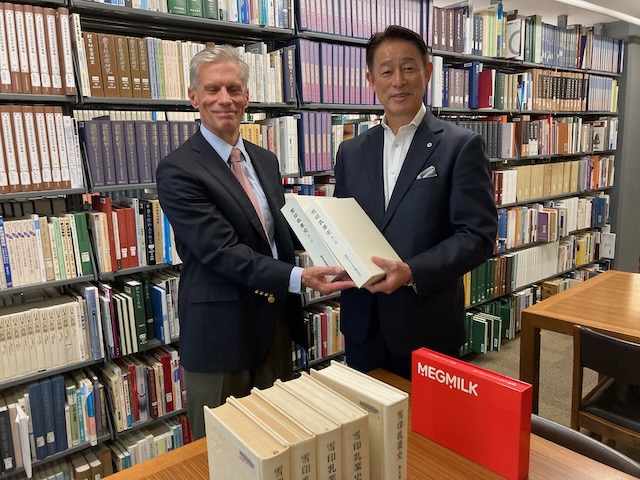
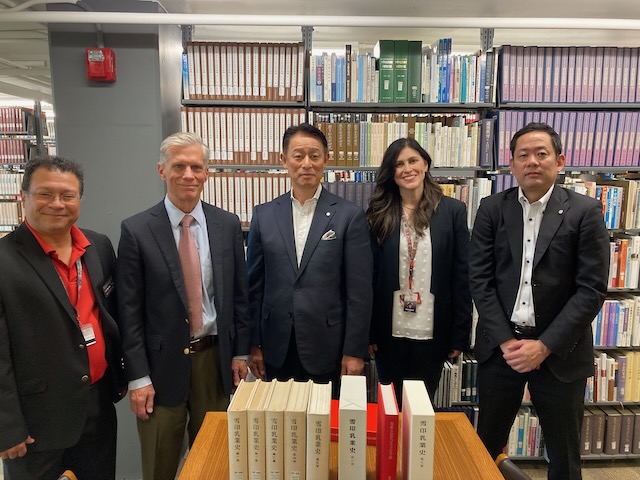
The Ohio State University recently expanded its collection of shashi (社史, company histories) with the 2023 acquisition of three volumes from Meg Milk Snow Brand, Japan’s leading dairy producer. This addition brings the total number of Meg Milk–related shashi held by the University Libraries to seven and further strengthens OSU’s growing collection of materials related to agriculture, food production, and corporate development. The most recent volumes were donated during a campus visit by Meg Milk Snow Brand representatives, which included a tour of OSU’s main campus library, where the shashi are housed.


Images in the slider above show representatives from Meg Milk Snow Brand presenting the most recent volumes of their company’s history to The Ohio State University Libraries during a campus visit.

Entitled Yukijirushi Nyūgyō shi, the seven-volume Corporate History of Meg Milk Snow Brand chronicles the evolution of Japan’s modern dairy industry. Beyond tracing the company’s institutional history, these volumes document broader developments in milk processing technologies, as well as the establishment of legal and quality standards that shaped dairy production and consumption across Japan through the oil crisis of 1974.

Continue reading

Diaries and Documents of Premodern Japan: Shiryō Sanshū

Front page of a website

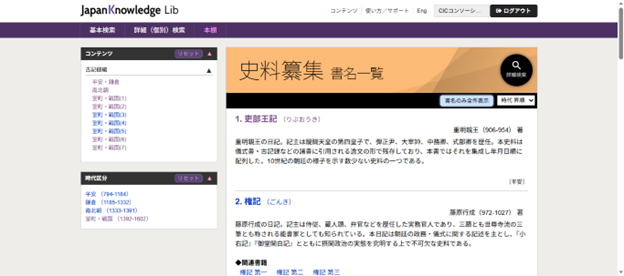
Homepage of the JapanKnowledge collection of the Shiryo Sanshu.

As part of our ongoing effort to strengthen access to premodern Japanese historical sources, we announced earlier this fall the addition of the complete digital transcription of Heian Ibun (平安遺文). Building on that momentum, we are pleased to now offer access to the first unit of Shiryō Sanshū, newly available through the JapanKnowledge platform.

This initial release includes documents and diaries dating from the Heian, Kamakura, and Nanboku-chō periods, offering valuable insight into Japan’s premodern past. The collection features writings by prominent historical figures, including Prince Shigeakira (4th son of Emperor Daigo, 重明親王), Emperor Hanazono (花園天皇), Fujiwara no Teika (藤原定家), and Nakahara Momori (中原師守), among others. These diaries and journals allow researchers to explore the daily lives, thoughts, and concerns of court nobles and members of the imperial family.

The Shiryō Sanshū is a highly respected compilation of ancient diaries and documents, published by Yagi Shoten (八木書店), a Tokyo-based publishing house, between 1968 and 2020. The series encompasses more than 260 documents spanning from the Heian period through the Edo period. Each volume has been meticulously digitized, presenting both the original script and modern Japanese transcriptions. This dual-format approach enables full-text searching using both historical and modern character forms.

Continue reading

Expanding Premodern Japanese Sources: Heian Ibun Now Available

A website featuring a variety of Japanese texts, listed in chronological order.

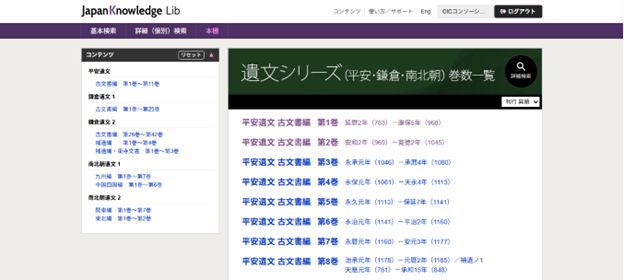
Front page of the Heian Ibun collection, which is included in the “Ibun Series” (遺文シリーズ) archive on JKBooks.

We are pleased to announce another significant addition to our growing collection of accessible archives and databases: the complete digital transcription of Heian Ibun (平安遺文), one of the largest and most comprehensive collections of Heian-period (794–1185) historical documents in the world. This digitization greatly expands research possibilities by providing full-text, searchable transcriptions of all included materials.

Heian Ibun was compiled by historian Dr. Rizō Takeuchi (竹内理三博士), who began assembling the collection in 1947. Over the course of approximately twenty years, he brought together more than 5,500 documents, publishing them across 11 volumes arranged largely in chronological order and spanning the entirety of the Heian period. In 1974, Dr. Takeuchi returned to the project to revise and reorganize the volumes into a new format.

These revised editions were later digitized and further updated by historians at the University of Tokyo, who have continued to make corrections and enhancements since 1996. The most up-to-date versions of these texts are now available digitally through the JKBooks platform on JapanKnowledge.

Continue reading

Kabuki’s Modern History, as Told by Postcards


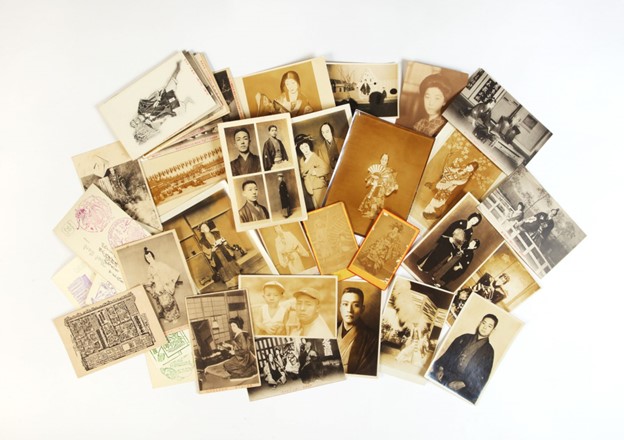
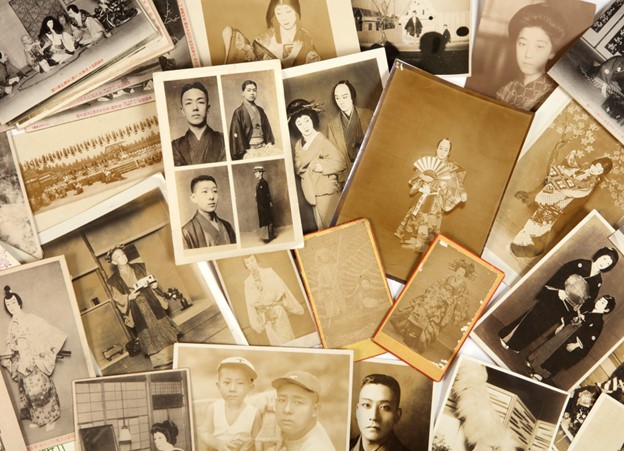
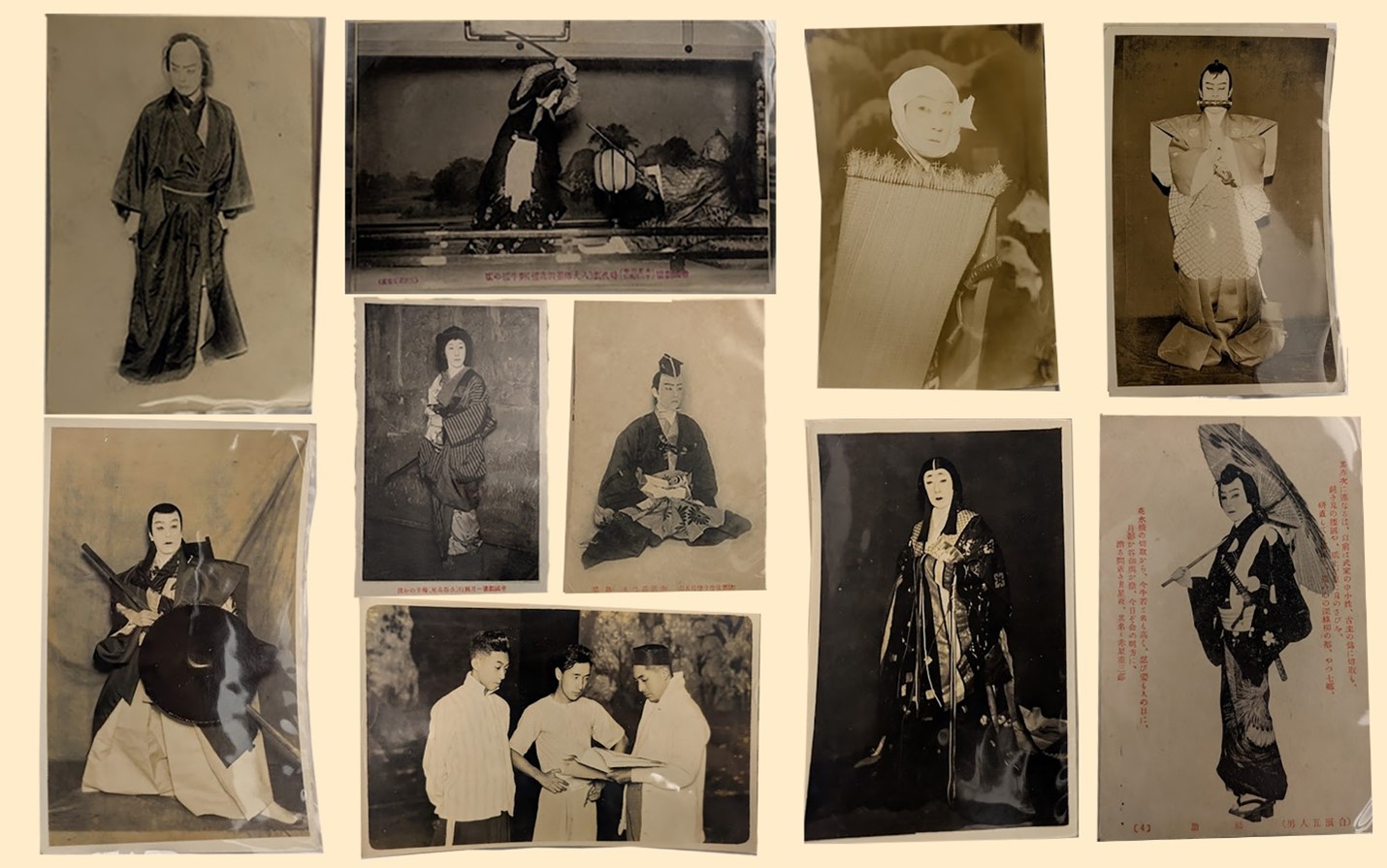
Today I would like to highlight one of our library collections that was featured in our recent atrium exhibit: an impressive set of 20th-century kabuki actor postcards. Featuring photographs of kabuki actors and plays—both onstage and behind the scenes—this collection contains over 2,500 postcards and is the largest we are aware of outside Japan. The contents date from the early Taishō period (1912–1926) to the 1980s and are in excellent condition overall, although some earlier cards show minor signs of wear or fading.

Portrait postcards like these became increasingly popular in Japan at the turn of the 20th century, when advancements in photography allowed printed cards to be produced at ever-faster rates. This meant that mass-produced images became prime collectibles for fans who visited kabuki theaters and other cultural sites. Soon, they surpassed the popularity of ukiyo-e woodblock prints, which had dominated the 19th century as one of the most sought-after Japanese collectibles of the era.

Continue reading

From Scrolls to Postcards: Rare Treasures of East Asian Art on Display

Guest post by Jayden Mitchell

A banner on the left side and a chair and two display cases on the left side

The Thompson Library exhibit ‘Mobility, Collecting and Diaspora’, a collection of East Asian objects related to performing arts, open until July 20, 2025.

We are proud to be part of the ongoing exhibition “Mobility, Collecting, and Diaspora: Preserving and Teaching East Asian History, which brings together remarkable artifacts from Japanese, Chinese, Korean, and Indonesian performance and fine arts. Located in the Thompson Library Special Collections Display Atrium, this exhibit represents an unprecedented collaboration between the Bliss M. and Mildred A. Wiant Collection of Chinese Art, and Chinese and Japanese collections from the Lawrence and Lee Theatre Research Institute, the Rare Books and Manuscripts Library, and the Herman J. Albrecht Library of Historical Architecture.

Continue reading

A Rare Acquisition: Yosano Akiko’s A New Translation of The Tale of Genji

The Japanese collections at OSU hold a wide range of contemporary and historic editions of the famous Genji Monogatari. Among these is a rare and historically significant set of A New Translation of The Tale of Genji (Shin’yaku Genji monogatari), published in 1912 by the renowned feminist writer Yosano Akiko (与謝野晶子, 1878–1942). Held in the Rare Books and Manuscript Library, this set represents a pivotal moment in the reception of Genji Monogatari, as Yosano boldly transformed the Genji Monogatari into a modern-language masterpiece that could be easily appreciated by all.


4 books

The four books that make up Shin’yaku Genji Monogatari.
Image courtesy of The Lavenberg Collection of Japanese Prints

Her translation was both a scholarly achievement and an uncommon intervention, offering a fresh poetic rendering of Genji at a time when it was largely studied through a male-centric academic lens. As a first edition, this set is exceptionally rare and an invaluable resource for scholars, students, and enthusiasts of Japanese literature.

Continue reading

Mapping the Allied Air War – AAF Target Chart of Tokyo

Guest Post by Takuma Goto

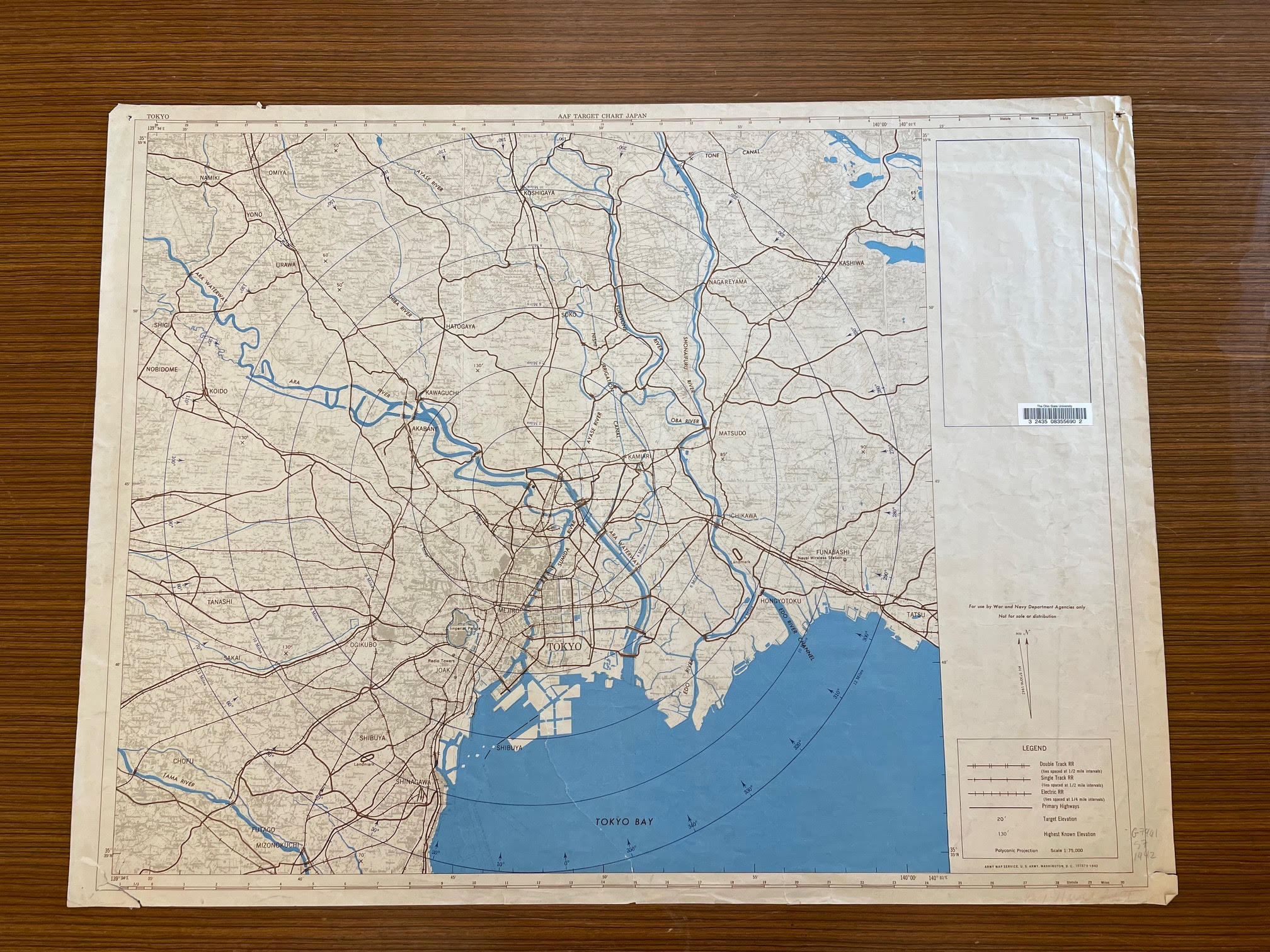
In a previous blog, I discussed our University Libraries’ ongoing Japanese maps project. Today, I’d like to share another interesting map I’ve encountered: a World War II U.S. Army Air Forces’ (AAF) “target chart” of Tokyo, Japan.

Historical Background

Soon after the attack on Pearl Harbor on December 8, 1941, the United States quickly mobilized for the Pacific War. The following April, the AAF’s aerial campaigns against Imperial Japan began with the Doolittle Raid on the Tokyo Metropolitan Area. This small-scale air raid would become the first of hundreds of Allied bombings throughout World War II until Japan’s surrender in August 1945. 

AAF Target Chart Japan. Washington, D.C.: Army Map Service, 1942.


Continue reading

Herman J. Albrecht Library of Historical Architecture – Rare Pop-up Teahouses by Nobutatsu Tansai

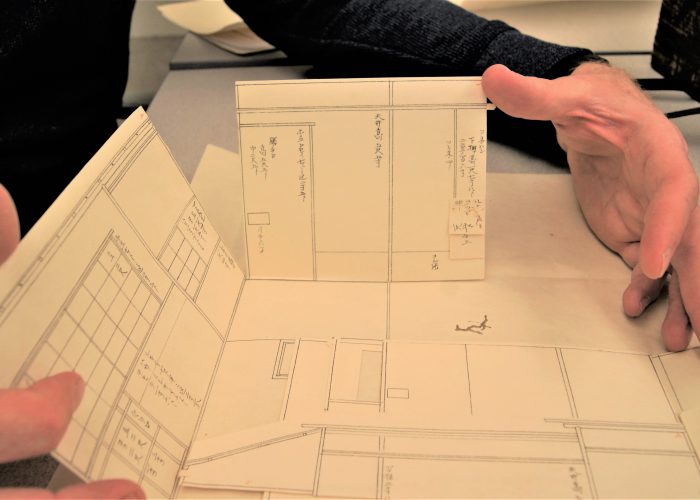
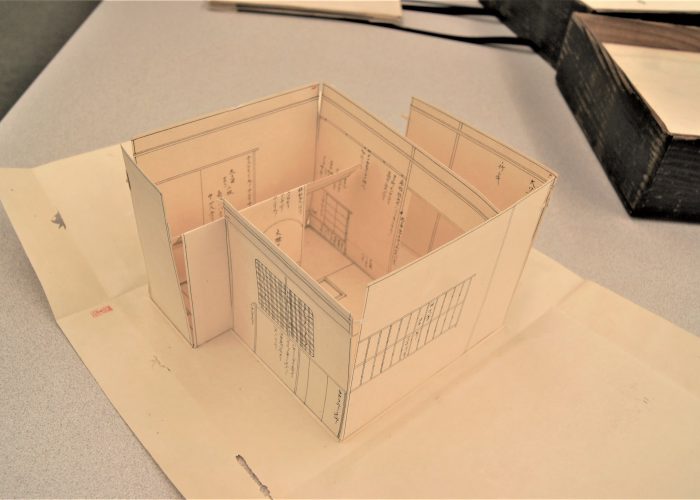
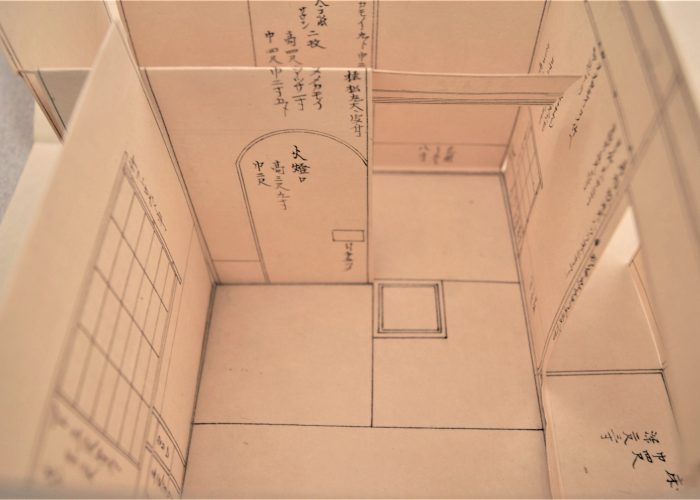
Modern architects are acquainted with the idea of representing their designs in three-dimensions with the help of computer software. CAD (computer-aided design) programs can turn useful two-dimensional plans into practical 3D models as they would be seen in real life. Before the evolution of such digital technologies, artists in Edo Japan (1603-1868) created highly technical pop-up drawings known as okoshi-ezu (起絵図 Okoshi-ezu defined by JAANUS), which modeled 3D buildings through the construction of folding paper and cut-outs. Nobutatsu Tansai (覃斎信立) was one such designer, and he made dozens of examples of this origami-like art form with a particular focus on the spaces of the tea ceremony (茶の湯, cha no yu)

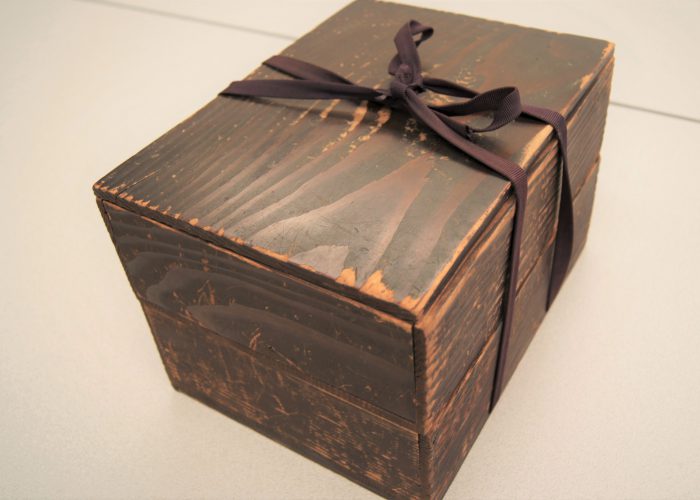
  • The contemporary wooden box containing the flattened pop-ups

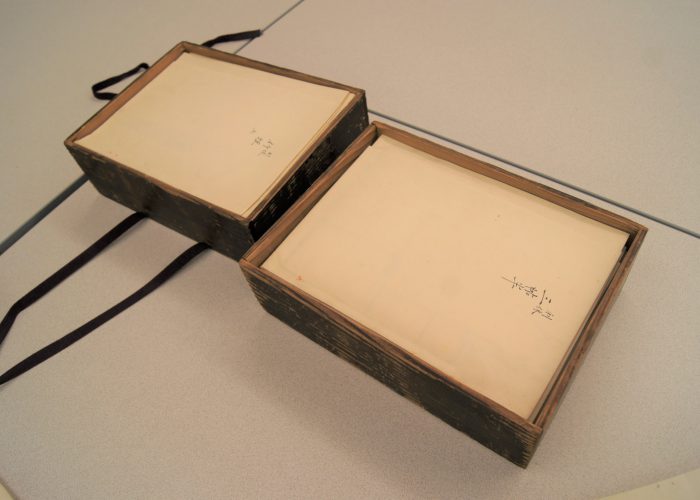
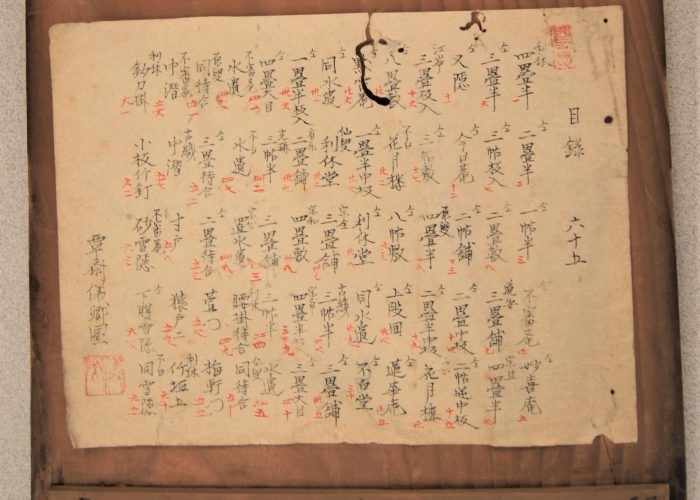
This unique collection of Tansai’s chashitsu (茶室, teahouse, lit. “tea room”) pop-ups is held in the Herman J. Albrecht Library of Historical Architecture, located in OSU’s Thompson Library. Contained in a wooden box, these paper replicas are exceptionally rare, one of only three known collections in the world. The other two are held in Japan’s National Diet Library in Tokyo and in the Peabody Essex Museum in Salem, Massachusetts. Dated between 1820 and 1860 and believed to have been made in Kyoto, this set of okoshi-ezu are comprised of 65 pieces and are in remarkable condition for nearly 200-year-old sheets of folding paper.

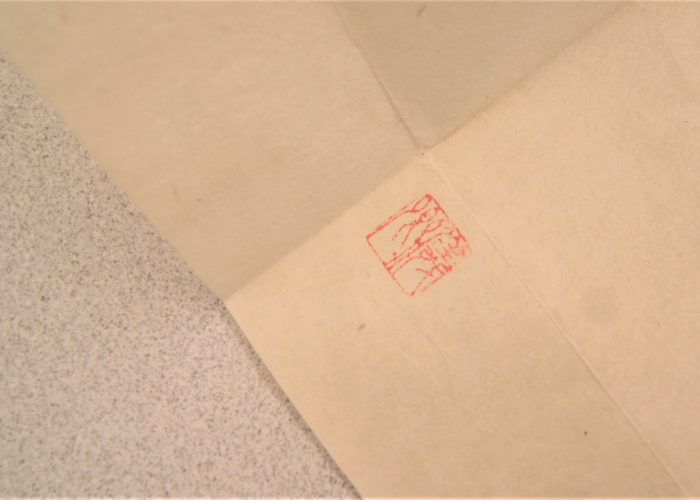
Japanese-style architecture is eminently unique. Tansai masterfully captured the trappings of chashitsu, drawing (and folding) from the designs of famous historical buildings in and around Kyoto like the Fushin-an and Myoki-an teahouses. Each design is numbered and recorded in an accompanying manuscript. Tansai’s precise work demarcates the shape of the teahouses, but he has also faithfully written the materials and exact real dimensions of each structure. The sizes of rooms in Japan are often measured by the number of straw tatami mats that can fit inside, one of the measurements Tansai recorded. This is especially apt for a traditional tea room, an exemplar of Japanese-style rooms (和室, washitsu). Other elements of Japanese architecture represented include shōji (paper-covered sliding doors) and tokonoma (alcoves where hanging calligraphy scrolls or other artistic objects are displayed). The folded drawings are made on washi (和紙), a kind of durable handmade paper crafted in Japan, and the artist has stamped his personal artist’s stamp (判子, hanko) onto each model.

It is hard to overstate the rarity and significance of this special item. Japan’s paper arts, historic architecture, and ceremonial heritage are all well represented here through Tansai’s work. They are tangible icons enveloping intangible tradition; carefully crafted and lovingly preserved, these drawings express qualities that one could say permeate the macro culture of Japan’s old customs and are befitting of the stature of great historical architecture.

To view this rare collection, please contact Dr. Eric Johnson (johnson.4156@osu.edu), Curator of Thompson Special Collections, or Dr. Ann Marie Davis (davis.5257@osu.edu), Japanese Studies Librarian.

To see additional photographs, you can take a look at the Rare Books & Manuscript Library’s Facebook page. Consider following them to see news about other unique pieces.

These folding models belong to the Herman J. Albrecht Library of Historical Architecture, which can be visited in Thompson Library.

Read more about Japanese teahouses with materials from our collections:

Niwa to chashitsu by Tei Nishimura (Tokyo: Kodansha, 1956)

Shiro to chashitsu : Momoyama no kenchiku, kōgei I by Nobuo Tsuji et al. (Tokyo: Kodansha, 1992)

Kyō no chashitsu by Takao Okada (Kyoto: Gakugei Shuppansha, 1989)

External links to scholarly articles about okoshi-ezu:

Okoshi-ezu: Speculations on Thinness by Andrew Barrie, comparing modern Japanese architectural design to the paper pop-ups of the past

Okoshi-ezu by Siân Bowen, written for the Victoria and Albert Museum of Art & Design, UK, the world’s largest museum of applied arts and decorative design

Level Up Your Japanese With Online TADOKU

Some of our Tadoku (多読) books at Thompson Library, now available online, too!

What is Tadoku?

Do you like to read? Seeing that you have made it to this library website, I’m guessing you do. If so, tadoku (多読 )—literally, “extensive reading”—is one of the best things you can do to improve your Japanese language skills. In fact, you may have done tadoku before without even realizing it!

As a grade-schooler, did you ever have “silent reading?” An “SSR” (Sustained Silent Reading) period? If this rings a bell, then you are already familiar with the practice of tadoku. Now, if you hated being forced to read for long periods of time in school, don’t fret! Tadoku need not be so regimented. In principle, it is the reading of a large quantity of comprehensible material rather than reading short-yet-difficult material (think chapter books over academic reading assignments).

While not a uniquely Japanese concept, tadoku is popular in the Japanese language learning sphere to improve reading speed, comprehension, and vocabulary. Incidentally, you can also use this method for listening practice!  The concept is simple: read a lot from a book that you mostly understand, without the help of a dictionary.

Continue reading

Older posts