Month: November 2022

Announcing the Thomas Gregory Song Research Fellowship, Spring 2023

Thomas Gregory Song ca. 1940 in school uniform in Japan-occupied Dairen
(present-day Dalian, China). Image courtesy of Rare Books & Manuscripts Library

The Ohio State University Libraries is pleased to announce the Thomas Gregory Song Research Fellowship for an independent research project that makes substantial on-site use of the Thomas Gregory Song (TGS) Papers in the Rare Books and Manuscripts Library (https://library.osu.edu/collections/ SPEC.RARE.0195/collection-inventory). Written predominantly in Japanese and English (with some documents in Korean), the TGS Papers include Song family genealogical records; personal photographs from Song’s childhood; an Oral History Interview; over 2300 blog posts; and personal correspondence, journals, and essays. The TGS Papers shed significant light on topics of World History, East Asian Studies, Asian American Studies, Asian diaspora, migration, and gender and sexuality studies.  For more detailed information on the Song Family history and related collections held at the University Libraries, please visit the recently launched Thomas Gregory Song Family Exhibit.

Applications are due by on Dec. 15, 2022 at 5:00pm.
Continue reading

The View that Rocks: The Geology of Mount Fuji

Guest post by Takuma Goto

In my ongoing explorations of the Japanese Maps Collection, Mount Fuji, or Fuji-san to speakers of Japanese, is perhaps the most prominent landmark in Japan. Given its significance in the Japanese geological, social, and spiritual landscape, in the present blog I have decided to focus on this great mountain.

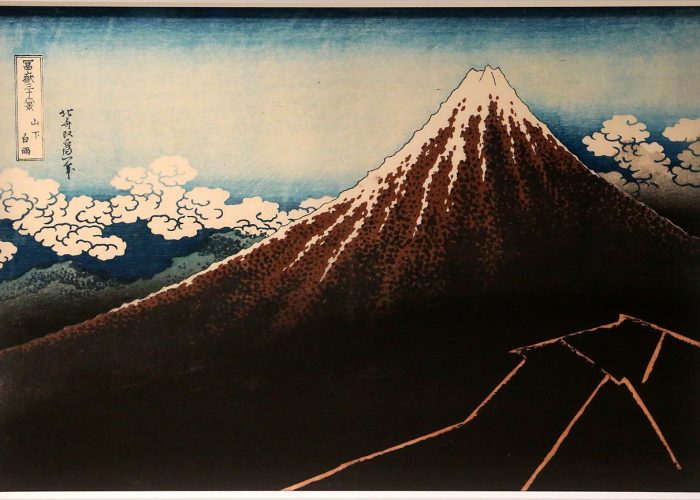
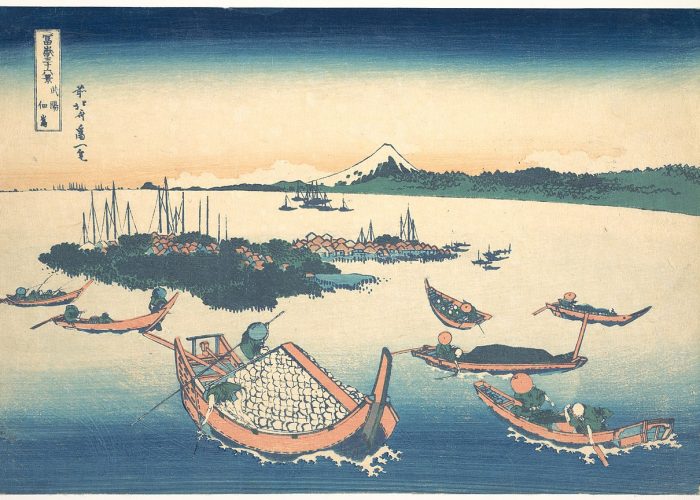
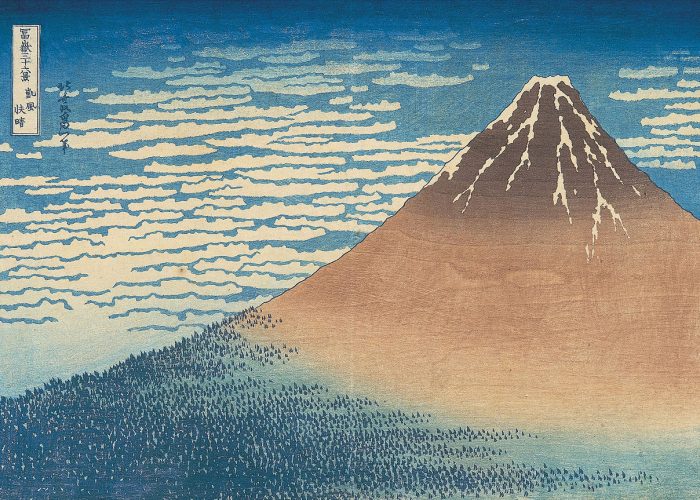
Examples of Hokusai’s Thirty-six Views of Mount Fuji from Wikipedia.org. ‘Fine Wind, Clear Morning’ (Gaifū kaisei 凱風快晴); Thunderstorm Beneath the Summit’ (Sanka hakuu 山下白雨); ‘Tsukuda Island in Musashi Province’ (Buyō Tsukuda-jima 武陽佃島 ); Shore of Tago Bay, Ejiri at Tokaido ( Tōkaidō Ejiri tago-no-uraryakuzu 東海道江尻田子の浦略図) 

Reaching an elevation of 3,776 meters, Mount Fuji is the highest peak in Japan as well as a major cultural symbol. This mountain, which is also a dormant volcano, is so important to Japanese culture that it has been canonized in Shinto mythology. For example, at the base of Mount Fuji is the city of Fujinomiya, where the goddess of the mountain, Konohanasakuya-hima (木花咲耶姫), is housed in a dedicated shrine called Fujisan Hongū Sengen Taisha (富士山本宮浅間大社). Mount Fuji is also a popular motif in classical literature, traditional crafts, and gardens. This mountain is well recognized world-wide from its extensive depictions in traditional woodblock printing, most notably Katsushika Hokusai’s Thirty-six Views of Mount Fuji (Japanese: Fugaku Sanjūrokkei, 富嶽三十六景, published from 1830-1835).

Continue reading