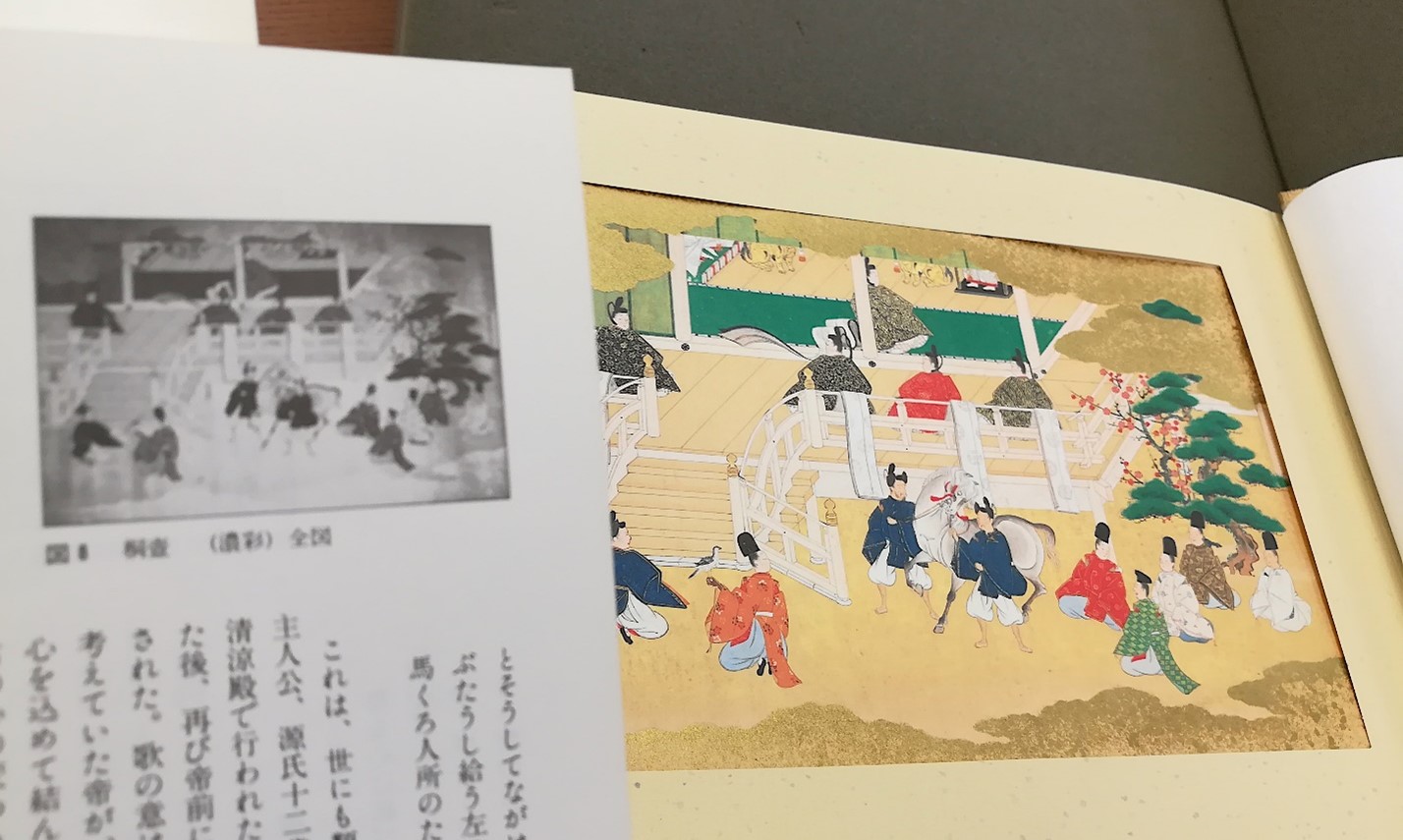
The Ohio State University Libraries are fortunate to have a wide range of fascinating Japan-related special collections. Several available are related to the famous classical Japanese novel, The Tale of Genji. Whether you are an established Genji scholar or a curious student, I would like to highlight some of our materials that can provide an extraordinary visual guide to this classic tale. I have spent time with two works in particular for this essay: they are a set of reproduction prints of the iconic Genji monogatari emaki as well as a separate set referred to as the Genji monogatari gajō. This post will serve as part one in a two-part blog series about these iconic artworks!

“Wood-block reproductions of the Genji picture scrolls,” ND1059.6 G4 W66 1994
The Tale of Genji (源氏物語, Genji monogatari), written by the female court attendant Murasaki Shikibu in the 11th century, is perhaps the most well-known and precious treasure of the Japanese literary tradition. This Heian-era (794-1185) classic is lengthy, character-driven, and full of vivid detail about the look and feel of the imperial Japanese court and aristocratic society. The tale follows the romantic life of Hikaru Genji, the “Shining” Prince, and depicts his many, mostly tragic relationships with women. Genji is the son of the emperor and a lower-ranking court lady known as the Lady Kiritsubo. While he is his father’s favorite child and is considered for imperial succession, he is ultimately removed from the imperial line and made a member of the Genji clan. This protagonist earns the description “hikaru” (光る, shining or radiant) on account of his beautiful appearance and endearing qualities. However, these same infatuating traits set up the bulk of the conflict in the tale, as the myriad women Genji becomes intimate with invariably experience neglect and jealousy or other courtly drama of the polygynous aristocratic setting. The memorable and complex characters of the Shining Prince’s world have appealed to Japanese audiences for centuries, and it’s no surprise that scores of portrayals, homages, and allusions have popped up since the tale was written over a millenium ago.
Continue reading