

Guest post by Jayden Mitchell
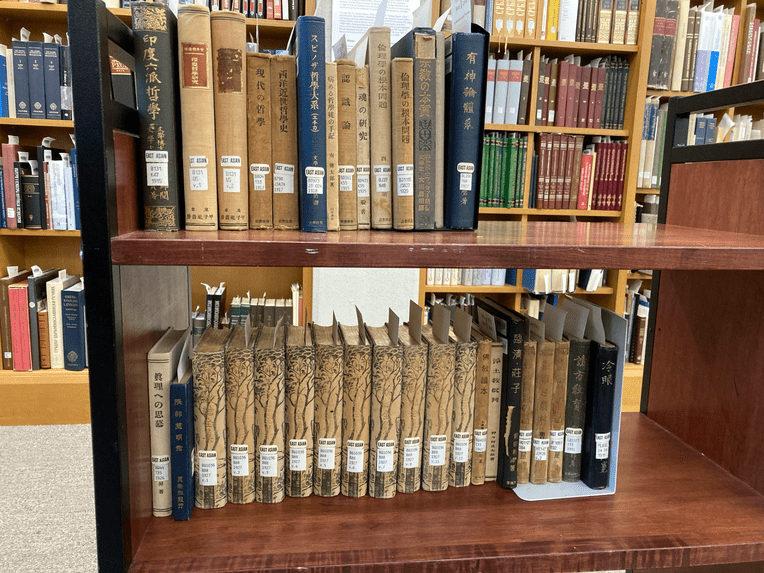
A sampling of some of our materials from this collection
Long-time readers of our blog may remember a post we published in 2015 about the Yurii Kyogoku Collection, a donation of more than 500 Japanese books that once formed part of the library at the Topaz Relocation Center in Utah. Topaz was one of ten camps where more than 120,000 Japanese Americans and Japanese immigrants were forcibly removed from their homes and incarcerated during World War II, making the surviving books important witnesses to a difficult chapter in American history.
The collection was donated to Ohio State by Yurii Kyogoku, who later worked as a Japanese cataloger at Ohio State University Libraries for many years. In our earlier blog post, we shared a list of approximately 60 titles from the donation—a substantial sample, but only a fraction of the collection as a whole.
Prompted by renewed interest in the collection, we recently collaborated with Collections Analyst Karen Ferris to compile a comprehensive inventory. The resulting bibliography identifies 497 volumes and provides the most complete record of the collection assembled to date.
Interestingly, the vast majority of the books—470 volumes—were published before 1945 and are believed to have originated from the personal library of Itsuzō Kyōgoku (1887– ), a Buddhist clergyman who immigrated to the United States in 1919. During his incarceration at the Topaz Relocation Center, Kyōgoku served on the camp’s Adult Education Committee and became the largest contributor to the camp’s Japanese-language library by bringing much of his own collection into the camp. After the war, the books were returned to him, although many had deteriorated beyond repair. The remaining 27 volumes in the donation were published after 1945 and are therefore more likely to have belonged to his daughter, Yurii Kyōgoku, who later served as a Japanese cataloger at Ohio State University Libraries before donating the collection.
The collection is especially strong in Buddhism, philosophy, religion, language, and Japanese culture, while also encompassing a wide range of literary and historical works. Researchers interested in exploring the collection can browse the complete inventory of the 497 volumes.
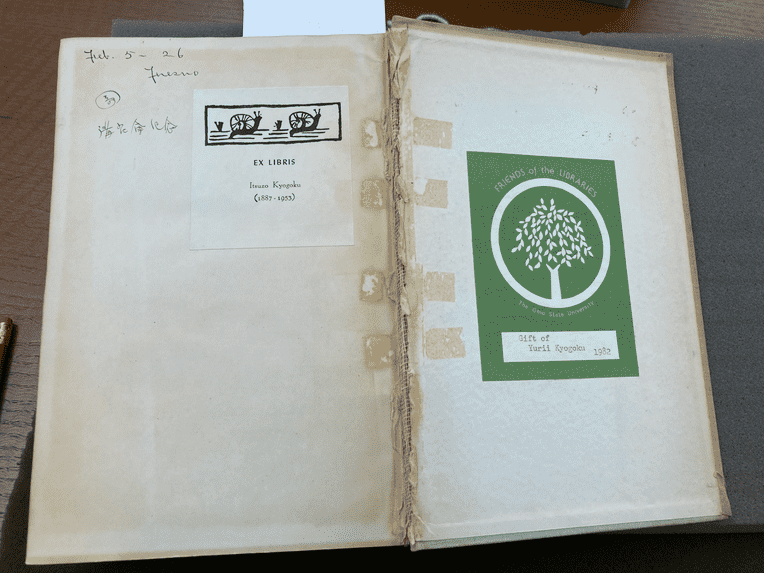
Some items from the collection include bookplates such as these.
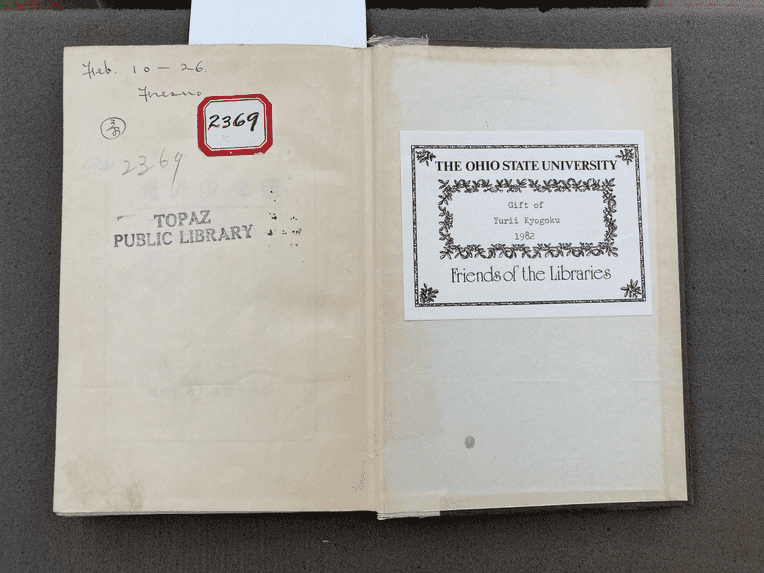
Notice the “Topaz Public Library” stamp on the endpaper here.
