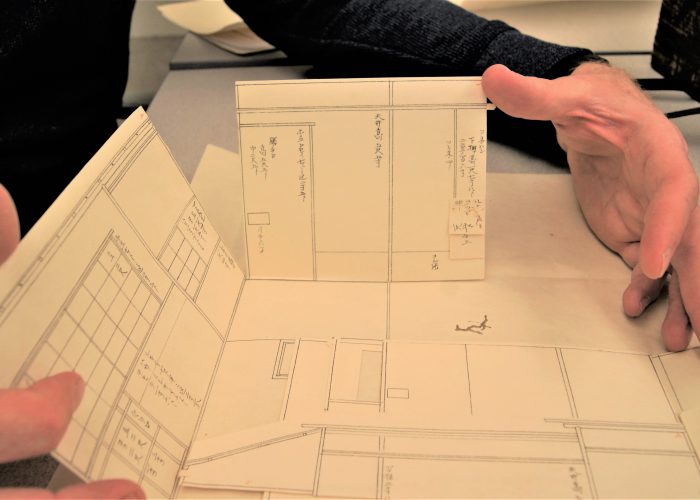
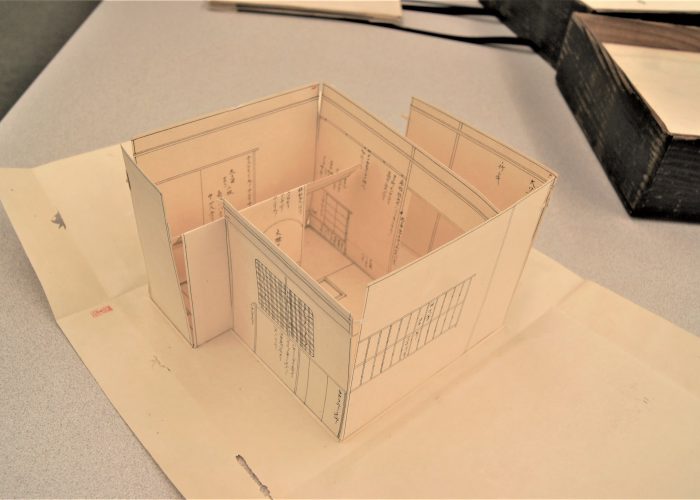
Modern architects are acquainted with the idea of representing their designs in three-dimensions with the help of computer software. CAD (computer-aided design) programs can turn useful two-dimensional plans into practical 3D models as they would be seen in real life. Before the evolution of such digital technologies, artists in Edo Japan (1603-1868) created highly technical pop-up drawings known as okoshi-ezu (起絵図 Okoshi-ezu defined by JAANUS), which modeled 3D buildings through the construction of folding paper and cut-outs. Nobutatsu Tansai (覃斎信立) was one such designer, and he made dozens of examples of this origami-like art form with a particular focus on the spaces of the tea ceremony (茶の湯, cha no yu).
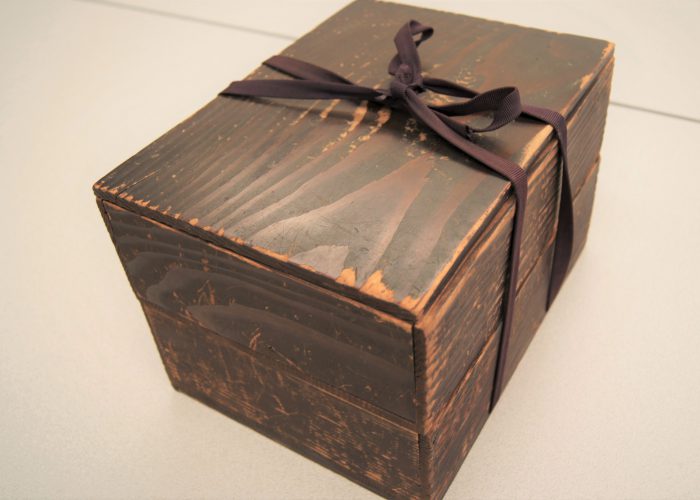
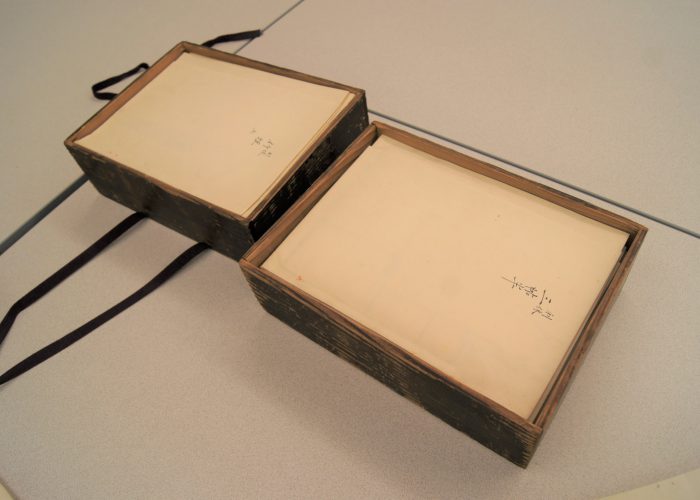
This unique collection of Tansai’s chashitsu (茶室, teahouse, lit. “tea room”) pop-ups is held in the Herman J. Albrecht Library of Historical Architecture, located in OSU’s Thompson Library. Contained in a wooden box, these paper replicas are exceptionally rare, one of only three known collections in the world. The other two are held in Japan’s National Diet Library in Tokyo and in the Peabody Essex Museum in Salem, Massachusetts. Dated between 1820 and 1860 and believed to have been made in Kyoto, this set of okoshi-ezu are comprised of 65 pieces and are in remarkable condition for nearly 200-year-old sheets of folding paper.
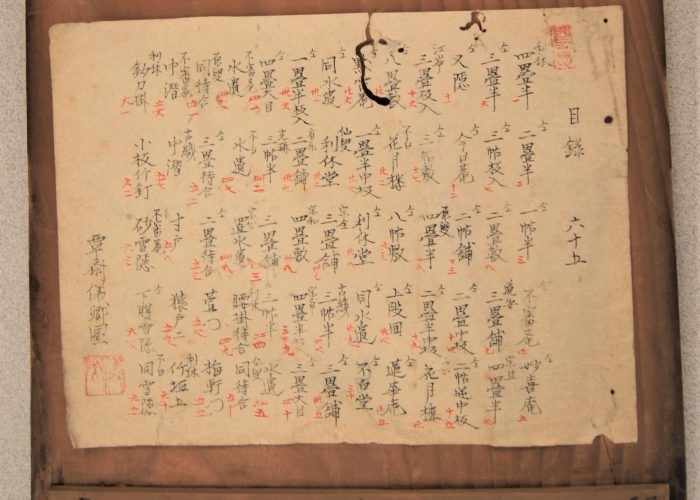
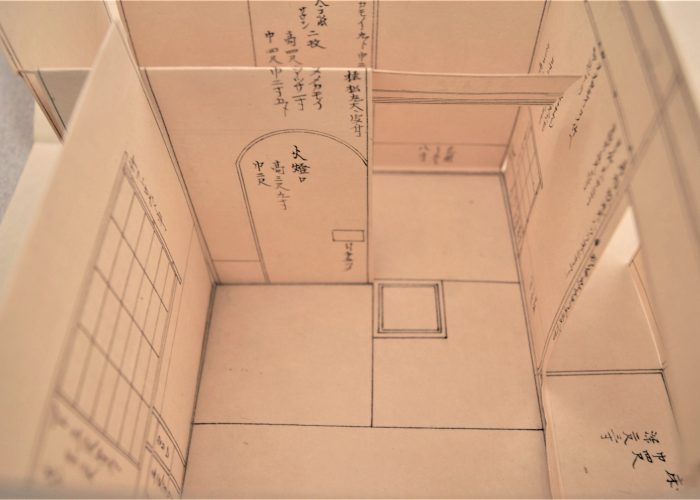
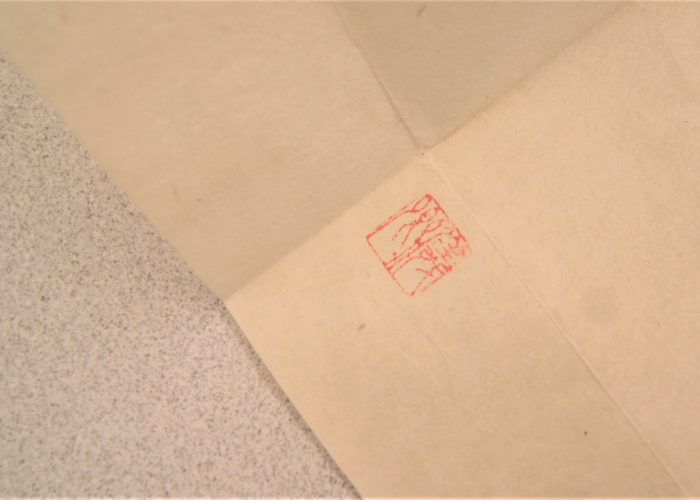
Japanese-style architecture is eminently unique. Tansai masterfully captured the trappings of chashitsu, drawing (and folding) from the designs of famous historical buildings in and around Kyoto like the Fushin-an and Myoki-an teahouses. Each design is numbered and recorded in an accompanying manuscript. Tansai’s precise work demarcates the shape of the teahouses, but he has also faithfully written the materials and exact real dimensions of each structure. The sizes of rooms in Japan are often measured by the number of straw tatami mats that can fit inside, one of the measurements Tansai recorded. This is especially apt for a traditional tea room, an exemplar of Japanese-style rooms (和室, washitsu). Other elements of Japanese architecture represented include shōji (paper-covered sliding doors) and tokonoma (alcoves where hanging calligraphy scrolls or other artistic objects are displayed). The folded drawings are made on washi (和紙), a kind of durable handmade paper crafted in Japan, and the artist has stamped his personal artist’s stamp (判子, hanko) onto each model.
It is hard to overstate the rarity and significance of this special item. Japan’s paper arts, historic architecture, and ceremonial heritage are all well represented here through Tansai’s work. They are tangible icons enveloping intangible tradition; carefully crafted and lovingly preserved, these drawings express qualities that one could say permeate the macro culture of Japan’s old customs and are befitting of the stature of great historical architecture.
To view this rare collection, please contact Dr. Eric Johnson (johnson.4156@osu.edu), Curator of Thompson Special Collections, or Dr. Ann Marie Davis (davis.5257@osu.edu), Japanese Studies Librarian.
To see additional photographs, you can take a look at the Rare Books & Manuscript Library’s Facebook page. Consider following them to see news about other unique pieces.
These folding models belong to the Herman J. Albrecht Library of Historical Architecture, which can be visited in Thompson Library.
Read more about Japanese teahouses with materials from our collections:
Niwa to chashitsu by Tei Nishimura (Tokyo: Kodansha, 1956)
Shiro to chashitsu : Momoyama no kenchiku, kōgei I by Nobuo Tsuji et al. (Tokyo: Kodansha, 1992)
Kyō no chashitsu by Takao Okada (Kyoto: Gakugei Shuppansha, 1989)
External links to scholarly articles about okoshi-ezu:
Okoshi-ezu: Speculations on Thinness by Andrew Barrie, comparing modern Japanese architectural design to the paper pop-ups of the past
Okoshi-ezu by Siân Bowen, written for the Victoria and Albert Museum of Art & Design, UK, the world’s largest museum of applied arts and decorative design