From Woody's Couch

Our Playbook on OSU History

Page 8 of 105

Tour of Regional Campuses: Lima

Lima Campus, 1976

Fourth up in our tour of Ohio State’s regional campuses is OSU Lima. Located in western Ohio, near the almost 200 acres of the Tecumseh Natural Area, this fourth addition to the OSU regional campus family was approved by the Board of Trustees in early April of 1960.

When it opened, Lima offered classes primarily to high school students and operated out of Lima Senior High School, mainly as a night school. It opened for its first Autumn Quarter on September 26, 1960. The first building on the campus was completed in 1966 and included offices, classrooms and a library. The second building followed shortly after, opening in 1968. This building included more offices, a workroom and a cafeteria. By its 25th anniversary in 1985, OSU Lima had seen almost 40,000 students.

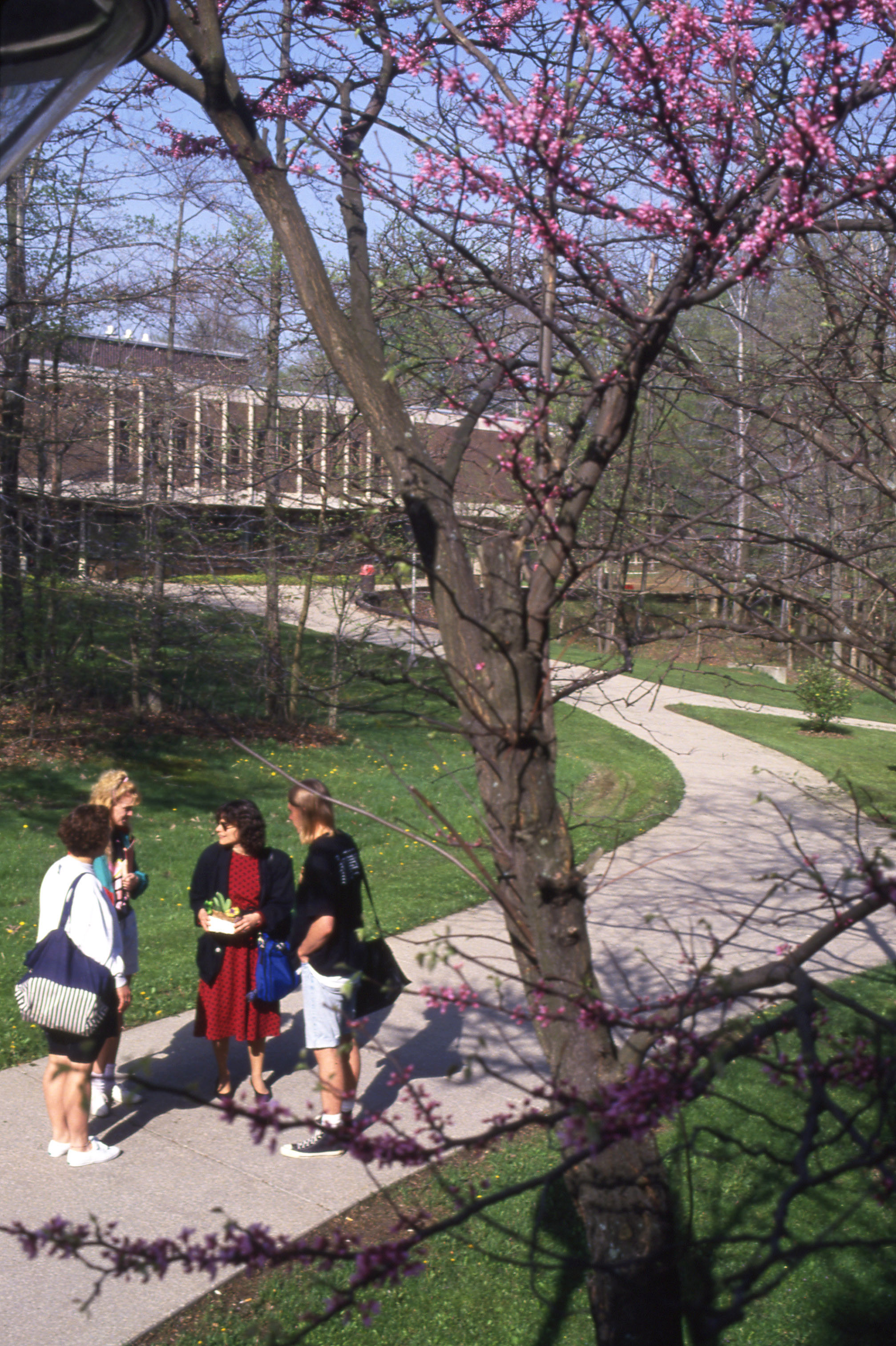
Students on Lima campus, 1980s

Today, OSU Lima offers 12 Bachelor’s programs in subjects from biology to theatre and provides plenty of general education requirements to students who plant to go on to the Columbus campus to finish their degree.

Fun facts: In April of 1987, the Lima Campus hosted the Great Black Swamp Dulcimer Festival, an event wherein dulcimer musicians would gather to make music and socialize with one another. According to a 1987 Lantern article, some professors would take a small private airplane owned by Ohio State to commute from Columbus to Lima. The service started in 1961 and included a 25-minute flight.

Written by Hannah Nelson.

Tour of Regional Campuses: Mansfield

Mansfield Branch, 1967

Third in our series on the regional campuses of Ohio State is OSU Mansfield, the third branch campus to be established after the first two, Marion and Newark.

Approved in March of 1958, the Mansfield branch soon after began to offer classes in a local high school to allow students to complete their first two years of college coursework. This first year, Mansfield opened with a total of 145 students. This number more than doubled by 1963, when they had 381 students. Soon after, Mansfield opened its first building, Ovalwood Hall, in 1966.

Students on Mansfield Campus, 1993

Today, Mansfield offers ten different Bachelor’s programs along with plenty of general education requirements that students can complete before transitioning to the Columbus campus.

Fun facts: in 1965, Mansfield began to construct a geodetic baseline device that would provide the most precise distance measurements in North America upon its completion. A nationally-recognized Frisbee team came to perform on campus on May 8, 1978, during the campus’s May Week activities. In 1989, Mansfield added a new WOSU station, becoming the first place to add a new station for WOSU in 40 years. This station played classical music 24/7 and was approved after the FCC relaxed its regulations regarding overcrowding on public broadcasting frequencies in 1985.

Written by Hannah Nelson.

Tour of Regional Campuses: Newark

Newark Branch, undated

Continuing our series on the regional campuses, we now head west to The Ohio State University at Newark. Newark was established alongside Marion in 1957, and it operated in much the same manner in its first decade. The campus’s first classes occurred at Newark High School in the evenings and consisted of 80 students and 8 faculty members. Classes continued to take place in Newark High School until early January of 1969, when its first building, Founders’ Hall, was dedicated.

The campus remained primarily a commuter campus until 1984, when Newark approved the construction of two residence halls which would allow students of the branch to live on campus. Alongside this construction project, while trying to clear new land for an accompanying parking lot, the construction company uncovered several archaeological sites dating back to the Middle Woodland period—about 1,400-2,000 years ago. In 2006, the Newark Earthworks Center was established to conduct research and increase the understanding of “American Indian cultures that produced the monumental Midwestern earthen architecture in order to advance understanding of the cultural and scientific achievements of American Indians to the world.”[1]

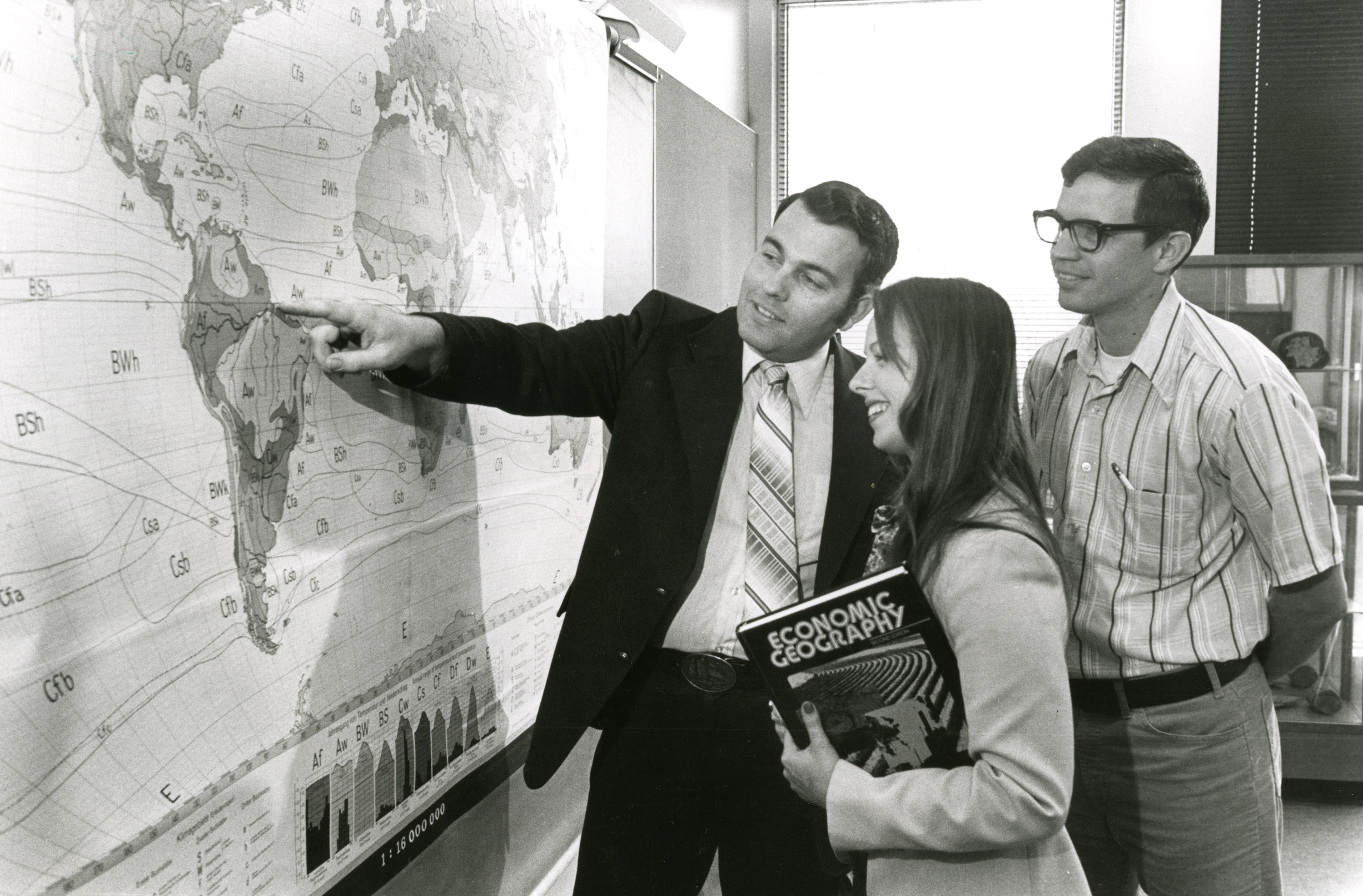
Geography Class at Newark,1979

Nowadays, the Newark campus has 11 buildings, which include two residence halls and a recreation center, and it offers six complete Bachelor’s degree programs as well as two Master’s programs in Social Work and Teaching and Learning.

Fun fact: in May 1990, Newark hosted “Clown Town ‘90” which was a three-day convention targeted toward both beginning and experienced clowns that offered seminars and instructional workshops on a range of topics from make-up techniques to balloon making.

Written by Hannah Nelson.

[1] Newark Earthworks Center: https://newark.osu.edu/initiatives/newark-earthworks-center.html

« Older posts Newer posts »