From Woody's Couch

Our Playbook on OSU History

Category: Women (page 1 of 8)

Go Bucks! The early days of athletics at Ohio State

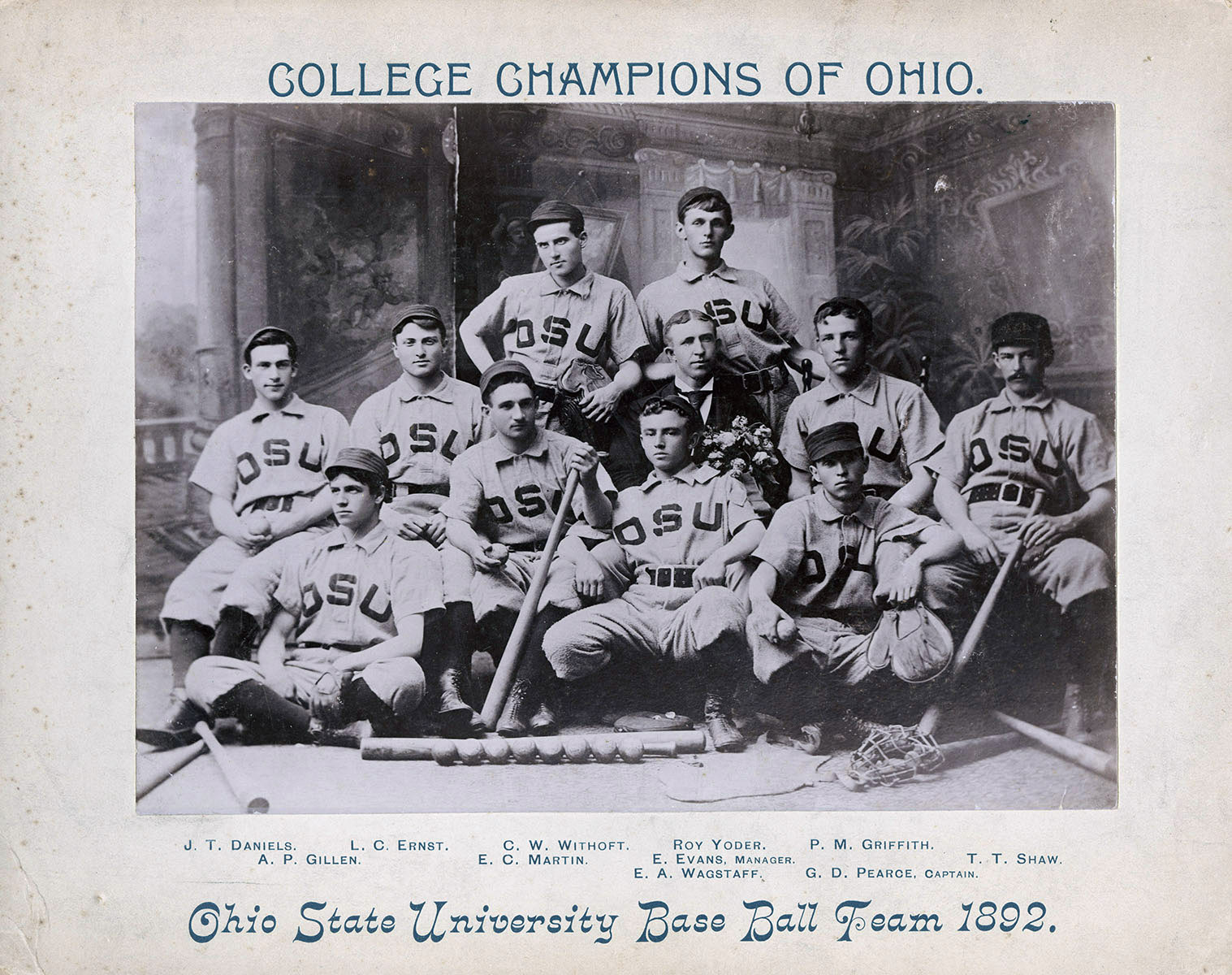
Sports were a part of campus life as early as 1879.  In 1881, The Lantern urged the students to create a baseball team and a track team that could play with any college.  The Athletic Association was created that same year and the first Field Day was held in the spring.  Baseball was the premier sport in the early years.

Baseball Team, 1892

However, by 1890 the university catalog stated: “There are also clubs in archery, lawn-tennis, base ball, and  foot-ball who meet teams from other colleges at proper times.”

Football game on field

Football action, 1892

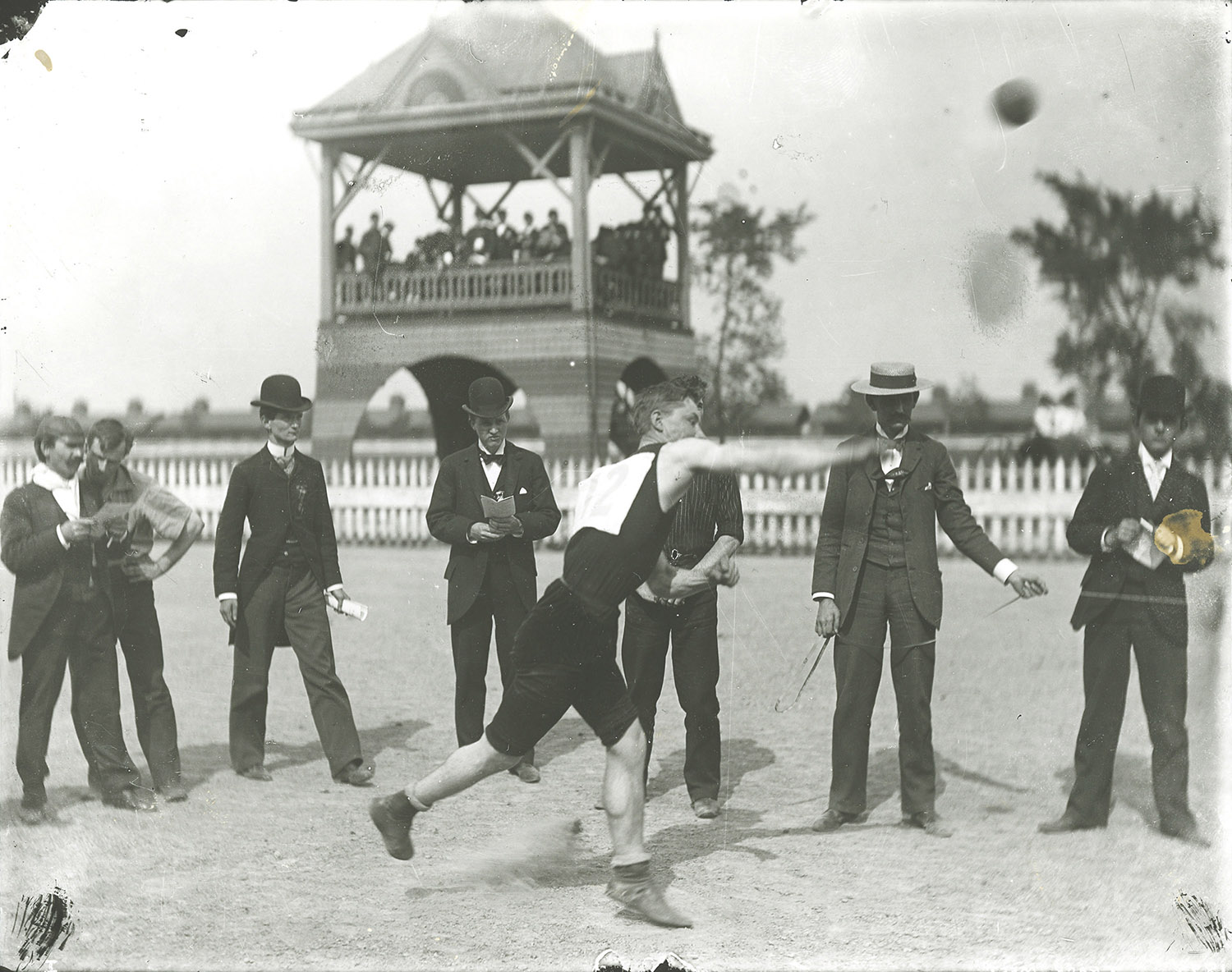
Man throwing shot put at track meet, 1895

Man throwing shot put at track meet, 1895

As for women’s sports, their earliest competitive team was in basketball even before the turn of the century.  Women were participating in city-wide basketball competitions by February 1899.

Women's basketball group, 1905

Women’s basketball group, 1905

The Built Fem-vironment: Women’s History on Campus in Four Architectural Structures, Part 2: Oxley Hall

Written by Sarah Stouffer-Lerch

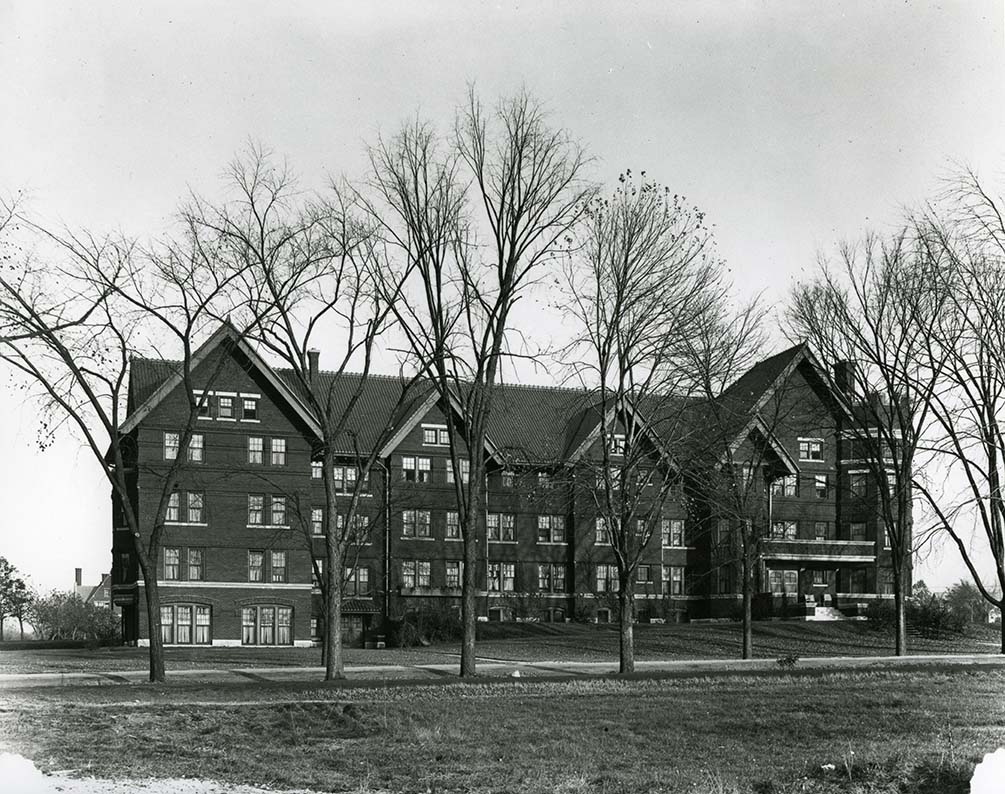
Exterior of Oxley Hall, 1910

In 1908—28 years after Alice Townshend became the first woman to graduate from the university—the first women’s dorm, Oxley Hall, was built. Architect Florence Kenyon Hayden Rector, who attended the University from 1901-1903 and studied under University Architect Joseph Bradford, was hired to design the dorm with his strong recommendation. Despite her considerable expertise, the Board of Trustees demanded Kenyon Hayden work with Wilbur T. Mills: the Board thought a man should also be involved with the project. According to the History of Oxley Hall by Martha Reinhold, Kenyon Hayden ended up doing most of the architectural work herself since neither she nor Mills could get along.

Oxley Hall, 1948

Oxley Hall housed 60 women despite the 600 women enrolled in courses at the time. As one monthly newsletter from October of 1909 put it: “[W]e are desperately in need of more Oxley Halls.”

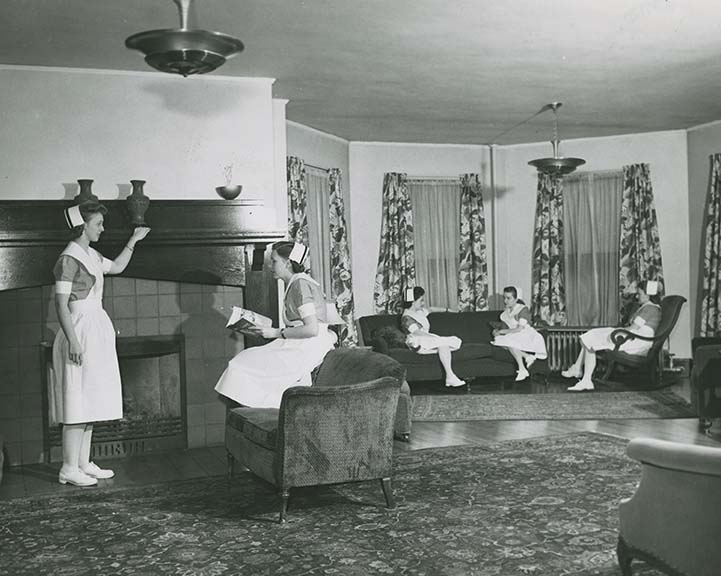
Oxley Hall—also referred to as the Women’s Dormitory, the Girls’ Dormitory, the Woman’s Building, and the Ladies Dorm—became both a social hang-out and rallying point for university women. Oxley Hall housed the Woman’s Council, an organization whose main goal was to “bring girls together.” The first meeting of the Woman’s Council, in fact, was held primarily to discuss fixing up the Gab Room. Each woman was to donate 25 cents each year for that purpose. In addition to planning events like the Co-Ed prom, the Council engaged in activities to ensure that “out of town” women and women who were new to the University felt welcomed.

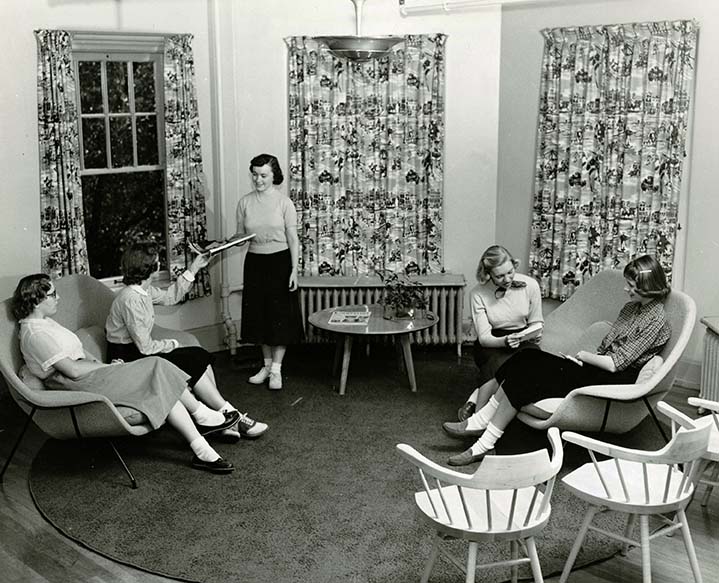
Women students chatting in Oxley Hall, 1953

Unfortunately, this hospitality did not extend to all women. Oxley Hall, like all dormitories on campus at the time, was not open to students of color. The construction of Mack Hall, the second women’s dorm, occurred in 1922. This coincided with a growing number of students of color entering the university, who pushed to be allowed to live in the dorms. Even still, it wouldn’t be until after WWII that dorms became integrated. Oxley Hall last housed students in 1966—a year before former president Novice G. Fawcett’s administration sold the “below standard” building to the University Research Foundation.

Editor’s note: Florence Kenyon Hayden Rector (maiden Kenyon Hayden) designed Oxley Hall after 27 days of solitary work. She went on to be a renowned architect in Ohio, as well as being the first woman with an architecture license in the state. (O. W.)

The Built Fem-vironment: Women’s History on Campus in Four Architectural Structures, Part 1: The Gab Room

Written by Sarah Stouffer-Lerch

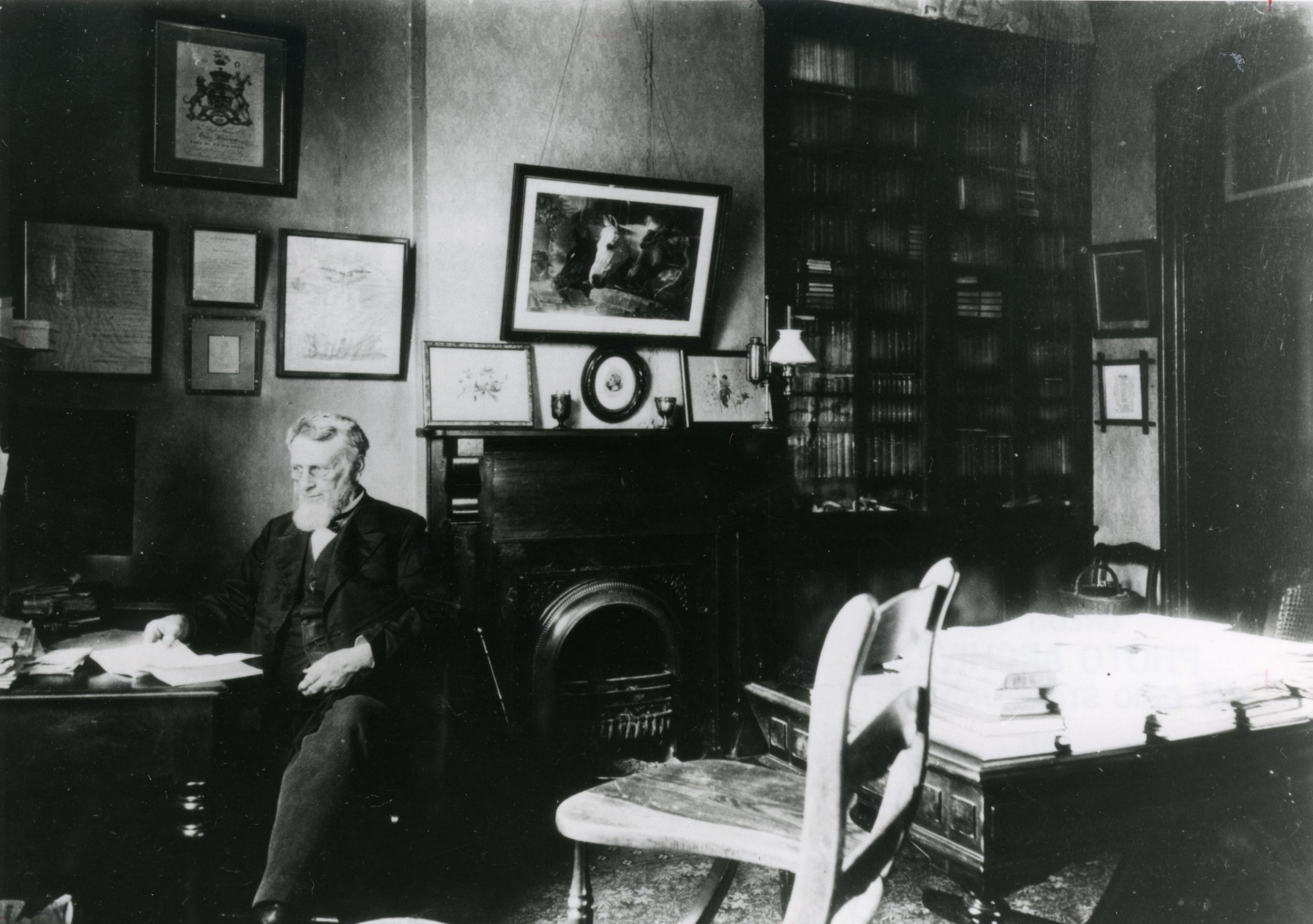
A black and white photograph of Norton Townshend sitting at his desk in 1883. The office features two desks, a fireplace, a large bookshelf, and a many framed images.

Norton Townshend at his desk, 1883

The first women attending Ohio State University did not have guaranteed student housing or a centralized meeting place—luxuries that were often afforded to their male counterparts. Instead, they would need to find the rare rooming house that would grant them boarding or, for those with family nearby, live at home. For those who were able to find lodging, the ability to socialize with other women was limited both because of the lack of a women’s dorm. In addition, Neil Farm, the property on which Ohio State University originally existed, found itself isolated from the main parts of Columbus at the time.

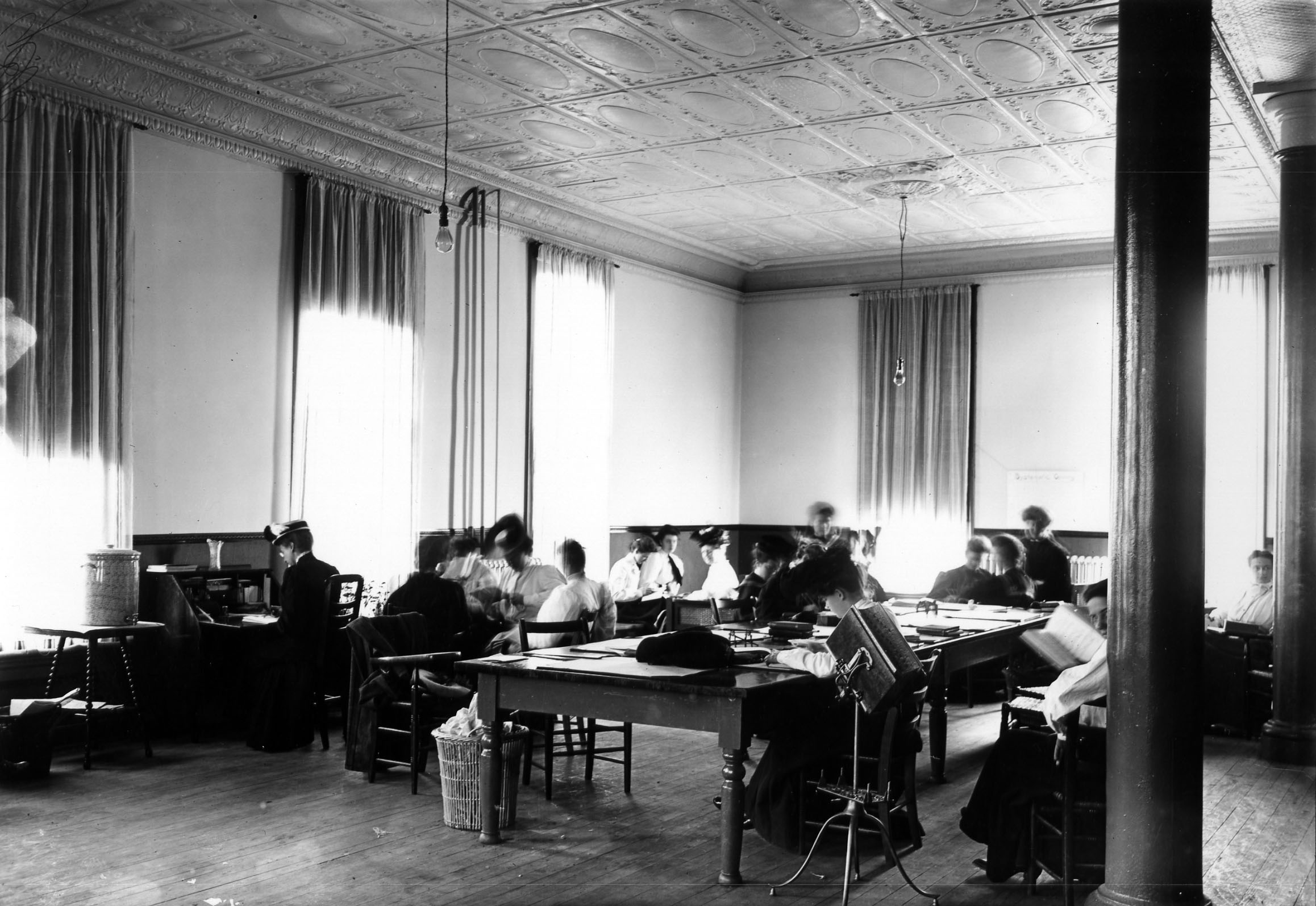
University Hall Gab Room, 1895

Early faculty member Norton Townshend—father of Harriet and Alice, the first two women students at Ohio State University—decided to address the unmet need for a space for women on campus. His office became the first iteration of what became known as the Gab Room, a derogatory name which labeled a designated area for the socialization of women students. Despite the name, University women saw the office as much more than just a physical space. Although the location changed several times as Ohio State grew, the Gab Room remained constant as both a social hang-out spot and, in some regards, a war room for women students to advocate for their equality on campus.

A prime example of advocation in the Gab Room occurred in 1882 when the university’s forty-five women students congregated to sign a petition to the Board of Trustees. They wanted a women’s dormitory, supplying proper room and board for the growing body of women students. Although then-University president Walter Quincy Scott supported the endeavor, the request was denied.
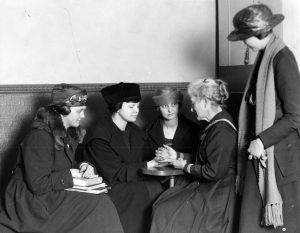
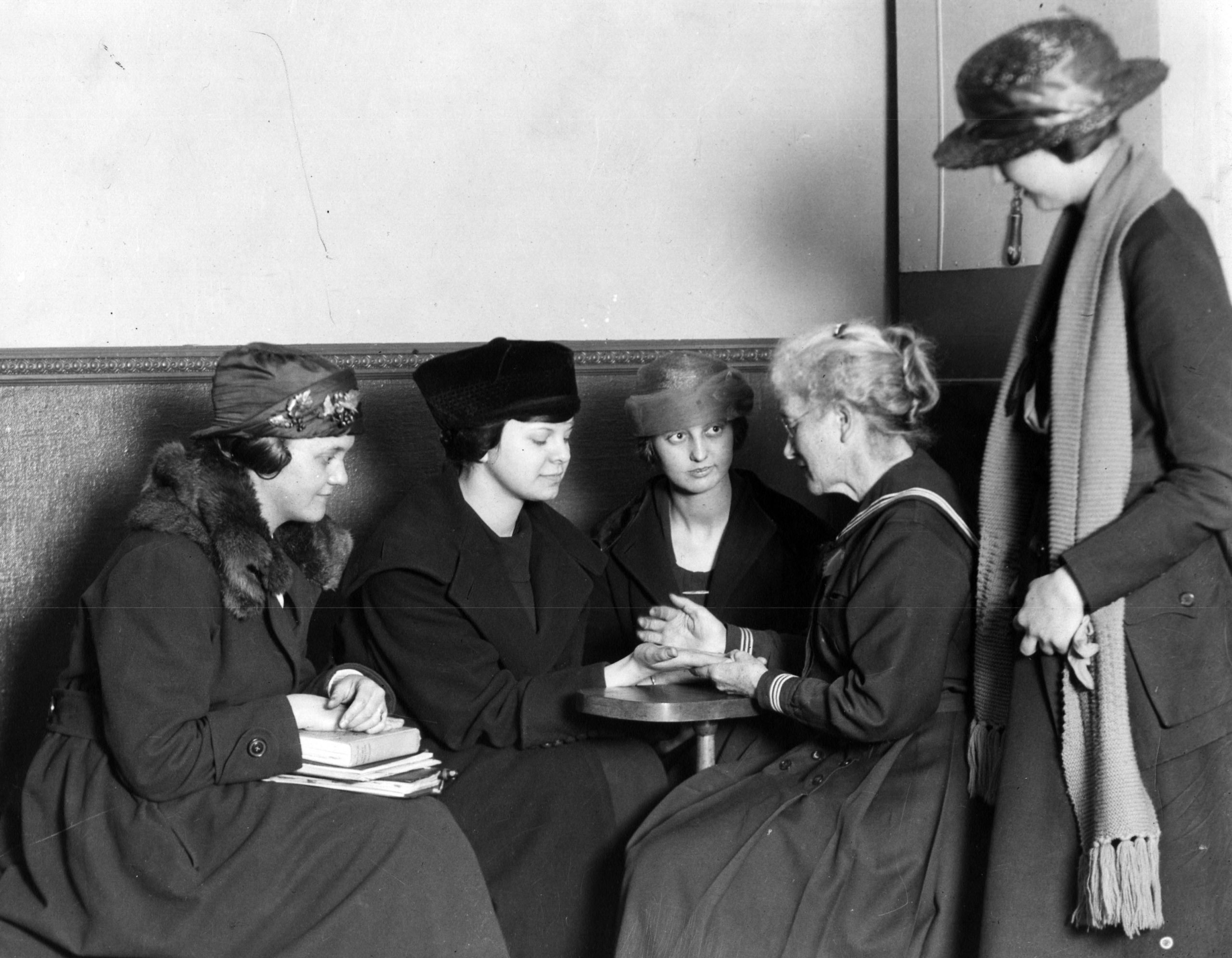
University Hall Gab Room with Mary Brown, 1915

In 1890, the location of the Gab Room moved to Hayes Hall. No University funds were given in order to furnish the room, so the women did their own fundraising. When a water pipe burst in 1892, the women of the Gab Room once again petitioned the university—their pleas were heard and he water issue was quickly resolved.

One of the last major functions the Gab Room served was as a rallying point for the Women’s Self-Governing Association (WGSA). In the 1920s, the WGSA found itself fighting for a Women’s Union Building. The WGSA members would invite legislators to the Gab Room, now located on the second floor of University Hall. Before the legislators arrived, the spot was made to look even shabbier than its normal appearance. This campaign continued until 1927 when Pomerene Hall, the university’s Center of Women’s Activities, was built. Ostensibly, Pomerene Hall made the Gab Room redundant, ultimately finding itself cleared for other purposes in the early 1930s.
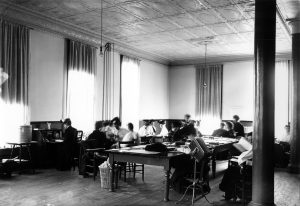
The Gab Room, 1907

Older posts