From Woody's Couch

Our Playbook on OSU History

Page 7 of 105

Dances and data: computer use on campus

Interest in computers on campus has been quite notable ever since Ohio State acquired its first computer in 1951.
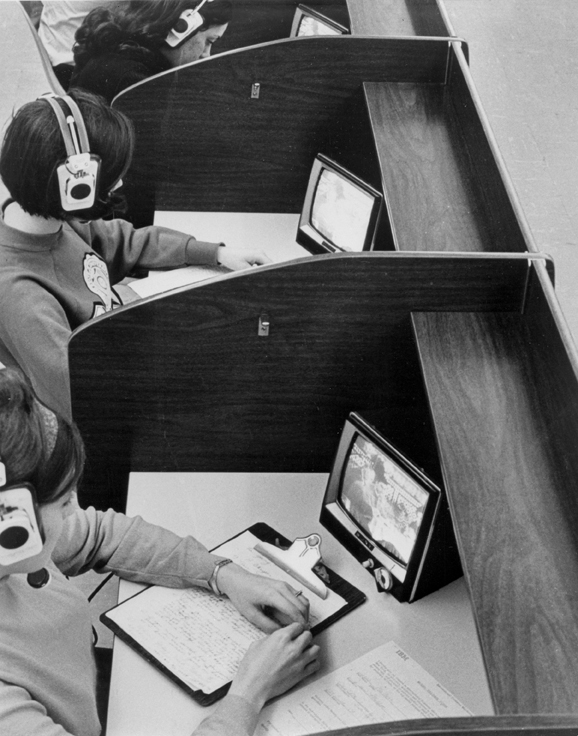
Computer instruction system terminals, c. 1960s

The professors at OSU have been involved in technological research and development from the earliest days of computers on campus. In 1959, an electrical engineering professor used a computer to test his newly-invented tracking system designed to vastly improve the accuracy of anti-aircraft missiles. Almost a decade later in 1967, OSU developers created a spelling-correction program that could use the computer to read over a written work and make corrections on misspelled words. The following year, Charles Csuri, a professor of fine arts, won first prize at the Fourth International Experimental Film Competition for his hummingbird computer animated film. He would later go on to become known as one of the fathers of computer animation.

Interest in computer science, however, did not exist solely among the professors. In November 1965, the University published a report on the growing popularity of computer science among the students. The year before, 1,130 students were enrolled in computer classes, 280 in non-credit seminars, and there were 231 theses and dissertations on the topic of computers. This interest led to the creation of the division of Computer and Information Science (CIS) under the College of Engineering in September 1966. OSU granted its first degrees in CIS at the end of winter quarter in 1968, and by June of that year, Computer and Information Science became its own department.
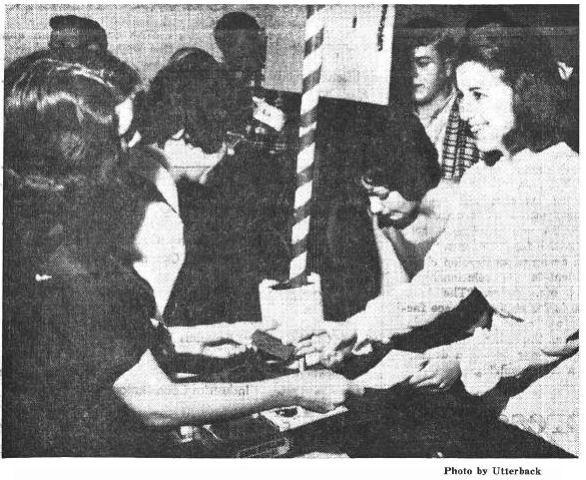
Students at the computer dance, 1964

Of course, while students were certainly interested in computers from an academic perspective, they also used them for more recreational purposes. In October 1964, the campus YMCA hosted a computer dance where the students were matched up with one another by computer after filling out questionnaires. This dance ran successfully for a few years, but after the novelty wore off, it flopped hard in April of 1967. OSU wouldn’t try matching students up with computers again until 1977, when an independent, student-run company called Computer Date Match came to campus and charged students $3.50 to be matched up with a list of other students after taking a survey.

Along with dating games, students also found another way to goof around with computers. In the 1970s, each student had a certain amount of time allotted for computer use to complete assignments. Many of them, however, would use they allotted time to play games and would then have to pay for more time to finish their schoolwork.

Computers have been contributing to culture at Ohio State for far longer than most of its students have been alive, and it is safe to imagine that they will continue to do so far into the foreseeable future.

Written by Hannah Nelson.

Let’s get wired up: computers come to campus

OSU’s history with computers began in 1951, when the university acquired an IBM ‘Brain.’ This 2,400-pound computer, intended to teach students the function of machines, could read, interpret, accumulate, and total figures.

Installation of IBM ‘Brain,’ 1951

As the times evolved, so too did the type of machines OSU acquired. One year after the acquisition of the ‘Brain,’ the Department of Electrical Engineering purchased the Reeves Electronic Analog Computer, the first all-purpose electronic computer made for general lab use. Then in 1956, OSU installed the IBM Type 650, the first mass-produced computer, which would bring advanced computing technology to central Ohio. The IBM type 650 gave researchers in central Ohio an option to do research with a computer nearby instead of needing to travel to somewhere like Wright Patterson Air Force Base in Dayton.

The next major development in computing technology arrived in 1965, when Ohio State acquired a GE 636 computer. This system would allow other Ohio colleges to use it by dialing in over long-distance phone lines, and it also came with GE Datanet-760 display terminals—television screens that make visible the inner workings of the computer. Professors used these screens to run problems on the computer while showing students how the computers solved them in order to further enhance their knowledge of how computers solve problems.

The IBM 650 in use, 1956

The quick advancement of computer technology brings with it a diversification of the ways in which the University uses it. In 1956, computers were first used to compute GPAs; then in 1964, diplomas were no longer hand-signed by the president and were instead signed by computer. About a year later, Ohio State implemented a new computerized elevator system that took the place of the elevator boy and was also able to measure weight. The same year, OSU began to develop a network that would allow the university to connect to eleven other Midwestern schools including the University of Chicago, the University of Minnesota and the University of Michigan.

In June 1980, the Office of Student Financial Aid became the first administrative department to make consistent use of online computer programs to speed up processes and allow them to help students more effectively. Five years later, the Union opened a computer lab for student use and found that most students were primarily interested in using the new word processors to speed up the process of writing their papers.

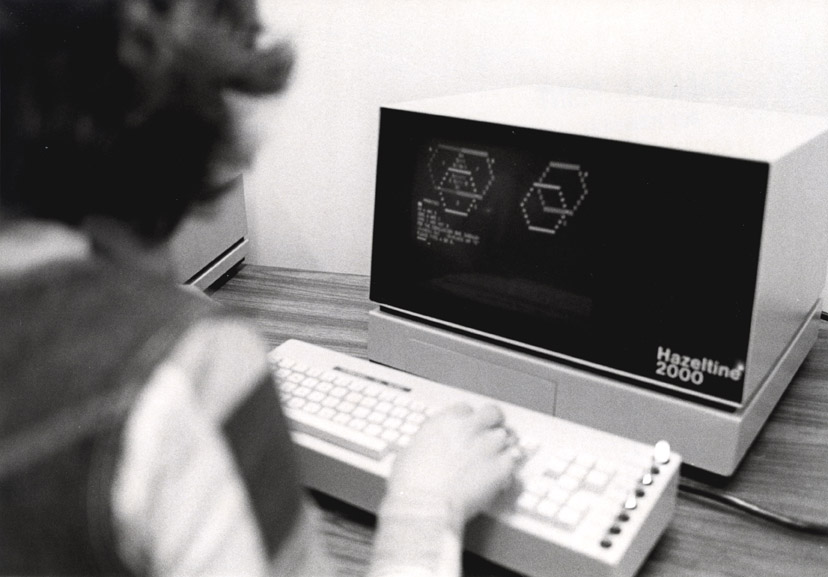
Student using computer, 1975

In 1986 came the implementation of SONNET (System of Neighboring Networks), a campus-wide system that linked all OSU computers to the same network. This network facilitated e-mail communication between departments and colleges and served to integrate different types of computers into one cohesive system. The major hubs for SONNET were located in the telecommunications Network Center, Baker Systems Engineering, Kottman Hall, the Fawcett Center, Bevis Hall, and the Kinnear Road Center. This system revolutionized communication across campus with its state-of-the-art copper wiring and fiber optics network, and it helped everyone on campus begin to rely on computers as a new mode of communication.

Written by Hannah Nelson.

Tour of Regional Campuses: ATI at Wooster

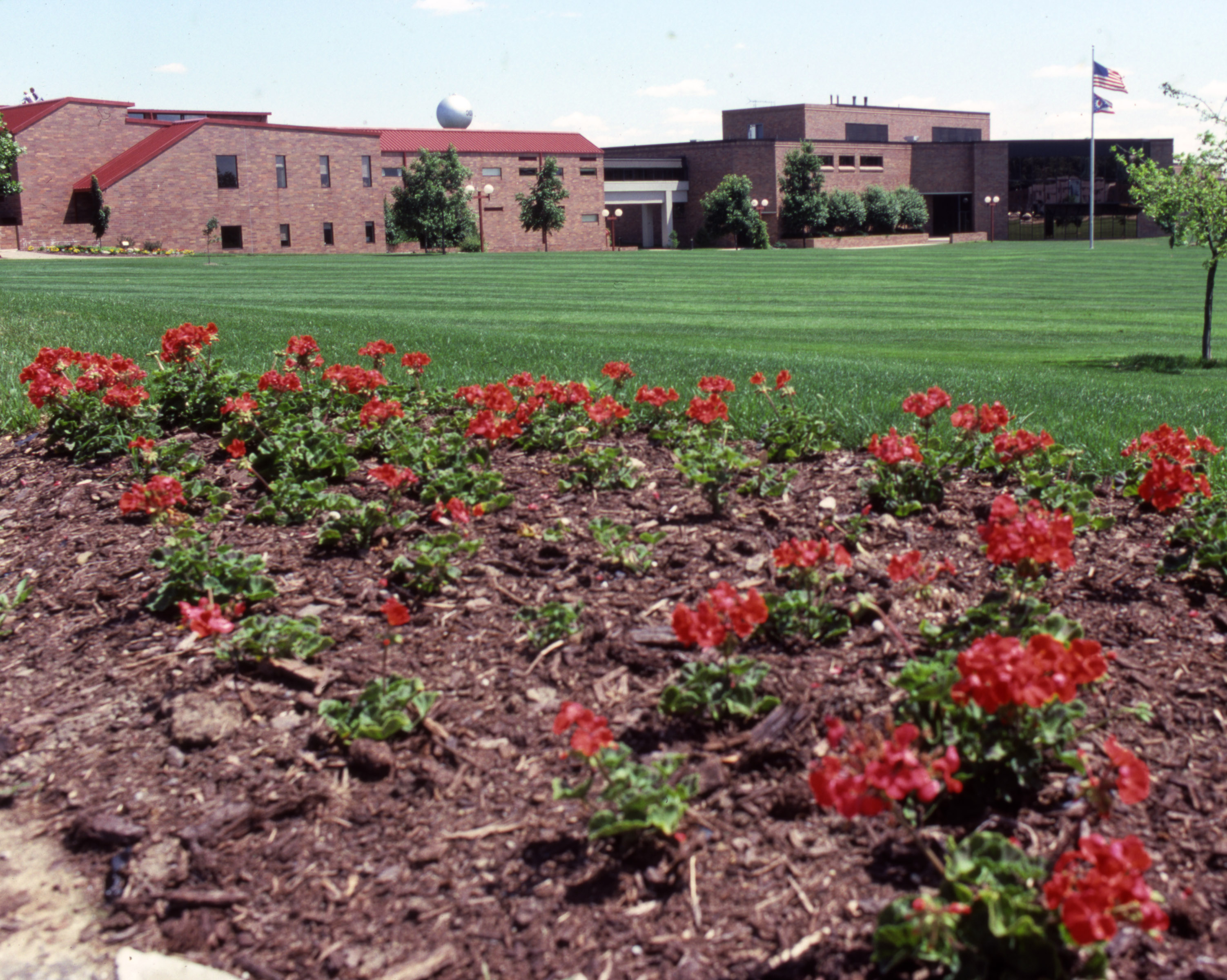
ATI Wooster, 1983

The final installment of our regional campus series is this brief look at the Ohio State Agricultural Technical Institute at Wooster, better known as OSU ATI.

OSU ATI, established in 1969, was the last of the regional campuses and the most specific with regard to its mission. It was designed to be the unit of the College of Food, Agricultural, and Environmental Sciences (CFAES) that would grant Associate degrees and provide comprehensive agricultural education through a statewide mandate. The first classes took place in 1972 with 197 students enrolled in the campus’s first autumn quarter.

Until 1996 and the establishment of Associate of Science degrees, OSU ATI only offered Associate of Applied Science degrees, designed to prepare the student to enter an agricultural trade immediately after graduation. This new degree allowed students at ATI to transition directly to CFAES in Columbus.

Students on a tractor at ATI, 1979

Today, OSU ATI continues to offer Associate of Science and Associate of Applied Science degrees and certificates to students looking to pursue an agriculturally-minded career.

Fun facts: in 1985, OSU ATI had the only program facility for bee teaching and applied research in the United States, and Ohio at the time had around 10,000 beekeepers, more than any other state. In this same vein, it also had the only program in the United States that granted degrees in beekeeping. In 1993, ATI sent more than 40 students down to Florida to aid victims of the recent Hurricane Andrew. Students earned 3 credit hours for the trip and while there, lodged in tents and dormitories provided by People Helping People.

Written by Hannah Nelson.

« Older posts Newer posts »