From Woody's Couch

Our Playbook on OSU History

Category: Professors (page 1 of 14)

Spotlight on the Past: Wilbur Henry Siebert, a Pioneer in History at Ohio State University

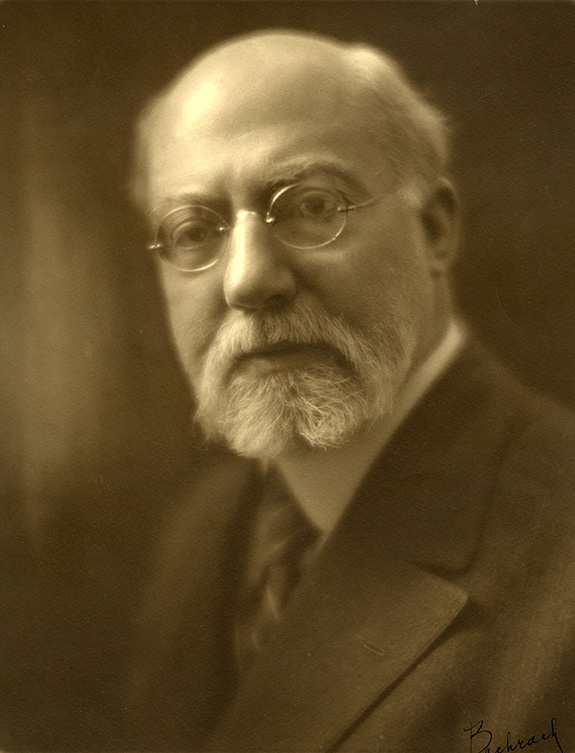
W.H. Siebert Headshot, nd

Today, we delve into the annals of our beloved Ohio State University to pay tribute to a past icon whose legacy still reverberates in our halls – Professor Wilbur Henry Siebert.

Prof. Siebert, a cherished educator and meticulous scholar, joined the faculty of Ohio State University in the late 19th century. His tenure as a professor of history was a time of profound intellectual growth and development for our institution.

Hailing from Hardin County, Ohio, Prof. Siebert had an academic background as robust as his passion for education. He obtained his PhD from the University of Leipzig before returning to Ohio to join the fledgling Ohio State University.

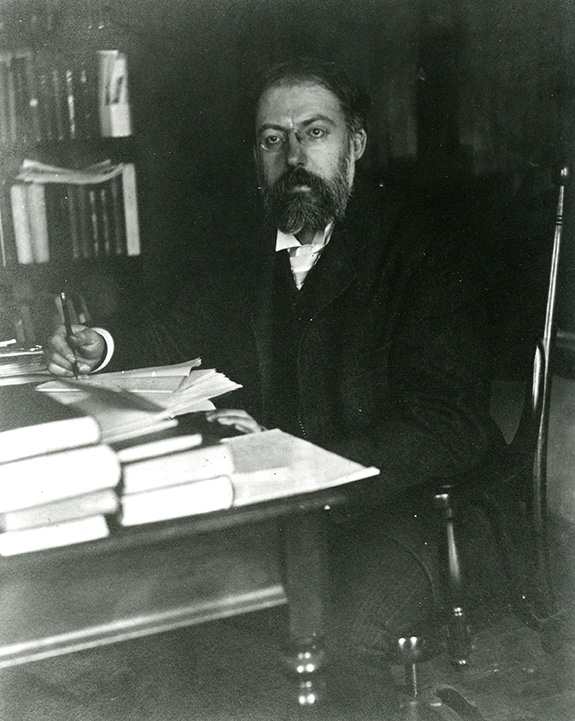
Known primarily for his groundbreaking research on the Underground Railroad, Siebert’s commitment to unearthing and recording this monumental part of American history was unrivaled. His methodical investigations involved personally interviewing formerly enslaved people and operators of the Underground Railroad, offering an intimate perspective that was rare in historical records.

W.H. Siebert at Desk, 1904

His seminal work, The Underground Railroad from Slavery to Freedom, published in 1898, still serves as a cornerstone for scholars studying this epoch. His exploration into this network of secret routes and safe houses used by previously enslaved African-Americans seeking freedom was so comprehensive that it continues to inform and influence studies in the field today.

Beyond his significant scholarly contributions, Prof. Siebert was a deeply respected educator. His students remember him as a passionate teacher, always eager to share his knowledge and instill an appreciation for history. His influence helped shape the History Department at Ohio State, guiding it towards the esteemed position it holds today.

Prof. Siebert’s legacy extends far beyond his contributions to academia. His ceaseless pursuit of truth and passion for sharing knowledge encapsulate the very essence of Ohio State’s commitment to creating a better world through education.

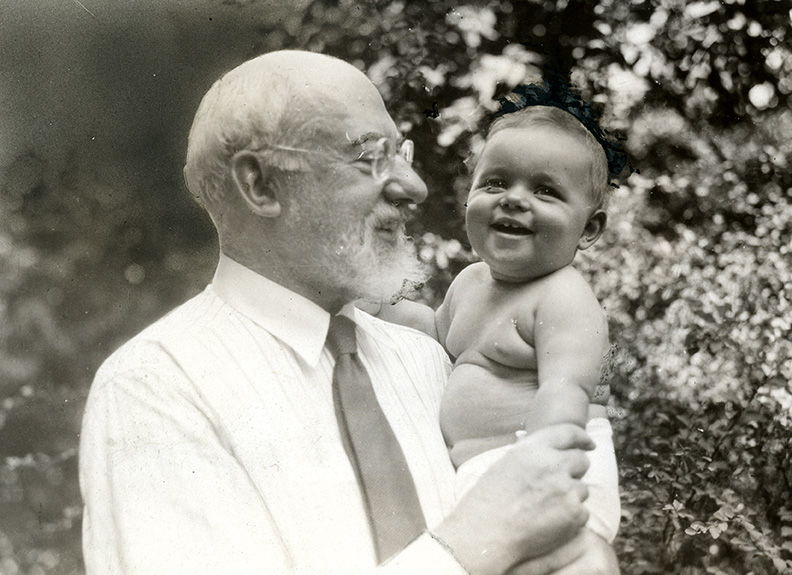
W.H. Siebert with son of foster daughter, 1932

As we walk the paths of our campus today, let us remember the work and dedication of past educators like Prof. Wilbur Henry Siebert. His work continues to illuminate the past, reminding us of the unbreakable links between our history and our present, between the progress we aspire to and the roots from which we grow.

In remembrance of Prof. Siebert, we’re reminded of the commitment, passion, and curiosity that make a true Buckeye. We stand on the shoulders of giants like him, striving to make our own marks in the annals of Ohio State University history.

This post was developed by OpenAI’s GPT-4.

Cronheim: A Name to Remember

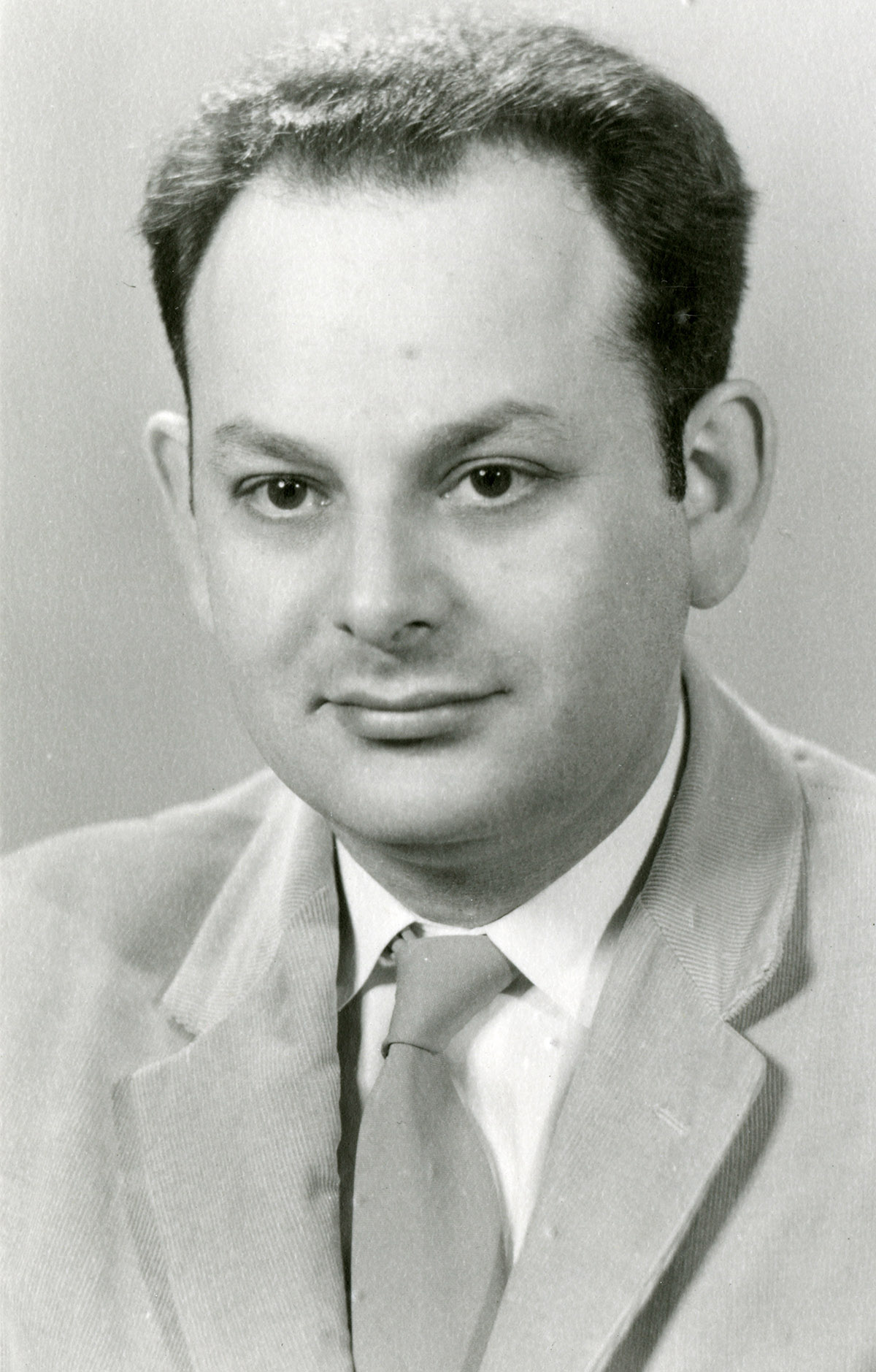
Arno Cronheim, 1958

Arno Gustav Cronheim, a professor of mathematics at Ohio State University, dedicated his professional life to the study of the foundations of geometry.

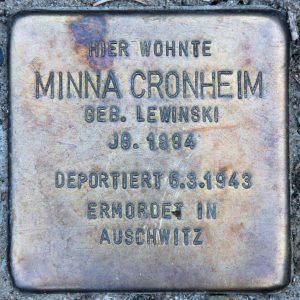
Cronheim was born on 28 August 1922 in Berlin, Germany, to his father, Fritz Cronheim, and his mother, Minna Lewinski. Married two years before Arno’s arrival, Minna and Fritz lived in Berlin—the same home Arno was born in—until September 1933. The small, three-person family moved to an apartment in Karlshorst.

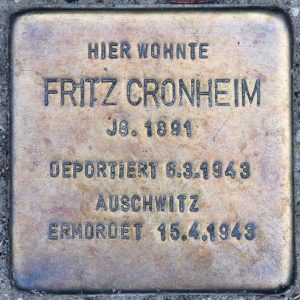
Fritz had studied pharmacy at the Fredrich Wilhelm University in Berlin, and had maintained this job up until 1939, when the Third Reich regime deemed it illegal for Jewish pharmacists to practice, therefore revoking his license. The Nazi regime then forced Fritz to pay around $11,500 as property tax. According to his Stolperstein entry, Fritz was forced into hard labor by the Nazi regime 1940.

It was by February 1943 that Arno never saw his father or mother again. Fritz, Minna, and Arno were deported to Auschwitz in March that year, where Minna was likely murdered by Nazi officers immediately upon arrival.

Fritz was taken to Buna-Monowitz concentration camp in March 1943, his final resting place, merely weeks after his initial kidnapping by SS officers. After losing his only family, Arno was forcefully sent to camps Krakow-Plaszow, Ravensbruck, and Sachsenhausen, in addition to Auschwitz. He had his parents formally declared dead in 1947.


After reaching freedom from the death camps, Arno studied at Humboldt University, and graduated in 1951 from Free University in West Germany. Arno studied mathematics under known Nazi Helmut Hasse, all while Cronheim still identified as a Jewish man.

Arno Cronheim moved to the United States in 1951, where he studied for his doctorate at the University of Illinois and graduated din 1954; he then began teaching at Ohio State, a career spanning 27 years. While at Ohio State, Arno protested against oppression against marginalized students and staff during the 1960s. While in Columbus, his family would host and house international students.

By 1957, Arno married his wife, Harriet Sachs. In total, they raised two sons with one named after his father. Philip Fritz graduated from Ohio State in the 1980s.

Arno Cronheim passed away at age 82 in 2005 and was preceded in death by his parents, his wife, and his first son. Arno practiced Judaism his entire life.

Today (27 January 2023) is honored as International Holocaust Remembrance Day. In a world where certain politics run alongside culture wars against marginalized groups, it is more important now than ever to remember those who were killed at the hands of a prejudiced majority. I hope Arno’s, Fritz’s, and Minna’s stories can live on in the collective memory of those who carry the stories of the Shoah. We each have a responsibility to always remember.

___

For Fritz Cronheim’s entry on the Stolpersteine in Berlin, click here.

For Minna Lewinski Cronheim’s entry on the Stolpersteine in Berlin, click here.

To access Arno Cronheim’s oral history interview by the USC Shoah Foundation Institute, click here.

___

References

Arno Cronheim. “The Columbus Dispatch.” Obituary. https://www.legacy.com/us/obituaries/dispatch/name/arno-cronheim-obituary?id=28956186.

Chaker, Julia. “Fritz Cronheim.” Stolpersteine in Berlin. https://www.stolpersteine-berlin.de/de/waldowallee/37/fritz-cronheim.

Chaker, Julia. “Minna Cronheim geb. Lewinski.” Stolpersteine in Berlin. https://www.stolpersteine-berlin.de/de/waldowallee/37/minna-cronheim.

The Ohio State University Archives. “Cronheim, Arno.” Biographical file collection.

A Passage to India: Diary documents professor’s contributions to agriculture programs on subcontinent

Written by Christina Holmes

In September 1955, a team of four faculty members from The Ohio State University’s College of Agriculture travelled to India. The purpose of their trip was to aid in establishing and maintaining an agricultural education system in remote areas. As a joint venture between the university and the International Cooperation Administration – now the United States Agency for International Development – the Ohio State team’s objective was to assist in the establishment of agricultural universities in the states and territories of Punjab, Haryana, and Himachal Pradesh, and to provide them with the capacity to plan and administer statewide programs in agricultural teaching, research, and extension education.[1] The team from Ohio State included Prof. Thomas Sutton, assistant dean of the College of Agriculture; Prof. Everett L. Dakan, the Department of Poultry Husbandry; Prof. Charles L. Blackman, Department of Dairy Science; and Prof. Jacob B. Schmidt, Department of Rural Sociology.[2] The team was based out of the Government College of Agriculture in Ludhiana, Punjab.

Chandigarh school faculty
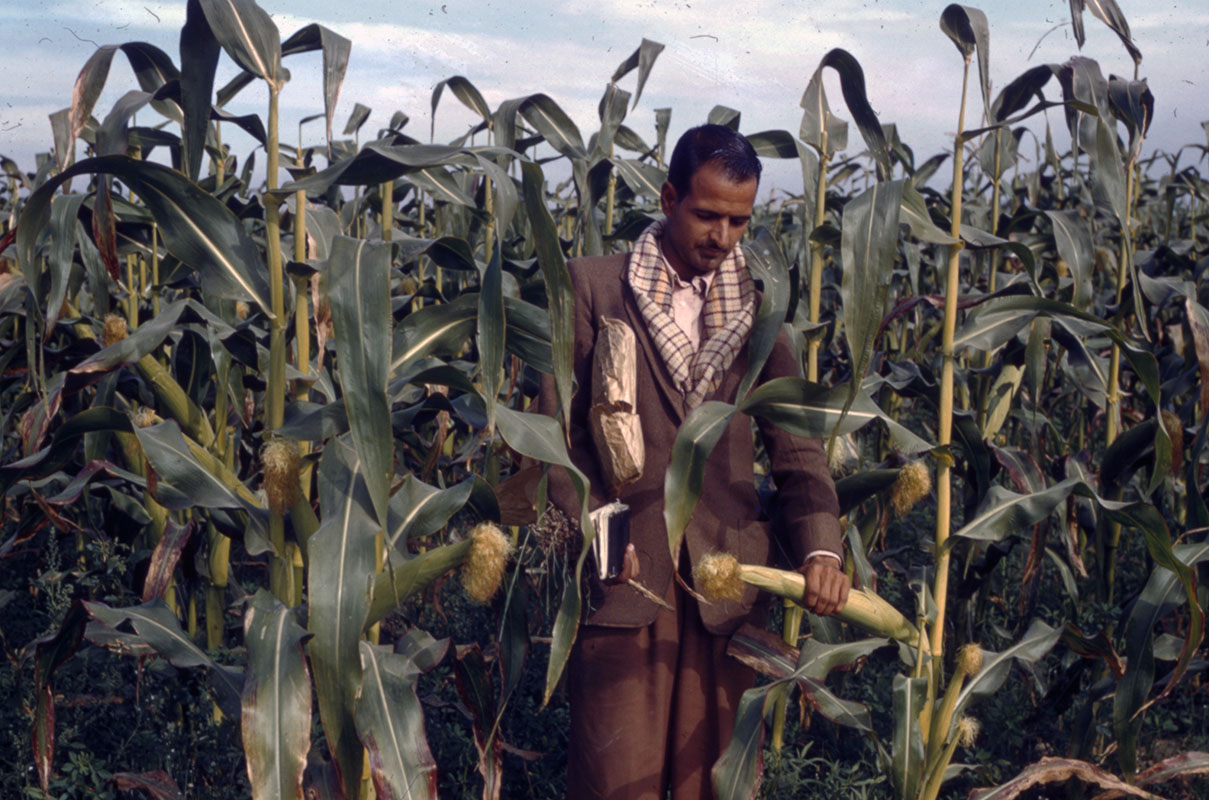
viewing a corn field, 1956

Professor Schmidt recorded his experience in India between April 1956 and August 1957 in a series of diaries that his family recently donated to the University Archives. In addition to Prof. Schmidt’s diaries, also acquired (was) is the diary of his wife, Lorene Schmidt, dated between September 1955 and January 1956. Combined, the three diaries provide valuable insight on the trials and tribulations of the agricultural program, as well a peek into the inner thoughts of Prof. and Mrs. Schmidt. Mrs. Schmidt’s diary also includes detailed accounts on the couple’s travels on their way to India.

Professor Schmidt and his wife, Lorene, 1957

Professor and Mrs. Schmidt left Ohio on September 22, 1955, and made numerous stops along the way that included brief stays in New York, London, Paris, and Rome before arriving in Bombay on October 6. Mrs. Schmidt’s diary includes complaints regarding missing hotel reservations, reviews for superior and inadequate restaurant fare, weather reports, and details of their tourist excursions. It becomes evident at one point that Mrs. Schmidt had become tiresome of sightseeing.  On October 15, 1955, she wrote, “Took 2 taxis over to TCM – from there went on a tour of 7 cities in and around New Delhi & Old D. A lot of ruins. Have seen so many am getting tired of it.” Mrs. Schmidt also never failed to include even the most insignificant of details. For example, on October 5, 1955, she wrote that a small box of Tide detergent cost $1.00 in Rome and that she did not purchase it.

An exhibit for insect control, 1956

Professor Schmidt’s diaries, however, tell a different story than that of his wife’s. Although he was also meticulous with his inclusion of miniscule details – such as whom he received letters from on a particular day, or what he had for each meal – it becomes clear that he felt as though he was fighting an uphill battle when it came to his objective in India: “After all these less than 2 years in India cannot be counted too long as measured by a life time. Yet, there is a hauntingly empty feeling that I have not nearly achieved fulfillment of mission in India. Only sporadically have I felt that my efforts have been productive and fruitful.” Faced with unfamiliar roadblocks, such as religious and cultural differences, lack of supplies, government involvement, and student attendance (or lack thereof), Schmidt’s hands were often tied and his frustrations were frequently expressed through his writing.  On July 2, 1957, 36 days prior to his departure from India, he wrote, “More than halfway through another year. This time in India has not added an unalloyed richness to a productive life. In fact, the frustrations and inconveniences, if not hardships (for an older person) have more often than not been the center of thinking. This is bad, but it is true.”

Chandigarh school faculty
in a corn hybrid field, 1956

Although Professor Schmidt only spent two years in India, the joint project between The Ohio State University and USAID continued long after his departure. In October 1961 the local government in the state of Punjab passed legislation to establish the Punjab Agricultural University, with assistance from OSU team members.[3]  Professor Schmidt may have felt that his time spent in India was fruitless, but it paved the way for a series of comprehensive improvements in the years that followed in the Punjab state. By 1964, the end of the initial nine-year regional contract, Ohio State team members helped to develop new university courses and youth programs, introduced new equipment and teaching methods, provided advanced training for 102 Indians in the U.S., and helped develop agricultural curricula, including a Master’s degree program in Farm Management at Punjab Agricultural University.[4]

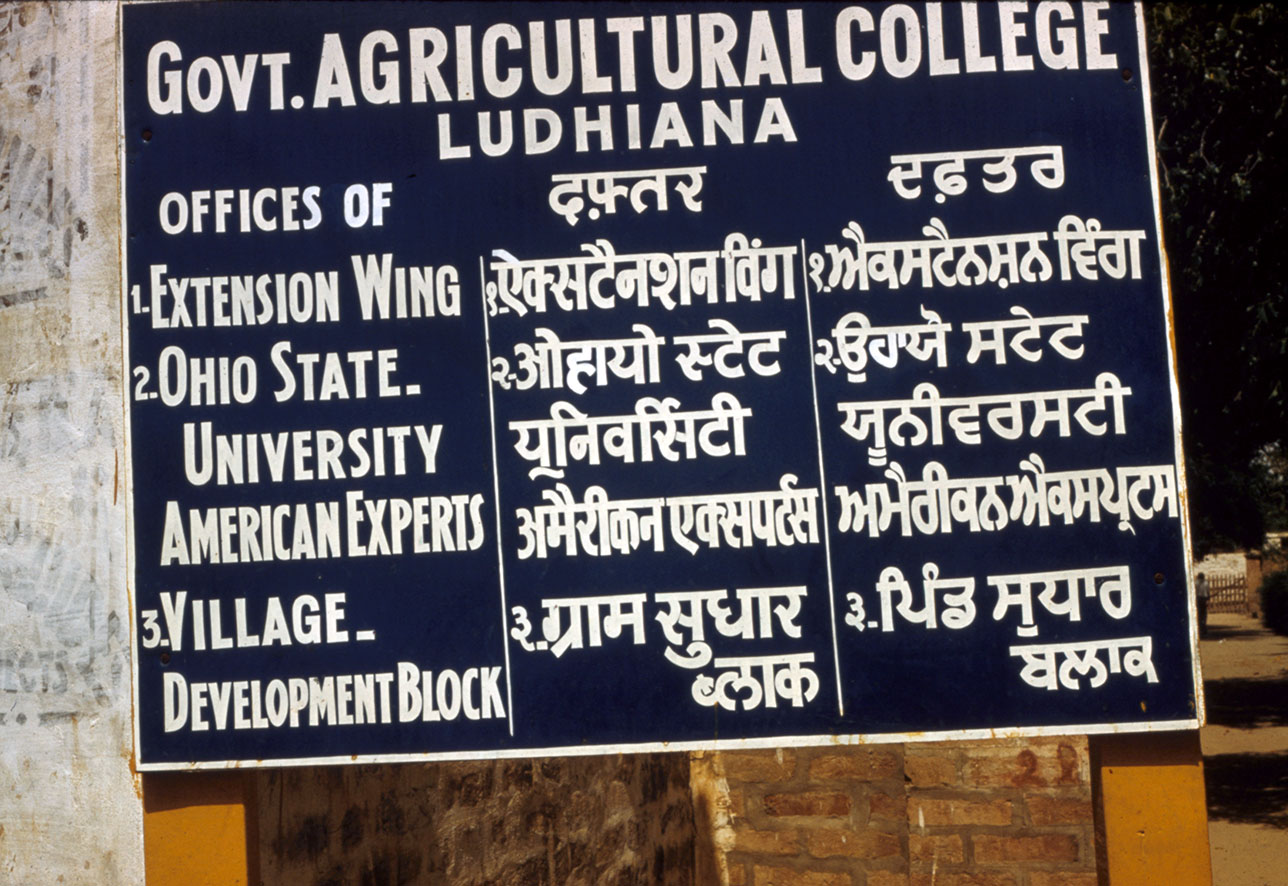
Agriculture Extension Sign
at the OSU Office in India, 1957

In his last diary entry on December 31, 1957, Professor Schmidt wrote, “Of mother it was said it is good to be great, but it is greater to be good. So may it be said of me.” Although he left India without feeling any sense of great accomplishment, it was his consistent effort, dedication, and time spent attempting to enrich the lives of others that established Professor Schmidt’s true goodness. Professor Schmidt passed away in April 1965, and therefore never knew the totality of the extensive agricultural advances in India he helped pioneer. However, may it be said that his time spent in India was not as wasteful as he believed, but rather contributed to the overall success of the agricultural program in which he partook.

[1] AID-University Rural Development Contracts: 1951-1966 (Urbana, Illinois), June 1968; 59.

[2] “India’s Agriculture Gets Help,” Ohio State Lantern (Columbus, Ohio), October 10, 1956.

[3] Terminal Report: USAID Contract /Nesa-14. November 1, 1964-June 30, 1973; 15.

[4] Terminal Report: USAID Contract /Nesa-14. November 1, 1964-June 30, 1973; 18-19

Older posts