From Woody's Couch

Our Playbook on OSU History

Throughout Time and Change: High Street’s Staples of Student Life (Part 2 of 3)

Welcome back to our series that explores former High Street “staples”, and the stories behind them. This series was written by Archives student assistant Fran McConnell.

Exterior of Tradewinds on High Street

Tradewinds, exterior view

Aside from the sculptures adorning its exterior walls, the 1951 Ohio Union pictured below would initially seem unrecognizable to recent OSU classes. Its bowling alley, 20-table billiard room, music lounge, and micro-computer lab may be foreign to them, but it resembles the current one by providing spaces to gather and resources for students. (9) This iteration of the Union was specifically petitioned for by students in 1947, with the goal of having a space equally accessible for both men and women! (10)

Ohio Union exterior facing High Street, 1950s

Ohio Union, 1950s

Bowling alley in Ohio Union, 1970s

Bowling alley, Ohio Union, 1970s

Despite evolving from the State Theater to the Agora Ballroom and finally to the Newport Music Hall (initially called the New Port), all venues at this location have provided students with affordable entertainment options. (11) The location opened in the 1920s as a silent movie theater, with its first showing being complementary to all. (12) The Agora, opened in 1969, kicked off the building’s renown as a music club by hosting acts such as Ted Nugent, B.B. King, and Pink Floyd. (13)  After convincing the Agora’s owners not to sell the venue to developers, Scott Stienecker preserved its legacy in 1984 by opening the Newport Music Hall, which continues to seek out programming that students can afford (including Grateful Dead tickets that were priced at $5.50 in advance and $7 at the door). (14)

Advertisement for Queen concert

The Agora, High Street

The Agora, 1976


A trip to High Street, whether it takes place at 1 p.m. or 1 a.m., would not be complete without grabbing a bite at one of its many restaurants. Street Scene, voted by students as the best place for a first date in 1988, was esteemed for its cozy atmosphere, curly fries, and “Chicago-style pan pizza.” (15)

Another form of education that students received on High Street was that of Greek pronunciation: at Souvlaki Palace, Gwendolyn Kay Smith Fisher ‘79 fondly remembers “being taught (probably by Mr. Psyhogios himself) …the correct pronunciation of gyro.”(16) Whether it be one graduating class’s Apollo’s or another’s Greek Village Gyros, Greek restaurants on High Street are always valuable sources of delicious meals and some pronunciation lessons.


9 “History.” Ohio Union – Office of Student Life.

10 “History.” Ohio Union – Office of Student Life.

11 Lalonde. “The High Street Shuffle,” pp. 9.

12 ”State Theater Opens Wednesday Evening.” The Lantern, 21 December 1921, pp. 1.

13 Berliner, Jon. “Newport Still Rocks Crowds at 35.” The Lantern, 7 October 2004.

14 Berliner, “Newport Still Rocks Crowds at 35.”

15 “Presenting the best and worst of Ohio State”; ”High Street reshuffled,” pp. 25

16 “High Street reshuffled,” pp. 26.


Throughout Time and Change: High Street’s Staples of Student Life (Part 1 of 3)

Students walking down High Street, 1970s

Students walking on High Street, 1970s

While reflecting upon his time at OSU, alumnus John Heinl ‘82 shared to the Ohio State University Monthly that “my education involved more than classrooms and studying, it included traditions…”1 These traditions entailed memories made on High Street, just as much as the ones made in classrooms and the ‘Shoe. Whether it be providing student employment, memorable meals, football celebrations, and life-long relationships, High Street has truly been a staple of student life, and this three-part series will explore its importance, starting South and working its way North.

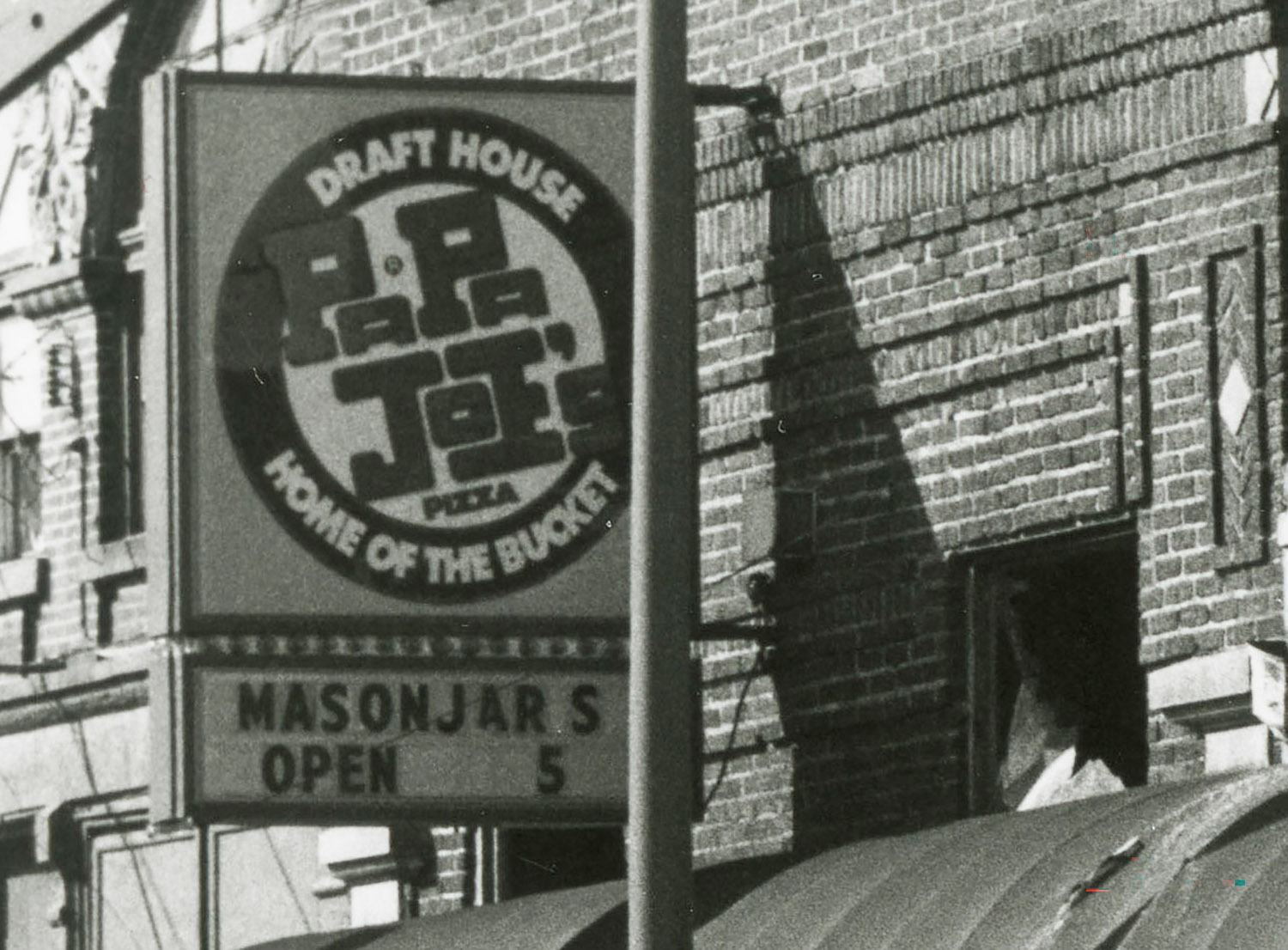
Papa Joe's sign, 1996

Papa Joe’s sign, 1996

Voted both the best and worst “bar to get sick in” from a 1988 Lantern poll, Papa Joe’s was a bar particularly beloved for its bucket deals, the “‘suction’ sound of walking across the beer-soaked floor,” and its kegs and eggs tailgates.2 The place was even nationally renowned, with a Florida radio station calling in at 6:30 a.m. on a 1990s game day to hear students sing the fight song.3

Happy Hour advertisement for Mean Mr. Mustards!

The Lantern, November 14, 1985

Along with Papa Joe’s, OSU students flocked South to frequent Mean Mr. Mustard’s, Oar House, South Berg, and the Bier Stube for all Buckeye celebrations (and current Buckeyes and visiting alumni will soon be able to visit the Bier Stube after its reopening in a new location).

Prior to being known for the Clothing Underground’s selection of “Jesus Hates Michigan” shirts, the 1898 N. High Street location used to house the State Restaurant and, later, Columbus’s “counter-culture headquarters for three decades.”4 Between the late 1950s to 1970s, the State Restaurant was remembered by Jeff Yungman ‘73 as “an oasis of home cooking on High Street” and was beloved by law students.5 As alumnus Mike Sproule ‘71, ‘71 MA, ‘73 PhD put it best: “Who would want to miss those spareribs, short ribs, and homemade pies!”6

The gift shop Trade Winds took up the torch of fostering community as its “employees and regulars nurtured the Community Festival from a campus street fair to the annual three-day blowout in Goodale Park” until its closure in 2000.7 Additionally, its owner, Libby Gregory, “edited the Columbus Free Press upstairs.”8

(This is a three-part series, written by Archives student assistant Fran McConnell.)


1 “High Street reshuffled.” Ohio State University Monthly. 2009 May, pp. 26.

2 “Presenting the best and worst of Ohio State.” The Lantern, 1 December 1988; Fiely, Dennis. “Check it off the list.” Ohio State University Monthly, June 2019, pp. 61.

3 Fodor, Sharon. “New home for Papa Joe’s still unknown.” The Lantern, Volume 16, Number 173, 6 December 1996.

4 Lalonde, Brent. “The High Street Shuffle.” Ohio State University Monthly. 2009 January, pp. 9.

5 “High Street reshuffled,” pp. 24.

6 “High Street reshuffled,” pp. 21.

7 Lalonde. “The High Street Shuffle,” pp. 9.

8 Lalonde. “The High Street Shuffle,” pp. 9.

Before St. John Arena and the Schottenstein Center, where did OSU play basketball?

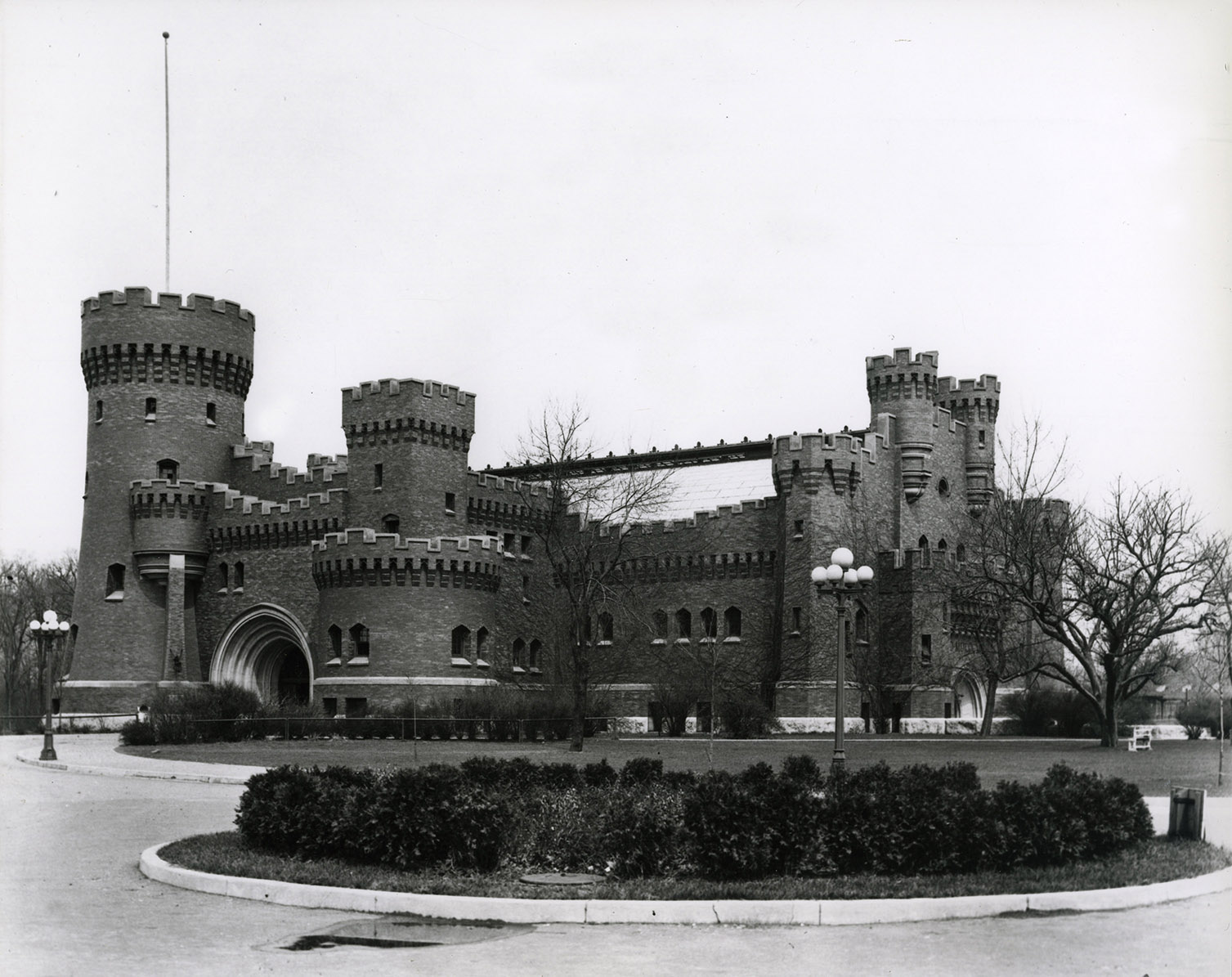
The Armory, 1918

The Armory, 1918

Men’s basketball became a varsity sport in 1898.  At the time, the only recreation building on campus was the Armory, (located where the Wexner Center now stands).  The Armory was used from 1898 until 1919 and held a maximum of 2,000 spectators.  Before each game, players would set up the seats on the balcony and the floor.

In 1919, the games moved to the Coliseum.  There, temporary risers were put adjacent to the floor, which created a seating capacity of 7,800.  Standing room only crowds were common, with a record of 11,184 during one game.

The Coliseum, 1920

Coliseum, 1920


In 1956, St. John Arena opened and the team was finally back on campus.

The team moved to the Schottenstein Center in 1998.


« Older posts