From Woody's Couch

Our Playbook on OSU History

Page 16 of 105

Frozen Fridays: ‘X’ is for Xenophile!

This blog post is part of the Frozen Friday Series, an A-Z journey of the Polar Archives.  Each week, we will feature some aspect of the history of polar exploration with a blog post written by our student authors.

In 1925, having returned from his inaugural journey to the Arctic and now dreaming of his flight over the North Pole, Commander Richard Byrd began a lecture tour across America, armed with pictures and films of the Arctic. While on tour, Byrd discovered how bad his public speaking skills and his films were. Still, people poured into his lectures anyway, burning to see the “dim, flickering films of the Far North.”[i]  Byrd had uncovered a nation of xenophiles.[ii]

A xenophile is someone who is attracted to foreign things, places or people. By the very nature of their work, explorers tend to be xenophiles, willing to risk their lives for such attraction. At the beginning of the 20th century, however, the broader public caught the bug and began craving the strange, the daring, and the exotic.  Byrd was far from the only man to capitalize on this fascination—in fact, he came late to the game. Newspapers had been catering to this desire for years, using any news, discoveries or controversies to sell papers and make money. By the time Byrd embarked on his lecture tours, the tie between newspapers and polar exploration was so strong that media outlets paid explorers in advance for exclusive rights to future exploits. Success and the resulting public venerations allowed many explorers to pay off debts or fund their next adventure.

Many of the stories, diaries and images that so enthralled the public are now held by the Byrd Polar and Climate Research Center Archival Program at The Ohio State University.  While the Richard E. Byrd Papers are the most well-known of our collections, we document the history of polar exploration through the papers and records of other explorers as well!

In this week’s Frozen Friday’s post, we will display a number of newspaper headlines found within the collections of the  Byrd Polar and Climate Research Center Archival Program!

[i] Explorer, page 102

[ii] At least in regards to the uninhabited polar regions.
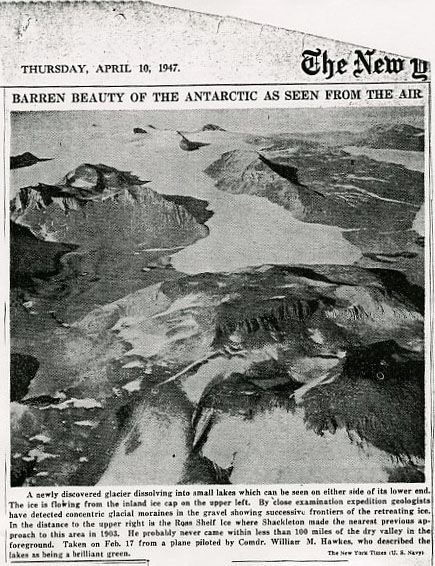
Many Americans were fascinated by the never-before-seen aerial view of Antarctica.

Many expeditions to the Antarctic attempted to
return with live specimens of penguin.
Unfortunately, very few birds survived the
journey.

The American media was very interested in domestic life, even those of penguins.

Companies like Coca Cola used Byrd’s expeditions as an advertising opportunity.
Advertisements and product placement were important aspects of Admiral
Byrd’s fundraising efforts.


Many of the brands that used Byrd in their advertisements
are still familiar to us today.


Members of Byrd’s expeditions became something of
celebrities. Their personal lives were talked about in
the media as though they were movie stars.
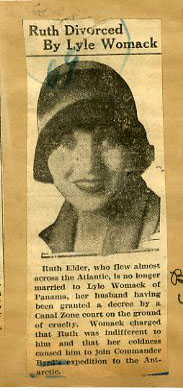
 

This gossip was not always a
good thing.
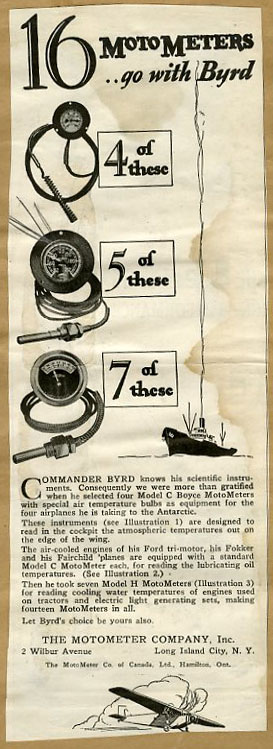
 

Byrd made deals with companies when planning
his expeditions. Advertizing rights were sold in
exchange for funding and equipment.
Paramount Pictures was one such company.


Written by Autumn Snellgrove and published by John Hooton
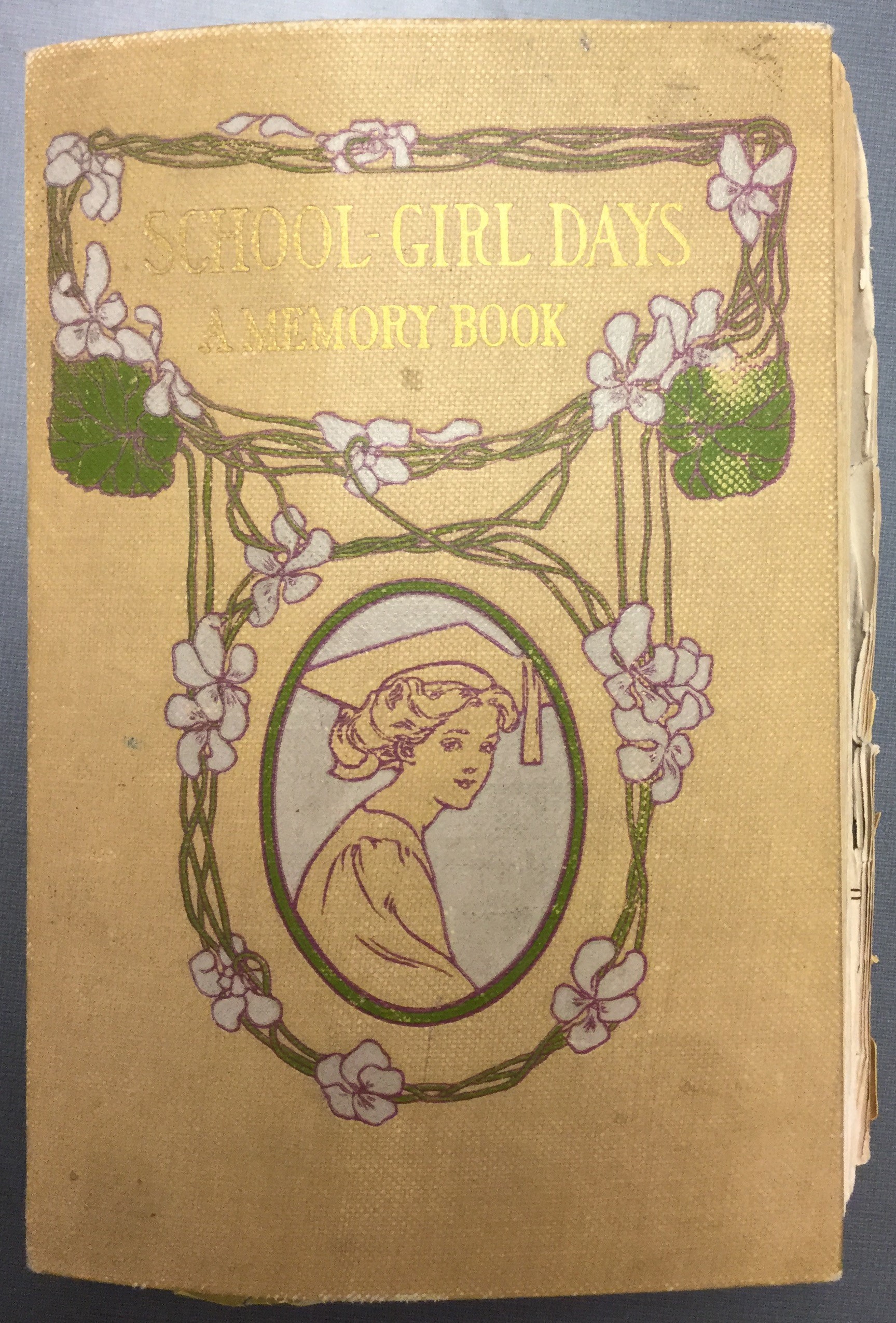
Scrapbook provides insights to early student life

Esther McGinnis Scrapbook, 1915

Today, college scrapbooks simply contain photos of one participating in various university events, friends hanging around on the weekends, and maybe a graduation cap tassel or diploma at the very end. However, the almost 200 page scrapbook that Esther McGinnis made to commemorate her time at the Ohio State University may not contain any photos of herself, but tells us much more.

Makio 1915

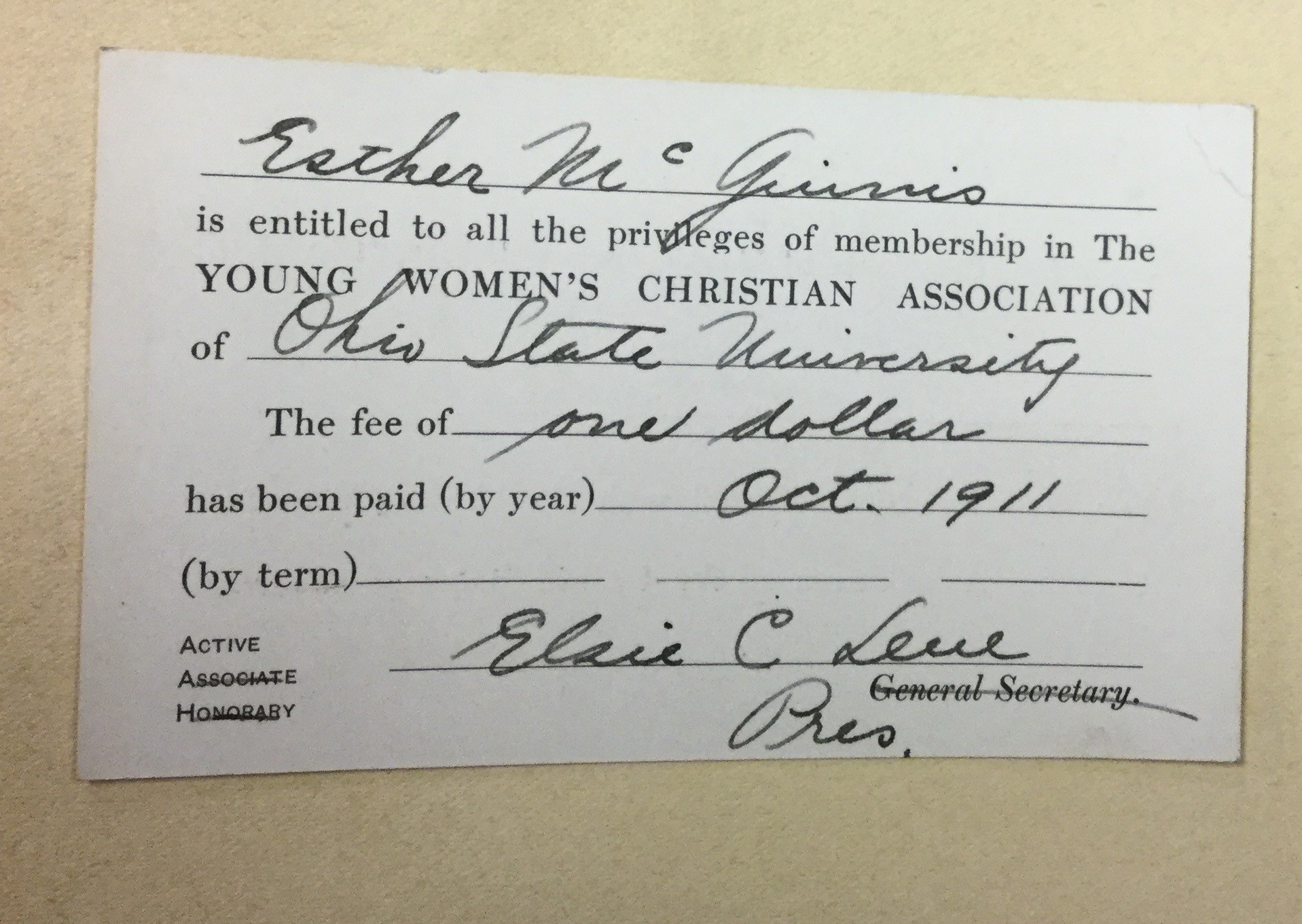
McGinnis started at Ohio State in the fall of 1911 as a Home Economics major and was actively involved throughout the Ohio State community during her undergraduate career. The journey through her scrapbook begins with the various organizations that she participated in during her four years. The Young Women’s Christian Association (Y.W.C.A.) appears to have been a major organization during McGinnis’ collegiate years.

YWCA Membership Card

Her membership card stating her affiliation and fee of one dollar to join is one of the first items glued into the book with a news article about her appointment as treasurer. She also belonged to the Philomathean Literary Society, one of the oldest existing literary societies among universities. Her scrapbook contains her invitation to join and several invitations to attend events held by the group. Additionally, as a member of the Women’s Glee Club she cut out Lantern news articles about her acceptance and their concerts that followed.

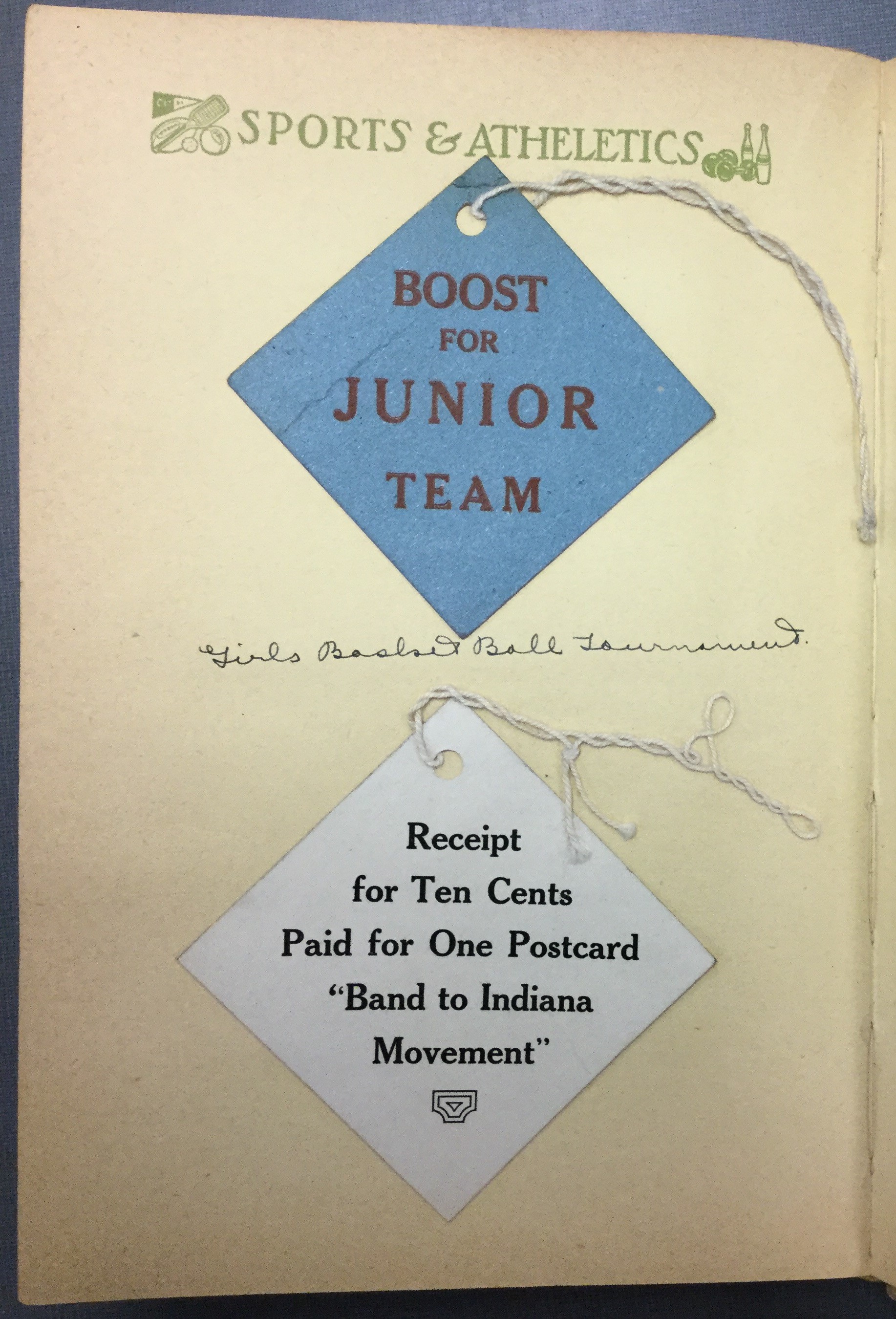
Athletic Tags, c. 1911

During McGinnis’ time at Ohio State she also participated in quite a few organizations pertaining to her major, home economics. She was a member of the Home Economics Club, inducted into Phi Upsilon Lambda – a national home economics honorary, andworked as a student assistant in the Home Economics department.

Dance card, 1912

While this scrapbook is significantly dated, it is similar to today’s scrapbooks by what it contains next. The first half of the book reads like a yearbook mainly because it involves her inclusion in school activities, while the second half of the book is more about the various events she participated in outside of her organizations. One such activity is a Co-Ed prom she attended with Dorothy Griggs in 1913 at The Armory. Inside the scrapbook McGinnis attached a dance card, which lists the dances followed by the name of whomever she danced with. In addition, there are tags that were used for various athletic events around campus with captions underneath them such as, “Girls Basket Ball Tournament.”

Valentine c. 1911

Continuing to flip through the pages will allow one to see all the parties, luncheons, plays, and concerts that McGinnis attended by means of invitations, playbills, tickets, and programs glued inside. One page we found to be interesting within the scrapbook was a cut-out heart valentine that reads “’E’ is for Esther, Please don’t molest her.” While we may not know the context behind it, this clever rhyme allows us to think about a different time in history and what the valentine could have meant to her at the time. Whether it is an inside joke among friends or a gift she received, we may never know but this is what makes the scrapbook intriguing and an asset to our collection at the archives.

The rest of McGinnis’ scrapbook is filled of news clippings about what was going on around campus. While some of these articles acknowledged her induction into an organization or her tryouts for the Glee Club, most of them were just current events or updates on individuals’ lives. Many were about new faculty and staff, engagement and event announcements, event recaps, and the occasional news clipping about Dr. Thompson; such as the Christmas greeting that he wrote in 1914.

Alumni Magazine, 1951

This scrapbook contains the memories and moments that Esther McGinnis wanted to remember beyond her days at Ohio State. In doing so, Esther provided the archives with an inside story of what the life of an Ohio State student was like at the beginning of the 20th century. It highlights the events that took place, what students valued and found to be of importance, and gives us the chance to learn about Ohio State from a new, fascinating perspective.

As for Esther McGinnis, she continued on to receive her master’s in nutrition at Columbia University and her Ph.D in child development at University of Minnesota, but eventually returned to the Ohio State University. In 1951, an honorary Doctor of Laws degree was granted upon her at the Ohio State University and the following year she became a professor in the Home Economics department at Ohio State. She was the member of several honorary societies within her discipline and the author of many books as well. Her scrapbook will remain in the University’s collection to allow our patrons to enjoy it as much as we have!

Observing National Armed Forces Day

Today is National Armed Forces Day. National Armed Forces Day was first created in 1949 by then Secretary of Defense Louis Johnson. Rather than maintaining three separate holidays for each of the branches of the military, Johnson decided to create a single holiday honoring the entire military. Although the first Armed Forces Day was in 1950, it was not made into an official Federal holiday until President John F. Kennedy in 1962.[1]

School of Military Aeronautics Squadron F in
August of 1917.

Here at the Ohio State University, we have a longstanding history of involvement with and support of the United States Military. The Morrill Act (1862) gave states script for federal land which the states could then sell for purposes of creating an endowment to fund an agricultural and mechanical college.[2] This act stated that the newly constructed school would be used to train students in the sciences of agriculture, mechanical arts, and military tactics.[3] The Department of Military Science and Tactics was created several years after the Ohio Agricultural, Military, and Mechanical College (the predecessor of today’s Ohio State University) and was staffed by active military personnel from the United States Army.[4]

The program continued to grow and transform in the twentieth century. Four important figures at the Ohio State University, including University President William Oxley Thompson, played crucial roles in the drafting of the National Defense Act, which established the Reserve Officer Training Corps (ROTC) in 1916. President Thompson was also responsible for the creation of the School of Military Aeronautics which would train students in the developing field of aircraft.[5] Students from both programs could be found participation in the numerous conflicts of the twentieth century.

Ohio State University students shooting at the rifle
range in 1918.

More information and resources about the Ohio State University’s role in the United States Military and the university’s founding can be found at the Ohio State University Archives. Manuscripts, documents, photographs, and other resources can be found there and are open to the public.

Written by John Hooton

[1] “Armed Forces Day,” National Day Calendar, accessed May 13, 2017. https://www.nationaldaycalendar.com/national-armed-forces-day-third-saturday-in-may/

[2] “Born in Adversity,” the Ohio State University Archives, accessed May 13, 2017. https://library.osu.edu/projects/founding/index.html

[3] Jack L. Gumbert, Forward to the Ohio State University Army ROTC History presentation, April 16, 2003, manuscript, from the Ohio State University Archives.

[4] Gumbert, Ohio State University ROTC History.

[5] Gumbert, Ohio State University ROTC History.

« Older posts Newer posts »