From Woody's Couch

Our Playbook on OSU History

Category: Uncategorized (page 8 of 10)

Women’s History Month: 90 years ago, first woman appointed as Trustee

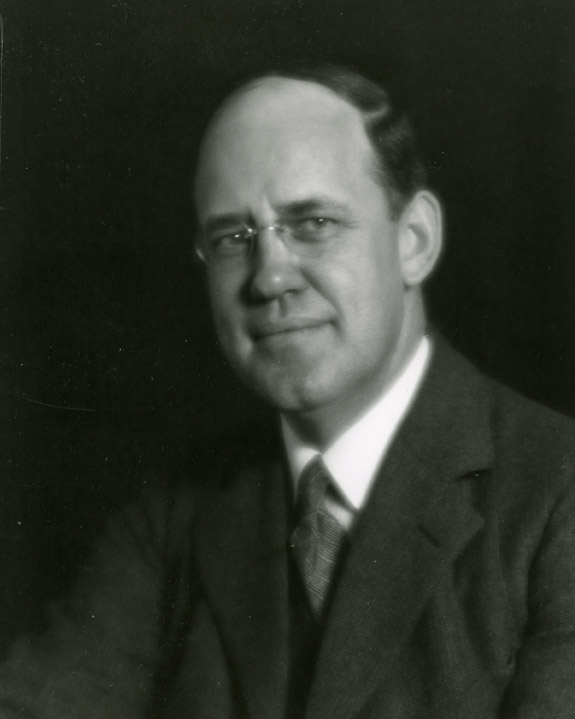
Alma Paterson, n.d.

Alma Paterson, n.d.

It was 90 years ago today that the first woman was named to Ohio State’s Board of Trustees. Alma W. Paterson was a member of Ohio State’s class of 1904; as an undergraduate, Paterson had been a member of the Browning Dramatic Society and studied science and physical education. She received her bachelor of arts degree in 1904 and went on to serve as an assistant director of physical education for women for three years. In 1910, she married Robert G. Paterson, a 1905 OSU graduate, who was then executive secretary of the Ohio Public Health Association. 

Alma Paterson was appointed to the Board on March 27, 1924, to succeed the late OSU Prof. Thomas Mendenhall. Then-Ohio Gov. A. Victor Donahey had already indicated that the next appointment to the board would be a woman since “the large number of women registered at the University warrants the selection,” according to a Lantern article about her appointment. Paterson was on the board until 1933, serving as vice chairman twice during that time.
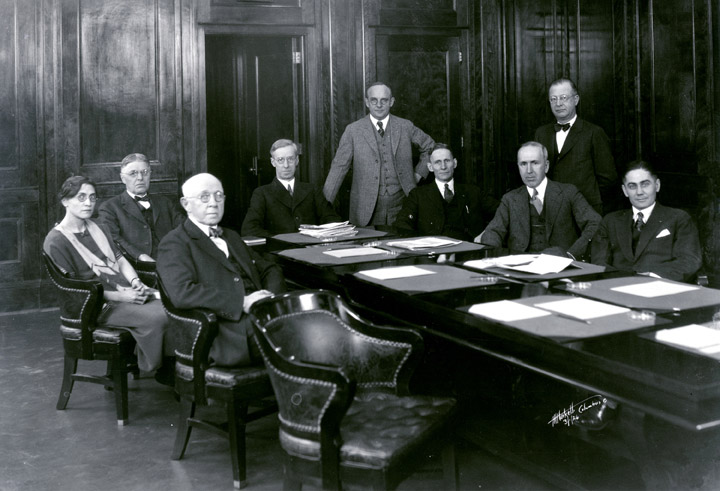
1926 board of trustees at conference table, including Alma Wacker Paterson

Paterson with the Board of Trustees, 1926

In 1954, the Board of Trustees named Paterson Hall, then a brand-new dorm for women, after her.

Paterson’s daughter, Ann, followed in her mother’s footsteps, first as a student (BS in Education in 1937 and MS in Education in 1939) and then as a professor of women’s physical education. After 19 years of teaching at OSU, she left the University in 1956 to teach at San Francisco State College.

– Filed by C.N.

Elzy’s voice took her from OSU to Broadway and beyond

Ruby Elzy, 1930

Ruby Elzy, 1930

When Ruby Elzy showed up at OSU as a freshman in 1927, she “couldn’t read one [musical] note from another,” she told the Lantern in 1937. By 1936, though, she was playing “Serena” in “Porgy and Bess” on Broadway.

It was actually a chance encounter with an OSU professor in her home state of Mississippi that began her journey to stardom. Growing up, Elzy traveled with her three siblings around Mississipi as their mother made trips to various schools in rural districts. Elzy was responsible for her younger siblings when her mother was at work and was taught basic schooling by her mother. When Elzy was 11 years old, her mother got her a job washing tablecloths at a local women’s center associated with Rust College in Holly Springs, Mississippi. When Elzy was old enough, she attended Rust College.

Royal D. Hughes, 1926

Royal D. Hughes, 1926

One day, OSU Education Prof. Charles C. McCracken was visiting with the president of Rust College in the president’s office. Since it was summer in Mississippi, all the windows were open, and their meeting was interrupted by singing from a nearby building. McCracken insisted on hearing a performance of the singer – Elzy – and convinced her to study music at Ohio State. So Elzy came to Ohio State in autumn 1927, after the school of music had awarded her with the Presser Foundation Music Scholarship. Since she couldn’t read music, then-School of Music director Royal Hughes taught her himself.

Music Building (formerly the President's home), 1922

Music Building (formerly the President’s home), 1922

After her graduation from Ohio State in 1930, she received the Rosenwald Scholarship to Julliard School of Music in New York. She was “discovered” again while singing in a choir in New

York that had been recruited to sing in the movie “Emperor Jones.” The director liked her dialect and knowledge of African-American spirituals, so he made her a supporting character, to none other than Paul Robeson.

In 1936, George Gershwin chose her to play “Serena” in his opera, “Porgy and Bess.” She sang the world premiere of that opera, and the following year received an invitation to perform at the White House. She also performed on national radio. She died unexpectedly on June 26, 1943, in Detroit after complications from surgery.

Bleeds Scarlet and Gray: Registrar as devoted to alma mater as she was to detail

Edith Cockins, 1910

Edith Cockins, 1910

One of our all-favorite people from the University’s past is Edith Daisy Cockins. So upon this anniversary of her death, we thought we should remember her and her commitment to the University.

Edith Cockins first came to Ohio State as a preparatory student in 1888 at the age of fifteen. Two years later, she officially enrolled as a freshman; some of her activities while she was a student included her work on the Lantern and the Makio. She graduated with a bachelor of arts degree in 1894.

She went on to complete a year of graduate work and joined the University staff in 1896 as a record clerk. The following year, she was appointed to the newly created post of University Registrar. She would retire 47 years later, having overseen the records of over 60,000 students.

Cockins, 1937

Cockins, 1937

However, in that interval of 47 years, Miss Cockins accomplished quite a lot. As registrar, she was responsible for all student records, and in 1914 she first organized diplomas at Commencement according to a system that allows students to receive their official diploma at the ceremony. It is still in use today, even though roughly 9,000 students attend the Commencement ceremony.

In 1911, she and another loyal alumnus, Ralph D. Mershon, undertook reorganizing the Alumni Association. The next year, she oversaw publication of the University’s “Who’s Who,” a guide to former notable alumni. And in 1929 was named director of the newly created Alumni Records division.

Along the way, she also held the titles of secretary of the faculty and University Editor. Cockins also was involved with several outside organizations, including the American Association of Collegiate Registrars, of which she was elected president in 1938.

Cockins retired from Ohio State in 1944 and was named registrar emeritus. She didn’t stray far from her alma mater, though. She stayed active with the alumni association, and she served as housing chairman for the national organization of Kappa Alpha Theta sorority. She also oversaw the publication in 1959 of a biography on Mershon, for whom the Mershon Center for International Security Studies and Mershon Auditorium are named.

She was awarded an honorary degree, a Doctorate of Administration, for dedicating so many years and expressing such commitment to the University.

Cockins passed away on March 15, 1963 at the age of 89. In 1967 the Pharmacy and Microbiology Building was renamed Cockins Hall to honor her. The Edith D. Cockins Memorial Award was also established to honor the University registrar employee who best demonstrates Cockins’ high standards.

Cockins Hall, 1967

Cockins Hall, 1967

Filed by C.N.

For information on other notable women at OSU, see The Women’s Place’s Encyclopedia of Pathbreaking Women at the Ohio State University at http://www.womensplace.osu.edu/assets/files/womenpathbreakers_Final.pdf

Older posts Newer posts