From Woody's Couch

Our Playbook on OSU History

Category: Uncategorized (page 9 of 10)

Bleeds Scarlet and Gray: Registrar as devoted to alma mater as she was to detail

Edith Cockins, 1910

Edith Cockins, 1910

One of our all-favorite people from the University’s past is Edith Daisy Cockins. So upon this anniversary of her death, we thought we should remember her and her commitment to the University.

Edith Cockins first came to Ohio State as a preparatory student in 1888 at the age of fifteen. Two years later, she officially enrolled as a freshman; some of her activities while she was a student included her work on the Lantern and the Makio. She graduated with a bachelor of arts degree in 1894.

She went on to complete a year of graduate work and joined the University staff in 1896 as a record clerk. The following year, she was appointed to the newly created post of University Registrar. She would retire 47 years later, having overseen the records of over 60,000 students.

Cockins, 1937

Cockins, 1937

However, in that interval of 47 years, Miss Cockins accomplished quite a lot. As registrar, she was responsible for all student records, and in 1914 she first organized diplomas at Commencement according to a system that allows students to receive their official diploma at the ceremony. It is still in use today, even though roughly 9,000 students attend the Commencement ceremony.

In 1911, she and another loyal alumnus, Ralph D. Mershon, undertook reorganizing the Alumni Association. The next year, she oversaw publication of the University’s “Who’s Who,” a guide to former notable alumni. And in 1929 was named director of the newly created Alumni Records division.

Along the way, she also held the titles of secretary of the faculty and University Editor. Cockins also was involved with several outside organizations, including the American Association of Collegiate Registrars, of which she was elected president in 1938.

Cockins retired from Ohio State in 1944 and was named registrar emeritus. She didn’t stray far from her alma mater, though. She stayed active with the alumni association, and she served as housing chairman for the national organization of Kappa Alpha Theta sorority. She also oversaw the publication in 1959 of a biography on Mershon, for whom the Mershon Center for International Security Studies and Mershon Auditorium are named.

She was awarded an honorary degree, a Doctorate of Administration, for dedicating so many years and expressing such commitment to the University.

Cockins passed away on March 15, 1963 at the age of 89. In 1967 the Pharmacy and Microbiology Building was renamed Cockins Hall to honor her. The Edith D. Cockins Memorial Award was also established to honor the University registrar employee who best demonstrates Cockins’ high standards.

Cockins Hall, 1967

Cockins Hall, 1967

Filed by C.N.

For information on other notable women at OSU, see The Women’s Place’s Encyclopedia of Pathbreaking Women at the Ohio State University at http://www.womensplace.osu.edu/assets/files/womenpathbreakers_Final.pdf
‘Jovial Bob’ aimed to put the fun back into USG elections

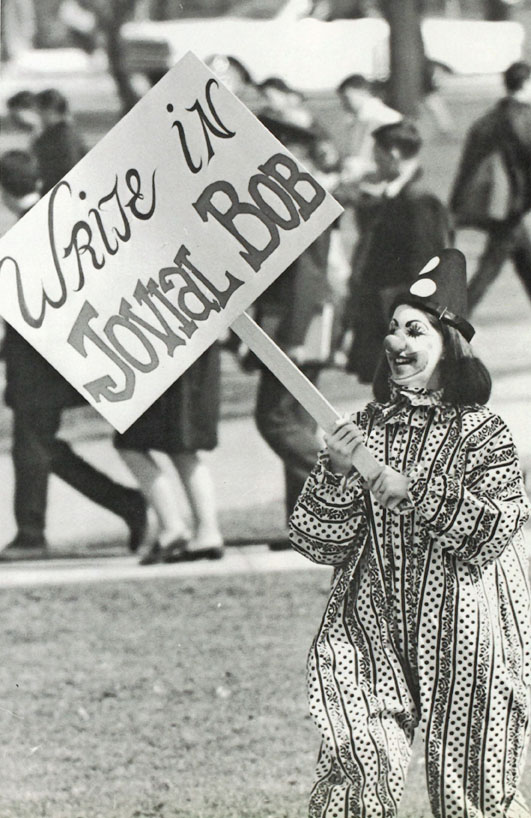
The Makio, 1965

This year’s USG election is the latest in a long line of annual events in which students choose the candidate whom they believe will best represent their interests in Ohio State’s student government. It has sometimes been ugly – depending on how much mud is slung by various candidates – and it sometimes has been plagued by scandal, with accusations of vote-rigging other such charges.

And once, in 1965, it was infused with a healthy dose of humor, thanks to R.L. Stine, who went on to author the popular Goosebumps series of scary books for kids.

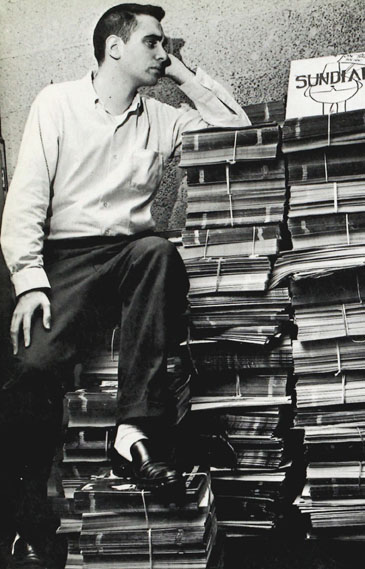
The Makio, 1965

At the time he ran for USG president that year, Stine was also known as Jovial Bob Stine, editor of the Sundial, OSU’s very own humor magazine. He also was a graduating senior and therefore not eligible to actually win the election. But that didn’t stop him from running a full-blown campaign, complete with clowns carrying signs encouraging students to vote for “Jovial Bob.” His campaign promise: If elected he would graduate and be gone for good.

Amazingly, he received 1,200 write-in votes.

After graduating that year, Stine went to New York City where, according to the alumni magazine, he wrote for a humor magazine called “Bananas,” then published his first book, How to Be Funny. He later wrote G.I. Joe and Indiana Jones books.

In the late 1980s, R.L. Stone was asked by a former editor to write a scary children’s book called Blind Date, which became a best-seller. That led to an idea for a series of scary stories for children, which led to Goosebumps. At one point in the early 1990s, the series outsold such other best-selling authors as Stephen King, John Grisham and Michael Crichton.

Coincidentally (or perhaps not?), the year after Jovial Bob ran, there was only one candidate for USG President. Also coincidentally, considering this blog post, this year’s election again features only one candidate – the first time since 1966.


Jesse Owens exhibit opens at Thompson Library

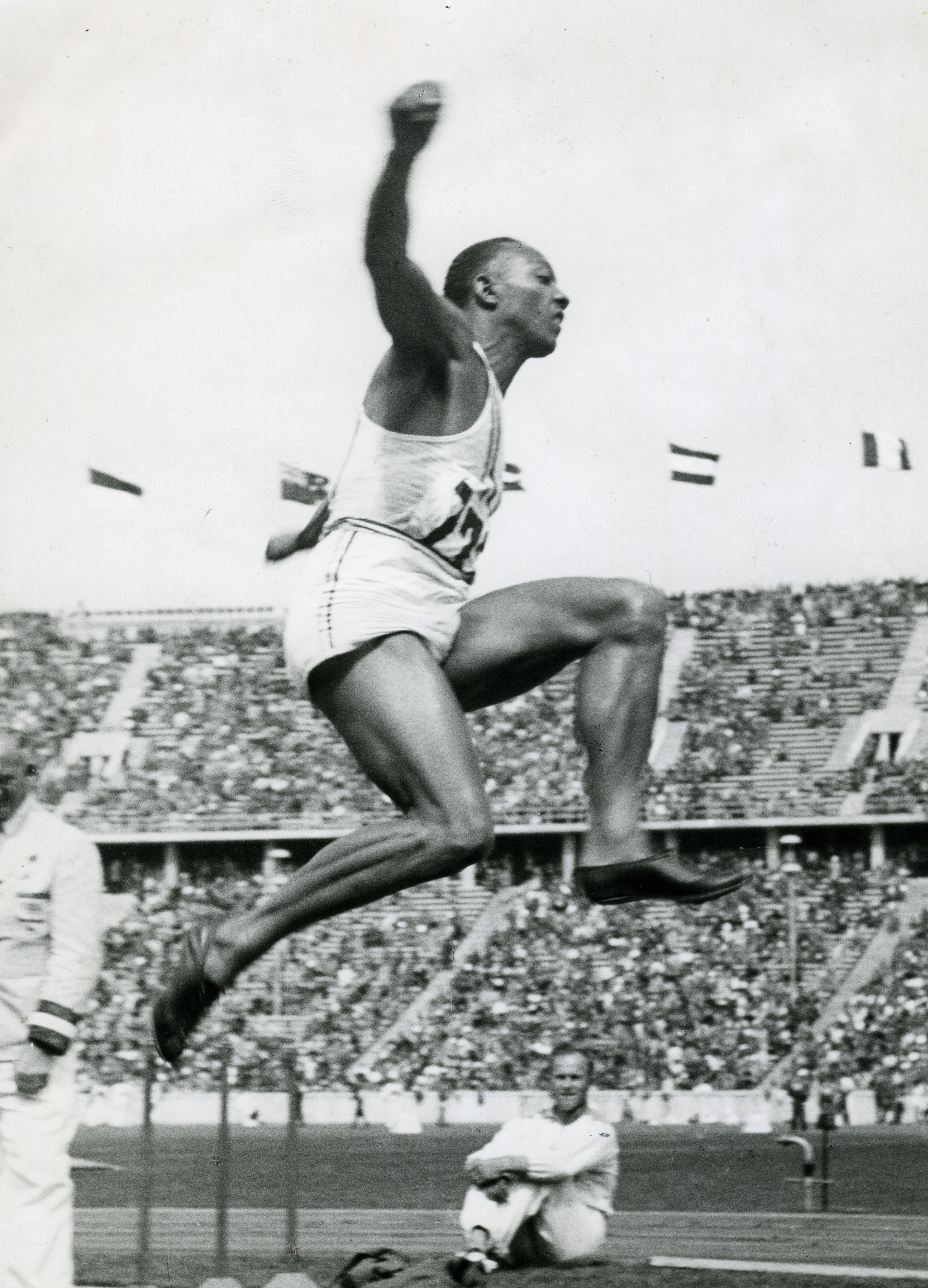
Jesse Owens, Olympics broad jump 1936

Owens competes in the broad jump at the 1936 Olympic Games

“Faster, Higher, Stronger – Jesse Owens: 100 Years of Life and Legacy” opens today in William Oxley Thompson Library Gallery and features material from the University Archives’ Jesse Owens Papers. The exhibit marking the 100th anniversary of Owens’ birth will run through May 5, 2013.

Owens made history at the 1936 Berlin Olympics by winning four gold medals in track and field.  Owens spent much of his later life working with young people and serving as a goodwill ambassador for the Olympic movement and the United States.  His accomplishments are explored in detail throughout the exhibit.  Highlights include Owens’ Olympic gold medals and diary, an Olympic torch from the 1936 Berlin Games, and Owens’ Presidential Medal of Freedom.

The exhibit examines Owens’ legacy after his death in 1980 and explains his connection to today’s Olympic athletes.  Material from the 2012 London Olympics worn by an Ohio State University student-athlete will be included in the exhibit.

Jesse Owen's gold medals, 1936

Owen’s gold medals, 1936

Additional information  about Owens can be found in the Archives’ web exhibit, “Jesse Owens: a lasting legend.”

An opening reception will be held Wednesday, January 23, from 4-6 p.m. in Room 165 at Thompson Library. The public is invited.

The Thompson Library is located at 1858 Neil Avenue Mall at The Ohio State University.  Gallery hours are Monday-Wednesday and Friday, 10 a.m.- 6 p.m.; Thursday, 10 a.m.- 8 p.m.; Saturday and Sunday, noon- 5 p.m.

For more information, please contact Tamar Chute (chute.6@osu.edu; 614-292-3271).

Older posts Newer posts