From Woody's Couch

Our Playbook on OSU History

Category: Events (page 5 of 13)

Archivist Tamar Chute: Celebration, changes in store for Archives during 50th anniversary

Tamar Chute

Tamar Chute, University Archivist

It is an honor for me to serve as University Archivist at The Ohio State University, particularly this year as we celebrate the University Archives’ 50th anniversary. Students often ask me, “What does the Archives do?” My short, elevator speech is “The University Archives serves as the official memory of The Ohio State University.” How we do that is the complicated part.

First, we collect material. In 2014 the Archives accepted more than 240 items or collections from units on campus and generous donors. These ranged from a small diary written by an unknown student in 1931 to more than 50 boxes from the Advanced Computing Center for the Arts and Design. To make highly used items widely available, we have worked with partners throughout the Libraries and University to digitize material, such as the Board of Trustees meeting minutes, Course Bulletins, and the Makio.

Diary_inside

Student diary from 1931

Adding material online has increased the number of donations we receive and the number of questions we answer. In 2014, the University Archives answered nearly 3,000 reference questions from individuals ages 8 to 80! We’ve helped people with National History Day projects, term papers, books, and their search to find information about their relatives. In each case, the Archives staff searched our holdings to help in any way possible.
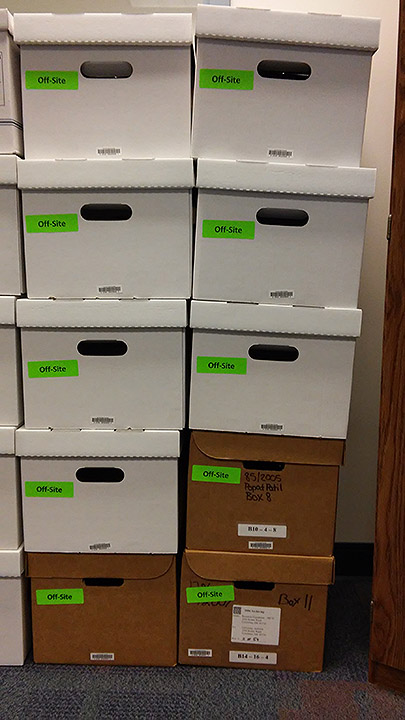
BoxesThe year 2015 will transform the Archives in many ways. Due to a lack of space in our stack area, nearly 14,000 boxes will be transferred to an off-site storage facility in February. These boxes will remain available to patrons but will require a little more advance notice to review (24 hours). At the same time, all of the Libraries’ Special Collections are migrating to a new online archives management tool, and the Archives will be working with a vendor to digitize our collection inventories. This means our inventories will be available to researchers any time and any place.

The year 2015 also will be the time to celebrate our past and look to our future. Be sure to keep reading our blog posts for updates and watch for a special feature about the University Archives in the March/April issue of the alumni magazine.
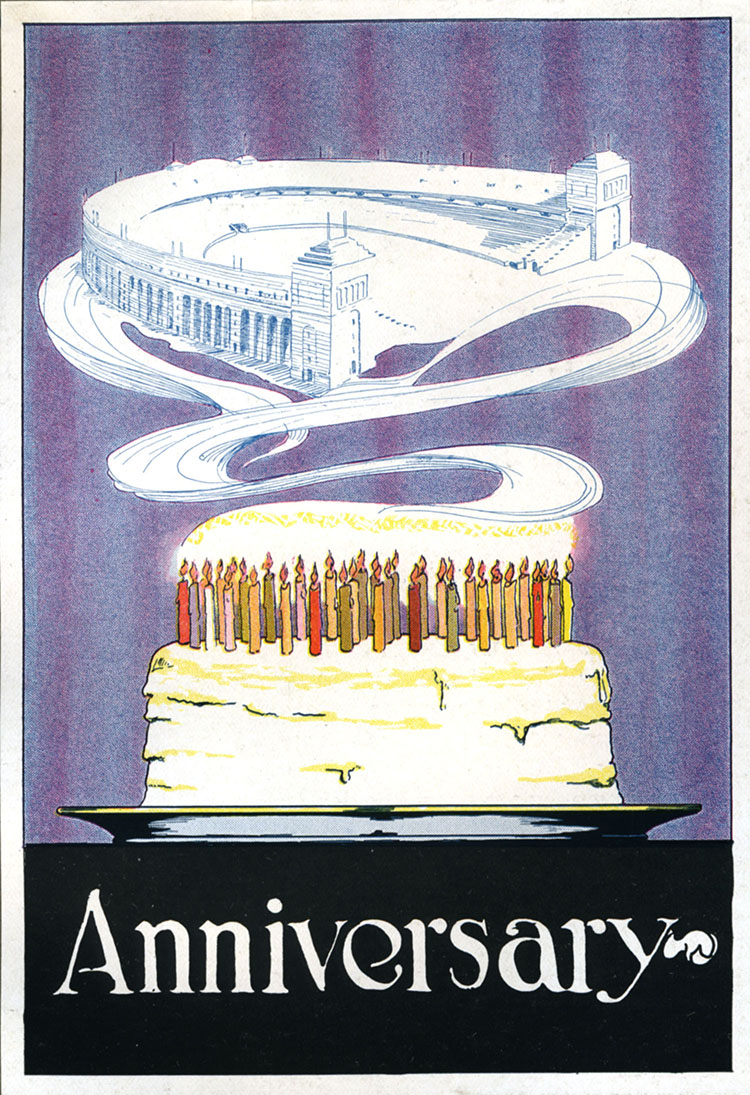
Sketch from the University's 50th anniversary celebration

In addition, I hope you can join us for our big anniversary event on May 14 from 4-7 p.m. Come toast the University Archives, take a tour of our facility, participate in a hands-on experience with interesting and unique artifacts, and watch rarely seen historical film footage.

All of us at the Archives are grateful for the support of so many people during the first 50 years of the University Archives. We look forward to celebrating our golden anniversary with you!

(Image at left is a sketch from the University’s 50th Anniversary Celebration in 1920.)
Twelve Days: Having the right ‘supplies’ key to planning OSU’s centennial party

(In celebration of the University Archives’ upcoming 50th Anniversary in 2015, we bring you “The Twelve Days of Buckeyes”. This is day four in a series of 12 blog posts highlighting the people who were instrumental in the creation and growth of the Archives.)

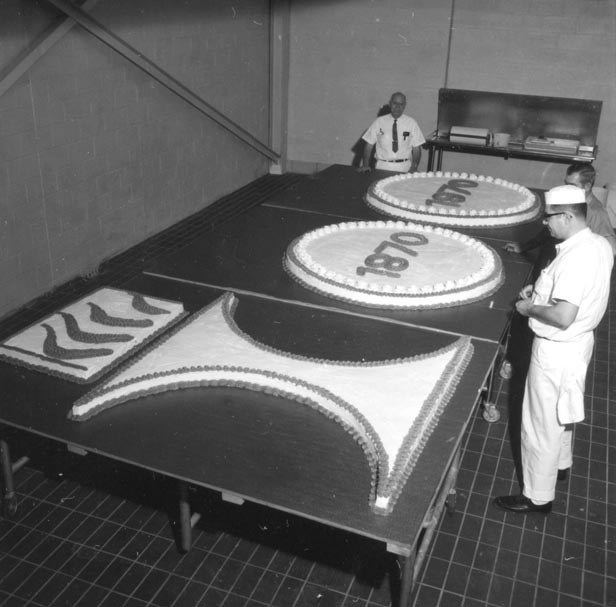
Cake made for the University's Centennial Celebration, 1970

The University’s centennial celebration cake, 1970

When you are planning a party, you always make sure that you have everything ready before it starts, right? In the case of a regular party, you see that you have enough food, beverages, plates, napkins, etc.

Same thing with the University’s centennial celebration in 1970, only in this case it had to make sure it had the historical papers, photos and artifacts to commemorate the 100th anniversary of its founding in 1970. Five years earlier, in 1965, the first University Archivist, Bruce Harding, was hired; a professional archivist was needed to properly manage the historical records as the University prepared to show off the legacy of its first 100 years. Particularly, photos were important, as they offered the basis of the “The First Hundred Years” book that was widely distributed for the event.

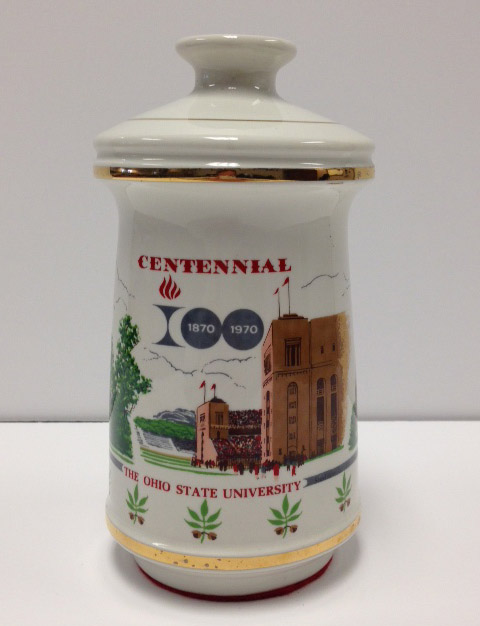
Centennial celebration container

Centennial celebration container

Coincidentally, as the University used the Archives to help it display its many historical legacies, the process of celebrating produced much-needed – and now often used – historical documents to be housed at the Archives. For instance, many OSU departments created centennial histories, which remain key resources for those doing administrative historical research.

And the celebration produced its own historical record: Not only does the Archives retain the various reports, proposals and other materials documenting the planning process, but it has a lot of really cool artifacts that demonstrate the way the University celebrated, such as a porcelain whiskey container with images of Orton Hall, Ohio Stadium and University Hall on it (at left).

Just an FYI: The University celebrates its 150th anniversary in 2020. It’s never too early to plan a party!

Twelve Days: Without Reuben Cannon, there might not be a Buckeye Nation

(In celebration of the University Archives’ upcoming 50th Anniversary in 2015, we bring you “The Twelve Days of Buckeyes”. This is day one in a series of 12 blog posts highlighting the people who were instrumental in the creation and growth of the Archives.)

Reuben P. Cannon, 1870

Reuben P. Cannon, 1870

When Congress passed a law in 1862 establishing the nation’s land-grant university system, it didn’t mean it was a done deal that there would be such a college in Ohio. The law allowed states to sell federal land out west to create endowment funds that would be used for university instruction in agriculture, mechanical arts (now known as engineering) and military science. But the whole thing was voluntary, so after the law passed, legislators in individual states began arguing over whether to take up the feds’ offer.

It was a long debate in Ohio, because there was much to consider. One of the biggest questions was, if Ohio sold the land and raised the money, would it be used for a new school or go to one currently in existence? After all, there were a number of colleges, such as Ohio and Miami universities, that would gladly use the money for instruction in agriculture and mechanical arts.

Enter Reuben Cannon.

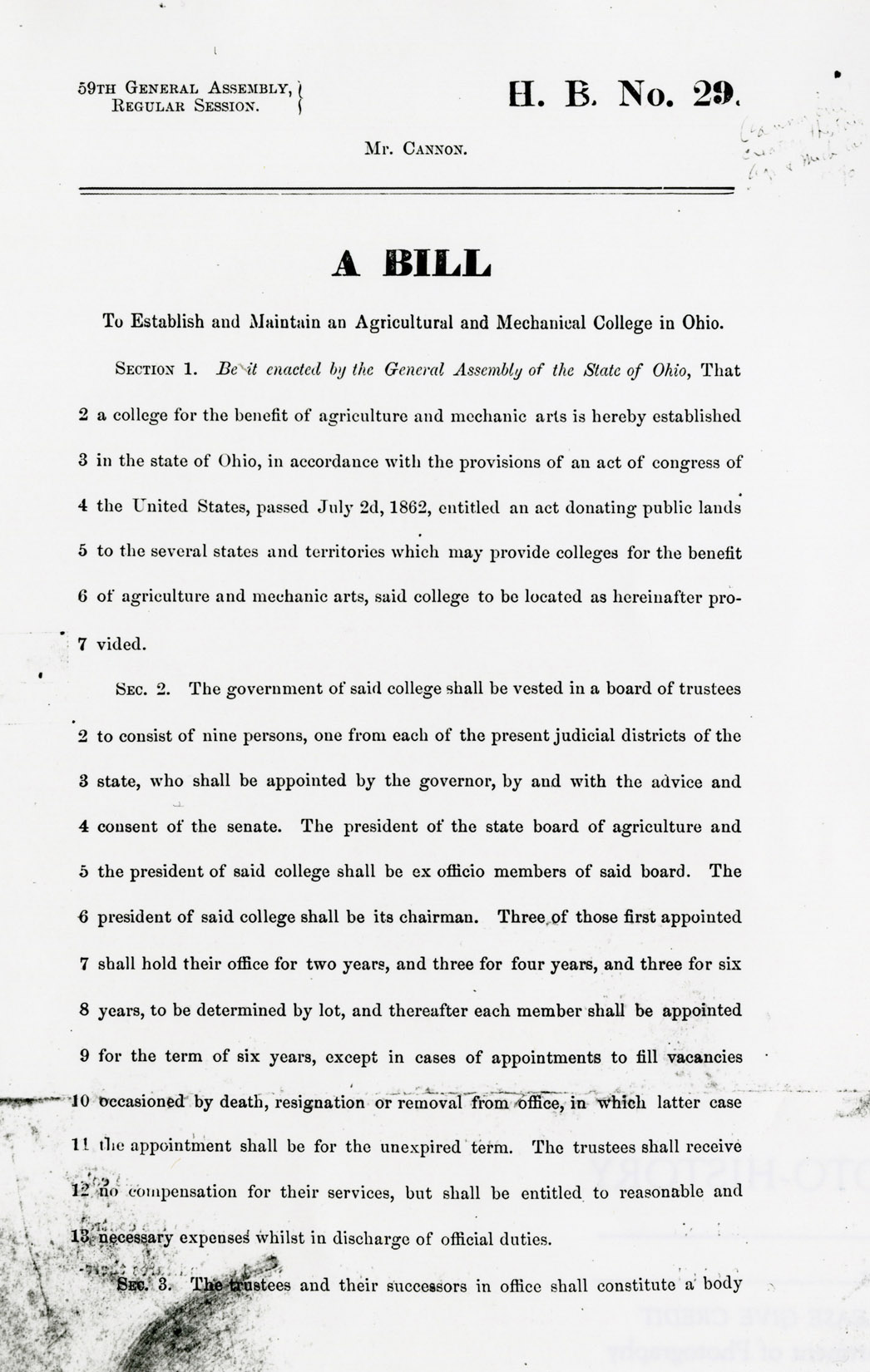
The Cannon Act

The Cannon Act

In 1870, Cannon, a General Assembly member from Portage County, proposed a bill to establish a brand-new university: the Ohio Agricultural and Mechanical College.

The Cannon Act of March 22, 1870, proposed a board of trustees of 19 members—one from each congressional district in Ohio—who would make decisions regarding this institution. These decisions included its curriculum, faculty, administration, and location.

Some specifics that the trustees implemented were that the location must not be less than 100 acres; it had to be in the center of the state, and it had to be accessible by railroad from parts of Ohio. This new college would have to be open to those over 14 years old, and it would have to have, at the very least, four departments: agriculture, mechanic arts, military science, and literature. Neil Farm, between Olentangy and Worthington Road, was chosen for the new campus.

In September 17, 1873, the Ohio Agricultural and Mechanical College would open its doors to 24 of its 40 applicants, including two women, from eleven counties.

Cannon is now known as the “father of Ohio State,” for without him, we may not be here at all!

1873

1873

Older posts Newer posts