From Woody's Couch

Our Playbook on OSU History

Page 78 of 105

North Campus housing grows as four dorms named after war veterans come down

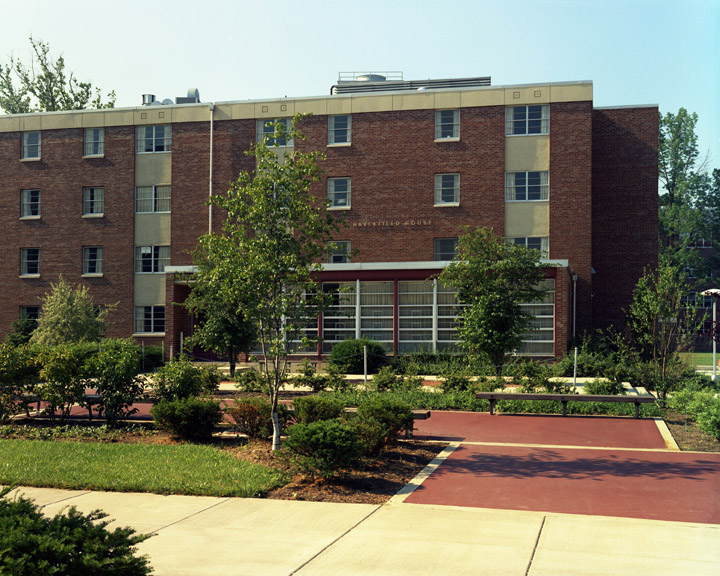
Haverfield House, 1967

As you may have heard, the Board of Trustees recently approved a plan to overhaul North Campus, with particular attention to the residence halls. The $396 million plan is expected to increase campus housing for students, as well as add dining and recreation facilities in the area.  As a result, four existing dorms will be demolished: Blackburn, Haverfield, Nosker, and Scott Houses.  Since they will be gone soon, let’s reflect on their significance:

On April 6, 1962, the Board of Trustees dedicated a group of dorms on North Campus, including the four to be demolished. These buildings were going to alleviate the housing crisis the University found itself in during post-war enrollment boom of the ’50s and ’60s. What is special about these buildings is that they were named in honor of U.S. war veterans who were all Ohio State students or alumni and who had died during one of the major conflicts, from the First World War through the Korean War. The only two buildings on North Campus not named for a veteran are Drackett Tower and North Commons (Taylor, of Taylor Tower fame, was a veteran, but he survived and worked at Ohio State for many years after he left the service). The four dorms to be demolished are named for the following individuals:

Blackburn, 1941


John Thomas Blackburn, of Columbus, was one of four Ohio State men killed in action in 1941 during the attack on Pearl Harbor. He served aboard the U.S.S. Utah. A member of Tau Kappa Epsilon fraternity, he enlisted in the Navy in October 1939.


Haverfield, 1941


A native of Uhrichsville, Ohio, James W. Haverfield graduated from Ohio State in 1930. He was a member of Beta Theta Pi, and active in Scarlet Mask. He enlisted in the Navy in November 1940. He was reported missing in action in 1941 after the attack on Pearl Harbor, and he was declared dead just five months after he was called to active duty. A Navy destroyer escort vessel was named to honor him as well.


Nosker, 1944


William C. “Bill” Nosker played three years on the varsity football team as a guard (1938-1940), and served as class president during his sophomore year (1940). He graduated in 1942 with a bachelor of science degree in Agriculture. In December 1943, he was deployed overseas and flew more than 30 missions before he died after a night-time takeoff on August 15, 1944, in Italy. He was awarded the Bronze Star for a mission over Romania, as well as an Air Medal, issued to those who distinguish themselves during an aerial fight. Nosker’s Air Medal had three oak leaf clusters, signifying that he had received this decoration three times.

Scott, 1941


Robert R. Scott was killed in action in 1941 during the attack on Pearl Harbor, while he was serving on board the U.S.S. California. A native of Massillon, Ohio, Scott was posthumously awarded the Congressional Medal of Honor—the first Ohio State student to be given the honor in either World War.

To learn about the other veterans and administrators the dorms are named for, check out Buckeye Stroll, our interactive map of campus: http://library.osu.edu/buckeye-stroll/.


Filed by C.N.
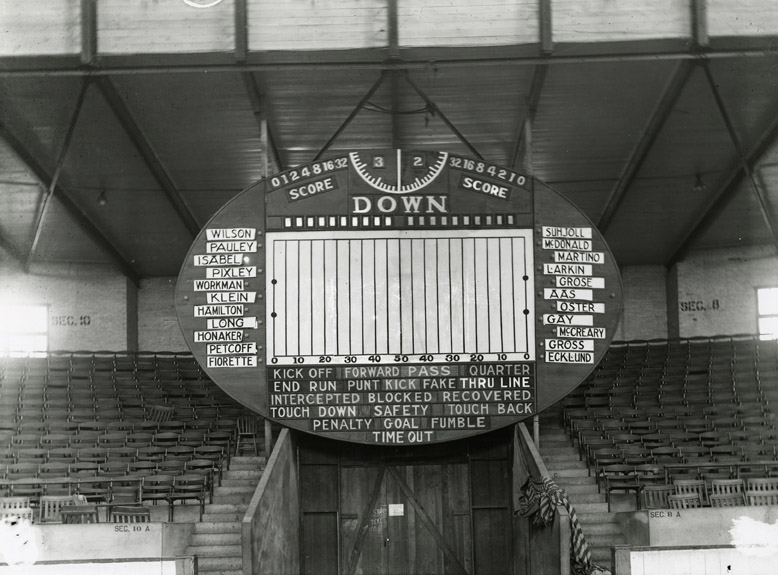
ESPN ticker: Meet the electric scoreboard

A scoreboard in the Ohio Coliseum, c1923

In December 1914, an alumnus by the name of Howard Bryan created an electric scoreboard, consisting of 100 electric light bulbs and the necessary wires, to allow fans who couldn’t make the game to follow the two teams’ movements on the board. It was first used for an away game at Indiana. This was half of the equation; the other half meant actually finding out what was happening at the real game. The solution: OSU “leased a wire,” which wasn’t explained in the Alumni Monthly magazine story, but likely means a telegraph line. So the board operator would receive the news via telegraph, then would show the play on the “scoreboard.” How’s that for “instant messaging”?

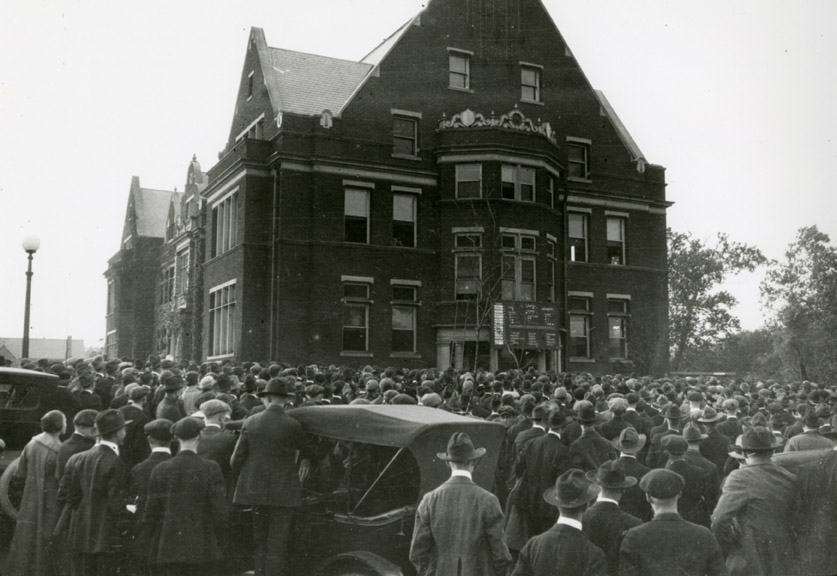
Over time, the “scoreboards” seem to have evolved, while keeping the same basic format. By 1919 there was one hung on the east side of the then-Ohio Union, what is now Enarson Hall on the South Oval. That scoreboard could attract crowds of a thousand people. Those of us who have smartphones may laugh at a group of people waiting for a light bulb to turn on, but it had a party atmosphere all the same. These scoreboard parties continued at least until 1927, which is the last we’ve found them mentioned in our records. At some point, the board was moved under the Stadium, where crowds gathered to find out the latest news. Now those were devoted Buckeyes!

A football scoreboard party outside of Enarson Hall (formerly the Ohio Union), 1919

Scoreboard party under the Stadium, 1923

Filed by C.N.

A River Runs Through It: The Olentangy’s place in campus history

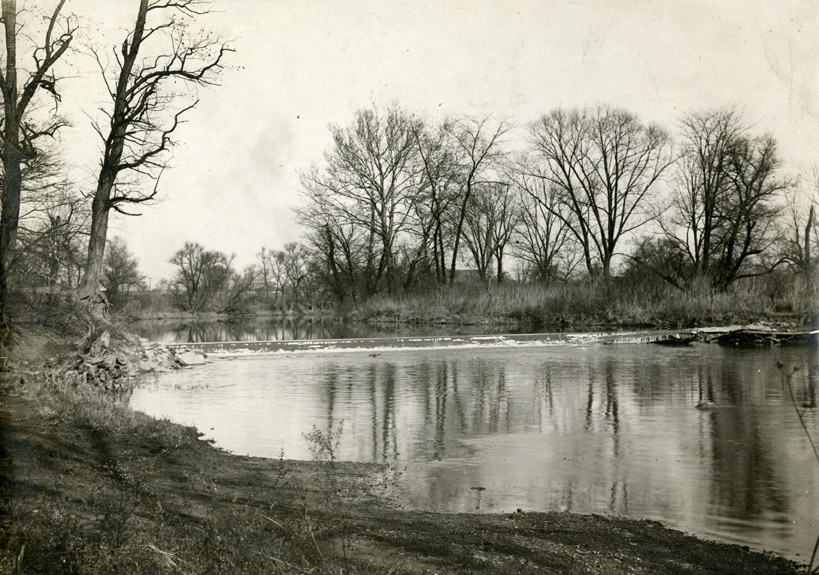
Olentangy River, 1913

The waterway we know as the Olentangy was called the Whetstone River by early settlers, and the Delaware Indians had a permanent camp just north of the present campus on its floodplains.

At the time the Board of Trustees purchased the Neil Farm in 1870 for the future site of campus, the Olentangy had a significantly different pattern; in fact, it flowed right through the area now occupied by Ohio Stadium. There was also a marsh, measuring about six acres, in the southwest section of the University’s original land purchase.

Much of the land on either side of the river was a natural flood plain, which supplied nutrients to the farmland, but could prove dangerous for people and livestock after heavy rains. Because of such flooding, the University and the State of Ohio have made a number of significant changes to the area around the river.

As early as 1884, the Board of Trustees set aside funds to repair a damaged levee. In 1879 the University drew up plans for “improving” the river; the plan included a dam north of campus, but the University did not own the land—yet. The University spent $607 to purchase about 12 acres; the Ohio General Assembly then gave a further $1,500 for the river project.  The dam was then built.

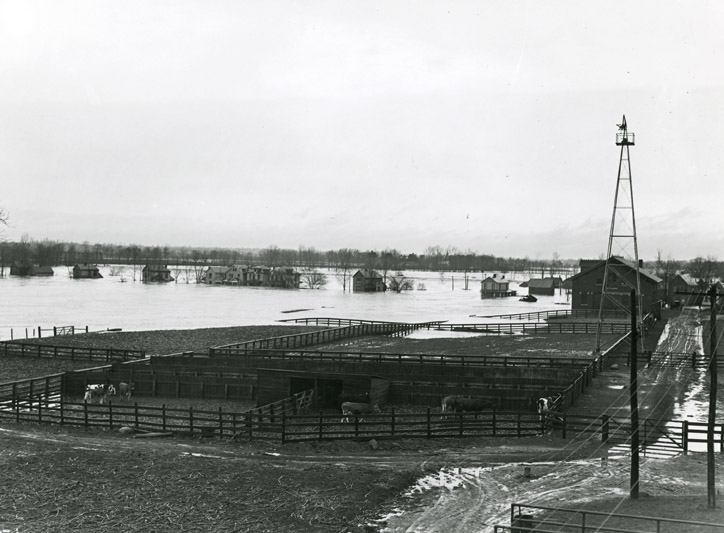
In March 1913, however, much of the west side of Columbus, and vast portions of the University’s farmland were flooded. Nearly 500 people lost their lives, and 100,000 lost their homes to the floods. No one on campus was hurt, and no livestock was lost, but the University was still affected.

Flooding on campus, March 1913

Just before the flood, most students had gone home for Easter, returned to campus Monday, and flooding began on Tuesday. On Wednesday, classes were cancelled, and for the next few days professors took their classes all over the city to assist in relief efforts. Students in home-economics classes prepared meals, residents of the women’s dorms sorted clothing and served meals.  OSU President William Oxley Thompson and Commandant George Converse volunteered male students in the University’s military science courses to assist the Ohio National Guard Troops throughout the city. Others helped with the clean-up. Damages on campus were said to have been close to $10,000, plus the $3,000 cost of keeping the power plant operating.

The University attempted to fix the recurrent flooding problem by rerouting the river, which then created a spot to build the Ohio Stadium. But the problem of flooding was far from over: significant floods occurred again in 1922, prompting the creation of a dike in 1923 along the river (along where Cannon Drive now runs). The river was also widened, as part of a WPA project. The result is what you see today—but not for long.

Flooding in 1922

Dike being built next to Olentangy, 1923


The Olentangy River restoration project, part of the One University Framework Plan, is set to restore the river to its natural flow and reconstruct some of the wetlands on the west bank. To accomplish this, the 5th Avenue dam, which was originally built to serve the University Power Plant, will be removed.

Filed by C.N.

« Older posts Newer posts »