From Woody's Couch

Our Playbook on OSU History

Page 77 of 106

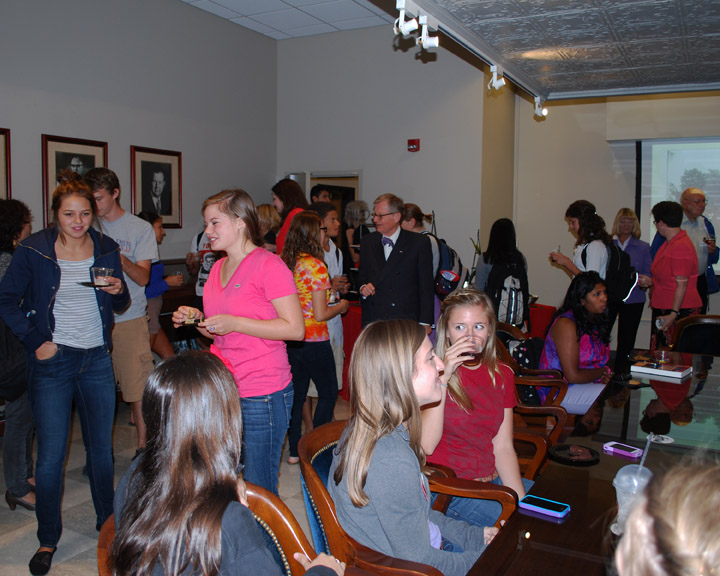
What better way to spend Founders Day than Tea with Gee?

Our first Founders Day event was a success, thanks to the wonderful folks in Ohio Staters, Inc., who co-sponsored the event with us; the many students, staff and faculty who accepted our open invitation to attend; and of course, President Gee, who shared some time with us to celebrate.

As you know, Founders Day commemorates the first day of classes at Ohio State in 1873, and as President Gee said, the mission that the then-fledgling university embraced at that time is the same today: providing a quality education for the next generation to tackle the challenges of the future. As it was then and is now, Gee said, we are up to the task. So, we appreciate everyone’s participation, and until next year, please enjoy the photos from 2012:


“Iced Tea with President Gee,” in progress


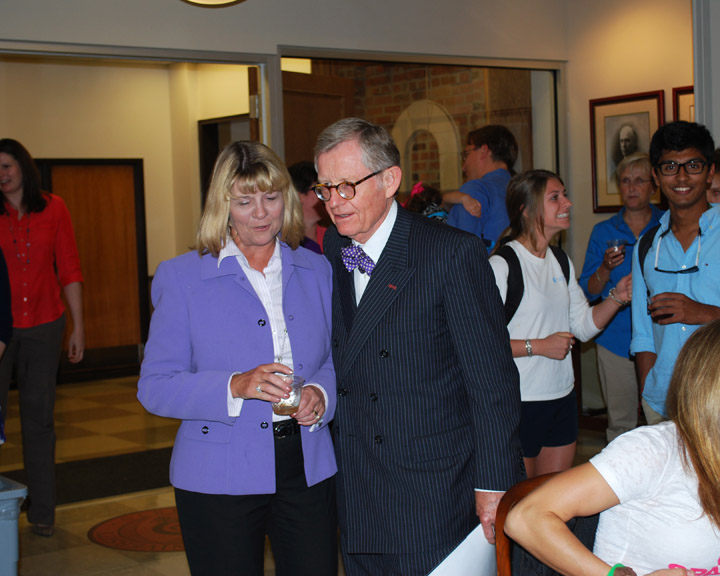
President Gee chats with OSU Libraries Director Carol Diedrichs


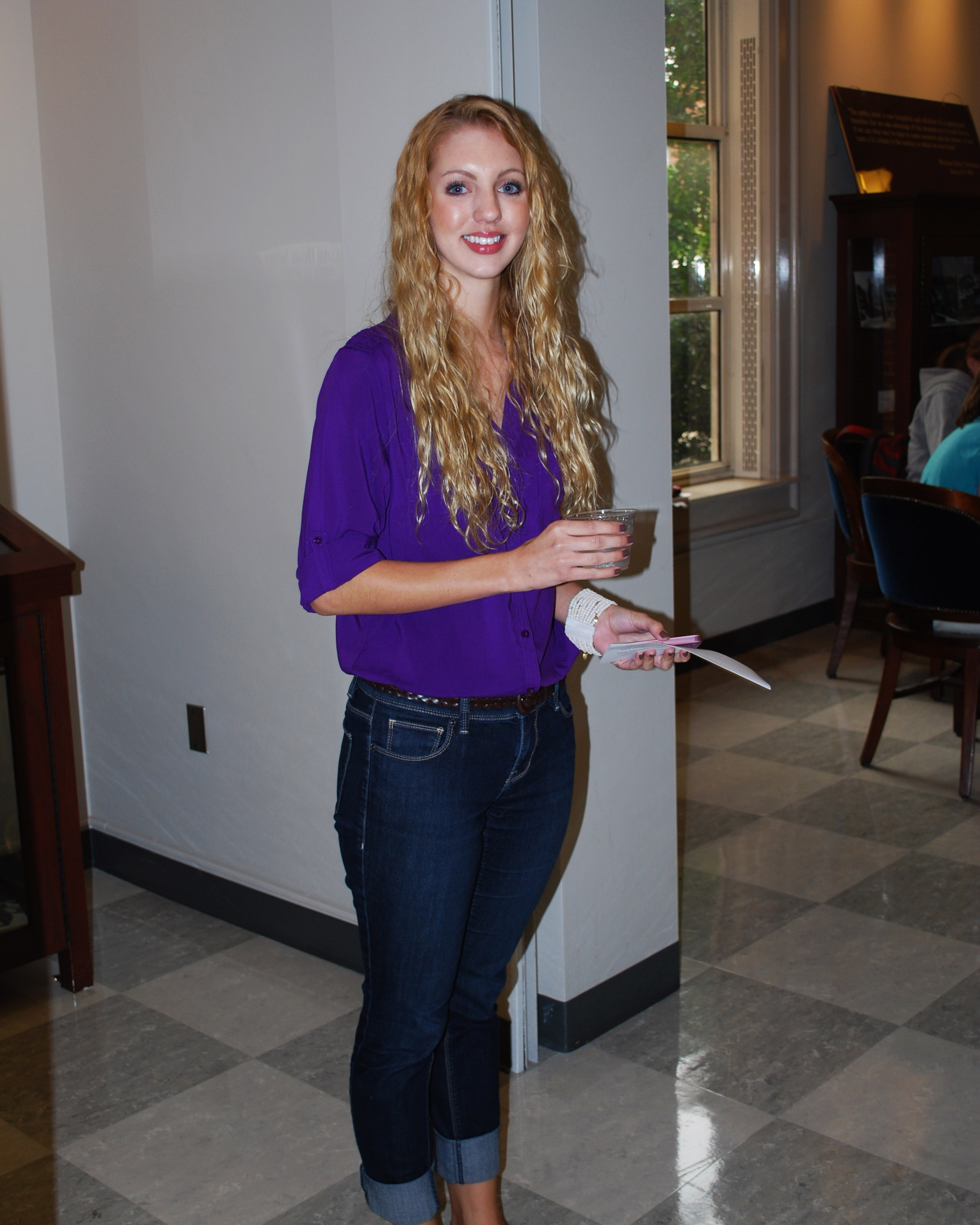
Serena Jezior, Ohio Staters, Inc. student member, who welcomed guests and introduced President Gee


President Gee talks to attendees about the University’s founding


University Archivist Tamar Chute gives President Gee a Founders Day coaster


President Gee and University Archives Student Assistant Annemarie Cunningham

Founder’s Day: ‘A small beginning makes a good ending’

University Hall, 1874

Nearly 140 years ago, the Ohio Agricultural and Mechanical College opened its doors.

On September 17, 1873, seven faculty members greeted the roughly two dozen students who showed up to get a college degree. (Reports vary between 17 and 25 on how many students there actually were.) The college’s sole building—University Hall—was still under construction, with an unfinished roof, no interior doors, and no more than a few benches for students.

There was no formal opening ceremony, nor a dedication. Therefore, it is not surprising that its opening went mostly unnoticed. However, one Ohio newspaper did write, perhaps a bit prophetically, “They say a small beginning makes a good ending.”

Despite the inauspicious beginnings, the University did succeed, and a lot of the credit for that success goes to the outstanding faculty. The Board of Trustees found remarkable individuals – men (and they were all men) who may not have achieved great honors but who recognized the worthiness of the University’s mission and dedicated themselves to the cause. And it was dedication. The faculty undertook significant workloads, not only teaching but donating time as per state requirement. For example, the agriculture professor was required by the state to analyze fertilizer samples—for free—for the general public. The faculty was also required to help with the grounds, including sanitation. On top of all that, many of the original faculty members lived in University Hall along with the students. Despite these conditions, many of these faculty members spent the rest of their careers at Ohio State.

First graduating class, 1878

But what did these professors teach? The focus was science, but the liberal arts were also required as part of the curriculum. Incoming students were required to take an entrance examination in “arithmetic, geography, English grammar, and elementary algebra.” Students also had classes in literature, history, agricultural science, engineering, chemistry, philosophy, and language (Professor Joseph Millikin apparently taught Latin, Greek, French, German, Anglo-Saxon and the Romance languages). From here, you know the story: Ohio State has been accumulating courses and departments—and students—ever since.

In 1878, the college changed its name to The Ohio State University, and the rest, as they say, is history.

For more information about the founding, visit our web exhibit at: http://library.osu.edu/projects/founding/.

Filed by C.N.

Should we call him “Coach” or “Doc”?

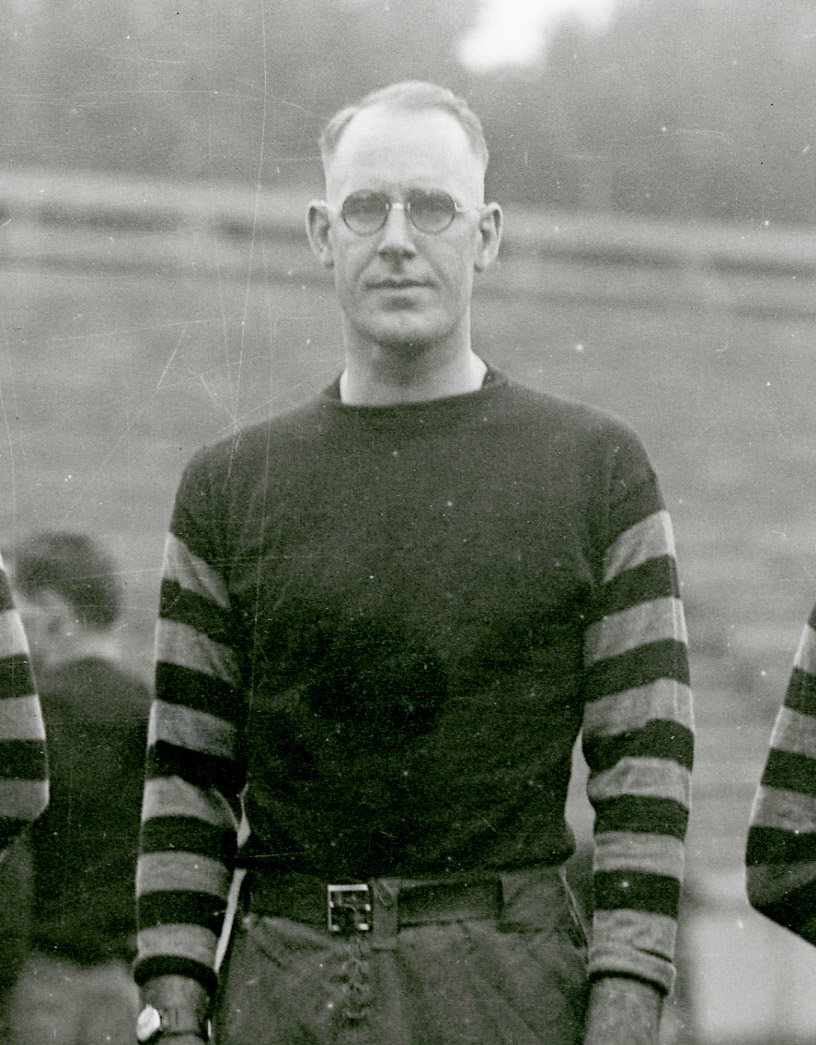
Coach Wilce, circa 1915

Did you know that one of OSU’s football coaches was an M.D.? Coach John Woodrow Wilce became Dr. Wilce in 1919 while head coach of the Buckeyes. In 1913, Wilce came to Ohio State from the University of Wisconsin (his alma mater), where he had been head football coach for two years. At Ohio State, he accepted the dual appointment of football coach and professor of physical education. He was 25 years old.

Wilce served as head coach for 16 seasons, leading the Buckeyes to three Big 10 Championships and into national prominence. Under Wilce, All-American Chic Harley led the Buckeyes to two of those championships. In fact, nine players achieved All-American status during the Wilce era. It was also Wilce who transitioned the team from playing at OSU’s first football game location, Ohio Field, to the big-league venue of Ohio Stadium.

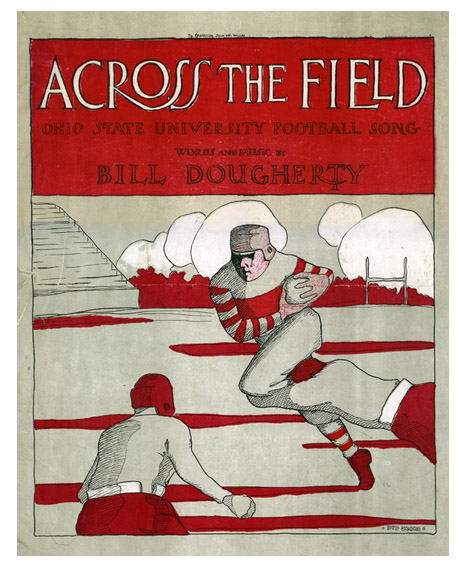
He even had a football fight song written for him. An unidentified press clipping in his biographical file here at the Archives says that back “in 1915, when the Buck team began to show its first signs of being a big conference threat, Bill Doherty, who was managing the team, wrote the ever popular ‘Fight the Team Across the Field,’ and dedicated it to Dr. Wilce, who was coach then.”

Wilce resigned after the 1928 season, took nine months off, and returned to the University as a physician on the staff of the Student Medical Service. Upon the reorganization of that department, he took the helm as director in 1935. In that position, he wrote many journal articles and gave many conference talks about University health services.

Wilce Student Health Center

He continued in that capacity until he retired in 1958, spending additional time studying the cardiac effects of athletic stress, another subject on which he was considered an expert. He was a Fellow and life member of the the American College of Physicians and vice president of the American College Health Association. He also was a recipient of the University’s Distinguished Service Award in 1956. He passed away in May 1963 at the age of 75.

Thousands of sick and injured students now probably link Wilce more with the University’s health services than his record as football coach: In 1969, the Board of Trustees officially named the then-new student health facility in Wilce’s honor.


« Older posts Newer posts »