From Woody's Couch

Our Playbook on OSU History

Page 65 of 106

‘Jovial Bob’ aimed to put the fun back into USG elections

The Makio, 1965

This year’s USG election is the latest in a long line of annual events in which students choose the candidate whom they believe will best represent their interests in Ohio State’s student government. It has sometimes been ugly – depending on how much mud is slung by various candidates – and it sometimes has been plagued by scandal, with accusations of vote-rigging other such charges.

And once, in 1965, it was infused with a healthy dose of humor, thanks to R.L. Stine, who went on to author the popular Goosebumps series of scary books for kids.
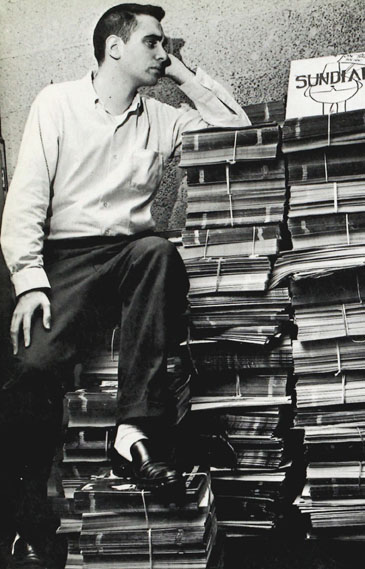
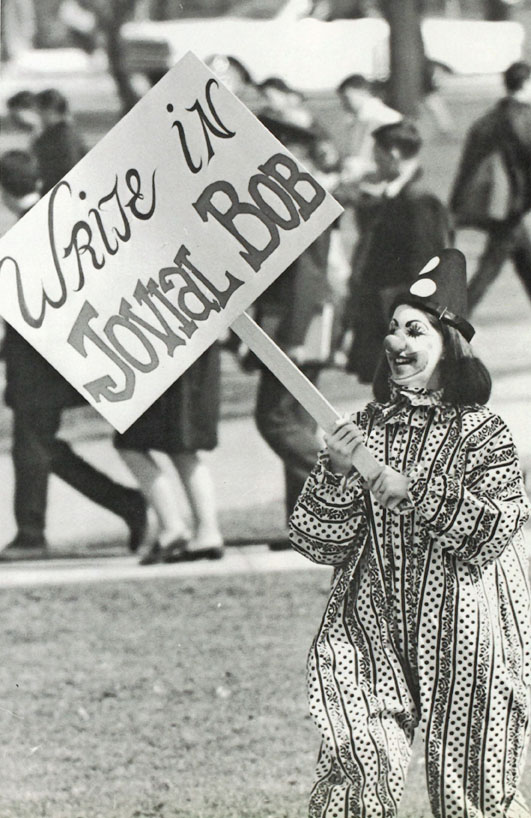
The Makio, 1965

At the time he ran for USG president that year, Stine was also known as Jovial Bob Stine, editor of the Sundial, OSU’s very own humor magazine. He also was a graduating senior and therefore not eligible to actually win the election. But that didn’t stop him from running a full-blown campaign, complete with clowns carrying signs encouraging students to vote for “Jovial Bob.” His campaign promise: If elected he would graduate and be gone for good.

Amazingly, he received 1,200 write-in votes.

After graduating that year, Stine went to New York City where, according to the alumni magazine, he wrote for a humor magazine called “Bananas,” then published his first book, How to Be Funny. He later wrote G.I. Joe and Indiana Jones books.

In the late 1980s, R.L. Stone was asked by a former editor to write a scary children’s book called Blind Date, which became a best-seller. That led to an idea for a series of scary stories for children, which led to Goosebumps. At one point in the early 1990s, the series outsold such other best-selling authors as Stephen King, John Grisham and Michael Crichton.

Coincidentally (or perhaps not?), the year after Jovial Bob ran, there was only one candidate for USG President. Also coincidentally, considering this blog post, this year’s election again features only one candidate – the first time since 1966.


Black History Month: Football player had higher calling than just ‘phys ed’

William Bell

William Bell

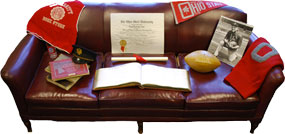
William “Big Bill” Bell was a standout tackle for the OSU football team, but his academic career off the field far outshone his performance on it.

Bell played for the Buckeyes from 1929 through 1931, and earned All Big Ten and Honorable Mention All-American honors his final season. But football wasn’t his only activity: He was a member, and Sergeant of Arms, for the African-American social fraternity, Alpha Phi Alpha, and he was a member of Varsity “O,” the Collegiate Council, and the Interracial Council.

His senior year, the Upper Class Cabinet of the OSU chapter of the YMCA tapped Bell to lead a new committee on interracial relations. In doing so, the Cabinet’s president, Wallace Hall, revived a then-dormant policy of allowing African-American members to become a member. In a Lantern article about Bell’s appointment, Hall said “Bell is a good worker, and I see no reason he should not be a member of the cabinet.”

Bell was named Interracial Chairman of the Upper Class Cabinet, 1931 Makio

Bell was named Interracial Chairman of the Upper Class Cabinet, 1931 Makio

After graduating in June 1932, Bell began a long career coaching football at historically African-American colleges, including Claflin College in South Carolina, Florida A&M University, Howard University and finally North Carolina A&T State University. Bell worked more than 20 years at North Carolina A&T in a number of capacities, including athletic director and professor of physical education. (Along the way, Bell received his master’s degree in physical education and his PhD in physical education from Ohio State, in 1937 and 1960, respectively.)

After organizing physical education departments at several universities, Bell ended his career as athletic director of Fayetteville (Alabama) State University where he assisted in the development of Fayetteville’s National Youth Sports Program, a summer organization for disadvantaged youths.

He died at the age of 81 in 1981 in Fayetteville. In Bell’s obituary, a former student of Bell’s at North Carolina said Bell “never said ’phys. ed.’ He always said ‘health and physical education.’ He wanted it to be a profession.”

Obituary: Charles O. Ross

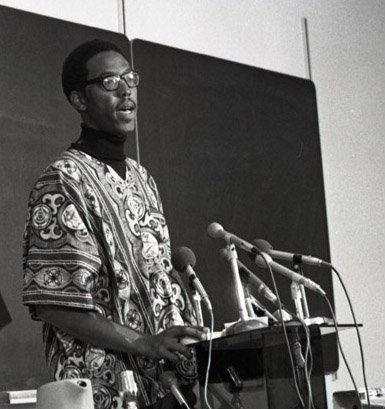
Charles Ross, 1970

Charles Ross, 1970

We are saddened to hear of the passing of longtime OSU Professor Charles O. Ross, who died last week at the age of 79. For decades, he was a constant champion of issues of racial equality, even when it cost him his job as director of the black studies department.

After the campus riots of 1970, the University approved a plan for a new Department of Black Studies. Ross, a professor of social work, was chosen as its first director. Immediately, Ross demanded more money for the program, and he pushed for substantive changes related to African-American involvement on campus, such as recruitment of much larger numbers of black students to the University.

Ross was also politically active and was involved in a movement to organize high school students. Racial disturbances subsequently occurred at area high schools, and the OSU Board of Trustees, displeased with Ross’ involvement, fired him from the directorship a year after he was hired.

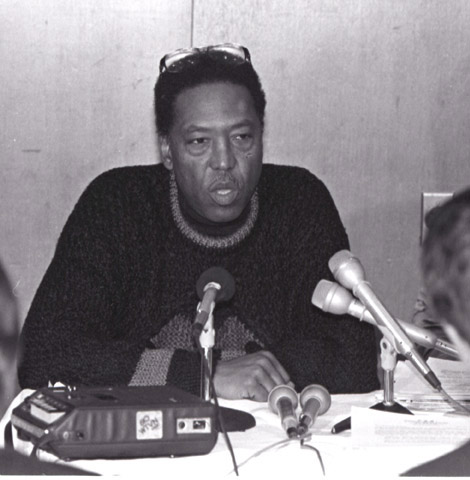
Ross, 1988

Ross, 1988

Ross continued to be an outspoken figure throughout his tenure: In 1993, for instance, he briefly occupied the office of the then-new Dean of Social Work, Beverly Toomey, to protest then-Provost Jean Huber’s decision to hire Toomey over him. According to The Lantern, Toomey was named Dean, despite a faculty recommendation in favor of Ross, who called the Provost’s decision racist, but filed no legal action on the matter.

Despite his sometimes contentious relationship with the University, Ross remained at OSU for 35 years, and in 2006, the Board of Trustees awarded him the title of associate professor emeritus upon his retirement.

Read a Columbus Dispatch obituary here:

http://www.dispatch.com/content/stories/local/2013/02/19/longtime-osu-prof-known-for-activism.html

————-


« Older posts Newer posts »