From Woody's Couch

Our Playbook on OSU History

Category: Uncategorized (page 10 of 10)

End of an era: Classroom bells go silent for semesters

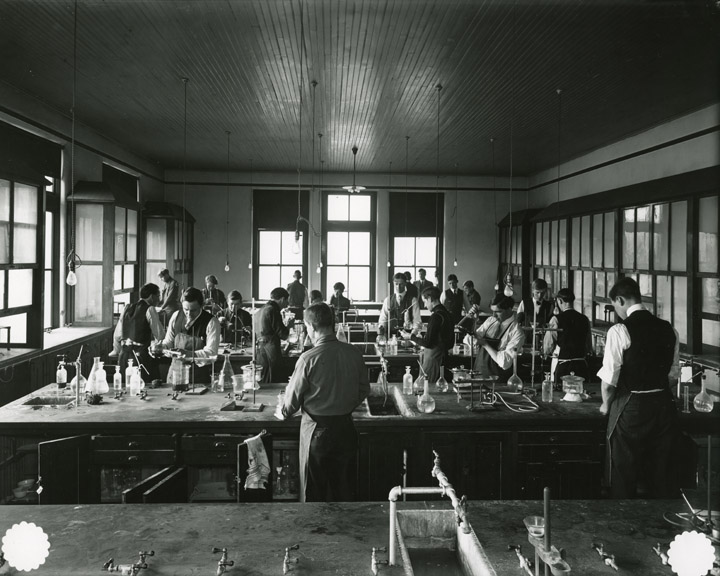
Metallurgy lab in Lord Hall, 1910

Someday, we’ll be noting in our blog, as we do with other historical campus events, the anniversary of this date – June 1, 2012 – the day the classroom bells stopped ringing permanently. With the conversion to semesters, and the subsequent wide variations in class times, the University decided to shut down the bell system with the end of this quarter. Today’s 4:18 p.m. bell will be the last.

It’s an end to what appears to be more than 100 years of bells signaling the start and end of classes in various buildings around campus.

The first reference to bells can be found in the minutes of the Board of Trustees’ Building Committee for the meeting of June 14, 1906. An appropriation of $45 was listed for bells to be installed in what later became Lord Hall, the home of the School of Mines and Engineering. Other expenses listed were electrical fixtures, electric lamps, motors, shades and chairs. At a similar meeting two years later, the minutes state that the committee approached the E. Howard Clock Company on the matter of obtaining a “Watchman’s Clock System for the various buildings of the University…for ringing the class bells…for the sum on $520.”

In 1920 John Coven, a master mechanic at the University Power House, explained to a Lantern reporter how the clock system worked. The bells are regulated from a clock in the chief engineer’s office. A wiring system linked that clock with all of the classroom bells. A spring, attached to the clapper, was wound every two weeks in every bell so that it would spring – and ring – when called to do so.  This system also tracked the night watchman and the campus policeman before the age of telephones. Stations were set up around campus with a button that would record the time and the station location so that, in the event of an emergency, an official could be located.

There’s been talk before of disabling the bells for good – most recently in 1993. The Classroom Coordinating Council and the Scheduling Office went so far as to conduct an experiment: Bells were disconnected in five buildings for a quarter. Surveys were then sent to 400 faculty and 300 students to see what they thought about the change. More than half responded, and in the end, the bells kept ringing.

To learn more about the disabling process, read this Columbus Dispatch story:
http://www.dispatch.com/content/stories/local/2012/06/01/at-ohio-state-its-o-h-bye-o-to-classroom-bells.html

An ode to OSU’s First President and No. 1 Geology Fan

In the early days,  OSU’s yearbook, the Makio, did not include photos, only illustrations to go along with annual updates on the classes and student organizations. It was seen more as a literary publication, which meant there also was plenty of fiction inside, including poetry.

Today, to celebrate “Poetry in Your Pocket Day 2012” (April is National Poetry Month), we decided to find a short OSU-related poem we could share with you from an early Makio, in case you’re desperately looking for something you can stick in your back pocket as a way to honor the day.

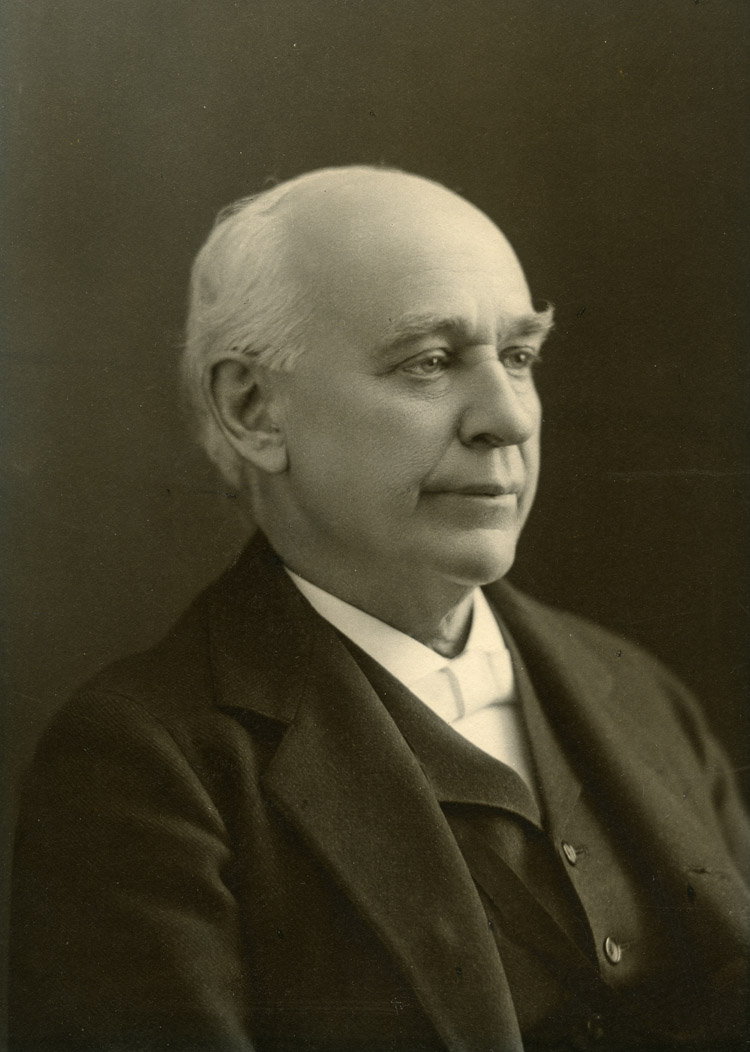
Portrait of Edward Orton Sr., 1890

Our selection comes from the second issue of the Makio – 1882 – which also happened to be the year after OSU’s first president, Edward Orton Sr., ended his tenure in this role.

While president, he also served as chairman of the Department of Geology, and after his presidency, he served as state geologist until his death in 1899. After his presidency, he witnessed the construction of a building to house the geology department, which resulted in the aptly named Orton Hall in 1893. The building not only housed the geology department, but also a geology museum, which was started with a gift from Orton of his own collection of 10,000 geological specimens.

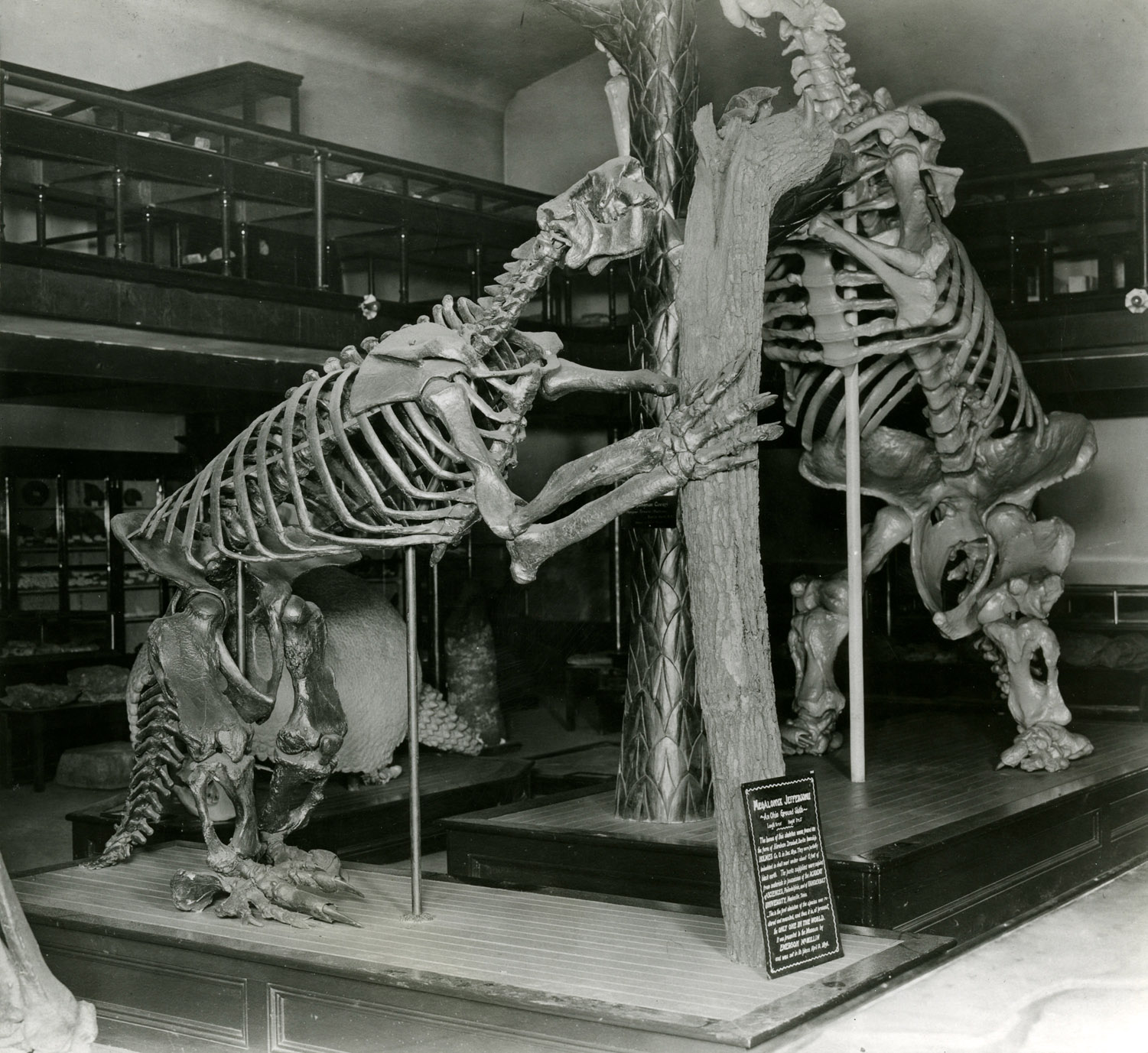
Skeleton of ground sloth, no date

For the geology building, Orton encouraged the use of stone native to Ohio, and in fact, the exterior stone is composed of 40 varieties of Ohio stone, placed in the order in which they appear in the bedrock. Instead of mythic gargoyles surrounding the top of the tower, there are carvings that represent various prehistoric animals,  and inside above the pillars in the vestibule, there are carvings of fossils dating from the time when Ohio was under a vast warm, shallow sea.

Are you beginning to see a theme here?

So, among the poetic “Faculty Pokes” on page 89 of the 1882 edition of the Makio, the editors have some fun with their beloved ex-president’s passion for geology:

“I conned the rocks with anxious eye,

A student meek and docile;

When a distant whisper floated by,

Oh, come and be a fossil!”

Orton Hall Tower, featuring carvings of prehistoric animals, 1982

Newer posts