From Woody's Couch

Our Playbook on OSU History

Category: Student organizations (page 2 of 10)

The Built Fem-vironment: Women’s History on Campus in Four Architectural Structures, Part 1: The Gab Room

Written by Sarah Stouffer-Lerch
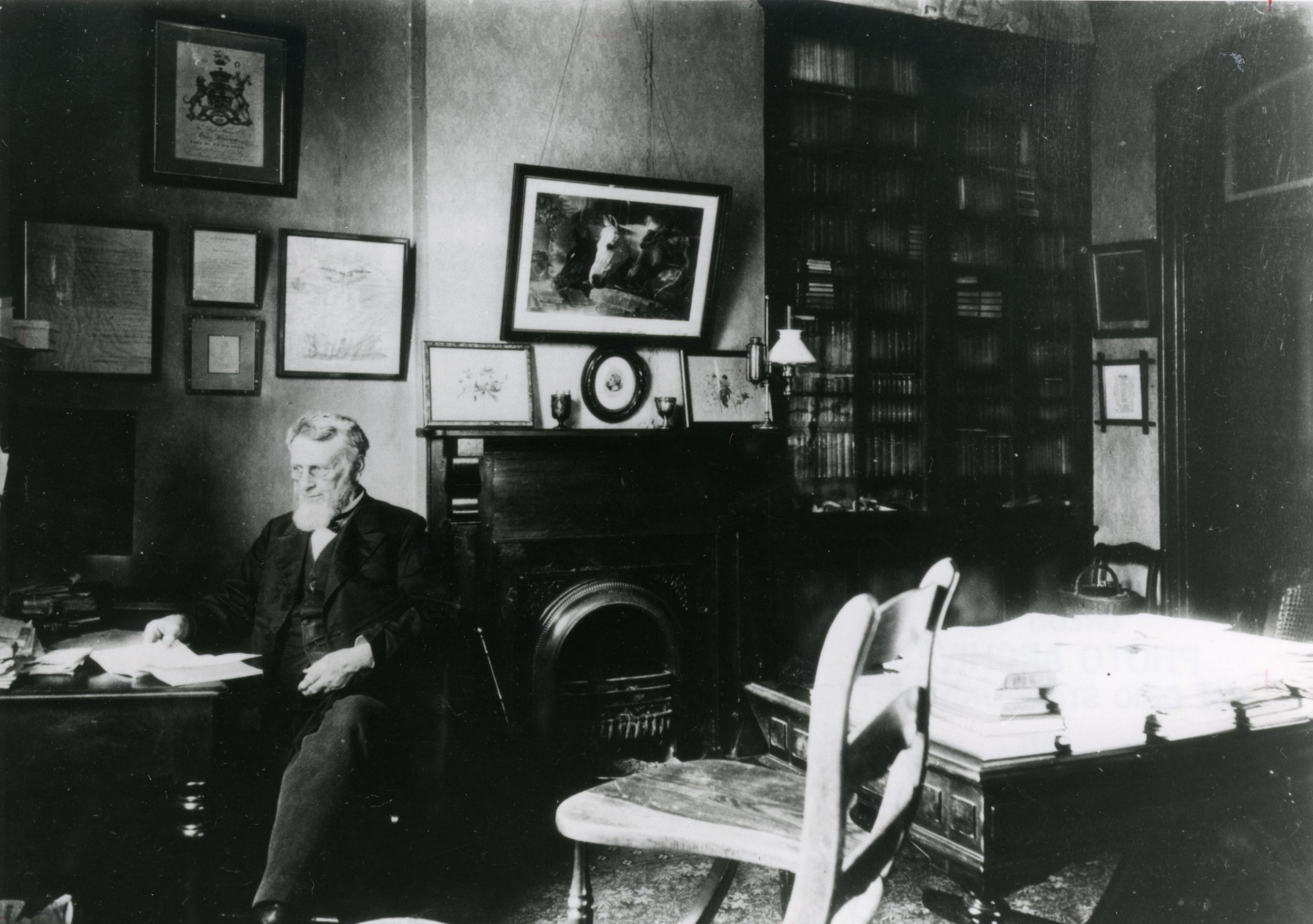
A black and white photograph of Norton Townshend sitting at his desk in 1883. The office features two desks, a fireplace, a large bookshelf, and a many framed images.

Norton Townshend at his desk, 1883

The first women attending Ohio State University did not have guaranteed student housing or a centralized meeting place—luxuries that were often afforded to their male counterparts. Instead, they would need to find the rare rooming house that would grant them boarding or, for those with family nearby, live at home. For those who were able to find lodging, the ability to socialize with other women was limited both because of the lack of a women’s dorm. In addition, Neil Farm, the property on which Ohio State University originally existed, found itself isolated from the main parts of Columbus at the time.

University Hall Gab Room, 1895

Early faculty member Norton Townshend—father of Harriet and Alice, the first two women students at Ohio State University—decided to address the unmet need for a space for women on campus. His office became the first iteration of what became known as the Gab Room, a derogatory name which labeled a designated area for the socialization of women students. Despite the name, University women saw the office as much more than just a physical space. Although the location changed several times as Ohio State grew, the Gab Room remained constant as both a social hang-out spot and, in some regards, a war room for women students to advocate for their equality on campus.

A prime example of advocation in the Gab Room occurred in 1882 when the university’s forty-five women students congregated to sign a petition to the Board of Trustees. They wanted a women’s dormitory, supplying proper room and board for the growing body of women students. Although then-University president Walter Quincy Scott supported the endeavor, the request was denied.
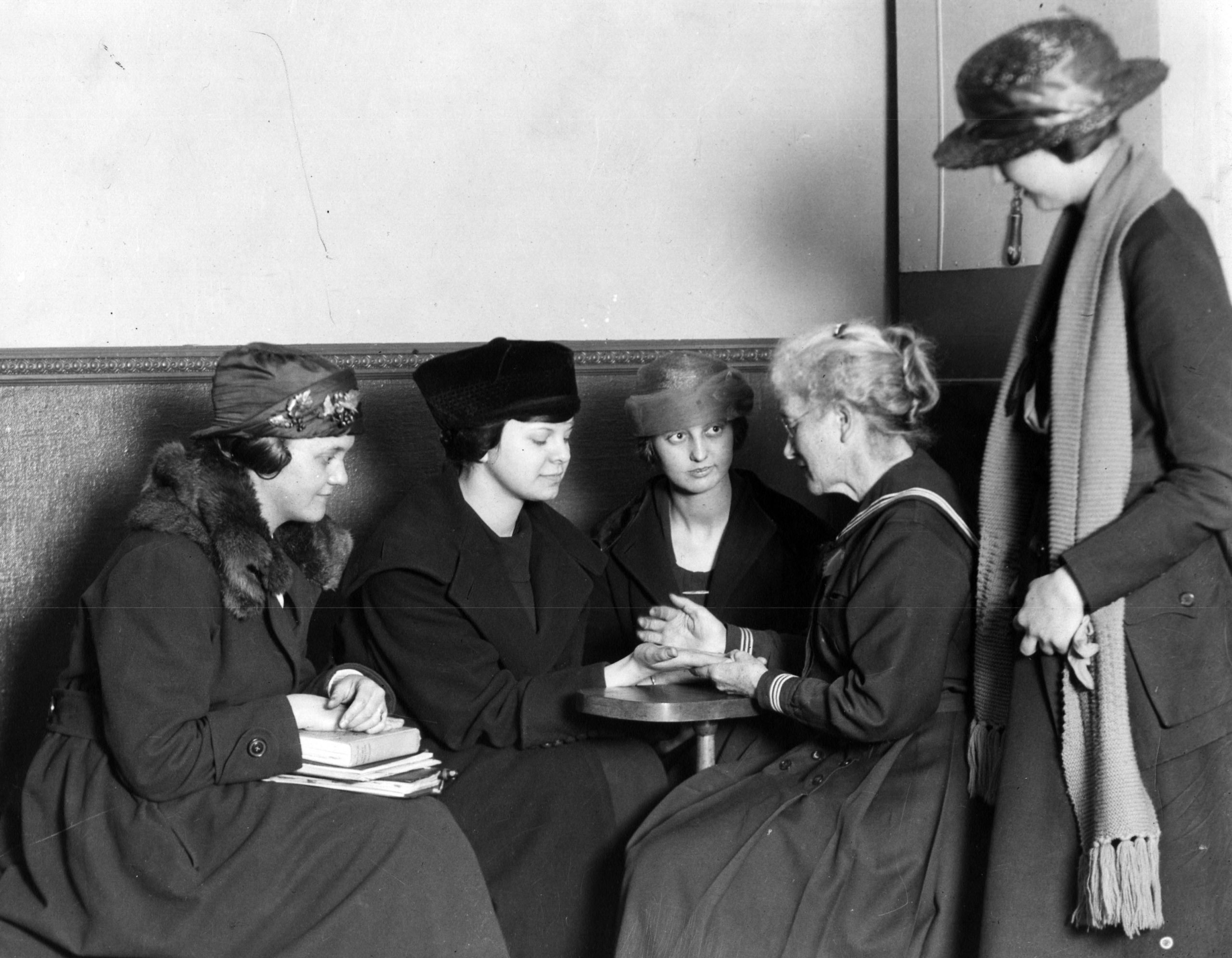
University Hall Gab Room with Mary Brown, 1915

In 1890, the location of the Gab Room moved to Hayes Hall. No University funds were given in order to furnish the room, so the women did their own fundraising. When a water pipe burst in 1892, the women of the Gab Room once again petitioned the university—their pleas were heard and he water issue was quickly resolved.

One of the last major functions the Gab Room served was as a rallying point for the Women’s Self-Governing Association (WGSA). In the 1920s, the WGSA found itself fighting for a Women’s Union Building. The WGSA members would invite legislators to the Gab Room, now located on the second floor of University Hall. Before the legislators arrived, the spot was made to look even shabbier than its normal appearance. This campaign continued until 1927 when Pomerene Hall, the university’s Center of Women’s Activities, was built. Ostensibly, Pomerene Hall made the Gab Room redundant, ultimately finding itself cleared for other purposes in the early 1930s.
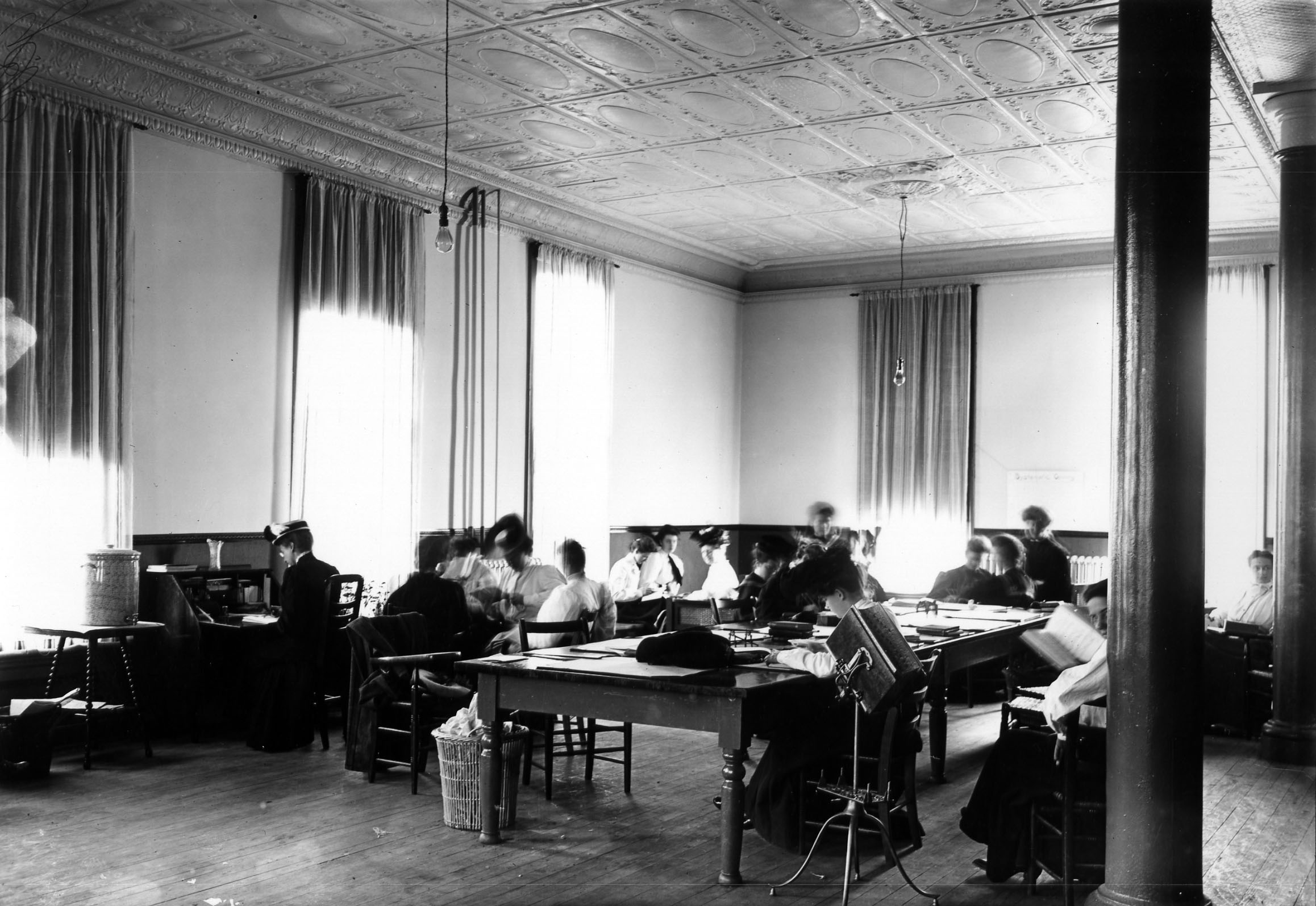
The Gab Room, 1907

Orton Hall Chimes have struck the right chord with Buckeyes for 100 years

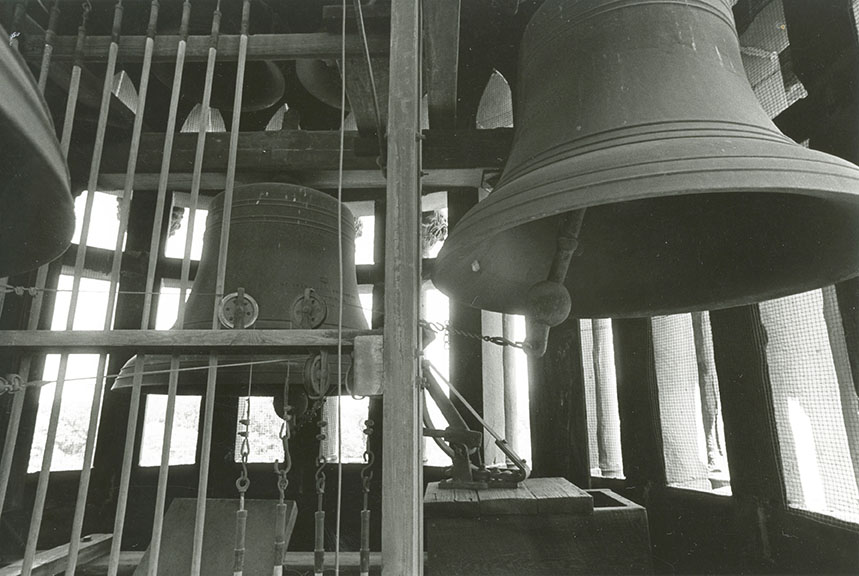
Orton Hall Bell Tower, 1995For 100 years, students making their way across the Oval have been serenaded by the Orton Hall Chimes – 12 bells that have become an integral part of the OSU experience for many in the University community. They were delivered to OSU on Feb. 11, 1915, after the classes of 1906, ’07, ’08, ’09, ’10, ’11, ’13, and ’14 banded together to purchase the bells for roughly $8,000. (The class of 1912, apparently a group of nonconformists, decided to donate a mantel piece to the Main Library).

The dozen bells, together weighing roughly 7 ½ tons and all tuned in D flat, were installed over the following weeks. According to a “Contract for Chimes” signed by the Board of Trustees with the manufacturer, the McShane Co., the bells were to be made out of Lake Superior copper (about three-quarters) and imported East India block tin, and they were guaranteed not to crack. At Commencement that year, the Chimes were officially dedicated, and also that year, a new organization called “The Chimes Club” formed to take charge of playing melodies at 11:50 a.m. and 4:50 p.m. daily. Chemistry Professor W.L. Evans noted at the time that it was “expected that the advent of the chimes will create a new interest in college music at OSU.”

Orton Chimes before installation, 1915

Orton Chimes before installation, 1915

A few years later, the classes of 1919 and 1920 purchased an automatic striker for the bells to mark the time of day, and by 1949, the bells were renovated and an electric clock device was installed so the Chimes would ring on the quarter hour and the full Westminster Quarters melody would play at the full hour.

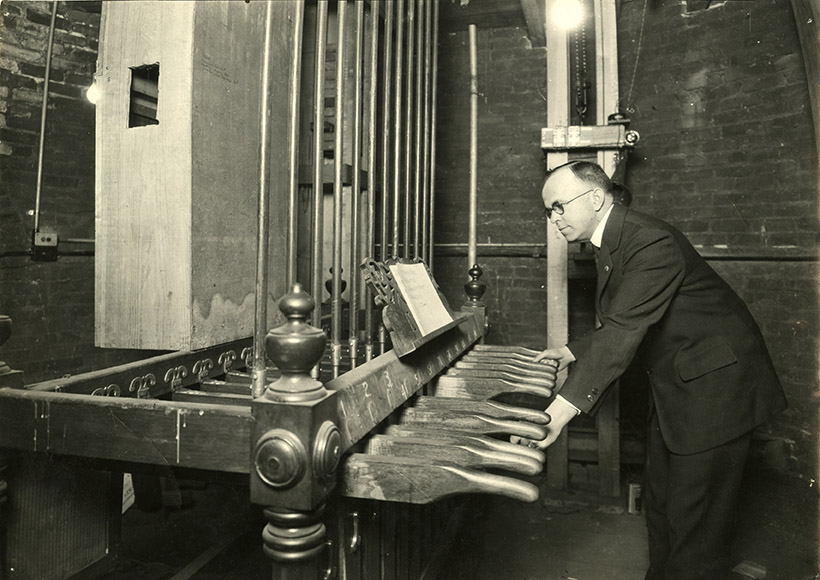
Allen McManigal, 1920s

Allen McManigal, 1920s

Meanwhile, the twice-daily serenades were still done by hand. Four faculty members – including Evans – traded the duty of climbing the 80-some steps twice a day to play the serenades in the Chimes’ early history. Later, an engineering drawing professor, Allen McManigal, took charge of the Chimes, playing them himself or supervising music students to do so. His direction continued for more than 25 years until his death in 1950; later, Music Professor Wilbur Held, an organ music specialist, supervised students. In the 1960s, these students, called Chimes Masters, were paid $25 a week for the responsibility of making it to the top of the tower in time to play such songs as “June is Busting Out All Over” on especially dreary or snowy days. In addition, “Carmen Ohio” was played during the football season, as well as carols during the holidays.

After roughly 60 years of ringing, the chimes needed a little tune-up, so the Class of 1978, in conjunction with OSU, made a $28,000 repair to the bells in 1985. A year later, a more modern electrical system was installed to automate the serenades as well, although an electric keyboard also was installed, making it much easier and less laborious to play by hand.

Orton Hall bells, 1985By 2003, two new bells were installed, this time chiming at G sharp and A sharp. This $12,000 addition enabled the Chimes Masters to have much more a variety in songs to play, which was often a complaint made by students over the years. These new notes could now play songs like “America the Beautiful” and “The Buckeye Battle Cry.”

On Wednesday, Feb. 11, 2015, the Ohio Staters, Inc., will host a 100th-anniversary celebration event at Orton Hall from 5:30 p.m. to 8 p.m. The event will feature remarks by President Drake, refreshments, a display of related artifacts and tours of the tower. For more information go to the Staters’ Facebook page.

The Oval’s Long Walk has paved way for students for a century

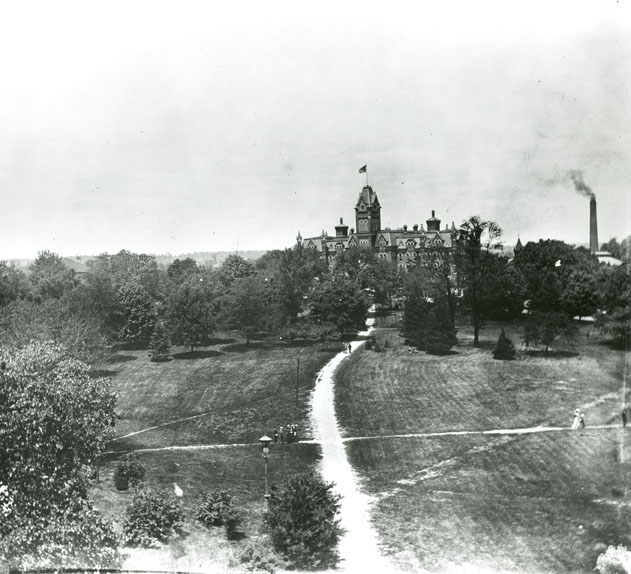
University Hall, 1897

University Hall, 1897

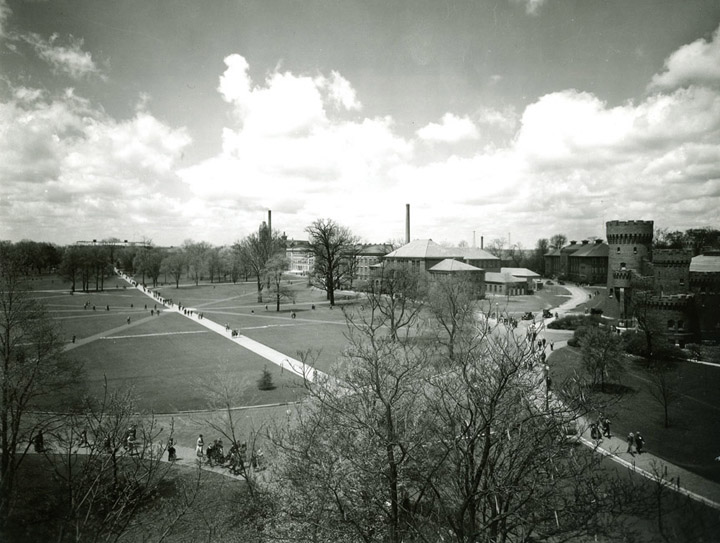
It’s hard to imagine OSU without an Oval or a Long Walk, but it turns out that both of these were purely accidental when it came to the early shaping of the University’s design.

The layout of early campus actually followed that of an English Manor, with the manor house, (the original University Hall), on high ground and set back from the road. Access to High Street was by a path that ran diagonally across what is now the Oval to the site of Page Hall.

Early campus planning of the University did not include an Oval in the middle of campus, and certainly no “Long Walk.” But, in the early 1890s, as some of the first campus buildings were built in certain spots, it created a central green area. In 1893, a new master plan was proposed that created a layout for a “central open space around which buildings could be arranged, and which would not be crossed by any roads.” By 1901, this space had closely evolved into the shape of today’s Oval.

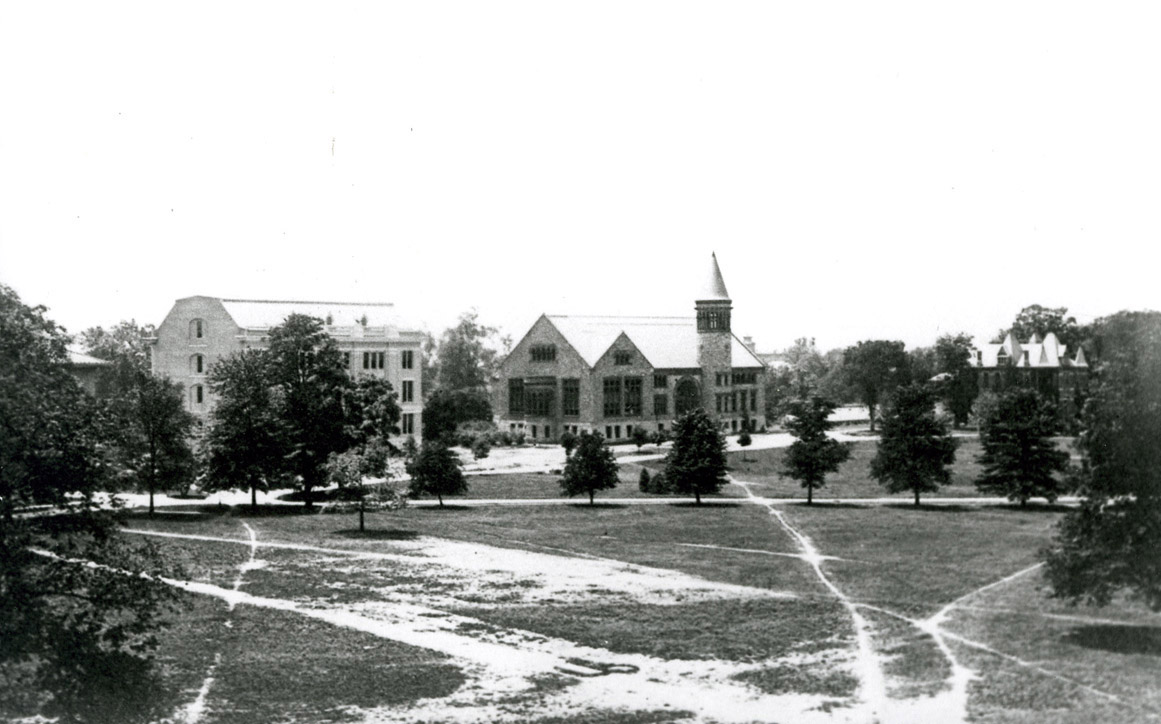
Oval, 1905

Oval, 1905

As buildings continued to go up, students began creating their own walking paths, trekking across the grass to their destinations. Their walking paths partly led to the current design of sidewalks, including the Long Walk.

Joseph N. Bradford, who became University Architect in 1911, was the next piece of the puzzle in the Long Walk’s creation. Bradford was committed to a formal arrangement of campus. In fact, the campus plan he created in early 1914 showed a very formal, geometric pattern of walks within the Oval. By the fall of 1914, the Long Walk was constructed.

Proposed map by Joseph Bradford

Proposed map by Joseph Bradford

However, the construction of the Long Walk did not seem to elicit the fanfare one might expect today from the media. A Lantern article dated September 15, 1914, includes a paragraph about the new walk in a story about two new buildings on campus:

Oval and the Long Walk, 1927

Oval and the Long Walk, 1927

“A broad walkway, of dark red cement has been built from the main entrance to the Library across the oval to the Fifteenth avenue entrance. Walks to the Chemistry building and to Orton Hall extend from it…..”

Not everyone on campus benefited from the Long Walk. In the 1920s and 1930s, freshmen were forbidden to use the Long Walk. The penalty for being caught on the path – which was enforced by the upper-classmen honorary Bucket and Dipper – was to be thrown in Mirror Lake.

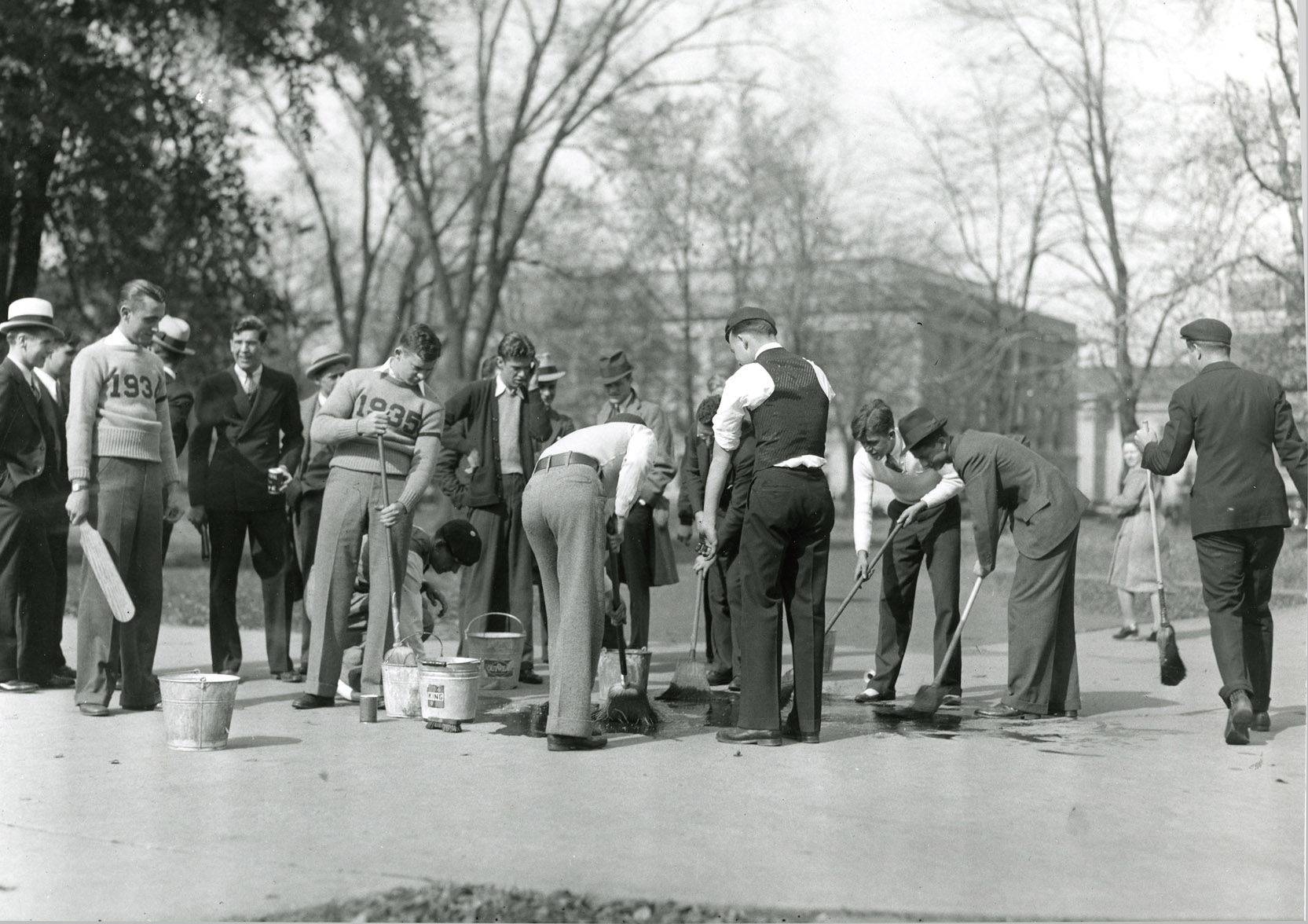
In 1931, freshmen of the class of 1935 were in hot water after Bucket and Dipper members found the class emblem of 1935 painted all over the Long Walk. All of the freshmen suspected in the painting were told to report to the Oval every day at 12:30 p.m. for an hour’s worth of cleanup, until all of the painted numerals were gone.

Freshmen cleaning the Long Walk, 1931

Freshmen cleaning the Long Walk, 1931

One suspected freshman, who had been assigned the task of bringing buckets of water from Mirror Lake to the Long Walk for the cleanup, said “I’d rather carry the water from the lake than be tossed into it.”

Students, on their way to classes during the Long Walk cleanup, apparently gathered around to watch the freshmen at work. It was reported that up to 60 spectators were observing the action, while other freshman on the way to classes steered clear and avoided the scene altogether.

The Oval and the Long Walk have been home to many other student activities over the years. Check out our Oval gallery on Flickr to see how the campus spot has changed over the years.

Older posts Newer posts