From Woody's Couch

Our Playbook on OSU History

Category: People (page 34 of 52)

Home Ec students fight against exclusion

Wilhelmina Styles, 1932

Wilhelmina Styles, 1932

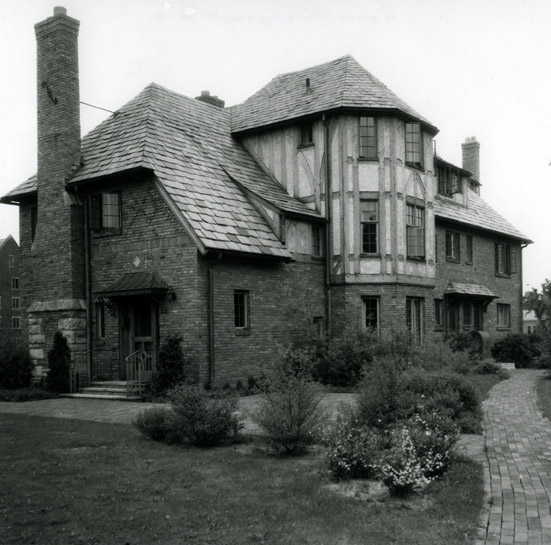
In 1921, the Department of Home Economics established a Home Management House to teach women students how to run an efficient home, as well as life skills, such as finances, nutrition, and child care. Students received credit for instruction in the laboratory center, where they lived together for roughly six weeks in a staged home environment.

Ten years later, Wilhelmina J. Styles, an African-American student, requested permission in May 1931 to seek admittance for practical training in the House for the autumn quarter. She was refused admission. (Although there was no set rule barring African-American students from campus housing, they instead lived in boarding houses or private homes.) Despite protests from local officials, business leaders and religious organizations, then-OSU President George Rightmire supported the decision; Styles was asked to substitute another Home Ec course for the home-management graduation requirement.

Doris Weaver, 1933
Doris Weaver, 1933

Home Management House, 1937

Home Management House, 1937

In May 1932, Doris Weaver applied for a reservation in the House and was accepted for the autumn quarter. Subsequently, after learning Weaver was African-American, the department withdrew Weaver’s confirmation for participation in the House.

Then, Ohio Rep. Chester K. Gillespie, the only African American in the Ohio General Assembly at the time, intervened on Weaver’s behalf with a series of letters to Rightmire. He also asked that the state legislature begin an investigation for possible discrimination. Shortly after, the OSU Interracial Council – made up of student representatives of the YMCA, YWCA, International Club and Council of Women, among others – filed a protest in support of Gillespie’s charges discrimination based on race.
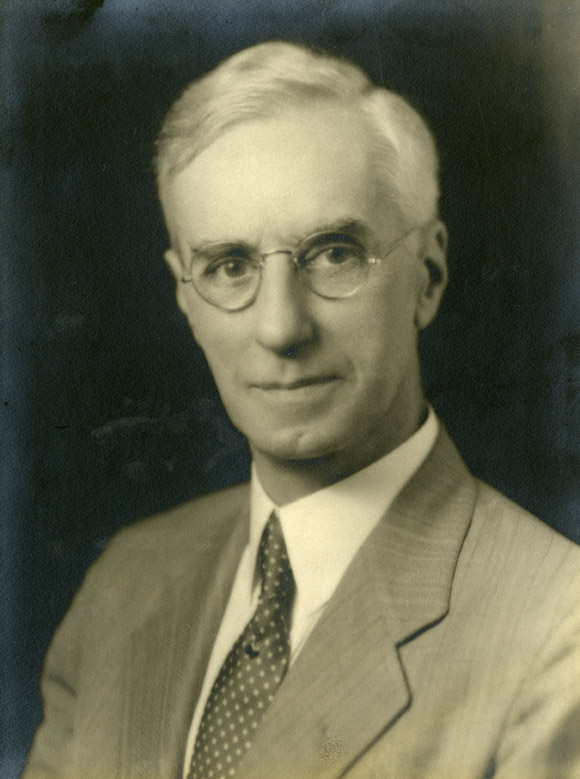
President Rightmire, 1932

President Rightmire, 1932

At a subsequent hearing before a House committee, Rightmire denied barring Weaver from the House because of her race. He said she had been offered exclusive use of part of the house but had refused the offer.

Gillespie then threatened to revoke funding to OSU because African-American students were not allowed to participate equally in the House program. Eventually, Weaver’s case went to the Ohio Supreme Court, which supported Rightmire’s assertion that Weaver was not being denied equal opportunity since she and other African-American students were offered exclusive use of certain sections of the house.

The ruling did not deter Weaver from continuing her studies; she received a bachelor’s degree in Home Economics in March 1933 and went on to earn a master’s degree in 1936. According to a 1981 interview, she taught at Wilberforce University for seven years – along with Wilhelmina Styles – in that university’s Department of Home Economics.

For more information on these women and other African-American students’ experiences at OSU, please see Pamela Pritchard’s 1982 dissertation: “The Negro Experience at the Ohio State University in the First Sixty-Five Years, 1873:1938, with Special Emphasis on Negroes in the College of Education.”

 

With OSU medical degree, woman achieves many firsts in military career

Clotilde Bowen, 1947

Clotilde Bowen, 1947

Though three African-American men graduated shortly after OSU’s College of Medicine was established in 1914 (Clarence Alphonso Lindsay, Rudolph Finley and Charles Robert Lewis, all in 1916) it was roughly 30 years later that the College graduated its first African-American woman. She then took that degree and built an amazing military career with it.

The first African-American woman to receive her MD was Clotilde Dent Bowen, who completed her program in 1947. A graduate of Columbus’s East High School, Bowen completed her undergraduate degree at Ohio State in three years, and was accepted into medical school in January 1944. After her graduation, she completed her residency in New York City, and set up a private practice in Harlem.

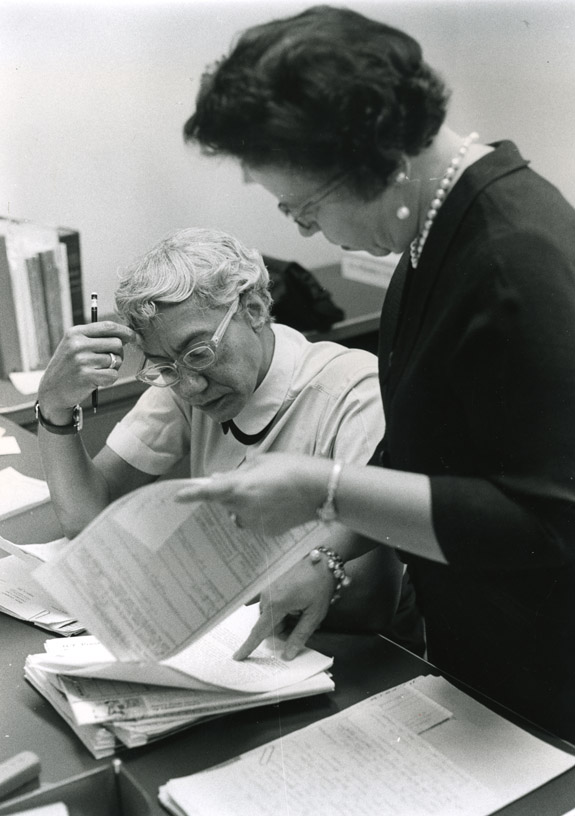
Col. Bowen (left)

Col. Bowen (left)

Later, Dr. Bowen became U.S. Army Col. Bowen, the first African-American physician in the U.S. Army, as well as the first African-American woman Colonel. In 1967, during the height of the Vietnam war, she decided to return to active duty. She became the first African-American woman to direct a military hospital clinic.

Col. Bowen, 1975

Col. Bowen, 1975

Dr. Bowen later completed a second residency at a Veterans Administration hospital in Pennsylvania in psychiatry. Her other achievements include being the first African-American woman to be named chief of psychiatry in two Veterans Administration hospitals and two Army medical centers.

Dr. Bowen was honored with the Bronze Star and the Legion of Merit in 1971 for her work to set up drug treatment centers and her efforts to lessen racial conflicts during the Vietnam War. She was awarded the Meritorious Service Medal in 1974.

The College of Medicine annually holds the Clotilde D. Bowen, MD, Diversity Lecture Series in Bowen’s honor, and last year a need-based scholarship fund was set up in her honor.


Perpetrator eluded police in perplexing OSU poisonings of 1925

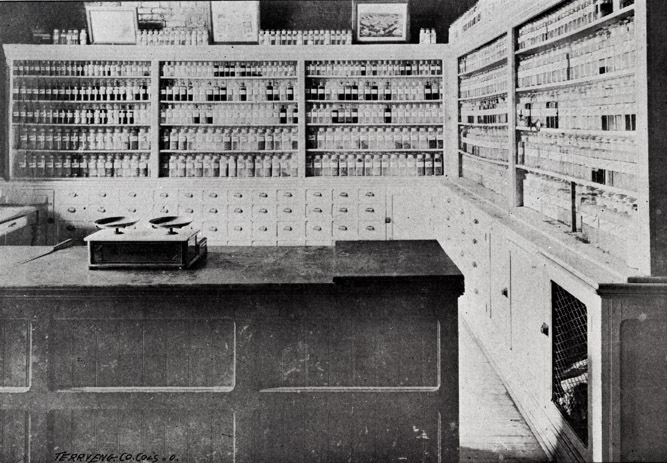
The dispensary, as it would have appeared in the early 1900s.

The dispensary in the early 1900s.

One of OSU’s most horrific unsolved mysteries is the 1925 strychnine poisoning incident that left two students dead and could have killed many others.

It was the last week of January in 1925, and like many winters, there were dozens of ill students lining up for medicine at the dispensary (the campus equivalent of a pharmacy). At that time, quinine was prescribed to relieve fever and aches and came in little white pills. The dispensary was busy and employed many students, and there was little professional supervision. It is believed that these contributing factors that allowed someone, intentionally or mistakenly, to mix strychnine pills into the batch of quinine pills.

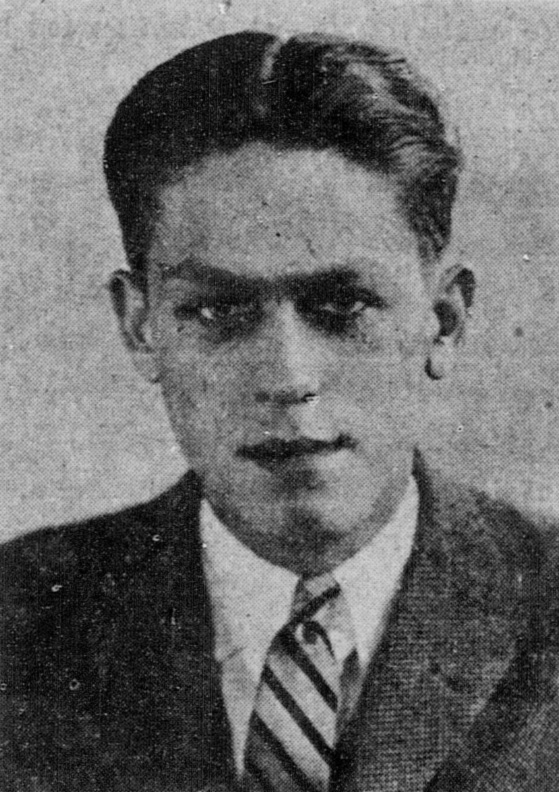
Charles Huls, 1923

Charles Huls, 1923

The first victim was Charles Huls, a 21-year-old senior studying journalism. He was the “big man on campus” type who was involved in many activities: the Makio, Bucket and Dipper and Sphinx, to name a few. On January 31, Huls had a tooth pulled, then went to the dispensary for cold medicine. He was found ill in his room at the Phi Gamma Delta fraternity house on 17th Avenue that night. Huls then developed convulsions and died.

A day later, David Puskin, a 20-year-old junior, took ill. Puskin had been feeling poorly before he sent his friend, Louis Fish, a pharmacy student, to the dispensary for medicine. On Feb. 1, Puskin got up, shaved and took a pill for his continuing cold. Within 20 minutes, he was dead.

At first, Huls’ death was thought to be from tetanus, and Puskin’s death was ruled to be viral meningitis. Officials even isolated Puskin’s friends and acquaintances to prevent an outbreak.

Then, other students became sick, including a sophomore football player, Timothy McCarthy. Lynn St. John, then-athletics director, heard about McCarthy’s symptoms and pressed College of Medicine Dean E.F. McCampbell to test the pills. The pills were found to contain pure strychnine, which prompted a police investigation.

In an April 1925 report, written by McCampbell, at least two other victims tested positive for strychnine poisoning and at least 10 strychnine capsules were found, hidden among the quinine pills distributed by the OSU dispensary.

Unfortunately, the investigation was unsuccessful in locating a perpetrator, or even a motive. The only arrest made was Louis Fish, the pharmacy student who had gone to the dispensary for David Puskin. Fish was allegedly grilled by police, but quickly released. President Thompson was said to be convinced that the poisonings were not an accident, but no more clues were forthcoming. In 2000, The Columbus Dispatch asked Dr. Park Dietz, a forensics psychiatrist for his opinion on the poisonings. Dietz felt that rather than an accident, a prank, or an attempt as mass murder, that the poisonings were likely targeting a single individual, with intent to murder that person and use the poisonings as cover. Dietz also said it is very likely that the actual victims were not the intended target.

The University investigation did change how the dispensary and pharmacy program at OSU operated. OSU became the first school in the country to offer a four-year program for pharmacy students. Tighter regulations and better training measures were put in place at OSU and quickly adopted across the country.

Filed by C.N.

Older posts Newer posts