From Woody's Couch

Our Playbook on OSU History

Category: People (page 33 of 52)

Home a hard place to find for past OSU women undergrads

Oxley Hall residents, 1931

Oxley Hall residents, 1931

Women undergraduates who attend OSU today should be thankful for the times in which they live. If they had attended the University during its first 50 years, they would have had to work a lot harder to find a place to live here.

Though women attended OSU from the day it opened its doors in 1873, they did not have a dorm until 1908 when Oxley Hall opened. Even then, Oxley Hall housed only 60 women, and there were 600 women enrolled at that time. So until Oxley Hall, women had the options of living at home – if they were from Columbus – or living in area boardinghouses.

Part of the reason for the dearth of campus housing was financial: At the time Ohio State depended much more greatly on state funding, which was miniscule compared to other state universities. For instance, while the University of Michigan received $274,000, and the University of Wisconsin was given $92,736 from their respective state legislatures for the 1881-1882 academic year, Ohio State received $21,950.

It also was not a top priority for OSU’s first leaders; the university’s first president, Edward Orton Sr. never made such a funding request to state lawmakers, for example. (Granted, he had a lot of other things going on, like starting a university from scratch.)

Mack Hall residents, 1924

Mack Hall residents, 1924

It wasn’t until OSU’s fourth president, James Canfield, that there was a concerted effort to offer campus housing to women, which culminated in the construction of Oxley Hall. Slowly, the campus options increased with the construction of Mack Hall in 1921 and the purchase of Neil Hall in 1925. Women who lived in the dorms were supervised, and did most of the cleaning and other chores in the dorm. They had a curfew and were prohibited from having male visitors except for certain hours on Saturday and family visits on Sunday.

With very limited space at the University, sororities became a very popular choice: Ohio State had 25 sorority houses by 1925. These were considered the next best option for out-of-town students because like the dorms, they were socially acceptable to parents and the University, with each house having a “house mother” and sharing the University standards as to curfew, rules and living conditions. There were also houses supervised by religious entities, such as the Westminster Foundation, which housed a limited number of women students in an off-campus house.

Neil Hall women, 1929

Neil Hall women, 1929

If a student was unable to gain accommodation with family, or in a dorm or sorority, the student still needed a place to stay. Many girls opted to try to work for a family in exchange for room and board. This was not always the best solution; students sometimes would end up exhausted and unable to keep up with schoolwork.

After the appointment of the first Dean of Women in 1912, University staff inspected the rooms that girls rented in private homes to prevent unsafe living conditions. The Office then began keeping a list of boarding houses that could be recommended to students. To be on the list, the home had to pass the University’s inspection, there could be no male boarders in the boarding house and conditions had to be sanitary.

Apparently, some women students lived in conditions so poor that the University left certain campus buildings open, such as the Home Economics Building , so women students could use the bathrooms if their own rooms lacked suitable plumbing. And for all that, women paid as much as $5 a week, while male boarders usually paid $3-4.50 per week.

Filed by C.N.

Much of our information for this blog came from two dissertations on the early history of women at OSU, both of which are available at the Archives:

Sisters and Scholars: Women at the Ohio State University: 1912-1926, by Louise Ann Booth (1987)

Women at the Ohio State University in the First Four Decades: 1873-1912, by Pouneh M. Alcott (1979)

Black History Month: Football player had higher calling than just ‘phys ed’

William Bell

William Bell

William “Big Bill” Bell was a standout tackle for the OSU football team, but his academic career off the field far outshone his performance on it.

Bell played for the Buckeyes from 1929 through 1931, and earned All Big Ten and Honorable Mention All-American honors his final season. But football wasn’t his only activity: He was a member, and Sergeant of Arms, for the African-American social fraternity, Alpha Phi Alpha, and he was a member of Varsity “O,” the Collegiate Council, and the Interracial Council.

His senior year, the Upper Class Cabinet of the OSU chapter of the YMCA tapped Bell to lead a new committee on interracial relations. In doing so, the Cabinet’s president, Wallace Hall, revived a then-dormant policy of allowing African-American members to become a member. In a Lantern article about Bell’s appointment, Hall said “Bell is a good worker, and I see no reason he should not be a member of the cabinet.”

Bell was named Interracial Chairman of the Upper Class Cabinet, 1931 Makio

Bell was named Interracial Chairman of the Upper Class Cabinet, 1931 Makio

After graduating in June 1932, Bell began a long career coaching football at historically African-American colleges, including Claflin College in South Carolina, Florida A&M University, Howard University and finally North Carolina A&T State University. Bell worked more than 20 years at North Carolina A&T in a number of capacities, including athletic director and professor of physical education. (Along the way, Bell received his master’s degree in physical education and his PhD in physical education from Ohio State, in 1937 and 1960, respectively.)

After organizing physical education departments at several universities, Bell ended his career as athletic director of Fayetteville (Alabama) State University where he assisted in the development of Fayetteville’s National Youth Sports Program, a summer organization for disadvantaged youths.

He died at the age of 81 in 1981 in Fayetteville. In Bell’s obituary, a former student of Bell’s at North Carolina said Bell “never said ’phys. ed.’ He always said ‘health and physical education.’ He wanted it to be a profession.”

Obituary: Charles O. Ross

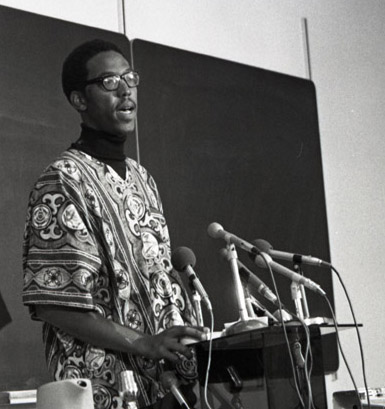
Charles Ross, 1970

Charles Ross, 1970

We are saddened to hear of the passing of longtime OSU Professor Charles O. Ross, who died last week at the age of 79. For decades, he was a constant champion of issues of racial equality, even when it cost him his job as director of the black studies department.

After the campus riots of 1970, the University approved a plan for a new Department of Black Studies. Ross, a professor of social work, was chosen as its first director. Immediately, Ross demanded more money for the program, and he pushed for substantive changes related to African-American involvement on campus, such as recruitment of much larger numbers of black students to the University.

Ross was also politically active and was involved in a movement to organize high school students. Racial disturbances subsequently occurred at area high schools, and the OSU Board of Trustees, displeased with Ross’ involvement, fired him from the directorship a year after he was hired.

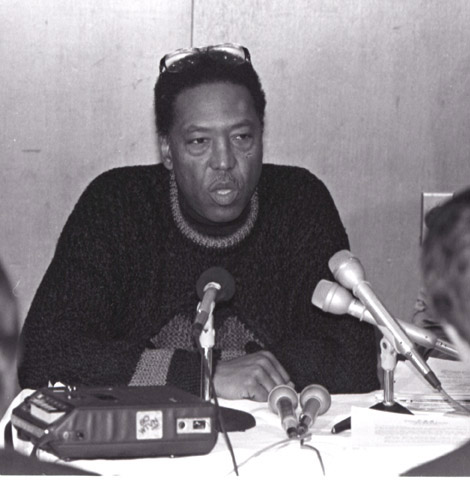
Ross, 1988

Ross, 1988

Ross continued to be an outspoken figure throughout his tenure: In 1993, for instance, he briefly occupied the office of the then-new Dean of Social Work, Beverly Toomey, to protest then-Provost Jean Huber’s decision to hire Toomey over him. According to The Lantern, Toomey was named Dean, despite a faculty recommendation in favor of Ross, who called the Provost’s decision racist, but filed no legal action on the matter.

Despite his sometimes contentious relationship with the University, Ross remained at OSU for 35 years, and in 2006, the Board of Trustees awarded him the title of associate professor emeritus upon his retirement.

Read a Columbus Dispatch obituary here:

http://www.dispatch.com/content/stories/local/2013/02/19/longtime-osu-prof-known-for-activism.html

————-


Older posts Newer posts