From Woody's Couch

Our Playbook on OSU History

Category: Early University history (page 4 of 14)

100 years in the making…Centennial Histories now online

As part of our ongoing effort to digitize highly used material, the departmental Centennial Histories have recently been uploaded to the Knowledge Bank for public use.  To access the histories visit our website, where they are organized alphabetically.

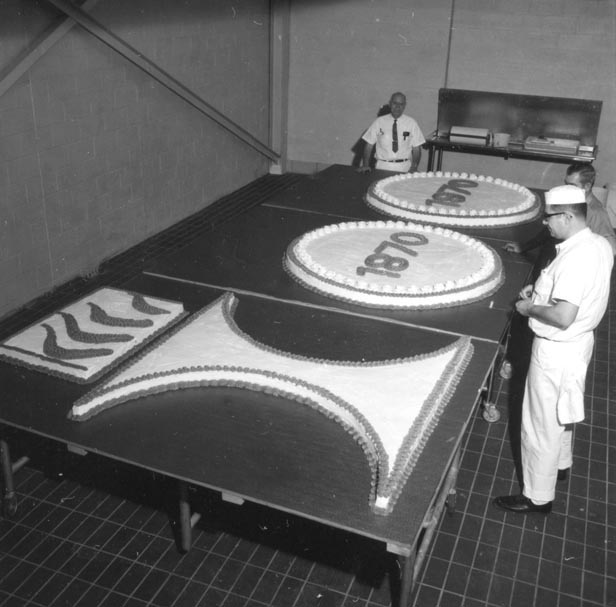
The University celebrated its Centennial in 1970 with a slew of events and ceremonies.  One of the longest lasting legacies of this celebration is the departmental histories, which preserve individual, detail accounts of the emergence Cent.Histand growth of departments.  The centennial histories followed the general theme of the Centennial project:  “to assess [the] first 100 years and utilize this heritage as a foundation for building an even greater institution.”  Before this period of time, little information was collected about the history of departments.
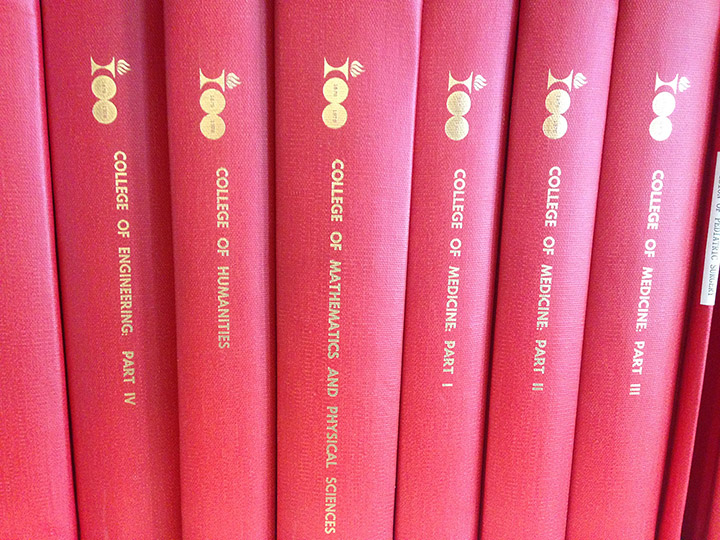
The idea stemmed from secretary of the  Board of Trustees, Edward Moulton and was coordinated by John T. Mount.  The plan was for departments to compile their own histories following prescribed guidelines.  Once finished these histories would sit in both the University Archives and in the general library collection.

To preserve important knowledge, departments had an outline that needed to fulfill four major pillars: Founding and Early Development, the Mature Years (progress within department), Current Status and Future Plans, and Appendix (includes lists of deans, chairs, and publications).  Along with the outline, departments received a page of sources to consult during this process.  These sources included both primary sources, such as the minutes from the Board of Trustees and annual reports, and secondary cake1970sources, including histories of the University in general.
The centennial history writers were current departmental staff, faculty or emeritus faculty.  The writers had an original deadline of July 1, 1969, but it was later extended to late December 1969.  The final product was submitted to the then-University Archivist, William Vollmar.

More than 130 histories were submitted and are in use today.  They range in size from a few pages to hundreds of pages.  Centennial histories are a highly useful research tool for information about departmental formation, faculty members, deans and even prominent students.  The histories collectively combine primary sources into a single source for research.

View the requirements for departments and the selected bibliography.

To see photos from our first 100 years, visit our Flickr page.
University Gardens plants roots for students’ education

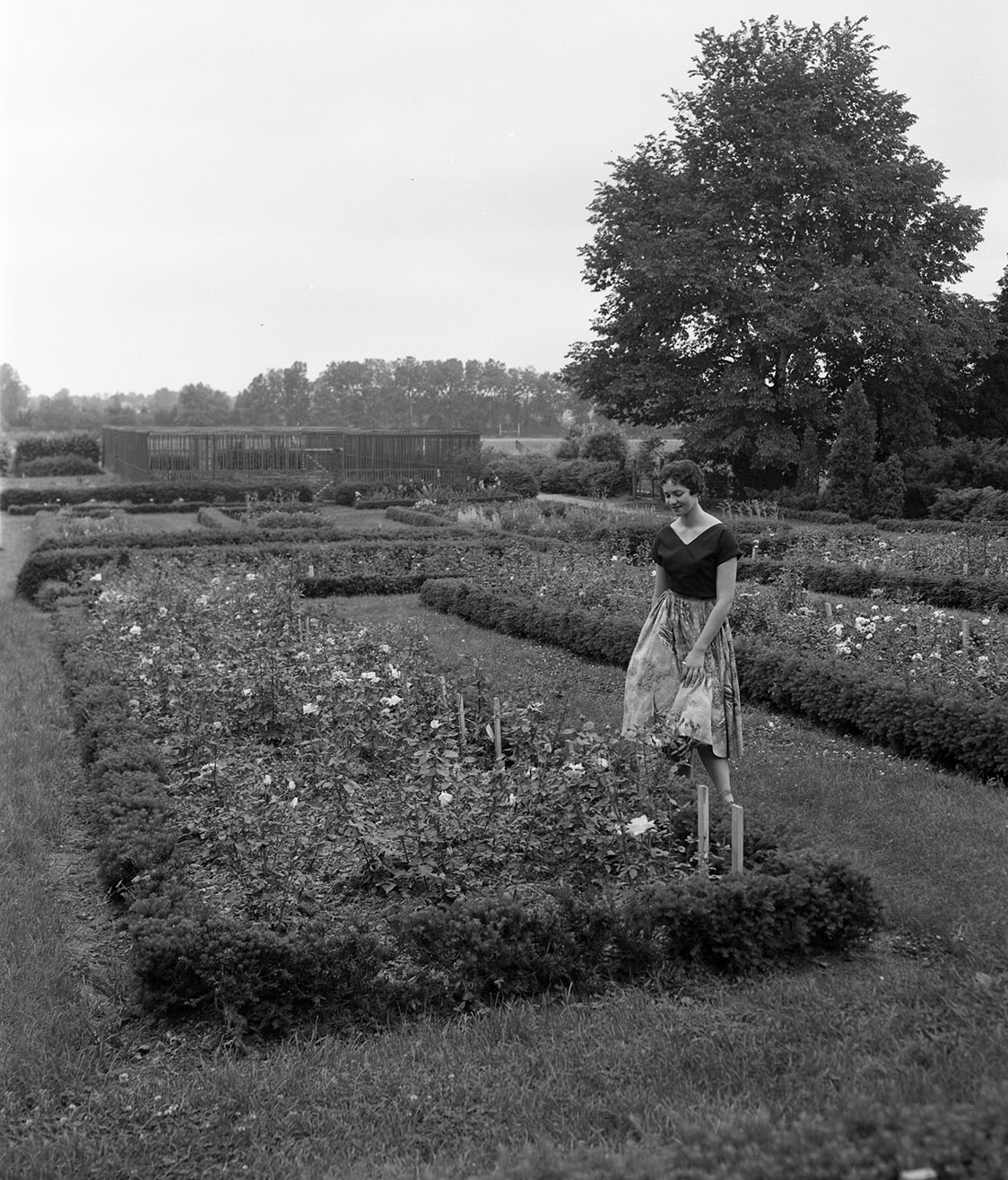
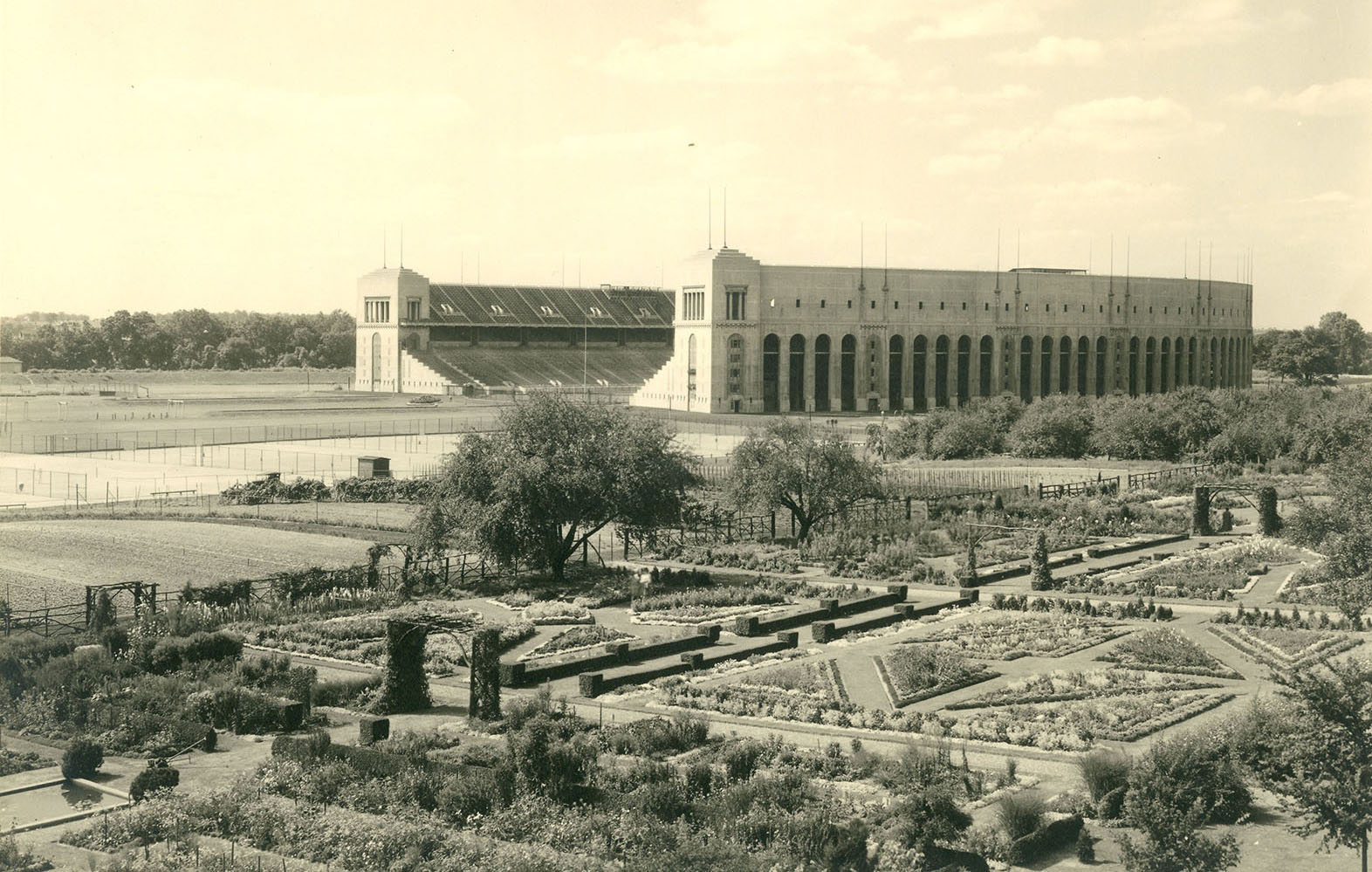
Students walking west of Thompson Library today are likely unaware of just how drastically different the campus landscape appeared in the past.  Starting in the 1920s and 1930s, the University Horticultural Gardens blanketed the campus west of Neil Avenue, presenting an array of plants, flowers, hedges, a lily pond and a number of exotic plants.

As a University largely based in agriculture, it’s no surprise that the school began to set aside a portion of the campus, as early as 1884, to be slated for garden space.  Much of the campus grounds were already covered in farmland when the school officially opened to students in 1873.  However, plans for a formal University Horticultural Garden did not surface until the 1910s, when a number of University Departments began laying out a scheme for the gardens.

At its peak, the University Gardens covered nearly 15 acres. The gardens were situated south of the McCracken Power Plant, west nearly to the Stadium, east of Thompson Library and south to the site of Jennings Hall.

At its peak, the University Gardens covered nearly 15 acres. The gardens were situated south of the McCracken Power Plant, west nearly to the Stadium, east of Thompson Library and south to the site of Jennings Hall.

c1950

c1950

The gardens presented a nearly perfect learning opportunity for students across a variety of colleges, as it served as an extension of their class work.  Landscape Architecture students were involved in the creation and formation of the gardens; Horticultural students grew experimental types of plants and recorded their results; and Botany and Zoology students were often devoted to plant-breeding experiments and the study of pest control.

The purpose of the gardens was two-fold: it not only provided hands-on experience for students, it also served to beautify the campus.  In fact, many gardening clubs and members of the public visited the gardens to learn about flowers and take a peek at unusual plants.  Some of the plants that were being tended were quite rare, reported the Lantern in 1922.  One species of gladioli had been imported from the Pacific Coast, and the bulbs cost $10 each.  Other plant species were brought from Holland, Asia and a number of other countries.

c1924

c1924

Students must have also enjoyed strolling through the gardens, especially at summer’s peak when the flowers were in full bloom. A July 15th 1927 Lantern editorial author writes: “One follows with amazement the intricate and perfectly executed designs in which the beds are planted and sighs as he recalls the bedraggled and wandering little rows which he has accomplished in the old garden at home – and asks himself if a course in horticulture wouldn’t be a valuable part of one’s education, after all.”

However, as the years wore on and campus construction progressed, the gardens were downsized.  “As size diminished, interest in the garden waned as well”, according to a 1968 Lantern article.  By the 1970s, the gardens were almost entirely gone.

Please see our Flickr page for more images of the University Horticultural Gardens.


Escaped slave becomes beloved figure at OSU

An escaped slave of Andrew Jackson became a beloved figure of the early university.

Washington Townsend worked at The Ohio State University for about 20 years first as a groundskeeper and then as janitor of Orton Hall, which housed the main library at the time. Townsend was once a slave at the Hermitage, a property of Andrew Jackson’s. He escaped slavery by reaching Ohio in 1860.

1895 Orton Hall exterior

1895 Orton Hall

Townsend came to the University in 1885 and worked until his death in 1904. He is most remembered as having a genuine character and positive attitude. His impact on the early University community is demonstrated by tributes of both faculty and students.

According to the Alumni Magazine, Townsend’s character and service was so well known and highly esteemed by President Edward Orton that Orton’s son, Edward Orton Jr., set up a pension plan for Townsend and paid for a plot of land in the Green Lawn Cemetery when Townsend died. Townsend’s gravestone marker has a tribute to his life written by Orton Jr.

The students felt similarly that his service and presence at the University made it a better place. They mention going out of their way to pass by Townsend to say good morning and even memorialized him in the yearbook.

Washington Townsend's Grave

Washington Townsend’s Grave

Editors of the early Makio would write plays or other literary pieces about their experience at Ohio State. In the 1897 Makio the editors wrote a poem about Townsend’s origins, loyalty to Ohio State and good cheer. They end the poem with the stanza:

Then here’s a toast to you old man.
May many years be thine,
is the wish of all your student friends
and the editors benign.

We learn from the Lantern that Washington Townsend suffered a stroke a couple years before he died. When he died on Christmas Eve 1904, several articles recognized the impression he made on campus. The reporters further said that all their names would be forgotten, but the kind words and faithful service of Washington Townsend would be preserved.

For the complete version of the student poem, view the 1897 Makio.


Older posts Newer posts