From Woody's Couch

Our Playbook on OSU History

Category: Buildings (page 25 of 25)

Bleeds Scarlet and Gray: Edward “Beanie” Drake

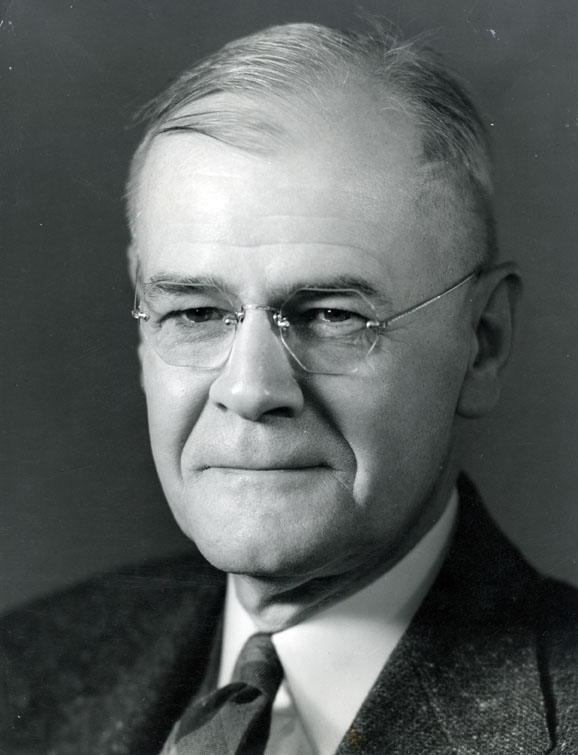
Beanie Drake, 1941

(Editor’s Note: This post is part of a series of profiles of life-long Buckeyes who have had a notable impact on the University. In other words, they bleed scarlet and gray.)

Drake Union, which was dedicated 39 years ago this week, (See OSU Archives’ Facebook page) was named after Edward S. Drake, known affectionately as “Beanie” Drake. He was the manager of the first Ohio Union (now Enarson Hall) when it opened in 1913, and he served in that capacity until his retirement 33 years later, in 1946. However, Drake’s involvement at OSU went far beyond his role as a business manager.

From 1936-1946 he supervised the ballot counting for all campus elections, including Homecoming Queen and USG elections. For 11 years he bought all of the food and planned the menus for the Ohio Union cafeteria, as well as Scholarship Housing (the dorms formerly housed in the Stadium), and for many years the football camp. He served as advisor for as many as 11 student organizations at any given time, and kept financial records for many even after his retirement. He helped to found Romophos, the sophomore honorary society, as well as Ohio Staters, Inc., of which he was a life-long member. But even beyond that he was known as a friend and counselor to generations of students. His kindness, generosity of spirit, and sound advice led many students to think of him as a father figure or a “father confessor.”
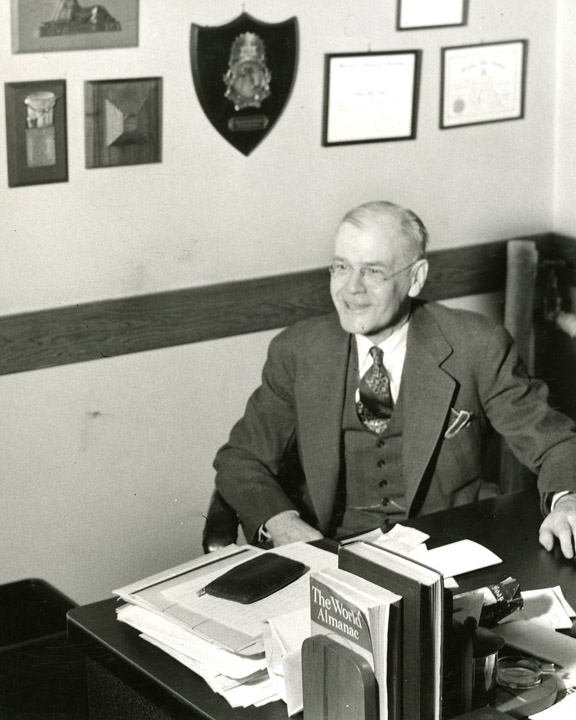
Upon his retirement, the Ohio Staters gave him the gift of a silver baton, to replace the pencil that he always used when conducting “Carmen Ohio,” which he did quite frequently. (He was very strict on the tempo of the piece, because he said that to play it too slow made it sound like a dirge.) His portrait hung in the Ohio Union for many years, and in his hand is that silver baton. A collection was taken up to pay for the painting, and it raised $2,000 more than was necessary. That money went on to establish the Beanie Drake Scholarship Fund, which is still awarded annually.
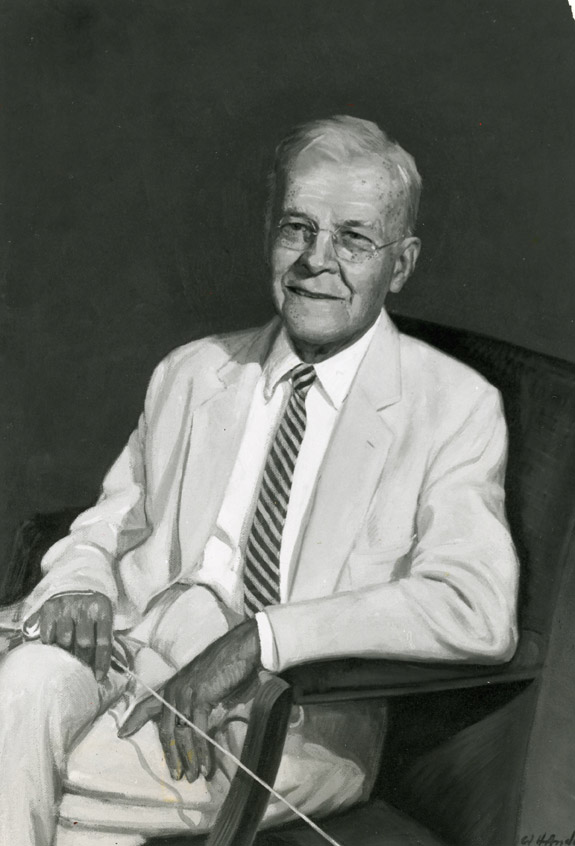
In 1958 Beanie received a Distinguished Service Award, to honor his many contributions to the University. Beanie passed away on March 23, 1967, at the age of 91.

filed by C.N.
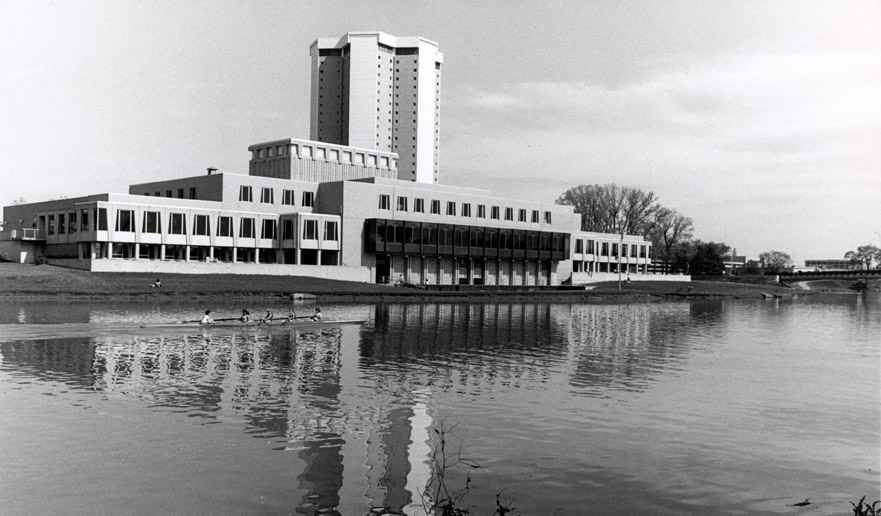
Drake Union
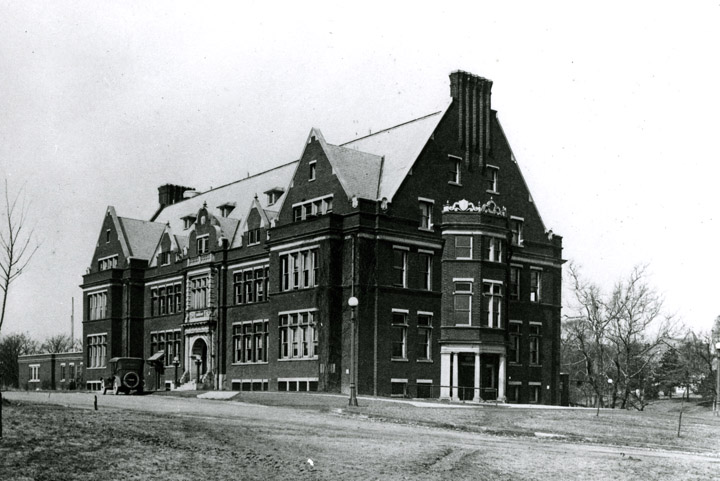
Enarson Hall (former Ohio Union), c1918

Beanie Drake leading Carmen Ohio at award banquet given by the Ohio Staters, 1955
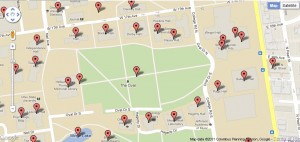

Buckeye Stroll

Want to take a walk through OSU history?   Now it’s easy, with the Libraries’ new mobile app and web site, Buckeye Stroll.

The site  features current and historical landmarks of the Columbus campus.  Included is a map view of more than 70 sites of interest on The Ohio State University campus, and a browse view for locating a known site by name. Each stop on the tour includes several historical photographs from the OSU Photo Archives, as well as historical summaries of the location.  This campus tour can be taken by either using your mobile device or your computer.

Click the map to go to the Buckeye Stroll web page

This summer, Buckeye Stroll was also released on the University’s new mobile application, OSU Mobile.

OSU Mobile allows you to access all the great features of Buckeye Stroll that are available on the web site.  The mobile application also includes other tools, including access to OSU news, real-time bus schedules, maps, grades and class schedules.

The Archives is continuing to add locations and photographs to Buckeye Stroll,  so please check back as the site is always changing.

Have you tried using Buckeye Stroll yet?  Please let us know what you think about it.


Bleeds Scarlet and Gray: Joseph Bradford

(This is the first entry in a series of profiles of life-long Buckeyes who have had a notable impact on the University, in other words they bleed scarlet and gray.)

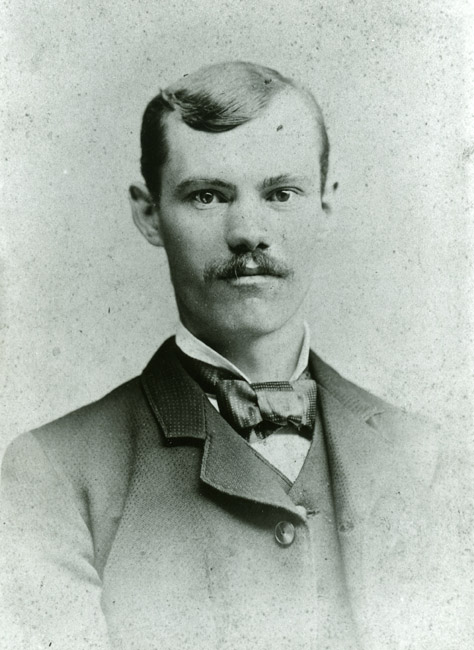
When the University’s Board of Trustees decided on Aug. 2, 1911, to hire the University’s first-ever architect, they didn’t have to go far to find him: Joseph Bradford, referred to as the “grand old man of the faculty,” is an example of a life-long buckeye.

Joseph Nelson Bradford, c1883

Joseph Nelson Bradford, senior portrait, 1883

As a student of the University, Bradford was a member of the first marching band (then referred to as a military band). He organized and directed a fife and drum corps for the University’s military training program, which a year later incorporated brass instruments and became the brass band that we have today. He also prepared illustrations for some of President Edward Orton Sr.’s geography research. He graduated from Ohio State with a degree in Mechanical Engineering in 1883.

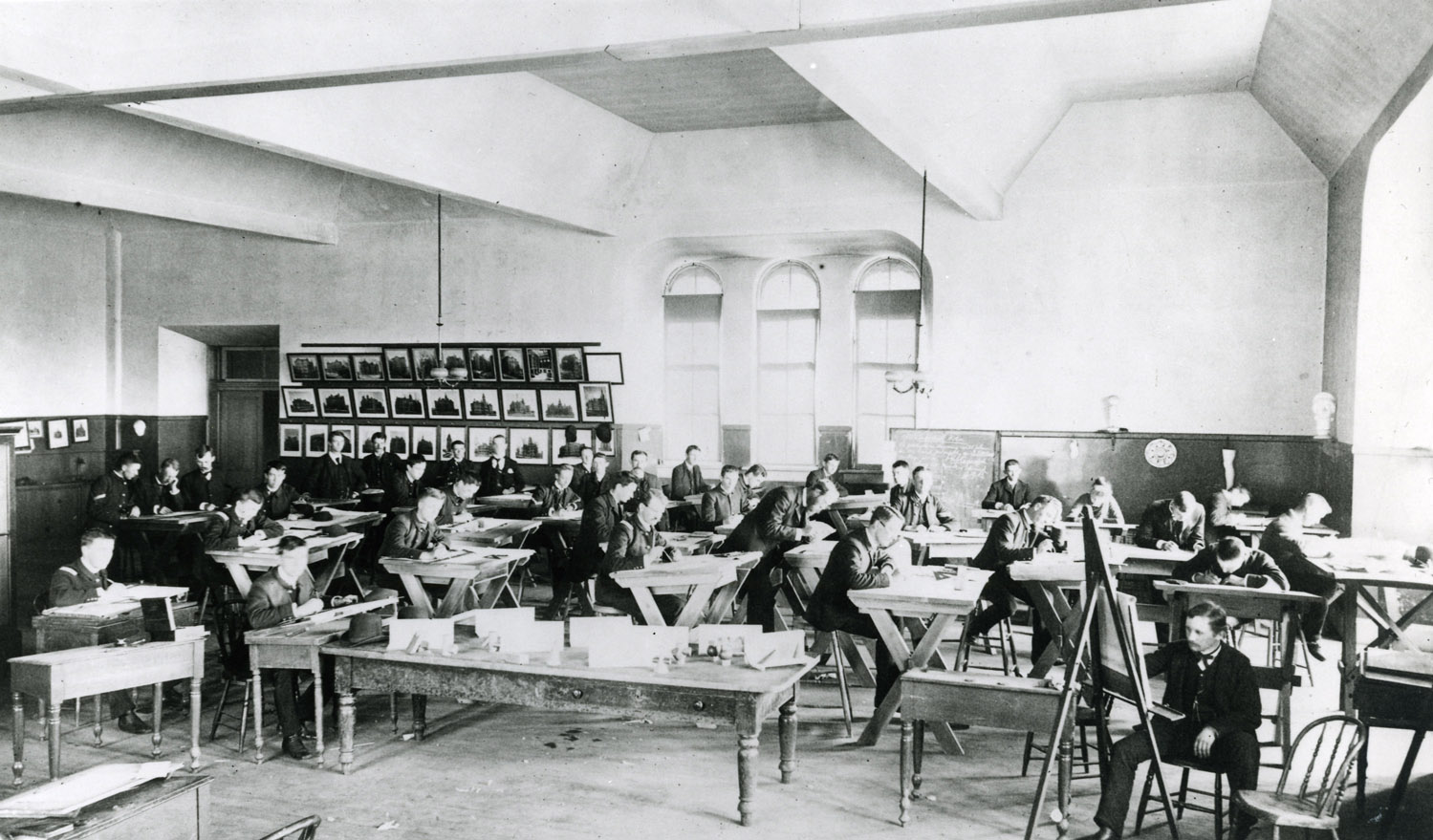
It is ironic that many of our best teachers never set out to teach: Bradford was a draftsman with the Pennsylvania Railroad when he was asked by the College of Engineering to organize a course in engineering drawing, which he declined as he did not want to be an instructor. Nevertheless, the Board of Trustees named him an instructor in mechanical and freehand drawing in 1885, with a salary of $1,000 a year. Whether he was happy at that moment is unknown, but he took the post. As a member of the faculty, he taught engineering drawing and architecture, and pioneered instruction in photography, with the first course in “picture-making” offered in the United States at OSU in 1890.

Engineering Drawing Class taught by Joseph Bradford, 1889

Bradford taught this Engineering Drawing Class in University Hall, 1889 (He appears in the rear left of this photograph.)

Joseph Bradford was named University Architect on Aug. 30, 1911, and he served in that capacity until his retirement in 1929. It is much of his work that we see today as he not only designed many buildings but planned the location of many future buildings he never saw built, with the goal of keeping all of a college’s buildings together. As University Architect, he oversaw the construction of forty new buildings, including Campbell, Derby, Hamilton, Lazenby, Lord, Pomerene, and Mack halls, the McCracken power plant, the Women’s Field House, Starling-Loving Hospital, and the Ohio Stadium. He also created the first accurate map of campus.

Campus Map from 1888, drawn by Joseph Bradford

Campus Map from 1888, drawn by Joseph Bradford

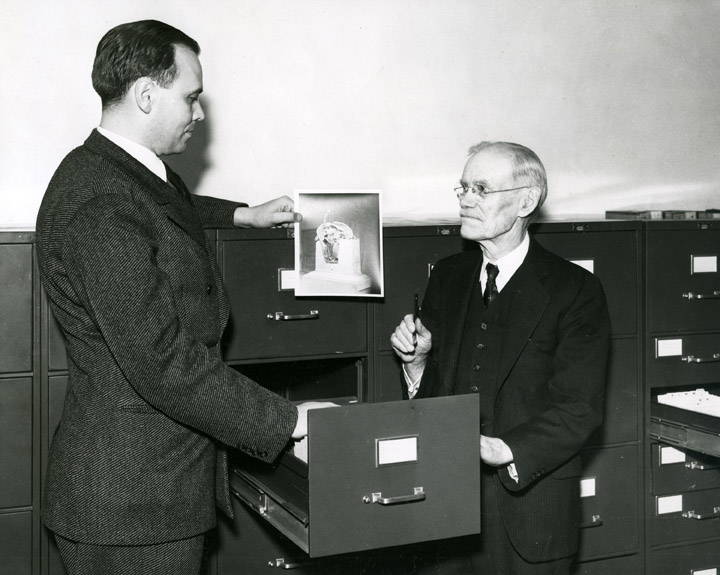
At the time of his retirement he had served the University for 48 years; he went on to compile a photographic history of the University and was named a professor emeritus in 1933.  (He also created a collection of hand-colored glass slides from University photographs.  A sampling of the collection has been digitized and can be found on the Photo Archives web site.)  He died in 1944.

filed by C.N.

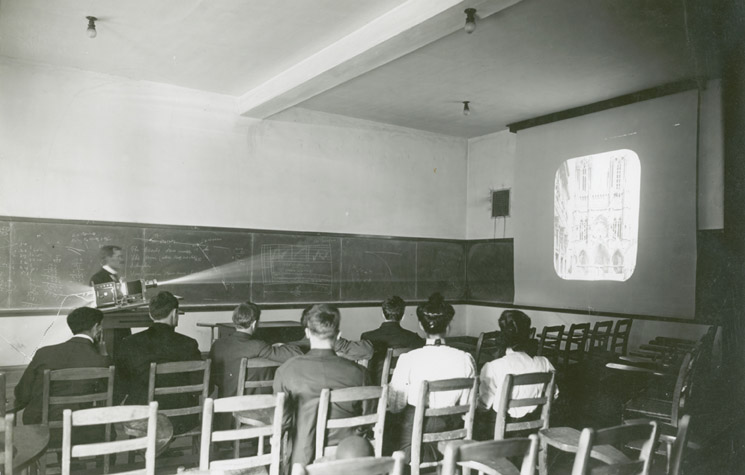
Architecture History Class, 1895

Bradford is shown here teaching a History of Architecture class using the first electrical lantern slide projector at OSU. This class was held in Hayes Hall, 1895

Joseph Bradford and F.W. Davis in Photo History vault, 1940

Joseph Bradford and F.W. Davis in Photo History vault, 1940

Newer posts