From Woody's Couch

Our Playbook on OSU History

Category: Buildings (page 13 of 25)

Freeman Howlett: Bringing out the horticulturist in all of us

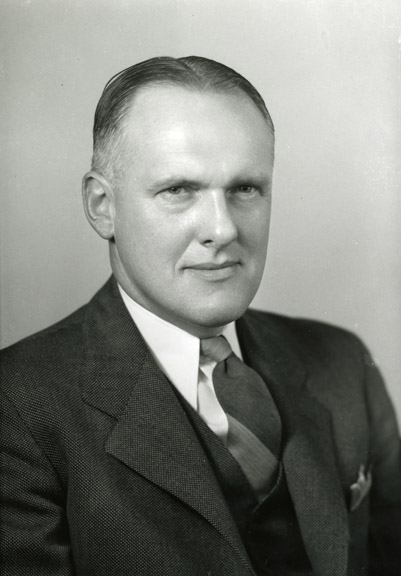
Freeman Howlett, 1950

Freeman Howlett, 1950

This summer, the University plans to build a garden on the roof of Howlett Hall, a demonstration project for green roof design. The building’s namesake, Freeman Howlett, would have loved the idea since he spent his life finding new ways to grow plants.

Howlett, who earned his master’s and doctoral degrees from Cornell University, first joined the staff at Ohio State in 1929, conducting research at the Agricultural Experiment Station. There, he taught classes at the University’s Fruit School, an outreach project for farmers from all over the state to learn new ways to better grow crops. One such class: “Further Studies on the Water Relations of Fruit Trees.”

During his 46 year career at OSU, Howlett studied plant nutrition and growing fruits and vegetables in greenhouses, and pollination. He spoke nationally and  internationally at conferences for the organizations he was a member of, including the International Society of Horticulture, the American Association for the Advancement of Science, and the Royal Horticultural Society in England. Howlett was also the first ever to receive the Presidential Citation of the American Society for Horticultural Science in 1963.

Howlett Hall, 1976

Howlett Hall, 1976

He also taught gardening courses throughout his career at Ohio State, even when he served as chairman of the Department of Horticulture from 1947 to 1969. He was named professor emeritus after his retirement July 1, 1970, and he died November 18, 1970, in Wooster, at the age of 70. In February, 1971 the University Trustees voted to name a building in his honor.

During his three decades as an apple breeder, he released several varieties of apples, including the Franklin (1938), the Melrose (1944), the Holiday (1964) and the Holly, which was released on the date of his retirement in June 1970. Cherry in color, it tasted like a cross between a Delicious and a Jonathan apple.

On its 100th birthday, we celebrate Thompson Library’s humble beginnings

Olive Jones, 1900

Olive Jones, 1900

It’s hard to imagine what the Oval would be like without Thompson Library towering over its west end, but if the University’s first full-time librarian had had her way, the campus’ main library would have been located away from its apex, near where the Faculty Club now stands. Fortunately, former OSU President James Canfield convinced her otherwise:


 “I was much interested in what Mr. Reeder told me of the proposed library building and in what you write about it: but you must not let it go off campus,” he wrote in a 1908 letter to Olive Branch Jones when he was Librarian of Columbia University. During his 1895-1899 tenure as OSU President, he had proposed putting the library in its current position, since it would be the heart of the University and deserved a central location. 


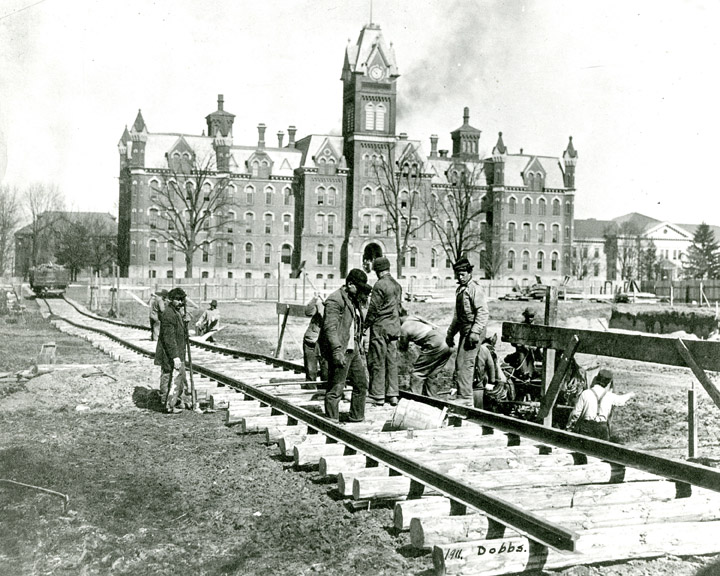
Main Library construction, 1911

Main Library construction, 1911

 The Board of Trustees agreed with him, and in 1913 what was then known as the “New Library” opened. It cost $314,515 to build. To get the heavy stone and other construction materials to the site, the construction company used a railroad spur, which had been built in 1909 from the Hocking Valley Railway to the University’s power plant. It was used to transport coal and other materials to the power plant, first at Brown Hall and later at the McCracken Power Plant. It ran down the middle of what is now Woody Hayes Drive from Olentangy River Road.


 (Today, a median filled with flower beds occupies the space taken by the tracks, which also were used to transport passenger cars for football games, particularly OSU vs. Michigan. The last vestiges of the railroad disappeared in 1970 when the power plant transitioned to natural gas from coal, and the spur was removed as part of the 315 highway construction project, which had originally been the path of the main railroad.)


Library, 1915

Library, 1915

 Before the “New Library” opened – on Jan. 6, 1913 – an ambulance from the Department of Animal Husbandry was used to move about 100,000 books to Thompson from Orton Library, which served up until that point as the main library. When it opened, the library had only three floors, two elevators, and no electric lighting. It was officially named the William Oxley Thompson Memorial Library, in honor of the fifth president of the university, in 1951, when its 11-story stacks were built. The Thompson Library now contains roughly 6 million volumes.


Filed by C.N.

Bleeds Scarlet and Gray: Athletics Director Larkins hired without applying for job

Richard Larkins, 1930

Richard Larkins, 1930

Before the imposing RPAC was the place to work out, there was Larkins Hall. It was much smaller, and by the time it was torn down in 2005, a lot worse for wear. But it had long served the OSU community, much as its namesake, Richard C. Larkins, did, as athletics director for nearly a quarter-century.

Larkins was associated with the University since he came to OSU as a student in the late 1920s. As a student, Dick Larkins played both on the varsity football team and the varsity basketball team, lettering in football from 1928-1930 and in basketball from 1929-1931. He displayed both leadership and smarts from the beginning: He was captain of the basketball team and class president, and he won the Western Conference Medal for scholastic achievement his senior year. Larkins was also a member of the junior honorary, Bucket & Dipper, and the senior honorary, Sphinx.

After earning a bachelor of science degree in Business Administration in 1931, Larkins coached the freshman football team while he worked on his MBA, which he received in 1935. Later that year he left OSU to serve as head coach for the University of Rochester football team.

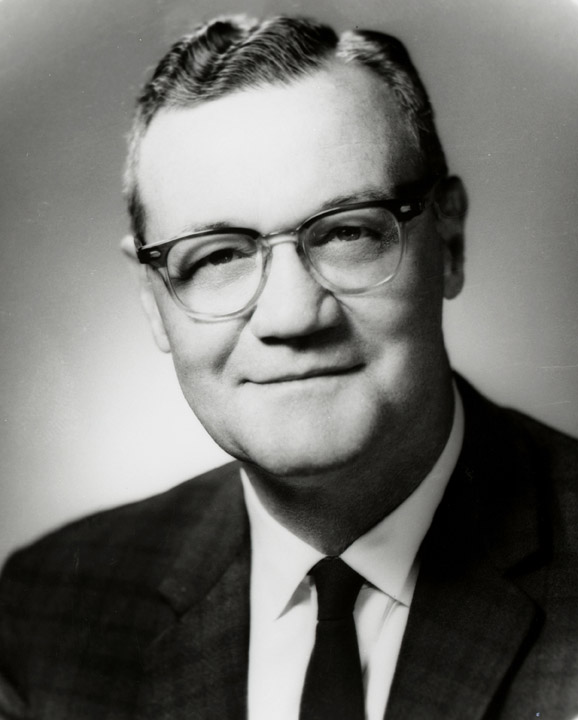
Larkins, 1966

Larkins, 1966

In 1937 Dick Larkins returned to his alma mater to teach physical education. When the position of Director of Athletics became vacant in 1947, Larkins never actually applied for the job. However, when members of the Athletic Board sat down to discuss possible candidates, Larkins was the only one who had the support of the coaching staff, the physical education department, and retiring Athletic Director Lynn St. John, according to an Alumni Monthly profile.

Larkins’ term as Director of Athletics included the hiring of three head football coaches – the last was Woody Hayes. But his influence on OSU athletics was much broader: Under his leadership, the program expanded to 18 sports, and he oversaw the construction of St. John Arena, French Field House and the adjacent ice rink, as well as an extensive renovation of Ohio Stadium.

In 1976, the Board of Trustees named the recreational facility after Larkins, who had retired in 1970 after 24 years as athletics director. Larkins died April 5, 1977, at the age of 67.

Larkins Hall, 1977

Larkins Hall, 1977

Older posts Newer posts