From Woody's Couch

Our Playbook on OSU History

Category: Buildings (page 12 of 25)

Now in a new home, Cartoon Library owes much to Milton Caniff

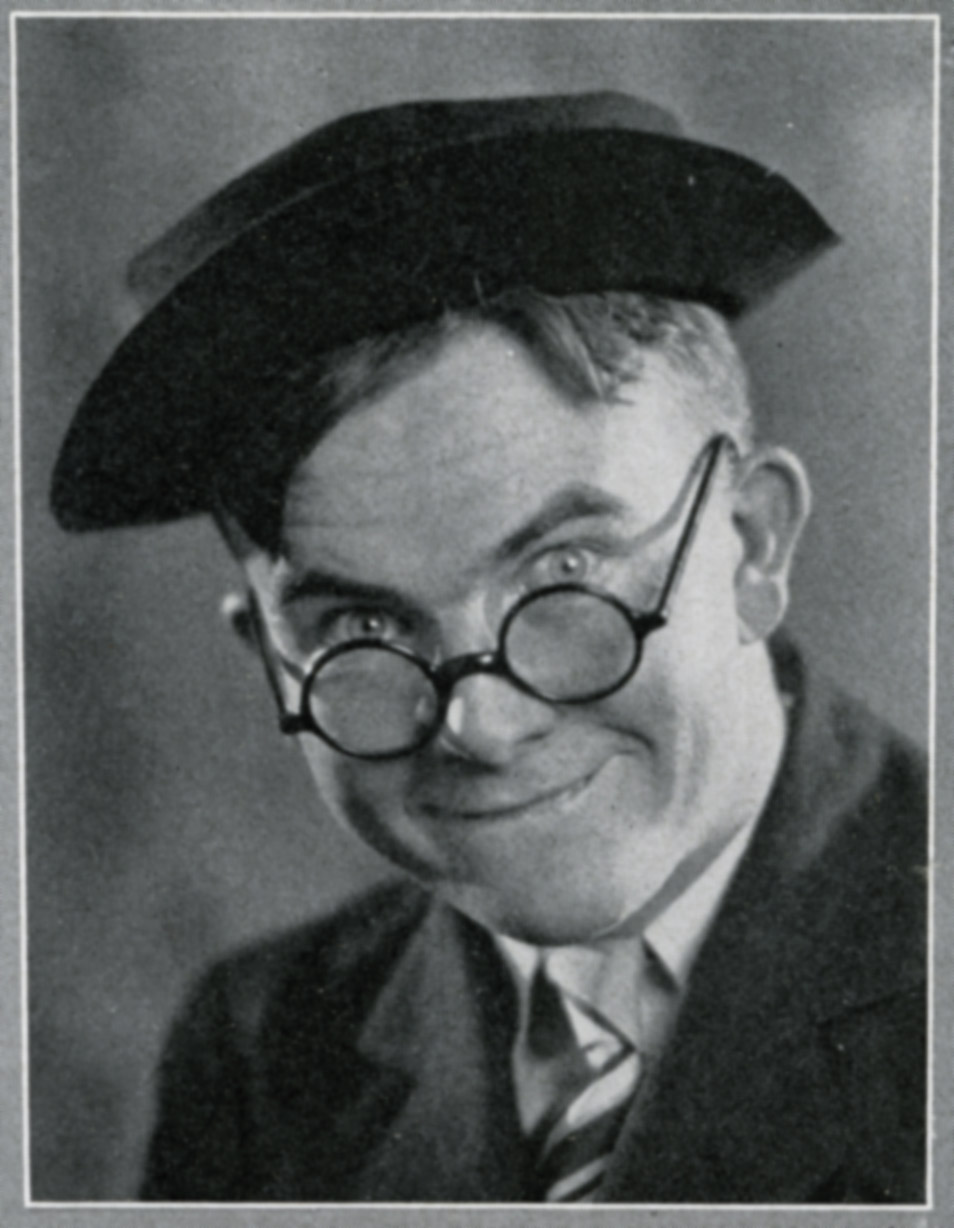
Milton Caniff, 1927

Milton Caniff, 1927

This week the Billy Ireland Cartoon Library and Museum re-opens in its new location at Sullivant Hall, after several weeks of moving its collections from its former location at the Wexner Center. Its first home, though, was in the Journalism Building, and might never have been created, if not for OSU alum Milton Caniff.

 Caniff, as you may know, went to OSU in the late 1920s. During that time he also served as art director of the Makio and the Sundial, an OSU student humor magazine. He graduated in 1930 with a bachelor’s degree in journalism. He later went on to draw “Terry and the Pirates” and later “Steve Canyon,” probably his most famous comic strip. That strip ran for more than 40 years.
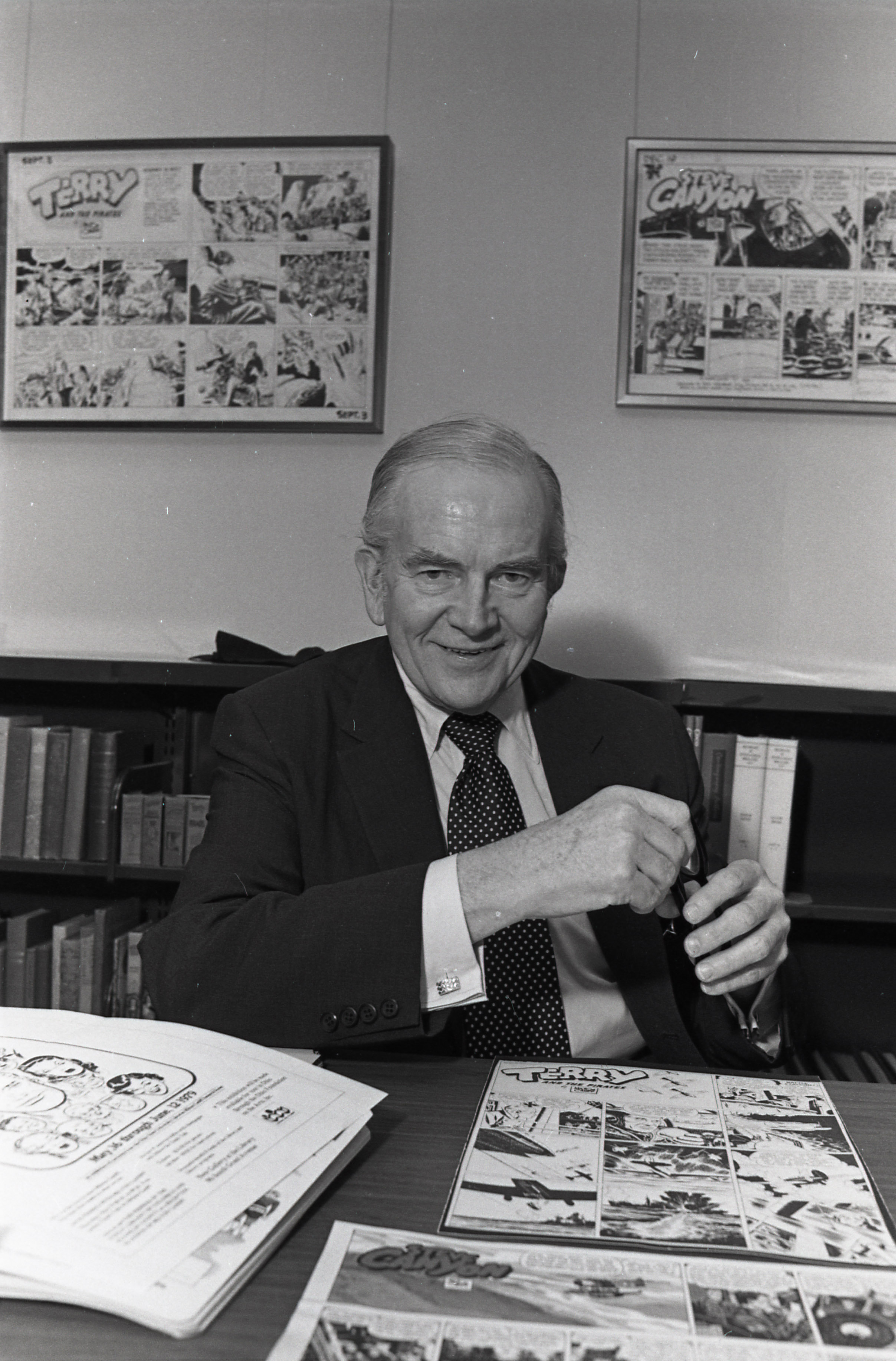
Caniff in the former Caniff research room, 1979

M. Caniff in the former Caniff research room, 1979

Caniff donated his papers and collected works to the University in 1977 to establish the Caniff Research Room in two converted classrooms of the Journalism Building. On May 19, 1979, the the official dedication ceremony was presided over by OSU President Harold Enarson, with many dignitaries attending, including New York Times columnist Jimmy Reston and  retired CBS president Frank Stanton. The original collection also included props, such as model airplanes, guns, and army uniforms that Caniff used to draw from, and his personal correspondence. The rest of the collection was given to the University after Caniff’s death in 1988.

 In the years that followed, a number of other artists bequeathed their work to the room as well, including L.D. Warren of the Cincinnati Enquirer, Ray Osrin and Pulitzer Prize-winner Edward D. Kuekes, both from the Cleveland Plain Dealer.

Students using the collection, 1979

Students using the collection, 1979

In 1990, the then-Cartoon, Graphic and Photographic Arts Research Library moved to the basement of the Wexner Center. Over the years, its collections of original art and manuscripts have been built primarily through gifts-in-kind, and the Billy Ireland Cartoon Library & Museum (re-named in 2009) is now the largest and most comprehensive academic research facility documenting printed cartoon art. 

The Cartoon Library is celebrating its grand opening at Sullivant Hall during the 2013 Festival of Cartoon Art. For information, go to:  http://cartoons.osu.edu/.

– Filed by C.N.

Bleeds Scarlet and Gray: Long after death, Failer’s contributions continue

Josephine Failer, 1985

Josephine Failer, 1985

On the anniversary of her birth this week in 1910, we would like to remember Josephine Sitterle Failer, who graduated from Ohio State’s College of Pharmacy in 1939, the same year the OSU Development Fund began the first year she donated to the Fund. She contributed to the fund for the rest of her life, but that wasn’t the only way she showed her support for her alma mater.

From her graduation, Mrs. Failer stayed active with her College’s alumni association. Over the years, she served on numerous boards and committees, including: the Alumni Association’s Board of Directors and Executive Board, the Alumnae Scholarship Houses Advisory Board, the Ohio State Alumni Council, the Friends of OSU Libraries, and the University Hospitals board. For more than 25 years, Failer, who had a passion for antiques, co-sponsored the Greater Columbus Antique Show and Sale, raising more than $105,000 for OSU organizations, including Alumnae Scholarship Housing, the OSU Marching Band, Men’s Glee Club, Naval ROTC, OSU Libraries and student financial aid.

But Jo, as she was known, did more than raise money. She delivered groceries to the elderly, visited hospital rooms, spoke with parents at freshman orientation, and registered participants for Program 60. If there was a job that needed doing, Jo was the woman to do it.

For years, she oversaw that the living conditions at the Alumnae Scholarship Housing residences were up to par, even occasionally hemming curtains while her husband, Jay, replaced fuses or rewired lamps. She and her husband continued to live in the University District, on East 15th Avenue, befriending their student neighbors. She once said she knew she would not find a more interesting place to live anywhere in the city.

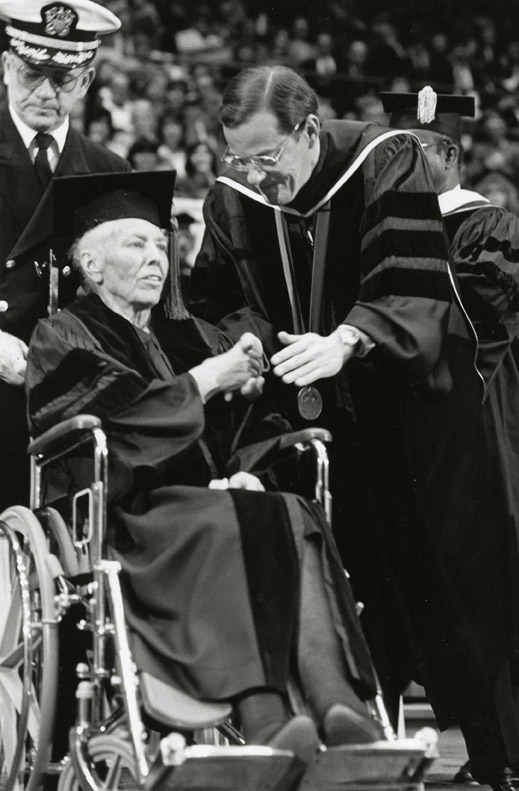
Failer receives her honorary degree, 1987

Failer receives her honorary degree, 1987

It was her love of the University, and her desire to give back to her alma mater that earned her an incredible amount of recognition. This recognition includes the University’s highest honors: the Distinguished Service Award (1964), the Alumni Centennial Recognition Award (1970), the Ralph D. Mershon Alumni Award (1984) and lastly, the honorary Doctorate of Humanities Award presented at the December 1987 Commencement a week before her death. She was 77 years old.

Failer’s dedication to OSU has continued long after her death, in the form of alumni awards and student financial awards in her name, such as the Josephine Sitterle Failer Alumni Award through the College of Pharmacy. The award honors a College alumnus or alumna who has made significant contributions to his or her community. A fund in her name also provides assistance to students in Alumnae Scholarship Housing who have been elected to membership in OSU honoraries. And the OSU Alumni Association established the Josephine Sitterle Failer Award for volunteer service to students. Its most recent recipient was James Miller, senior associate vice president for the Office of Technology Commercialization, whose many contributions include the renovation of a rundown fraternity house into a home for military veterans enrolled at Ohio State. Jo would be very proud.

Filed by C.N.

Korean War Anniversary: Conflict had multiple effects on OSU

Ohio State students in the Marine Reserves were some of the first called to active duty in Korea, 1950

Ohio State students in the Marine Reserves were some of the first called to active duty in Korea, 1950

Last week marked the 60th anniversary of the Korean War, which affected campus measurably, despite the fact it was being played out halfway across the globe.

Students in Company C, 7th Infantry Battalion, left Columbus for Camp Pendleton in September 1950. Within weeks, some of the men were in Korea, Japan and Guam.

Students in the Company C, 7th Infantry Battalion, left Columbus for Camp Pendleton in September 1950. Within weeks, some of the men were in Korea, Japan and Guam.

One of the first developments at OSU, according to a history of OSU Pres. Howard Bevis’ administration, was the appointment in autumn 1950 of a committee on Civil Defense, whose mission was to give Ohio communities the “knowledge and facilities” at the University to help them cope with atomic warfare. By March 1951 University emergency facilities had been inventoried by the campus Civil Defense Council, and local and state authorities had been notified of their availability. A War Emergency Committee was also created.

Because of the threat of atomic warfare, the city made extensive preparations for civil defense against such attacks. (At the time, Columbus was seen as a logical target in Ohio.) In early December 1950, OSU Vice President Bland Stradley announced the University would work both with Columbus and with Franklin County officials in preparing against atomic bombs.

Another effect of the war was a ban by the National Production Board on the construction of buildings for “amusement, recreational or entertainment purposes.” (St. John Arena’s construction did not begin until 1954, after the war ended.)

John F. Archer, 1944

John F. Archer, 1944

One of the biggest effects of the war, of course, was on enrollment. Early on, a University committee was created to coordinate information about the draft and calls to service of faculty and students. Like World War II, OSU faced a considerable dip in enrollment because of the war, so University officials tried to stem off an even further drop through a coordinated campaign to encourage male students to stay in school until they were called up, instead of enlisting. At the beginning of the winter quarter of 1951, Bevis issued a letter to male students, urging them to “stay in school as long as you can and do your work the very best you can! Whatever happens, this will make you of greater service to your country.”

In June 1950, the Alumni Monthly reported that dozens of Ohio State alumni were on the front lines when the war broke out. The first OSU casualty was Lt. John F. Archer, who was killed in action July 29, 1950. He had withdrawn from OSU during World War II to fight in that conflict; in the two years in which he served in World War II he won five battle stars. 

Older posts Newer posts