From Woody's Couch

Our Playbook on OSU History

Category: Administration (page 5 of 6)

Twelve Days: For OSU supporter Sullivant, teach “all that is worth knowing”

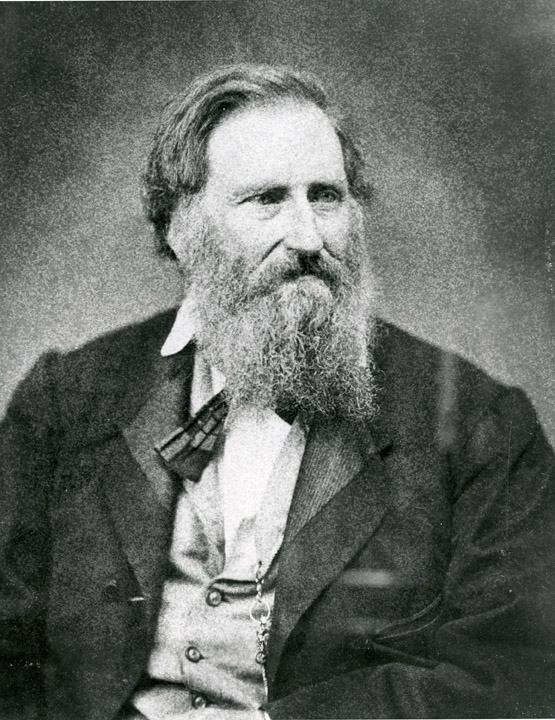
Joseph Sullivant, 1878

Joseph Sullivant, 1878

We’d like to launch this year’s “Twelve Days of Buckeyes” celebration by focusing on one of OSU’s earliest and biggest support: Joseph Sullivant, a prominent citizen of Columbus whose influence on the University’s earliest development was strong and unwavering.

Sullivant was the son of Lucas Sullivant, one of the first settlers of Franklin County. Lucas Sullivant came to Ohio from Kentucky as a surveyor of military lands and stayed, building his home in Franklinton, on the western side of the Scioto River. Joseph Sullivant was the youngest of Lucas’ three sons, born in 1809. All of the boys received a quality education, and Joseph was sent to a boarding school in Worthington for a time, before he later followed his next-eldest brother, Michael, to Ohio University. He finished his studies at Centre College in Danville, Kentucky where he had family.

Throughout the rest of his life, Sullivant spent his time in a variety of services, public and private, that helped in the development of the city. For instance, before the age of 21, the state legislature appointed him to found the Philosophical and Historical Society of Ohio and was its curator and secretary for a number of years. He also served for many years on the Columbus Board of Education. As the years went by, he became known for his pronounced and liberal views on political questions such as education.
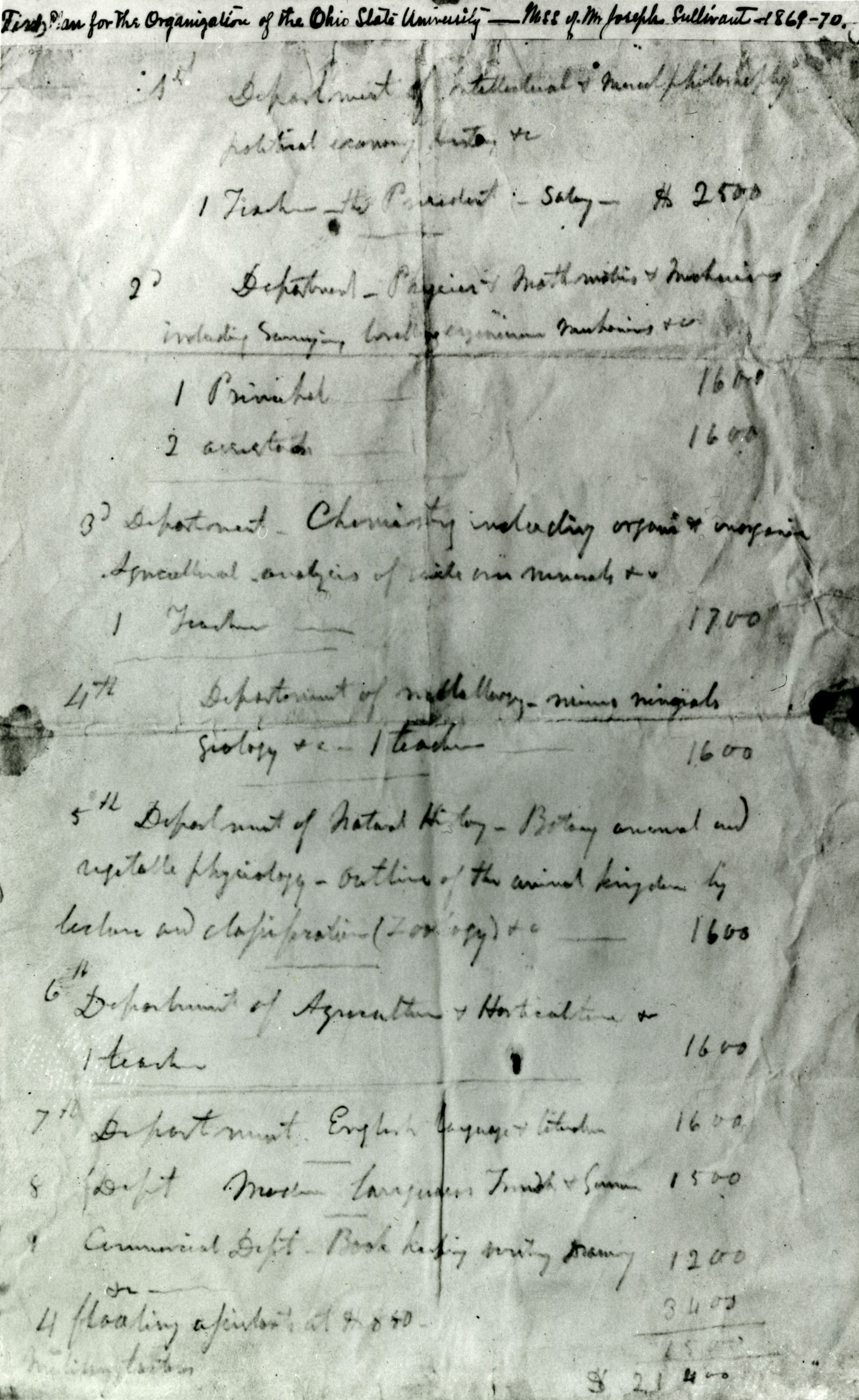
Sullivan's plan of organization for the school, 1869

Sullivant’s plan for the organization of the University, 1869

After the Oho state legislature passed the law to create the Ohio Agricultural and Mechanical College, Sullivant lobbied hard for it to be located in Columbus. He wrote an impassioned letter to the citizens of Franklin County, printed in a local newspaper, asking for their support of measure to approve the sale of bonds whose proceeds would be used to buy the land for the new college and build its first classrooms. The measure passed.

While Sullivant lived in Kentucky, he took an interest in agricultural education, and later in Columbus joined the state board of agriculture. As a member of that board, Sullivant would be a prime candidate to be selected for the new college’s first Board of Trustees. But when then-Ohio Gov. Rutherford B. Hayes nominated him for one of the seats, Sullivant at first asked Hayes to withdraw his name, knowing that his outspoken views and liberal positions on many issues would stir opposition in the Ohio Senate. Hayes refused, and the Ohio Senate ultimately confirmed Sullivant.

 As the Board of Trustees went about deciding the new college’s curriculum, Sullivant’s views on education became apparent. While some Trustees argued for the new college to focus solely, at least at first, on only those courses related to agriculture and mechanical arts, Sullivant advocated that the new college should “develop in all directions.” He went on to say, “If we had means, I would teach all that is worth knowing…What the farmer and mechanic need, like all other men, is a good education, and in proportion as that is general and liberal will they be best fitted for their special vocations.”

The University's original seal, designed by Sullivant, 1871

The University’s original seal, designed by Sullivant, 1871

Despite the controversy of his selection, Sullivant held great sway when it came to the final curriculum for the new college: his plan for ten departments of instruction was approved, although only six were in place when the college actually opened in 1873.

And if all that wasn’t enough, Sullivant designed the University’s original seal.

Sullivant died in 1882. In 1970, as the University celebrated its centennial, the Board of Trustees honored Sullivant by renaming the former Ohio State Archaeological and Historical Society Building (it had moved to its current home near I-71) after him.  

– Filed by C.N.
 

From founding, OSU community celebrated Thanksgiving with a day’s respite

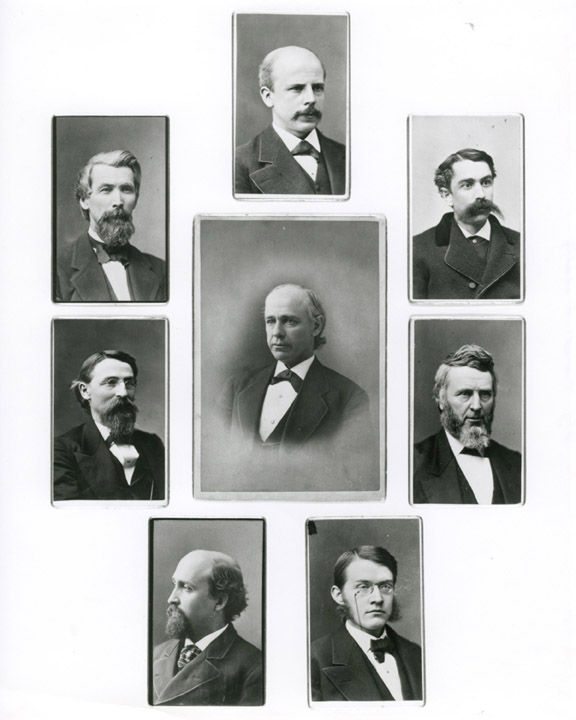
The first faculty of the University, 1873

The first faculty of the University, 1873

On Friday, November 21, 1873, just over two months after the University first opened its doors, the faculty were talking about taking a vacation.

In this particular case, it made sense: Not even a week later, Thanksgiving would be celebrated, so they needed to decide whether classes would be held that Friday. The faculty minutes for that date – the group’s 10th meeting ever – say “that Thursday Nov. 29 (Thanksgiving day) and the Friday following be allowed as holiday by the college, and that all college exercises be disbanded.” It was the only item of business for that meeting.

During World War II, Thanksgiving Day was a holiday for only civilians on campus. All Army and Navy-related classes were still in session on Thanksgiving. At that time, the Commencement ceremony for Autumn Quarter fell in early December, so classes on the Friday after Thanksgiving were considered a must.

In 1945, after the war was over, it was decided that no classes would be held from the Wednesday night before Thanksgiving until the following Monday – a first since before the war – to allow students to travel home for the holiday. In 1946 University faculty and staff were given both Thanksgiving Day and the following Friday off again in recognition for all of the overtime hours they had put in throughout the quarter with the record number of students enrolled that year.

President Bevis, 1948

President Bevis, 1948

In 1947 President Bevis ordered classes to be held the Friday after Thanksgiving, with the tradeoff that employees would get Christmas Eve, Christmas Day and Boxing Day, as well as the following weekend off. He stated that the University’s payroll deadlines, as well as orientation and fee payment deadlines necessitated the working Friday.

Classes were again eliminated for the Friday off as early as 1957, according to the Lantern, although OSU employees still had to show up to work. In the mid-1970s, during the nationwide energy crisis, the academic calendar was changed so that finals were completed by Thanksgiving. University employees still had to work the day after the holiday. By the mid-1980s, however, University classes were cancelled and University offices were closed both days.

–Filed by C.N.

Stradley Hall: Move-in forward, looking back

Stradley Hall, 1950s

Students returning to campus will be squeezing into fewer dorms this week because several residence halls are being renovated this year. One of those dorms is Stradley Hall, which is undergoing major renovations, including the addition of air-conditioning. Before this Cinderella of a dorm transforms completely, we thought we would tell you a little bit about its history:

Originally designated for men only, Stradley, along with Park and Smith Halls, was dedicated on October 17th, 1959 . Construction began in 1957 and was mostly completed by January 1959; the cost was listed at $1.8 million to build.

Bland L. Stradley, 1957

The dorm was named after Bland Lloyd Stradley, who arrived at Ohio State in 1920 as University Examiner, a position he held until 1944, when he was appointed Vice President. A graduate of Ohio Wesleyan University, Stradley had been principal of several high schools, including Canal Winchester, and had served as the assistant educational director at Camp Sherman during the First World War.

As University Examiner, Stradley was responsible for student admissions. From 1937 until 1944, Stradley served as both University Examiner and Dean of the College of Arts and Sciences. In 1944 he was appointed Vice President of Student Relations, making him responsible for all students outside of the classroom. Though he was responsible for discipline, he was well-liked by both students and faculty, receiving honorary memberships in Sphinx and Bucket & Dipper.

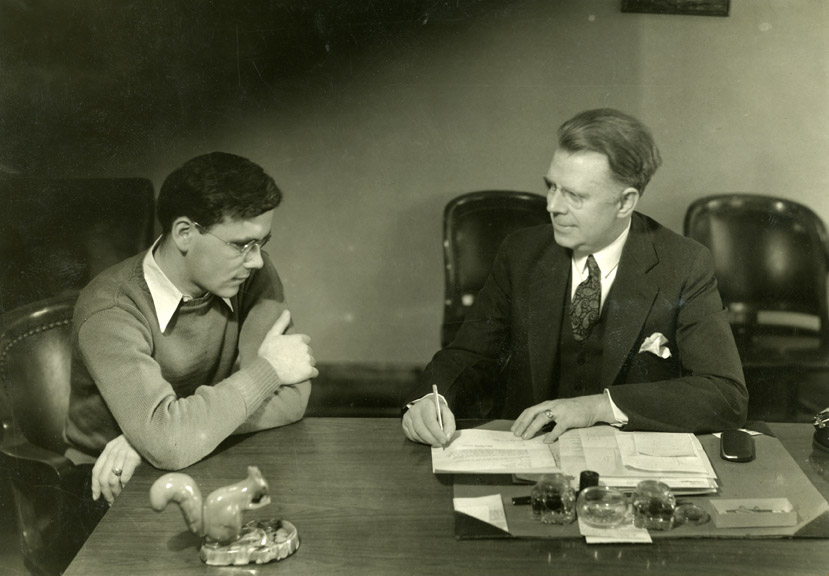
Stradley with student, 1937

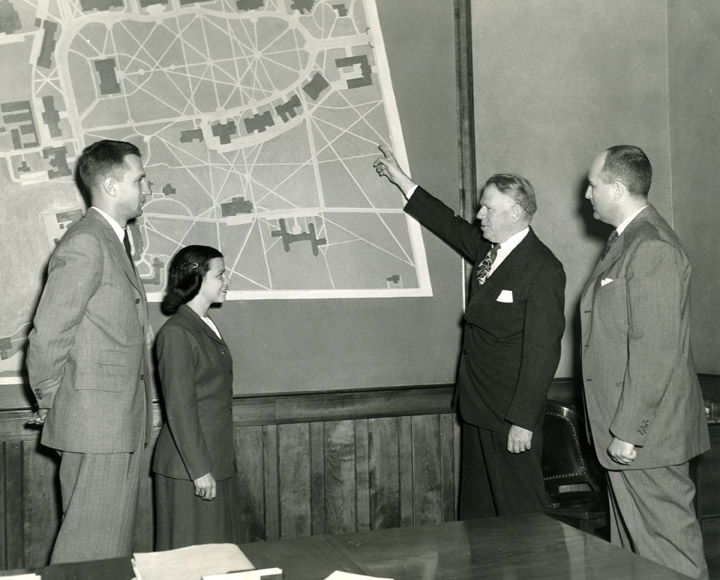
Stradley at campus map, n.d.


He was also known as a public speaker, and frequently encountered alumni, who he often remembered by name. He was also a member of the Faculty Club, as well as Torch and the Columbus Club, the Central Ohio Boy Scout Executive Board, and was a 33rd degree Mason.

In 1936, he gave the Summer Commencement Address, and was amongst the first to receive the University’s Distinguished Service Award in 1952. Bland Stradley died in 1957 at University Hospital.

Stradley Hall lobby, 1960

Stradley Hall dorm scene, 1962


Dispatch link: http://www.dispatch.com/content/stories/local/2011/08/22/dorm-fixes-will-squeeze-students.html

Older posts Newer posts