From Woody's Couch

Our Playbook on OSU History

Category: Activities (page 9 of 16)

School’s Out

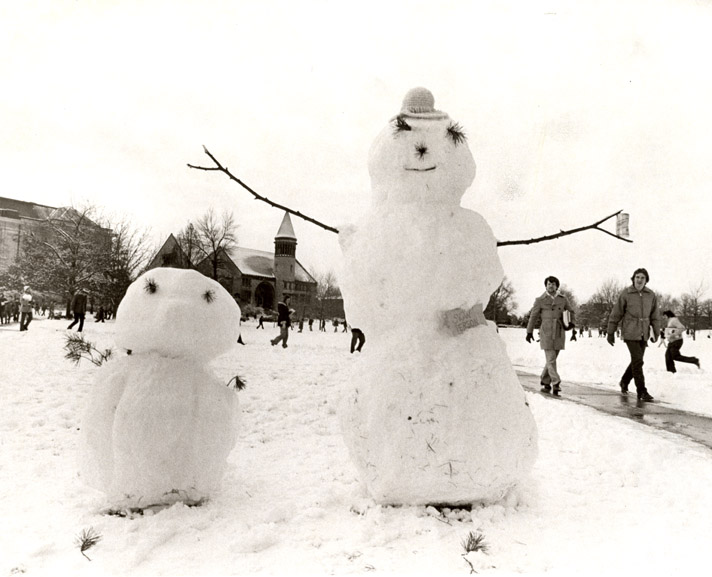
Oval, 1976

Oval, 1976

The recent polar vortex that shut the campus for two days serves as a reminder that even the Ohio State University isn’t impervious to the forces of nature. The campus has been closed a number of times for weather-related hazards, but classes also have been cancelled for a variety of other reasons over the years.

1918: October 11-November 12. Were you to travel through time to November 11, 1918, on the OSU campus, you might think classes were cancelled in celebration of the signing of the armistice between the Allied Forces and Germany that marked the end of World War I, but that wasn’t the case. The campus was instead shut down in an attempt to stop the spread of the influenza epidemic.

1968: April 9. Classes scheduled to be held between 8am and 4pm were cancelled out of respect for the funeral of Rev. Dr. Martin Luther King Jr., who was assassinated on April 4 in Memphis, TN.

Students hold a memorial for Martin Luther King, 1968

Students hold a memorial for Martin Luther King, 1968

1970: May 7-19. The University closed for nearly two weeks after four students were killed by the National Guard on May 4 at nearby Kent State University. The closure was an attempt to calm protestors on OSU’s campus and was largely successful. Learn more at our web exhibit on the 1970 Student Demonstrations.

1971: February 8. President Fawcett cancelled classes at 3 p.m. due to the 10 inches of snow that had fallen by then. He was quoted in The Lantern as doing so to “allow streets and sidewalks to be cleared so classes and offices can operate normally Tuesday.”

1977: January 18. Classes were cancelled due to cold weather in an attempt to conserve gas and electric resources at the request of Columbia Gas and Southern Ohio Electric. But students didn’t get too much of a break: Cancelled classes were rescheduled for President’s Day.
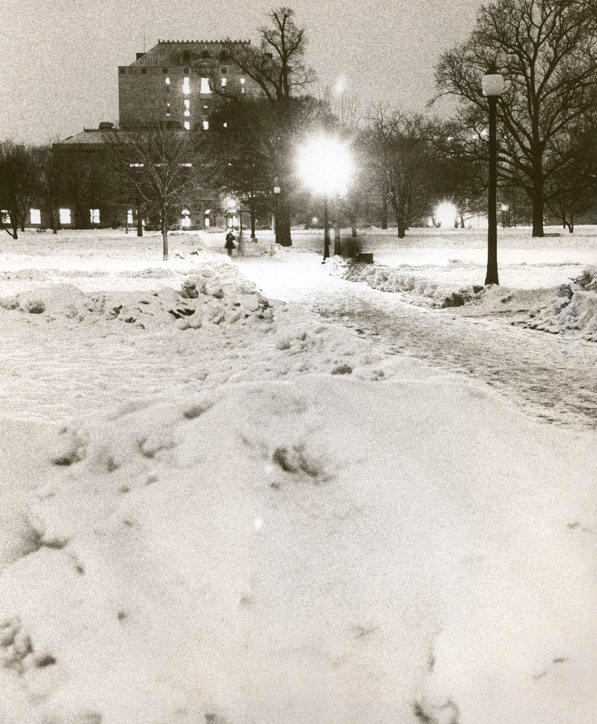
Photo of the Oval, 1978

The Oval after the Blizzard of ’78

1977: April 8. All classes scheduled on West Campus were cancelled after an explosion in Scott Hall. The blast was caused by an electrical malfunction and injured a graduate student and a firefighter.

1978: January 26-27. The famed Blizzard of ’78 stopped all but essential services on campus with 65 mph wind gusts and almost five inches of snow. Payroll operations, Medical Center personnel, telephone center operators, physical facilities workers, and student-life employees all braved the elements to keep necessary functions going.

1984: February 28. It wasn’t quite the Blizzard of ’78, but the snowstorm that hit town in late February of ’84 did manage to bring most of Columbus screeching to a halt. In addition to the county offices, courts, highways, and garbage pickups that were shut down for the day, some campus parking garages were closed and classes were cancelled starting at 4 p.m.

Twelve Days: For OSU undergrads, Park served as a constant counselor

Dean Joseph Park (left), with students, 1951

Dean Joseph Park (left), with students, 1951

One of the people Ohio State should never forget is Joseph A. Park, the University’s first Dean of Men. His greatest contribution may have been the Stadium Scholarship Dormitories, which helped thousands of male students attend OSU who otherwise could not have afforded to do so. But his long service as a calm counselor, ready to help in a crisis – or in some cases, get a student out of a jam – is what endeared him to thousands of students and led to his name on one of OSU’s dorms.

Born in Cleveland on October 7, 1893, Park graduated from Cleveland’s West High School before coming to Ohio State in 1914. At OSU, he was active in the YMCA, the fraternity Alpha Tau Omega and Sphinx, the senior men’s honorary. He also served on the staff of the Makio. During his junior year he was drafted to the Army, where he entered officer training. He returned to Ohio State in 1919 as a 1st Lieutenant, graduating in 1920. He married Ruth Vera Webb that June, and they had two daughters, Ruth and Mary.

Park, n.d.

Park, n.d.

As a senior, he had served as secretary for the campus YMCA; he held that position until 1927 when then-OSU President George Rightmire went looking for a position he was calling “student councilor.” Rightmire selected Park, whose job title changed to Dean of Men two years later. A new position at the time, the job changed greatly over the years as the campus grew. But Park didn’t change that much: He was always ready to listen and offer a helping hand or piece of advice.

Though he was responsible for the well-being of thousands of male undergraduates, he always kept a calm demeanor – and a phone at his bedside. Often the late-night calls were the results of normal college stress—or to bail students out of jail. In fact, the writers at the Sundial, OSU’s humor magazine, once said of Park’s position: “Some of the problems would tax a Supreme Court Justice schooled in psychiatry.”

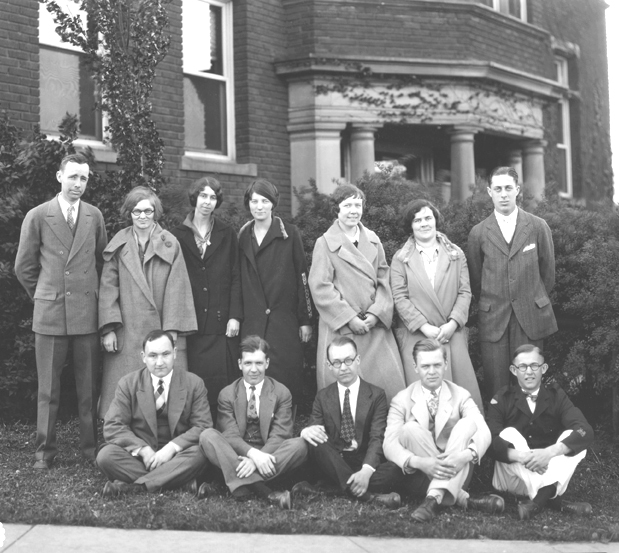
Park with students, 1930

Park with students, 1930

Park didn’t seem to mind, saying once that “the trouble is more than offset by the fun.” Indeed, he gave the bride away at dozens of weddings, and he and his wife chaperoned hundreds of campus dances and parties. On a questionnaire he listed his hobbies as “student life.”

Besides being a counselor and fill-in parent to students, Park also had the opportunity to make some lasting changes to the University structure. In 1927, when he was still a senior and YMCA secretary, Park proposed the creation of an office of director of student affairs and a student court, and the creation of a Student Senate. Eventually, all of these proposals came to fruition.

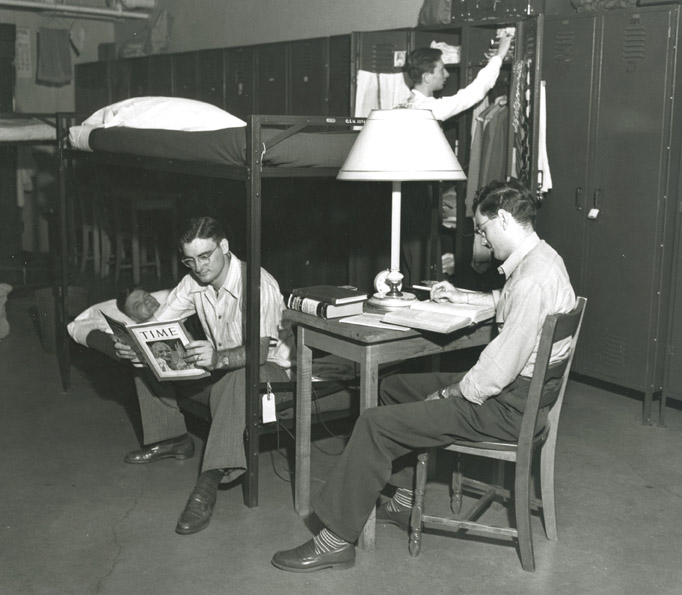
Students in the Stadium Dorm, 1947

Students in the Stadium Dorm, 1947

Park’s most notable contribution, though, was the establishment in 1933 of co-operative housing system in the Stadium for low-income male students. Known as the Stadium Scholarship Dorms, they helped keep students in school by offering affordable housing in exchange for working in the dorms at jobs like cleaning and serving in the dining area. This housing philosophy still exists in the Stadium Scholarship Program.

Park died on April 19, 1952. He was 59. In 1959, Park Hall was one of three then-new dormitories (Stradley and Smith were the others) built to provide more dorm space for men on campus.

– Filed by C.N.

Twelve Days: For OSU supporter Sullivant, teach “all that is worth knowing”

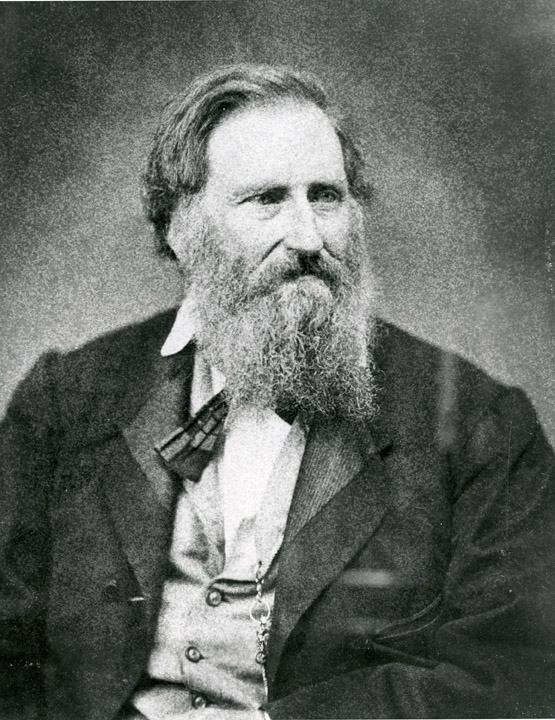
Joseph Sullivant, 1878

Joseph Sullivant, 1878

We’d like to launch this year’s “Twelve Days of Buckeyes” celebration by focusing on one of OSU’s earliest and biggest support: Joseph Sullivant, a prominent citizen of Columbus whose influence on the University’s earliest development was strong and unwavering.

Sullivant was the son of Lucas Sullivant, one of the first settlers of Franklin County. Lucas Sullivant came to Ohio from Kentucky as a surveyor of military lands and stayed, building his home in Franklinton, on the western side of the Scioto River. Joseph Sullivant was the youngest of Lucas’ three sons, born in 1809. All of the boys received a quality education, and Joseph was sent to a boarding school in Worthington for a time, before he later followed his next-eldest brother, Michael, to Ohio University. He finished his studies at Centre College in Danville, Kentucky where he had family.

Throughout the rest of his life, Sullivant spent his time in a variety of services, public and private, that helped in the development of the city. For instance, before the age of 21, the state legislature appointed him to found the Philosophical and Historical Society of Ohio and was its curator and secretary for a number of years. He also served for many years on the Columbus Board of Education. As the years went by, he became known for his pronounced and liberal views on political questions such as education.

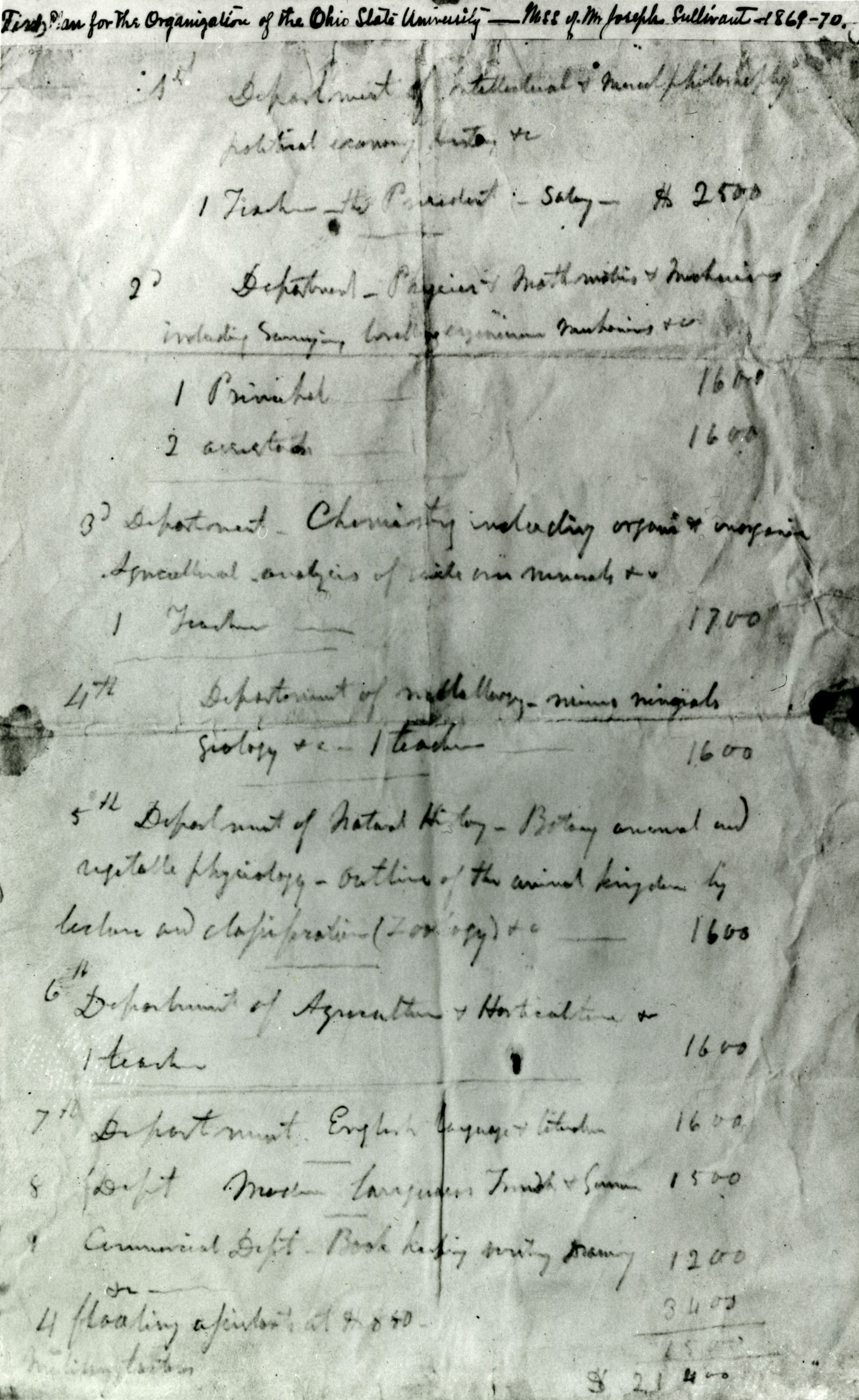
Sullivan's plan of organization for the school, 1869

Sullivant’s plan for the organization of the University, 1869

After the Oho state legislature passed the law to create the Ohio Agricultural and Mechanical College, Sullivant lobbied hard for it to be located in Columbus. He wrote an impassioned letter to the citizens of Franklin County, printed in a local newspaper, asking for their support of measure to approve the sale of bonds whose proceeds would be used to buy the land for the new college and build its first classrooms. The measure passed.

While Sullivant lived in Kentucky, he took an interest in agricultural education, and later in Columbus joined the state board of agriculture. As a member of that board, Sullivant would be a prime candidate to be selected for the new college’s first Board of Trustees. But when then-Ohio Gov. Rutherford B. Hayes nominated him for one of the seats, Sullivant at first asked Hayes to withdraw his name, knowing that his outspoken views and liberal positions on many issues would stir opposition in the Ohio Senate. Hayes refused, and the Ohio Senate ultimately confirmed Sullivant.

 As the Board of Trustees went about deciding the new college’s curriculum, Sullivant’s views on education became apparent. While some Trustees argued for the new college to focus solely, at least at first, on only those courses related to agriculture and mechanical arts, Sullivant advocated that the new college should “develop in all directions.” He went on to say, “If we had means, I would teach all that is worth knowing…What the farmer and mechanic need, like all other men, is a good education, and in proportion as that is general and liberal will they be best fitted for their special vocations.”

The University's original seal, designed by Sullivant, 1871

The University’s original seal, designed by Sullivant, 1871

Despite the controversy of his selection, Sullivant held great sway when it came to the final curriculum for the new college: his plan for ten departments of instruction was approved, although only six were in place when the college actually opened in 1873.

And if all that wasn’t enough, Sullivant designed the University’s original seal.

Sullivant died in 1882. In 1970, as the University celebrated its centennial, the Board of Trustees honored Sullivant by renaming the former Ohio State Archaeological and Historical Society Building (it had moved to its current home near I-71) after him.  

– Filed by C.N.


Older posts Newer posts