From Woody's Couch

Our Playbook on OSU History

Author: John Hooton (page 10 of 12)

Frozen Fridays: ‘G’ is for Geographic South Pole!

This blog post is part of the Frozen Friday Series, an A-Z journey of the Polar Archives.  Each week, we will feature some aspect of the history of polar exploration with a blog post written by our student authors.

cook34_5b

Amundsen stands in Antarctica on the Belgian
Expedition (1897 to 1899).

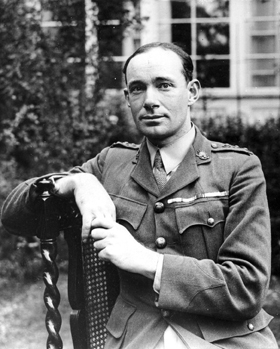
The Geographic South Pole is, simply, the furthest south one can go. Located at simple latitude of 90⁰ South, this cozy little bottom of the world is surprisingly difficult to get to. Explorers tried for years to reach that easy-to-remember coordinate and it was not until a mere one hundred and five years ago that man finally reached the Pole. In fact, just last Wednesday, December 14, was the anniversary of famed explorer Roald Amundsen’s conquest of the South Pole in 1911. As with most tales of the heroism and determination by polar explorers, Amundsen’s achievement deserves more than a brief line in chronicles of Antarctic exploration or a brief word above a textbook timeline.
evans-scott-rep-a193

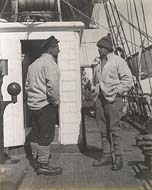
Robert Falcon Scott (right)
and Edward Evans, his
second-in-command, on
the deck of the Terra Nova.

It’s a classic tale of exploration: impossible conditions, a high stakes race, a great victory, and a tragic demise. In 1910, two expeditions led by veterans of the frozen continent arrived with the same goal in mind: to be the first to reach the Geographical South Pole. Roald Amundsen, leading nineteen men, commanded the Norwegian expedition.[1] Robert Falcon Scott, a relative upstart compared to his opponent, commanded the Terra Nova expedition to secure ‘for the British Empire the honour of that achievement’.[2] Though Scott received the adoration and respect from the British people upon returning from his first expedition to Antarctica six years prior, Amundsen had been a player in the polar circles since the 1890s when he joined the famous Belgian Antarctic Expedition, along with Dr. Frederick A. Cook (see our post about Dr. Cook for more information on the good doctor). These two men were embroiled in a competition of a most dangerous nature.

But this race was more than a competition between two men. It was a fight for the future of Antarctic exploration. Scott utilized a new technology, one that would prove later in the century to dominate the frozen fields of the Antarctic: the motor sledge.[3] Though not as efficient or effective as later motorized vehicles, the motors on Scott’s final expedition no less added to the dramatic nature of this struggle. Amundsen, on the other hand, relied on traditional methods, using dogs for equipment and personnel transportation.[4] Though Scott also used dogs to some degree on his expedition, he used them with less skill and thus they proved ineffective.[5] For Amundsen, however, his dogs proved vital to his victory (for more on the use of dogs in Antarctica, see our upcoming blog post for the letter ‘I’).

Both expeditions began on the frozen ice of the Ross Ice Shelf.[6] Having landed on January 14, 1910 and January 4, 1910, respectively, the crews of the Fram, Amundsen’s ship, and Scott’s Terra Nova prepared to winter until the next Antarctic Summer. 145135-004-402da76aEight men from the Fram left with eighty-six sled dogs on the eighth of September, 1911.[7] They reached the Pole almost four months later, [8] and Amundsen proved the victorious explorer.

In truth, the real drama lay not in the race itself, but rather in the story of Scott and his men, whose expedition was wrought with problems. And while they did eventually reach the Pole, that would only be one part of their journey.

Scott’s trek began with a limp; they could not leave their camp until late October, 1911,  a full two months after Amundsen had left his camp.[9] By mid-December, they were forced to kill off the last of their animals and were left hauling their own sledges.[10] The horses, weakened beyond use by the frigid conditions and difficult terrain, were shot on December 9th while the dogs were killed some time later for food. The men were exhausted, much more exhausted than Scott had anticipated in his planning.[11]The leader of his team, Teddy Evans, came down with scurvy before they completed their journey to the Pole.[12]

img-z21112245-0001

The cover of a welcoming guide to
the Amundsen-Scott South Pole
Station (circa 1970).

Scott and his men reached the South Pole on January 17, 1912; nearly two weeks after Amundsen had claimed his victory for Norway.[13] Needless to say, Scott was devastated. “The worst has happened,” he stated as he gave the news to his crew.[14] Unfortunately, this would not be the worst occurrence for Scott on this expedition. Scott and his men would not return to warmer lands. The expedition perished on their way back from the South Pole.[15] They were exhausted and froze in the harsh Antarctic conditions. Scott’s triumph and tragedy became a national symbol for the United Kingdom and several locations often visited by subsequent Antarctic explorers are named for Scott and have monuments to his journey.[16]
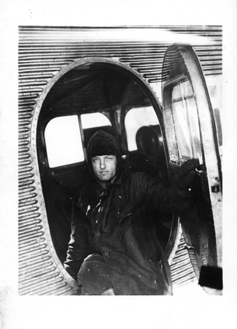
byrd7774_1

Admiral Richard Byrd in the Floyd
Bennett, the plane in which he made
his historic flight in 1929.

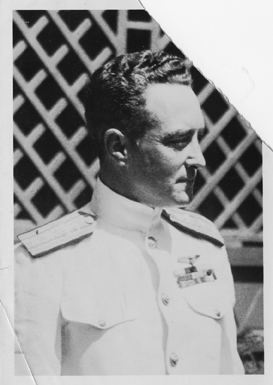
The Geographic South Pole represents one of the final terrestrial locations of exploration and achievement. Men competed for the honor reaching it. They gave up their safety, their time, their resources, and in all too many cases, their lives in pursuit of the honor of being first to reach its frozen point. Reaching the Pole did not become any less a point of yearning with Amundsen’s success. Admiral Richard E. Byrd reached the Pole by air in 1929. Many explorers to this day travel to the Pole to seek their own accomplishment and conduct crucial research in the study of global and polar climate.

For more information about Scott and his exploration, visit the Scott Polar Research Institute.  For more information on Amundsen, check out the Fram Museum in Oslo, Norway. Information on other explorers, including Admiral Byrd, can be found at the Byrd Polar and Climate Research Center Archival Program.


Written by John Hooton.

[1] Antarctica, 2nd ed., s.v. “A Professional in the Age of Amateurs.” (Surry Hills: Reader’s Digest, 1990).

[2] Antarctica, 2nd ed., s.v. “Scott’s Last Expedition.” (Surry Hills: Reader’s Digest, 1990).

[3] Antarctica, “A Professional in the Age of Amateurs.”

[4] Antarctica, “A Professional in the Age of Amateurs.”

[5] Antarctica, 2nd ed., s.v. “Sled Dogs.” (Surry Hills: Reader’s Digest, 1990).

[6] Antarctica, “Scott’s Last Expedition.”

[7] Antarctica, 2nd ed., s.v. “Amundsen Wins the Race to the Pole.” (Surry Hills: Reader’s Digest, 1990).

[8] Antarctica, “Amundsen Wins the Race to the Pole.”

[9] Antarctica, 2nd ed., s.v. “Triumph and Tragedy.” (Surry Hills: Reader’s Digest, 1990).

[10] Antarctica, “Triumph and Tragedy.”

[11] Antarctica, “Triumph and Tragedy.”

[12] Antarctica, “Triumph and Tragedy.”

[13] Antarctica, “Triumph and Tragedy.”

[14] Antarctica, “Triumph and Tragedy.”

[15] Antarctica, “Triumph and Tragedy.”

[16] Antarctica, “Triumph and Tragedy.”
Frozen Fridays: ‘F’ is for Film!

This blog post is part of the Frozen Friday Series, an A-Z journey of the Polar Archives.  Each week, we will feature some aspect of the history of polar exploration with a blog post written by our student authors.

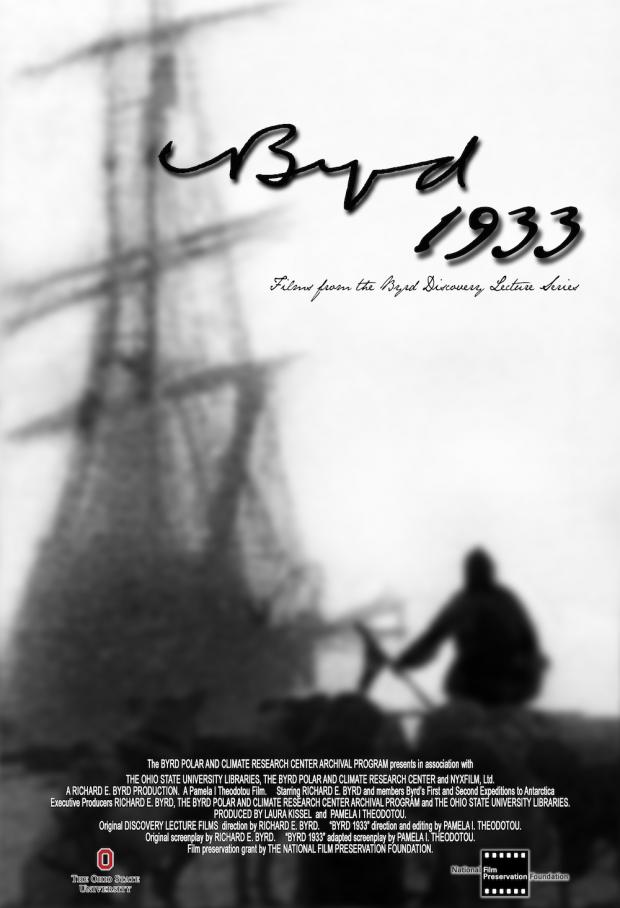
byrd-1933-poster-short-v3

‘Byrd 1933’ was produced using
moving image film found in the Richard E. Byrd Papers.

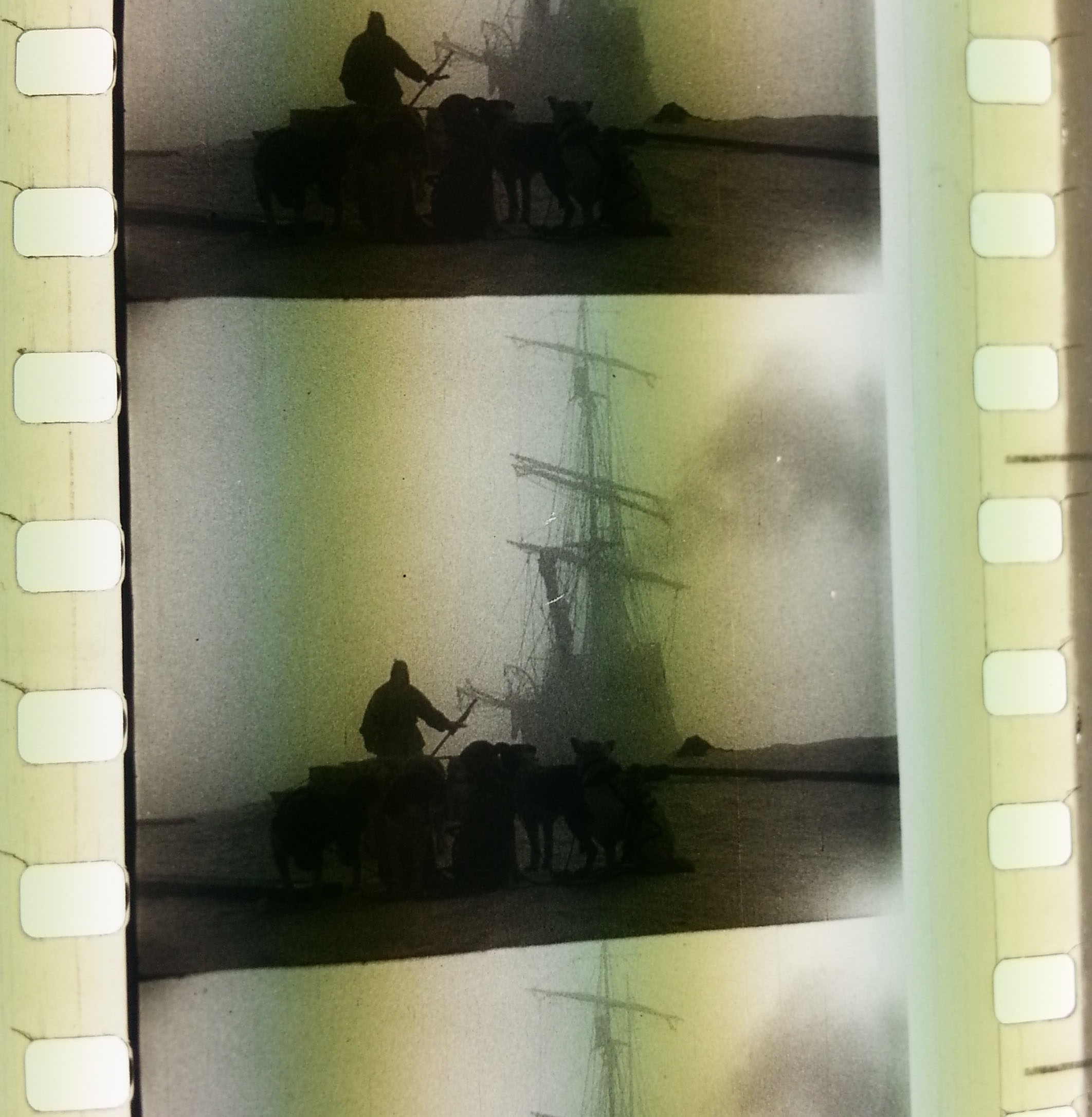
Byrd 1933 is a documentary by filmmaker Pamela Theodotou,  created from footage filmed primarily during Byrd’s Second Expedition to Antarctica, 1933-1935. Originally known as the “Discovery Lecture Series,” preservation of the original films was made possible by a generous grant given by the National Film Preservation Foundation to the Byrd Polar and Climate Research Center Archival Program in 2013.

In the twenty-first century, it is easy for us to forget the work that goes into the production of a film. We live in an age where computer generated graphics can create special effects that otherwise would have existed in our imaginations alone. Though there are those filmmakers who go to great lengths to create spectacles by using ‘practical’ effects (which are in no way practical), even they are advantaged by modern technology. Much of the danger associated with traditional film-making is nonexistent in a digital environment, making the very concept of ‘film’ mean something different to us now than it did before. The great ‘exploration’ films and television shows of our time, such as The Revenant or Star Trek, differ in one very significant way when compared to the exploration films of the past: the worlds being ‘explored’ are well known to us or are simple constructions of technology and imagination. The ‘Wild West’ has been tamed for at least a century and man cannot yet travel through space with relative ease, for example. We know that the men and women working on those projects were safe for the entirety of production. The same cannot be said, however, for those cameramen shooting footage during Byrd’s Second Antarctic Expedition in 1933-1935.

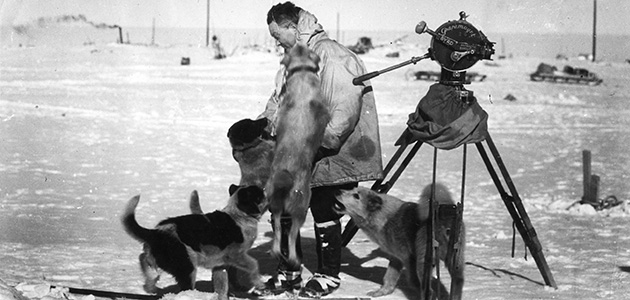
2015-10-19-1445239989-7831860-byrdpolaradmiralbyrdcollectionpups

A still from ‘Byrd 1933’ featuring
Byrd and some dogs.

Several  cinematographers from Paramount Pictures[1] accompanied the famed explorer Richard E. Byrd on the expedition, with the purpose of bringing Antarctica back to the public. The aim was to create a feature film of the expedition, one that would rival that of a film produced in Hollywood. While moving images of Antarctica had been brought back to the United States before, it was not of this caliber[2].  The Antarctic, with its freezing conditions and other environmental hazards, was in many respects the last ‘frontier’ for mankind. Relatively little was known about the continent.

According to Pamela Theodotou, creator of Byrd 1933, the imagery captured by this film crew is best compared to famed photographer Ansel Adams.

image-from-8517

Film used in ‘Byrd 1933’.

But what is truly remarkable is the work and struggle that went into the production of this footage. Filming is difficult under the best of conditions. One must worry about lighting, angles, and exposure times. Film development is a difficult and time consuming task. Now, imagine doing all of this in Antarctica, under freezing and dangerous conditions not only to yourself, but the film that often contains shots that may be irreplaceable. Pamela Theodotou writes on the process:

With temperatures at times 75 below zero, mechanics don’t work well and freeze solid; never mind the danger of film emulsion staying intact as it is wound around a spool inside the camera as it is turned. There were many reports of the camera freezing up, the oil used to lubricate them notwithstanding the cold, and lenses crusting over with ice crystals constantly if you breathed too close to them… The extreme cold complicated everything, equipment froze within minutes, mechanics ceased up, lenses fogged quickly if not handled carefully. And that was just the process of shooting. Complicating matters was the process of developing the film in those conditions… Never mind the developing of motion picture film. In photography you might have a roll of 36 pictures to develop into 36 images. These cinematographers had to develop hundreds of thousands of frames because one second of film is generally 24 frames a second.[3]

dsc_0016

Many reels made on the
Second Byrd Antarctic Expedition
(1933-1935) have become dust.

The actual process of filming and developing that film was a daunting task. Developing meant eighteen hours of work in absolute darkness to preserve the images on the film.[4]

The filmmakers endured the same conditions as the other members of the expedition. They faced the same cold, the same hazardous terrain, the same threats brought by ice. The film crew worked in these conditions with tools and resources that were not meant for the freezing cold.

It can be awe-inspiring when one considers what had to be done in order to shoot this film.  If one is in the local Columbus area, please consider joining us at the Westerville Public Library when Byrd 1933 is screened there on Friday, March 24 by the Westerville Historical Society. One can also view Byrd 1933 this coming April at the Ohio History Connection as part of its “Exploration Weekend.”

For more information on both events and the eventual release of Byrd 1933 to the public, please visit the Polar Archives.

For more information about filmmaker Pamela Theodotou and the process of creating Byrd 1933, please visit the film’s website .  Video content is featured, including the trailer, an introduction to the film given by Pamela Theodotou herself, and several featurettes!


[1] Pamela Theodotou, e-mail message to author, November 03, 2016.

[2] Pamela Theodotou.

[3] Pamela Theodotou.

[4] Wallace West, Paramount Newsreel Men with Admiral Byrd in Little America (Racine: Whitman Publishing Company, 1934), 32


Works Cited

West, Wallace. Paramount Newsreel Men with Admiral Byrd in Little America. Racine: Whitman             Publishing Company, 1934),


Written by John Hooton.

Frozen Fridays: ‘E’ is for Explorer!

This blog post is part of the Frozen Friday Series, an A-Z journey of the Polar Archives.  Each week, we will feature some aspect of the history of polar exploration with a blog post written by our student authors

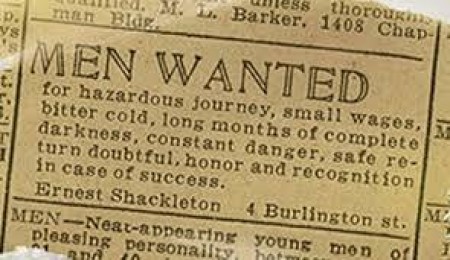
09_10_2013_shackleton-e1378828023512

The famous ‘advertisement’ in the Times

“Men wanted for hazardous journey, small wages, bitter cold, long months of complete darkness, constant danger, safe return doubtful, honor and recognition in case of success.”[1] And so read an advertisement supposedly printed in the London newspaper The Times[2], submitted by the famed polar explorer Sir Ernest Shackleton sometime in the early twentieth century. The ad might also have read something like “men needed for mission to boldly go where no man has gone before,” and would retain no less accuracy or meaning. Simply, the advertisement is a call to arms, asking young men to set aside their lives at home for the exotic, the dangerous, and the unknown in the name of personal glory and adventure. Although this advertisement likely never existed as it has been presented,[3]it does capture something of the mentality required by the explorer: a willingness to endure harsh conditions for great amounts of time, courage in face of possible injury and death, and extended time apart from loved ones, all for the sake of a chance for personal heroism. These real-life Captain Kirks existed well into the modern era.

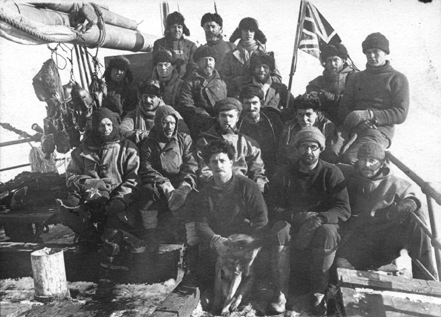
wilkins36_6_55

The members of Shackleton’s 1921 expedition
to the Antarctic.

By 1900, the world had shrunk significantly. Europeans had mapped the ‘darkest’ parts of the world; plunging into the heart of Africa and the mountains and deserts of Asia seeking to expand the breadth of Western knowledge.[4] Those blank spaces on the map had all but been filled in, apart from the cold, harsh Antarctic. In the toilsome and disheartening years of the Great Depression, the words “Dicky’ Bird is going south again” inspired in the hearts of many Americans, “tired of the deadly squabbles between Europe’s dictators and democrats and ground down by the daily effort to make or find a living in the midst of constant privation”, a feeling of romantic wonder and national pride[5]. The collections of the Polar Archives at the Ohio State University has the papers of many such polar explorers, including Admiral Richard E. Byrd and Sir George Hubert Wilkins, men who could be considered the embodiment of polar heroism and held the deep adoration and fascination of the American public.

wilkins35_9_1

Sir George Hubert Wilkins

Not only were Byrd and Wilkins considered heroic in the eyes of the public, the men with whom they served also saw them as heroes. One man serving under Wilkins described him in 1933 as “a wonderful leader” and wrote that Wilkins “never made decisions without giving us the opportunity either of making suggestions or of declining to undertake tasks if we felt unable to carry them out. But I think that most of us trusted Sir Hubert so implicitly that we gladly followed his ideas.”[6] Another member of that same expedition claimed that he “looked up to Sir Hubert as a dog does to his master. It was a tremendous honour to serve under such a great explorer.”[7] Wilkins always put the needs of the crew in their proper place of importance. When his plane, the Polar Star, was ruined before it could be flown over the Antarctic, Wilkins worked diligently with young men half his age to transport, by hand, heavy sledges of supplies for ten hours each day in thirty degrees Fahrenheit below zero against heavy winds for the purpose of another flight attempt the next spring[8].

byrd7640_4

Admiral Richard Evelyn Byrd

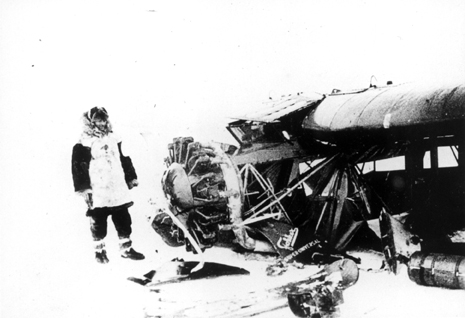
Admiral Richard Byrd held those characteristics one would find common amongst the greatest of leaders and explorers of any generation. Claude Swanson, a lifelong friend of the Admiral, found that Byrd’s “father’s indignant denunciations of foolhardiness were more than justified”[9]. A childhood friend of Byrd who accompanied a young Byrd on his travels across the globe, “attributes some of his gray hair to the anxiety accompanying his efforts to locate the young daredevil who had managed to slip away on his Filipino pony and join a sheriff’s posse…who were…rounding up a group of desperate bandits.”[10] Along with this proclivity towards adventure imbued in Byrd seemingly at birth was a profound sense of duty to others. This manifested itself best in relation to the men of Byrd’s First Antarctic expedition, 1933-1935. When a party of geologists left Little America I on a mission, their plane and only method of transport was swept away and destroyed in a storm with winds of over hundred miles per hour[11]. The men were stranded for several days before they heard Byrd, flying above on a mission of rescue[12]. Upon returning to the United States and the lands of warmth (or at least not eternal cold) after his expedition, Byrd was likely to be voted a special medal of honor by Congress[13]. Byrd then asked that medals be awarded to his men instead, to which Congress agreed[14].

byrd7763_4

The ruins of the plane destroyed in Byrd’s
First Antarctic Expedition (1928-30).

Wilkins and Byrd were the explorers of their time. To their men and to the public, they were reincarnations of the mythical explorers of old. Their actions spoke louder than their words, but that is not to say that their words were not already heard and appreciated.

One can learn more about Byrd and Wilkins and their incredible lives of exploration and adventure at the Polar Archives at the Ohio State University.


[1] Colin Schultz, “Shackleton Probably Never Took Out an Ad Seeking Men for a Hazardous Journey”, Smart News, September 10, 2013, http://www.smithsonianmag.com/smart-news/shackleton-probably-never-took-out-an-ad-seeking-men-for-a-hazardous-journey-5552379/?no-ist.

[2] Shultz, Shackleton “Probably Never Took Out an Ad”.

[3] Shultz, Shackleton “Probably Never Took Out an Ad”.

[4] Lisle A. Rose, Explorer (Columbia and London: University of Missouri Press, 2008), 2.

[5] Rose, Explorer 1.

[6] Simon Nasht, The Last Explorer (Sydney: Hodder Australia, 2005), 260

[7] Nasht, The Last Explorer 261

[8] Nasht, The Last Explorer 260-261

[9] Claude A. Swanson, introduction to Discovery, by Richard E. Byrd (New York: G.P. Putnam’s Sons, 1953), vii.

[10] Swanson, introduction vii.

[11] Antarctica, 2nd ed., s.v. “Conquest by Air.” (Surry Hills: Reader’s Digest, 1990)

[12] Antarctica, “Conquest by Air”

[13] Swanson, introduction xiii

[14] Swanson, introduction xiii

Works Cited

“Conquest by Air.” In Antarctica, 2nd ed. Surry Hills: Reader’s Digest, 1990.

Nasht, Simon. The Last Explorer. Sydney: Hodder Australia, 2005.

Rose, Lisle A. Explorer. Columbia and London: University of Missouri Press, 2008.

Schultz, Colin. Shackleton Probably Never Took Out an Ad Seeking Men for a Hazardous Journey. Smart News, September 10, 2013. http://www.smithsonianmag.com/smart-news/shackleton-probably-never-took-out-an-ad-seeking-men-for-a-hazardous-journey-5552379/?no-ist.

Swanson, Claude A. Introduction to Discovery, by Richard E. Byrd, vii-xv. New York: G.P. Putnam’s Sons, 1953.

Written by John Hooton.

Older posts Newer posts