Author: Caitlin McGurk (page 134 of 158)

Preservation and the Cartoon Library

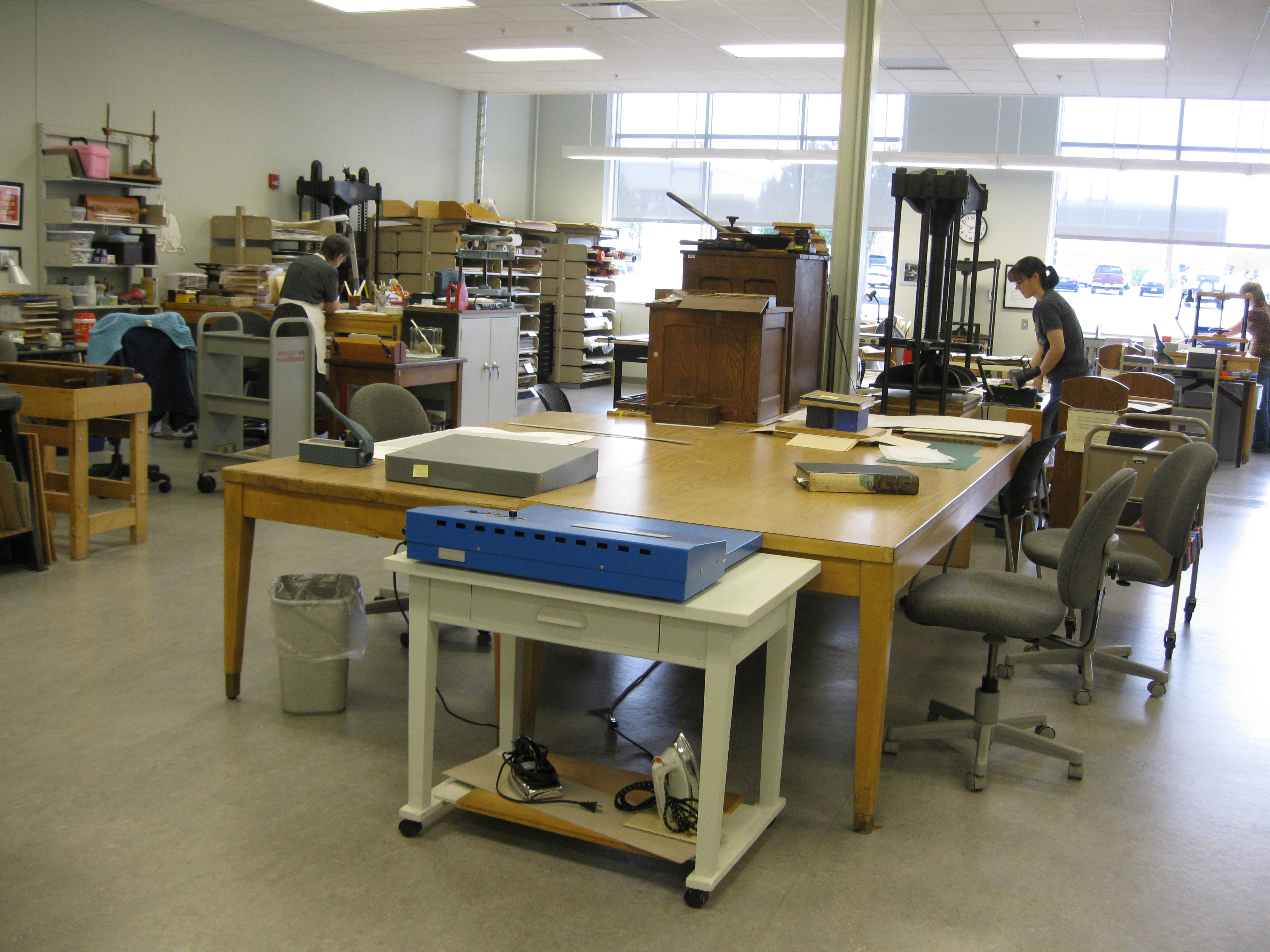
If there is one thing that makes us swell with pride more than our own pious treatment of comic art here at the Cartoon Library, it’s seeing the meticulous process by which these pieces are repaired over at our incredible Preservation & Reformatting studio. We are lucky enough to have the expertise of the amazing conservator Harry Campbell at hand, who regularly picks up worn and torn items from us and nurses them back to health.

Recently, Harry and his staff worked on a series of old Puck magazines that needed rebinding. We took a trip over there to snap some photos, and take a look at the facility. There are few places in the world where comics get the kind of treatment that they do at the Billy Ireland Cartoon Library & Museum!

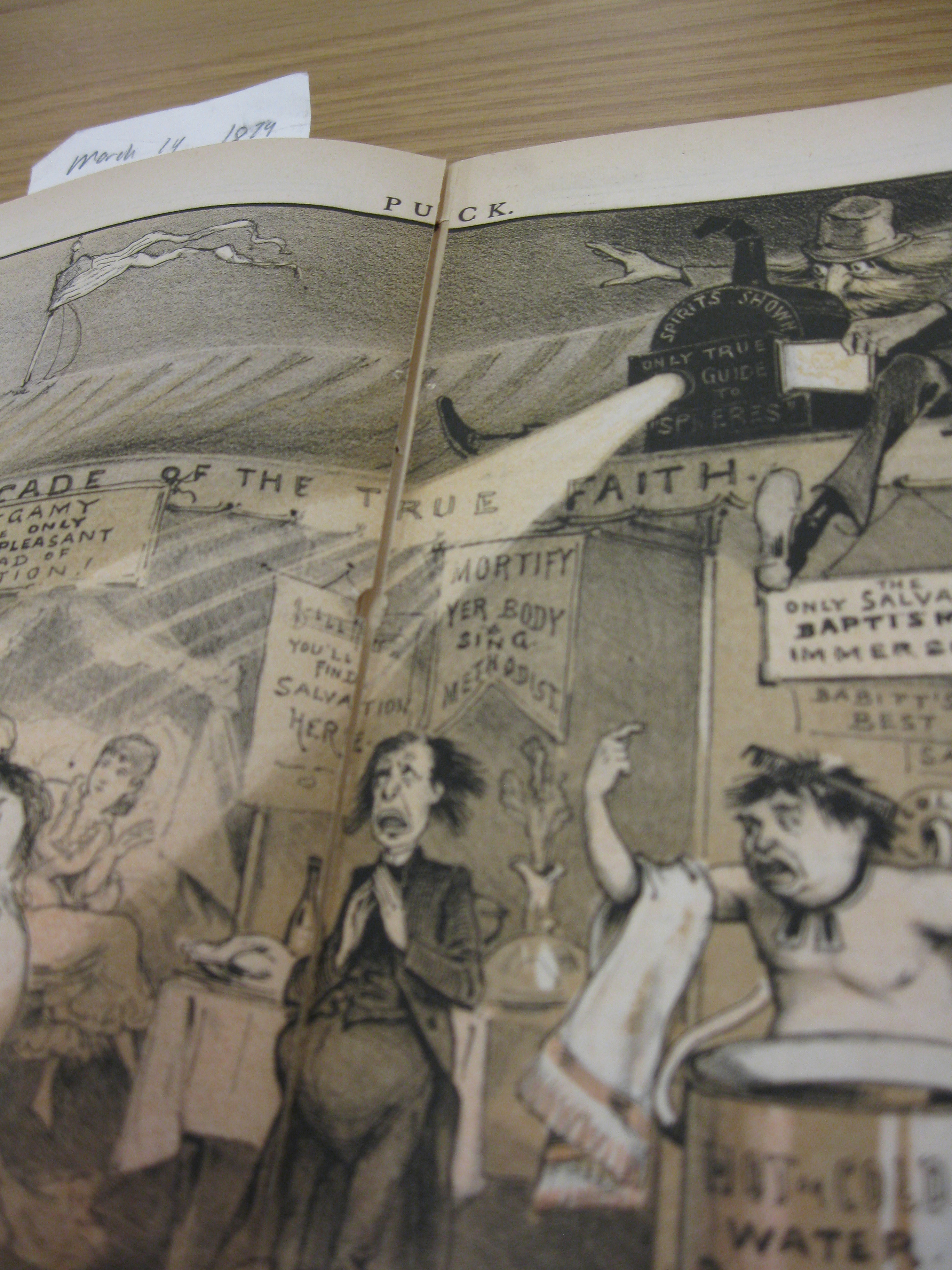
Like many of the old humor periodicals we collect such as Punch and Judge, issues of Puck magazine were collected and bound into hardcover volumes. The particular collection of Puck that we focused our photos around for today was from 1879, containing the issues from Volumes 5 & 6. As you can see in the images below (click to enlarge), the spine has been damaged severely and the sections had begun to separate from the rest of the text block.


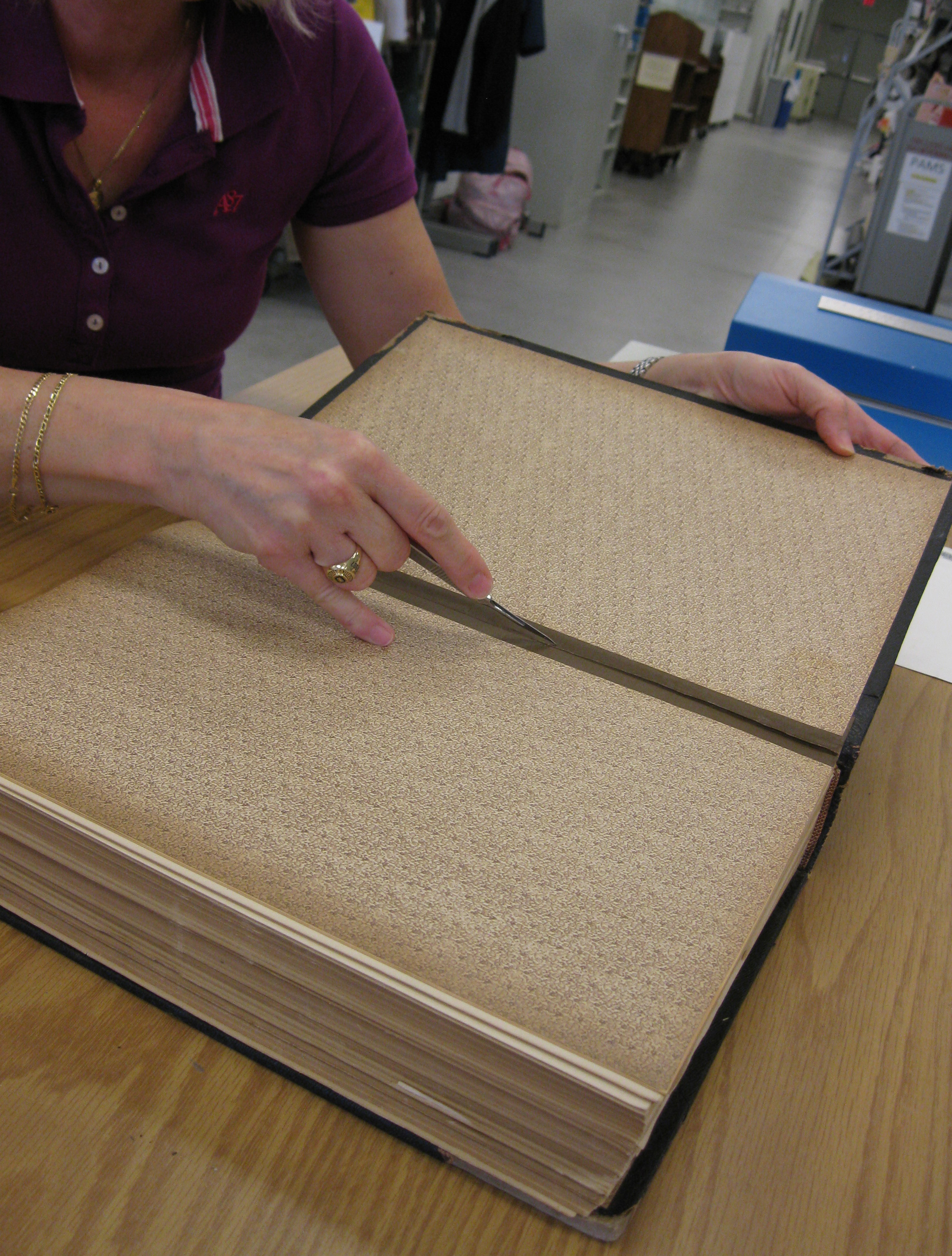
During our visit, we were able to watch Conservation Assistant Brenda Goodwin begin the careful work of deconstructing the volume in order to begin rebinding it with a new spine and casing. Below, an overview of the process through pictures:

With an x-acto knife and a steady hand, Brenda separated the textblock from the binding by slicing it out of the spine lining and endpapers.


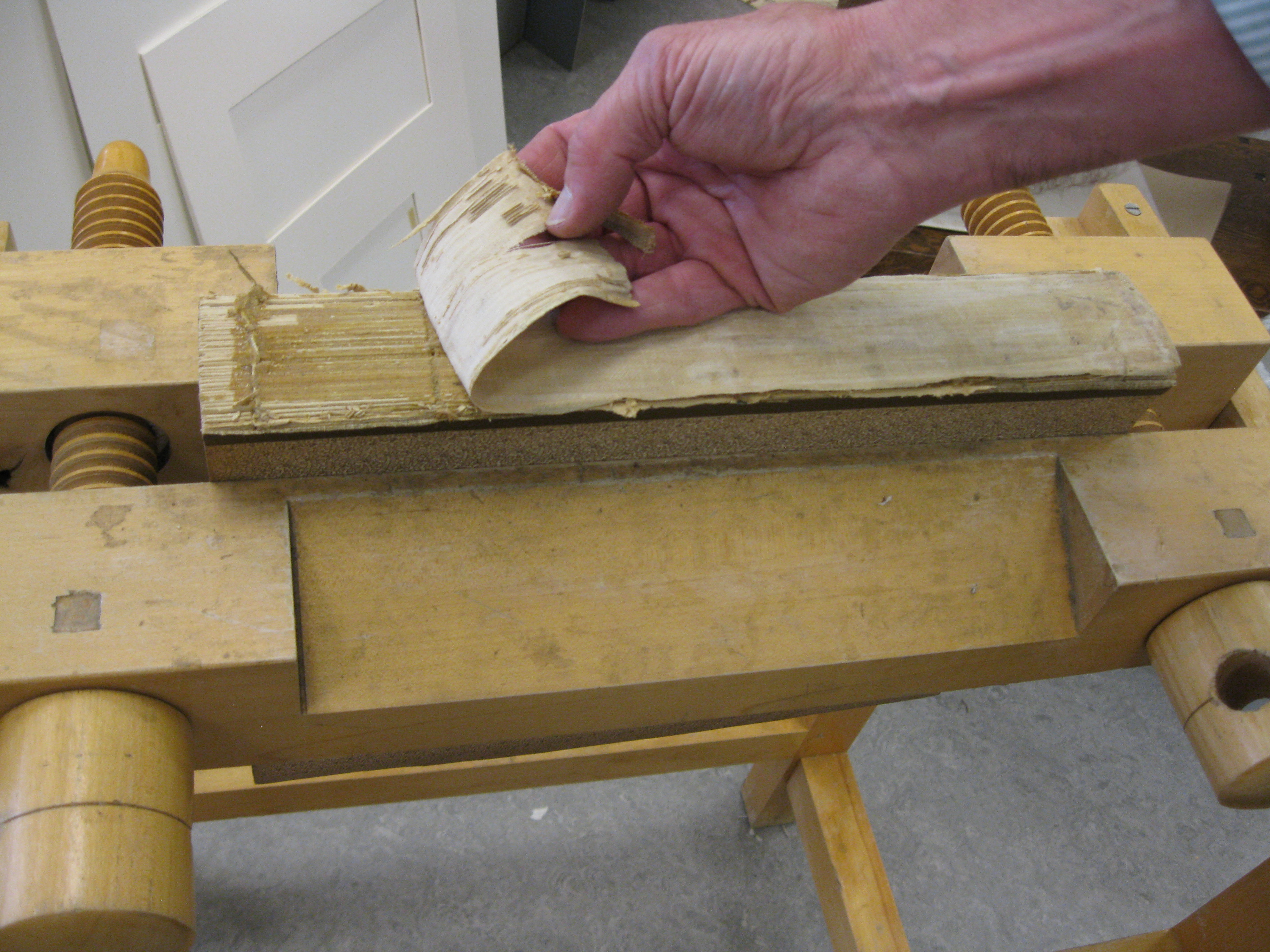
The text block is then placed in a vertical book vice (lying press) to hold it steady, while Brenda cleans the old spine off. Because of the strength of the old glue and brittleness of the paper, a softening agent is applied to the spine in order to more easily scrape away the old adhesive. Once the spine has been cleaned and exposed, a new cloth spine lining is applied.


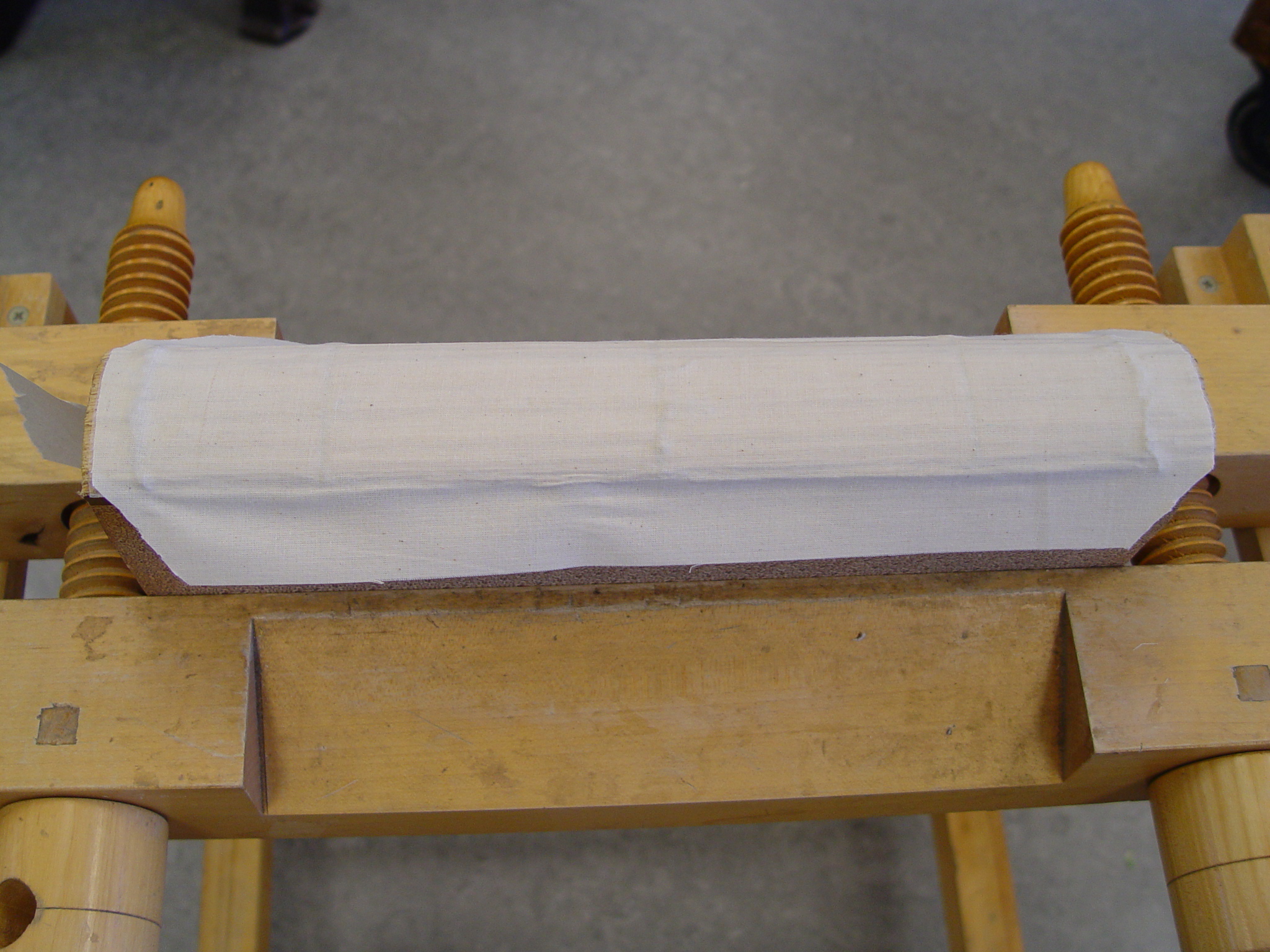
The loose sections from the volume, pictured earlier, are then re-sewn back into place through the new spine lining as seen below. Back in the vice, endbands chosen to match the original format as well as a hollow tube lining is then attached to the spine.


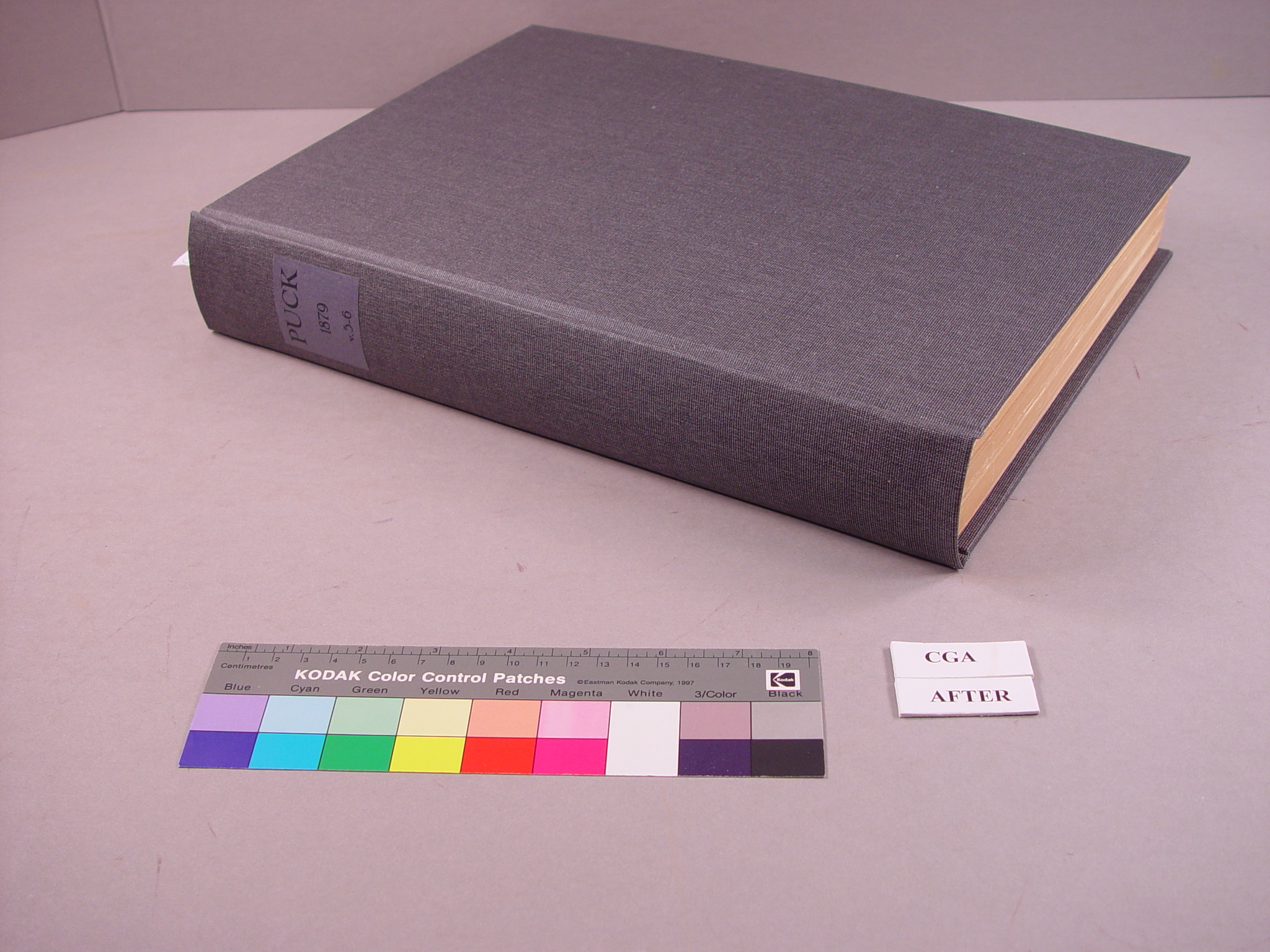
New endpapers are then attached and trimmed down, and the textblock is ready to be glued into its brand new case. The case has been made to the precise measurements of the original binding, with dyed book cloth and a fresh label to replicate the old one.


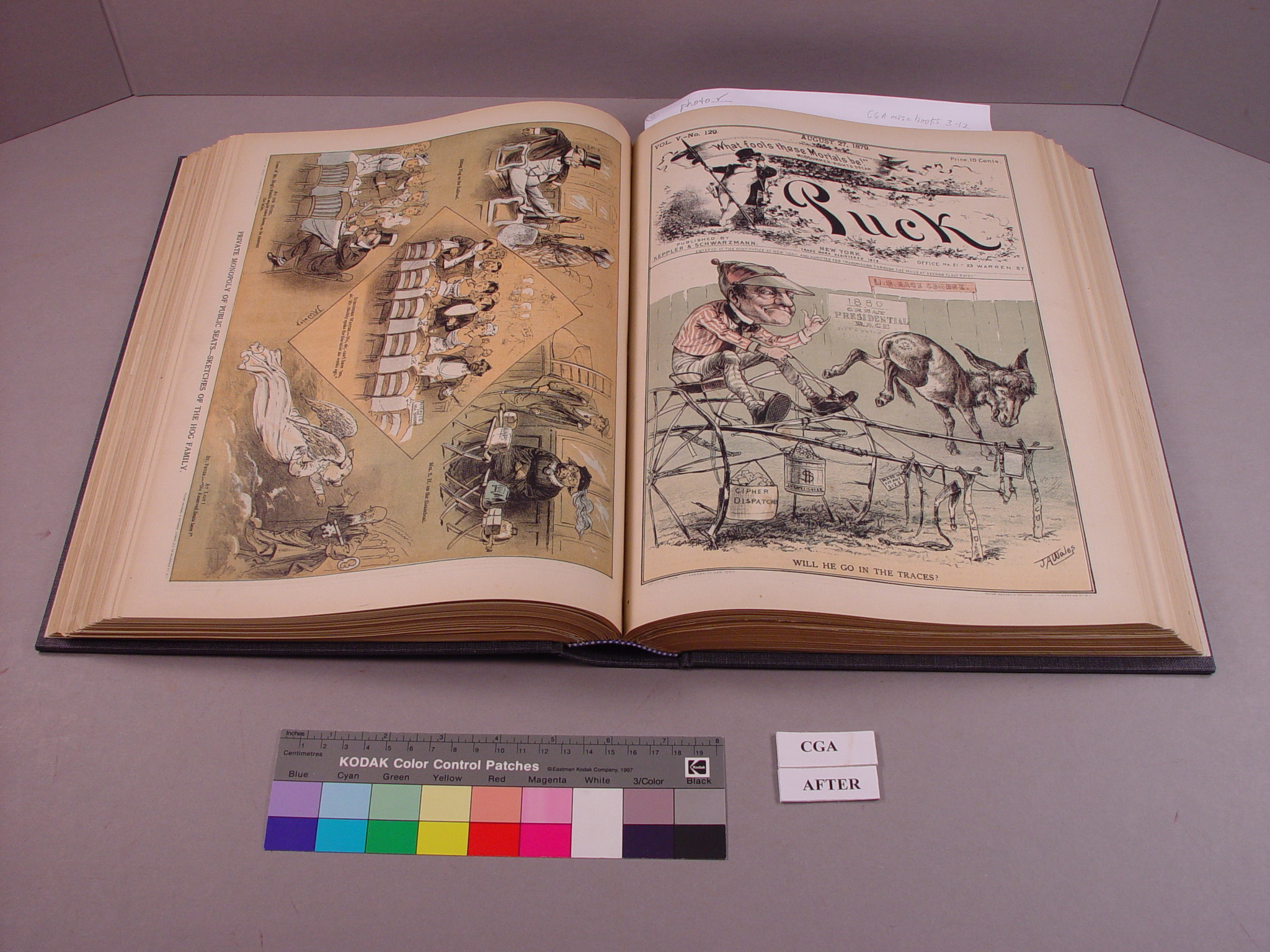
Once the adhesive has dried and the book has been pressed, voila! We’re left with a brand new version of the same old book, ready to be read without worry of further damage. Below, the finished volume, and a spread from the J.A. Wales cover of  Puck V. 5, No. 129.

We are so thankful to have the help of Harry, Brenda, and the rest of the Preservation & Reformatting crew! They are always hard at work on our materials, so we look forward to posting more process updates as they continue to revitalize our collection.

Found in the Collection: Gus Dirks and Bugville

Gus Dirks tearsheet “Latest News From Bugtown”. From the San Francisco Academy of Comic Art Collection, The Ohio State University Billy Ireland Cartoon Library & Museum.

The scattered obituaries of young Gus Dirks, the 21 year old cartoonist and kid brother of the far more well-known Rudolph Dirks (creator of The Katzenjammer Kids), are as sad as they are confusing for the cartoonist who signed his name with a flower.

One, from the Providence News begins: “Gus Dirks, the “bug artist,” killed himself late yesterday afternoon because the task of laughing and making others laugh just to keep away his own tears overcame him.”

Others refer vaguely to a life plagued by an unnamed illness, and many, like the one below conclude that he took his own life out of frustration over his comics work not being taken seriously enough. This is certainly a complaint that rings true for many cartoonists today, but speaks volumes to the time period when coming from a nationally syndicated 21 year old cartoonist.

Click to read full obituary from the New York Evening World

Despite his potential reasons for committing suicide in 1902, what is more than evident is that Gus Dirks was a brilliant talent at an incredibly young age. Although many sources confuse the story (most commonly by switching their ages), it seems that Gus followed his older brother Rudolph from Chicago to New York City to pursue a life in comics, where he shared a studio with artists Charles Sarka and John Tarrant at 232 West Fourteenth St.

Gus Dirks “Bugville” tear sheet. From the San Francisco Academy of Comic Art Collection, The Ohio State University Billy Ireland Cartoon Library & Museum

As Rudolph Dirks enjoyed much success working on Katzenjammer Kids beginning in the mid 1890s, the teenage Gus Dirks received attention from publications like Judge and Life. We are lucky to have a few of Gus’ originals in our collection, including the one below from Life.

Gus Dirks original from “Life” magazine. From the Leo and Marie Egli Collection, The Ohio State University Billy Ireland Cartoon Library & Museum

His work consistently focused around the life of bugs and other small animals, receiving enough popularity that he was approached by Hearst to create a regular Bugville feature for the Sunday color supplement.

Gus Dirks “Bugville” tearsheet. From the San Francisco Academy of Comic Art Collection, The Ohio State University Billy Ireland Cartoon Library & Museum

Unfortunately, other than his potentially-embellished reasons for suicide, not much information is known about Gus Dirks. Considering the quality of work he was putting out even as a teenager, had he outlived his frustrations, it’s more than likely that he would be venerated now just as much as his older brother.

Below, an early Bugville original from our International Museum of Cartoon Art Collection. Although hard to see in the image, Dirks had only penciled in the words here. His handwriting looks astoundingly child-like (and littered with spelling errors) in comparison to the advanced adeptness of his art- a juxtaposition of his age and talent that further attests to the tragedy of his young death.

Gus Dirks “Bugville” original. From the International Museum of Cartoon Art Collection, The Ohio State University Billy Ireland Cartoon Library & Museum

Older posts Newer posts