From Woody's Couch

Our Playbook on OSU History

Page 28 of 106

Frozen Fridays: ‘A’ is for Antarctica!

This blog post is part of the Frozen Friday Series, an A-Z journey of the Polar Archives.  Each week, we will feature some aspect of the history of polar exploration with a blog post written by our student authors.

Known for its penguins and the aurora australis, Antarctica is a cold, snowy land so inhospitable that its most numerous resident is a species of wingless fly. These unlikely tenants inhabit a land largely covered in ice. Without ice, Antarctica would be about 2.7 million square miles; with its icecap, however, it

cook34_6b

Penguins, photographed by Dr. Frederick Cook

doubles in size. Throughout the year, water along its edges freezes into ice, and then melts into liquid water once again, creating an ice floe moat guarding the continent. Trapped within the ice is about ninety percent of the world’s fresh water.  Antarctica is the world’s southernmost desert, receiving only about two inches of precipitation a year. This precipitation falls as snow, which has accumulated over the course of Earth’s history to cover much of the continent. This snow ensures cold temperatures and, although Antarctica receives more sunlight in its summer than the equator, most of this sunlight is reflected by the snow.

Such a landscape challenges anyone who dares to set foot on the frozen continent, yet it is that very challenge that attracts explorers, scientists and researchers. Early explorers faced very real risks including starvation, freezing, or going mad during the long winter. The snow causes its own problems, making travel through some areas nearly impossible by occasionally causing ‘whiteout,’ removing all shadows and the ability to perceive depth.

byrd9252

Antarctica and the South Polar Regions, Byrd 1933

Before it was first explored, it was believed that Antarctica consisted of rich, arable land. It was Sir James Cook, who disproved this idea in the late eighteenth century. Cook unknowingly spent three years circling the continent without actually seeing it. He determined that if there was a southern continent, it was at the very center of the Antarctic Circle. Cook also noted the extensive numbers of whales and seals in southern waters. Whalers and seal hunters flooded south, seeking new seal colonies and mapping the coastline of Antarctica.
 

cook34_7a

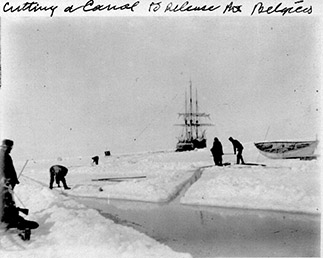
Cutting a canal to release ‘the Belgica’


After the profit-seeking era of sealers came “the Age of Heroes,” a time when men used their own determination and luck to penetrate the unseen interior of Antarctica. Though many would die in their attempts to explore this last unknown frontier, some would achieve fame.  In 1897, a multinational crew including the Norwegian Roald Amundsen and the American Dr. Frederick Cook sailed to Antarctica on board the ship Belgica. Arriving in Antarctica late in the exploring season, they soon found themselves trapped in the ice for over a year before they were able to cut a channel to open water and return to Europe.  This experience was not enough for Cook and Amundsen, who both continued their quest of polar exploration.  Amundsen would later be known as the first to the South Pole in 1911.
wilkins33_4_49

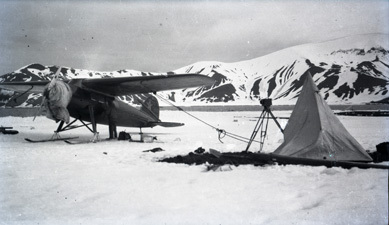
One of Wilkins’s Antarctic planes, 1928

Even as recently as the 1920s, most of Antarctica was still unseen by human eyes. That all changed with the arrival of modern technology on the continent. In 1928, Sir Hubert Wilkins used airplanes to explore and map more than one thousand previously unknown miles of the continent. He noted that “it had taken us three months, on foot, to map forty miles; now we were covering forty miles in twenty minutes.”  Richard E. Byrd was the first to fly from the Antarctic coastline to the South Pole in 1929.  In 1933, Byrd sent the first radio broadcast from Antarctica back to the United States.  Byrd would make several more expeditions to Antarctica in his lifetime; many other explorers would follow.

radarsatantarctica

RADARSAT map of Antarctica, 1997

The work in Antarctica is ongoing.  Modern expeditions study the impact Antarctica has on global weather patterns, as well as the effects of global climate change. The Ohio State University’s Byrd Polar and Climate Research Center (previously known as the Institute of Polar Studies) has sent numerous expeditions to Antarctica, including an all-woman team led by Lois M. Jones and expeditions which found the first vertebrate and mammal fossils in Antarctica.

The Byrd Polar and Climate Research Center Archival Program documents the history of polar exploration within this active research environment.  Visit us at go.osu.edu/polararchives to learn more about the history of polar exploration.  To learn about the current science conducted by OSU’s Byrd Polar and Climate Research Center, visit : http://bpcrc.osu.edu/


Text written by Autumn Snellgrove and edited by John Hooton
2nd Time Around for 2nd year students: Dorm Rule in the 60s

Novice Fawcett

Novice Fawcett

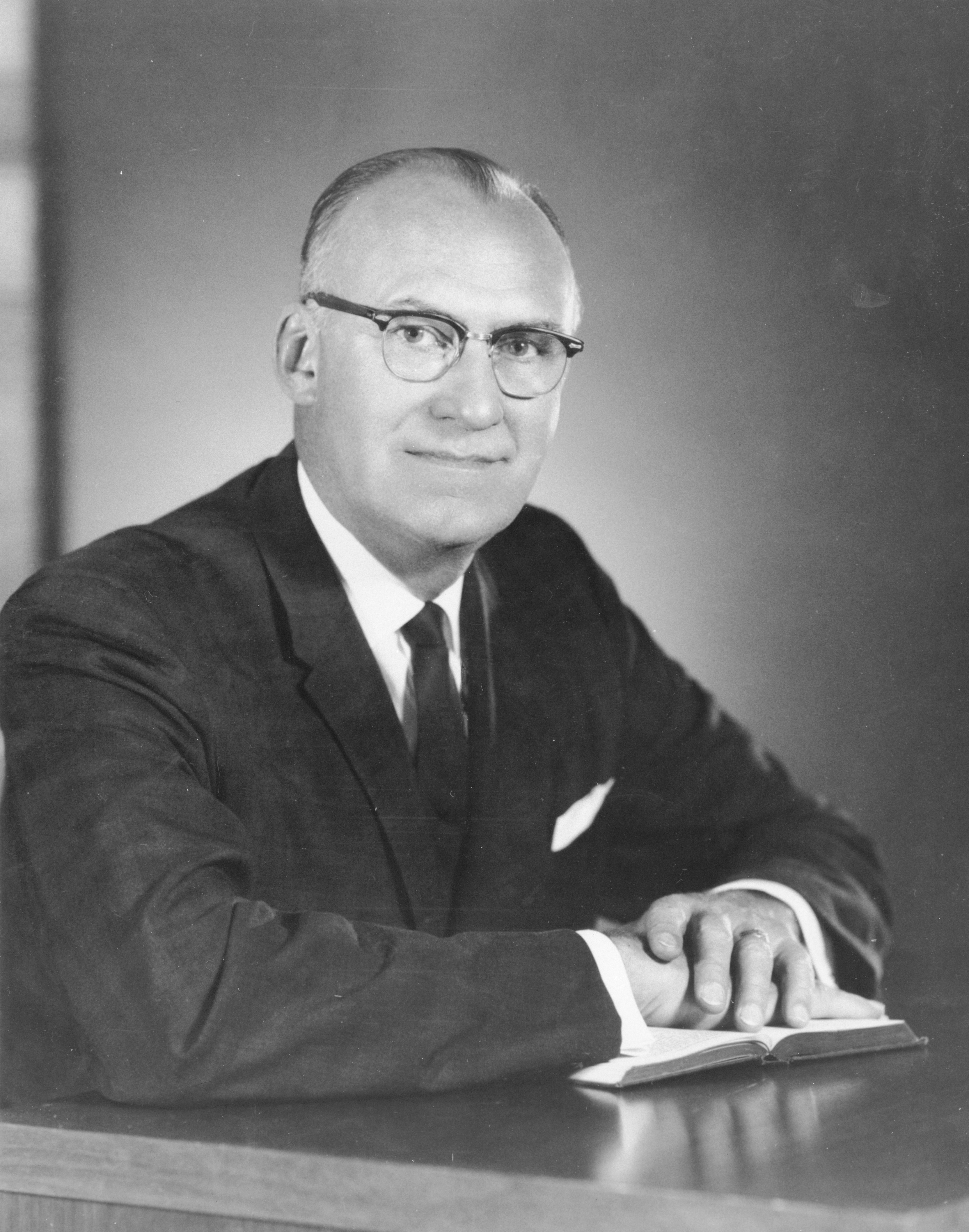
The requirement for sophomores to live in dorms went into effect this semester, but it’s not the first time second-year students have been told they have to live on campus.  In early 1965 President
Novice Fawcett enforced a rule stating that “unmarried freshman and sophomores under twenty-one years of age who do not live with their parents or close relatives are required to reside in University-owned residence halls.”  The rule was set to take effect in 1967.

This rule had originally come about in April 1958 when large amounts of money was raised by issuing bonds to pay for a large number of new residence halls.  The sophomore dorm rule was a way to maintain full occupancy in the new residence halls and ensure bond holders their money would be paid back.  Until the recommendation in 1965, the rule had never been enforced, likely due to high rates of occupancy in the residence halls.

Although the number dorm rooms in the mid-’60s met the demands of the current student body, the residence hall capacity was expected to increase.  Vice President Gordon B. Carson stated with these new openings, “it would be wise and prudent to reaffirm the Board of Trustees’ resolution.”

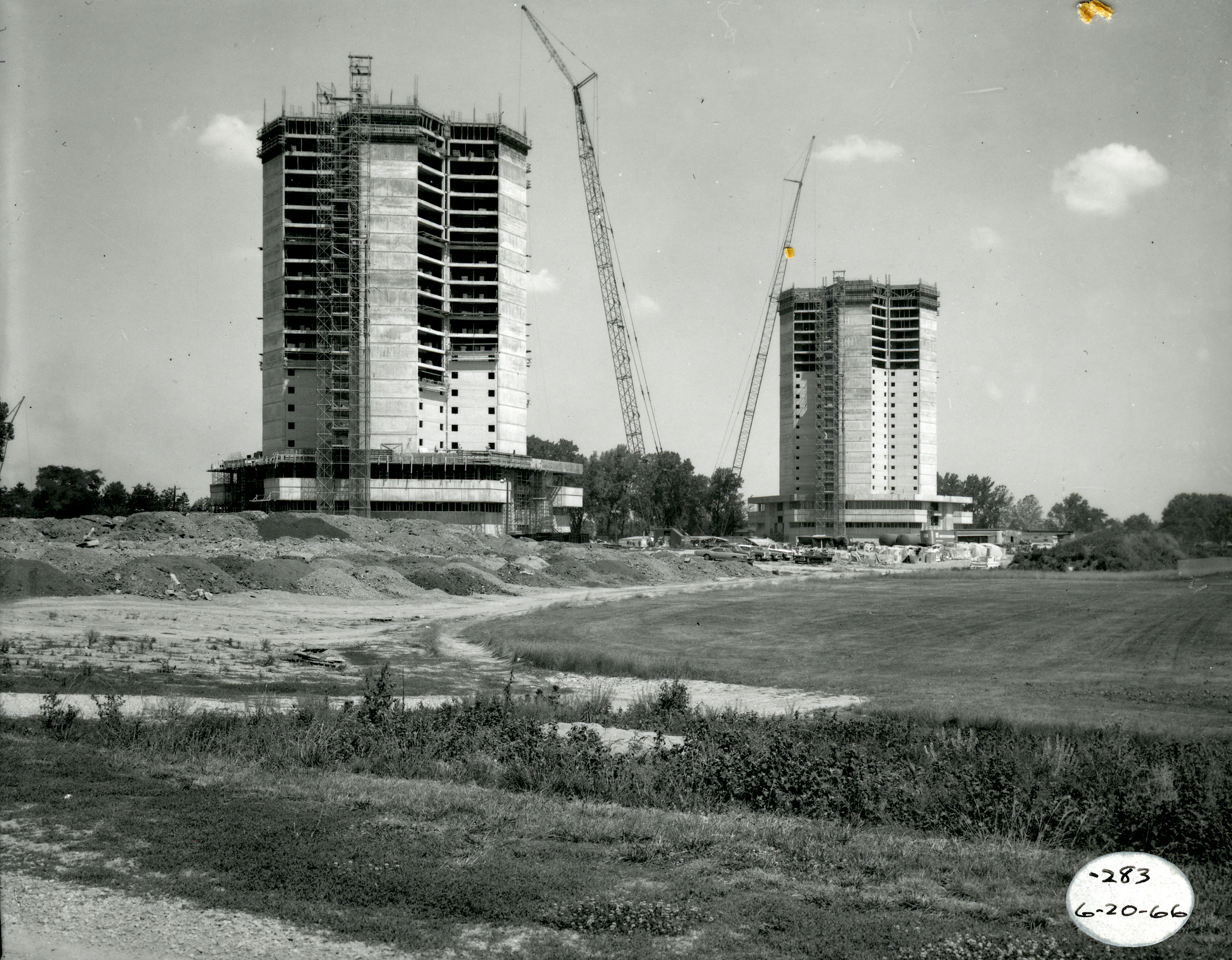
Construction of Towers, 1966

Construction of Towers, 1966

Students and politicians alike opposed the 1965 rule. Adversaries pointed out that there is a greater cost to living in dormitories.  They, including Robert Shaw, a Republican state senator of Ohio, believed that forcing students to remain in dorms for two years would prevent those with insufficient funds from attending the university and was therefore discriminatory.

Students, alumni and community members thought that it was not the job of the university to decide on living quarters; there should be freedom of choice.  Furthermore, students believed the reason for the enactment was a money-making scheme.

Regardless, the rule was enforced in the autumn of 1968 and remained in effect until 1976.  Throughout this period, sophomores could have a waiver signed by their parents allowing them to live off-campus.  The accessibility of the waivers fluctuated throughout

Lantern Headline, 1972

Lantern Headline, 1972

the eight-year period, with the most liberal period toward the end of dorm rule.  Waivers were given out so frequently that sophomores were able to choose if they wanted to live on or off campus and thus made the dorm rule obsolete.

The fight against dorm rule was part of a larger movement on campus led by students to have their voices heard by the administration.  You can learn more about the student movements on our Spring of Dissent exhibit  and Bill Shkurti’s new book The Ohio State University in the Sixties: The Unraveling of the Old Order.

Donors’ dilemmas bring historical treasures to the Archives

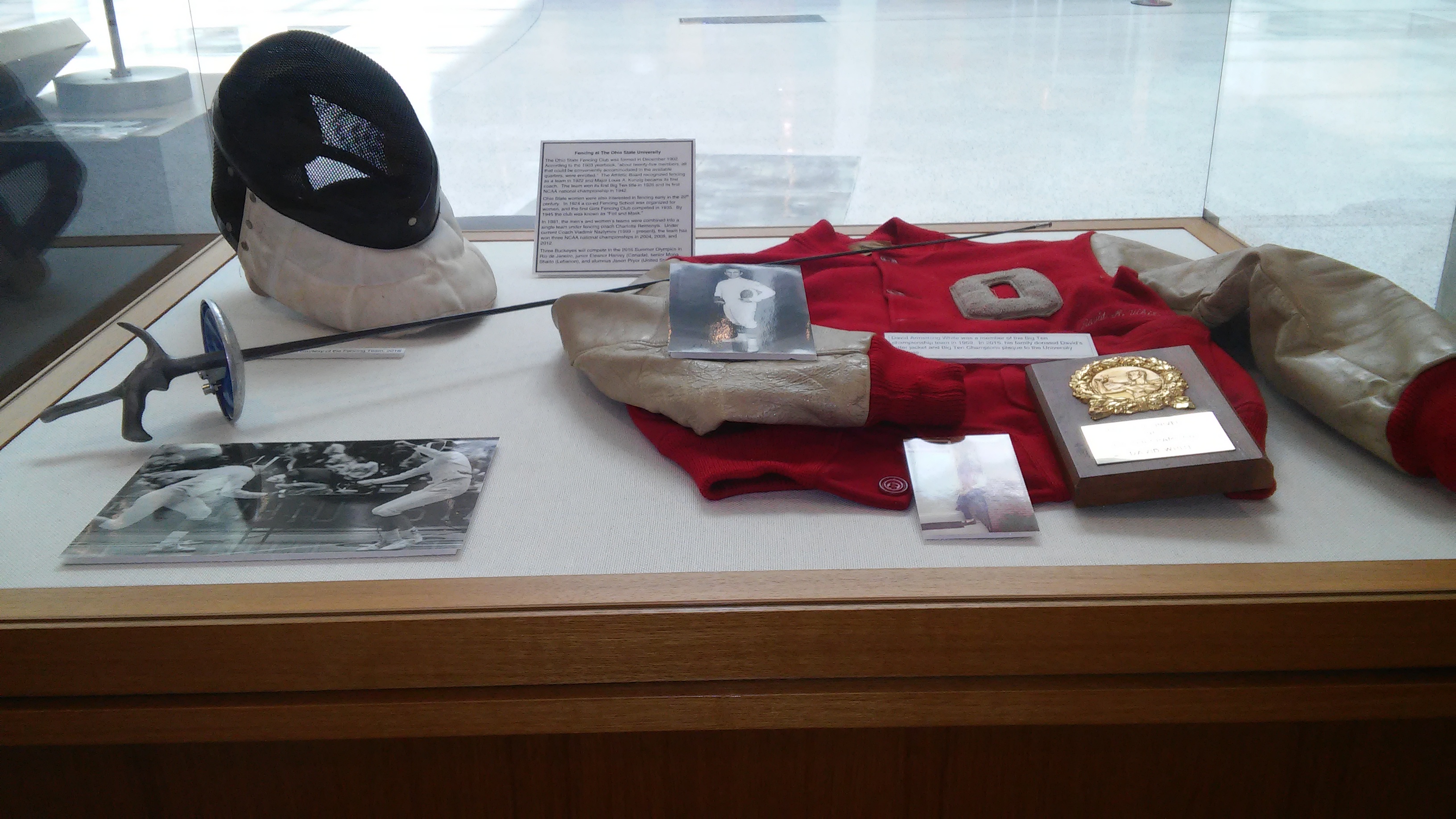
When people contact us to donate material to the Archives, they often say something like, “I don’t really know what to do with it, but I just can’t bear to throw it away.” To that, we give a hearty and grateful thank-you. If it weren’t for donors like that – who try their hardest to find a good home for a historical object instead of just pitching it into the trash – the Archives would have far less materialDSC_0071 that documents the history of campus life at OSU.

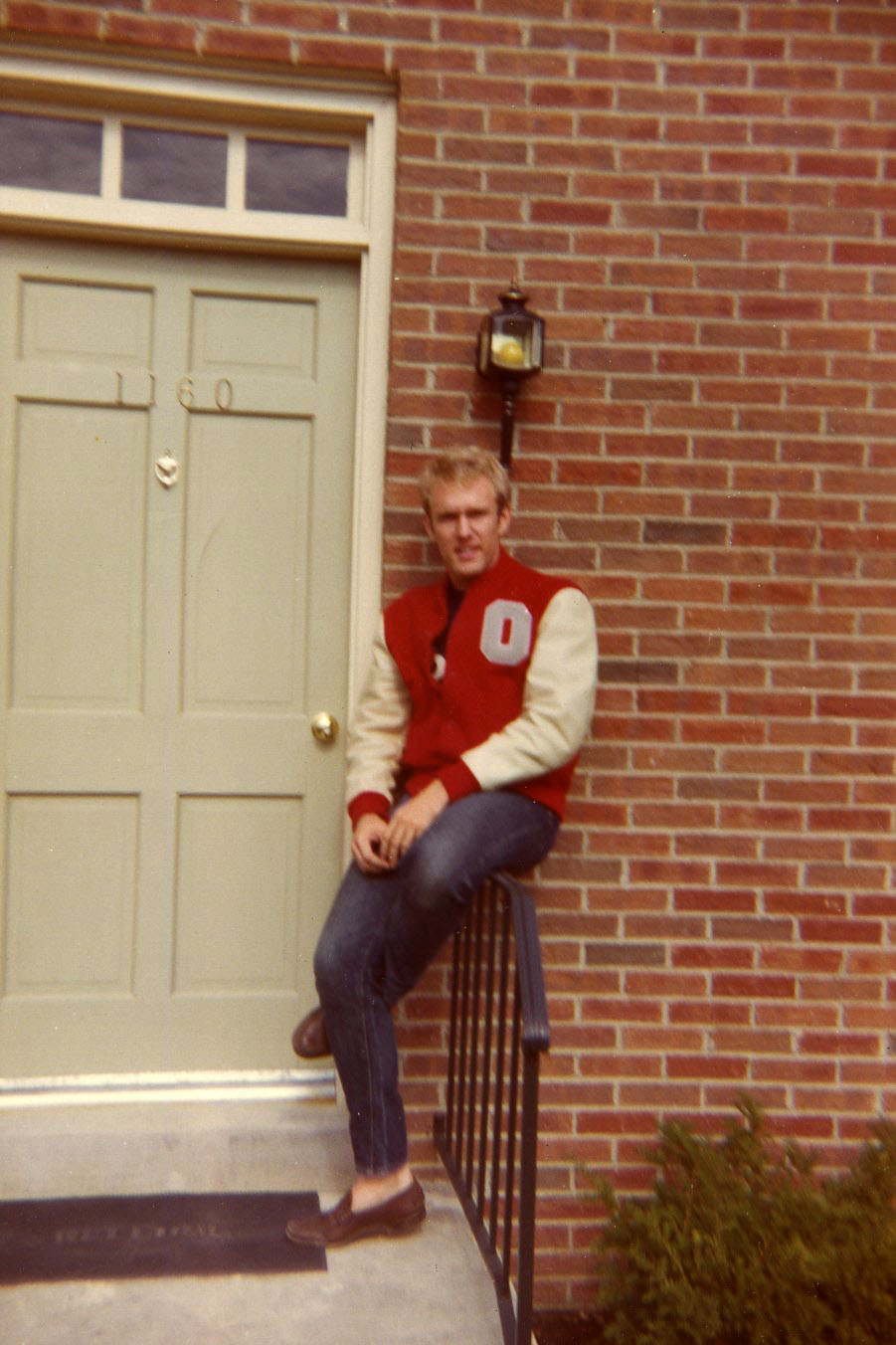
Case in point: In February 2015 Beth White of Gainesville, Ga., offered to donate material from her uncle, David Armstrong White, who had attended OSU from the fall of 1965 to June 1970. He had died in 1999 and had never had children, so there was no one in the next generation to hand down some of his “stuff” from OSU. And what great “stuff” it is! It turns out David White was a member of OSU’s 1969 Big Ten Championship Fencing Team. As such, he was awarded a plaque for being on the team, and since he participated at the Varsity level, he received a Varsity “O” jacket.  Along with these items, Beth White also donated earlier this year a photo of David White in 1971 wearing the jacket, a photo of the team in 1969, and some photos of a team reunion from 1994.

1969, David Armstrong White in letterman

1969, David Armstrong White in letterman

It also turns out that because of Beth White, we know the rest of the story about her uncle. Unless an OSU alum does something that gets him or her onto the pages of The Lantern or the Alumni Magazine after graduation, we usually don’t know the path their lives took after leaving campus. In David White’s case, after earning his bachelor of science degree in Architecture in June 1970, he lived in Columbus for a while, then moved to Atlanta in 1973 where he worked for an architectural firm for several years. He decided to return to school to obtain a degree in child psychology, so he entered George State University where he earned a master’s degree and specialization degree in that field. He was employed by Gwinnett County Public Schools as a staff psychologist until he retired in 1997. He passed away in October 1999.

By the way, David followed in his father’s footsteps when it came to attending OSU. Willard Chandler White Sr. earned a bachelor of arts degree in June 1960 and

followed that with a master of arts degree, specializing in Speech, in March 1962.

1969 Men's Fencing Team

1969 Men’s Fencing Team

To see some of David White’s artifacts and photos and to learn more about the history of fencing, visit the Archives’ exhibit case in the display area of Thompson Library at the east end of the first level, closest to the Oval. The exhibit will be up through early December. And thanks again to Beth White for taking the time and effort to find an appropriate home for her uncle’s pieces of OSU history.


fencing

« Older posts Newer posts »