From Woody's Couch

Our Playbook on OSU History

Category: Sports (page 7 of 13)

Twelve Days of Buckeyes: Polo a “mane” event 4 OSU’s ROTC program

Polo Team, 1920s

Polo Team, 1920s

For those of you unfamiliar with the game of polo, here’s a quick primer before we get into OSU’s connection to the sport: Four players mounted on horses and equipped with long mallets try to drive a wooden ball down a field and across the other team’s goal line. Meanwhile, four players on the opposite team try to get the ball away from the first team and do the same thing. Each player has at least three horses that can be rotated in and out of play, according to certain rules. It is considered a full-contact sport, and falls, bumps and spills are part of the game. For a good idea of how it all works, read Rudyard Kipling’s short story, “The Maltese Cat.”

As to Ohio State: In the mid-1920s, Lt. Charles Horn organized the first polo team, using artillery horses owned by the U.S. Army. In 1927, 40 horses were transferred with polo equipment for use by the OSU’s ROTC program. What does the military have to do with polo? For many years, the military regarded polo as an ideal training method for officers. Many ROTC programs, as well as military bases, had horses and polo teams on hand; in fact, polo was a sport spread by the military, first by the British and then in the U.S.

Polo Team, 1942 (Charles Horn kneeling on far right)

Polo Team, 1942 (Charles Horn kneeling on far right)

Here at OSU, many of the men on the polo team were enrolled in the ROTC program, but many were also studying Veterinary Medicine; there were also some who got into the sport without wanting to be a vet of either variety.

By all accounts, polo’s heyday was the interwar era. At OSU, crowds of up to 1,000 would gather to watch games played at the polo fields south of Ohio Stadium and east of the Olentangy River. An additional field was near the site of the Fawcett Center, and the stable where the horses were housed stood near the corner of Lane Avenue and Olentangy River Road.

Polo game, 1929

Polo game, 1929

As the military provided the horses, there was actually very little cost to the players except for riding attire and travel expenses for away games. That is how OSU could afford to compete with the likes of Princeton, Harvard and Yale, as well as travel to the games. (The horses did not travel with the team; the home team would provide horses for the visitors.) In addition to competing against Ivy League teams, OSU also played teams closer to home, such as Michigan State. The Buckeyes also competed against the University of Missouri, Texas A&M and a number of military teams.

Polo ceased to be played at OSU in 1943, when the U.S. Army recalled its horses.
Twelve Days of Buckeyes: Title IX’s impact still felt at OSU

Since its passage was 40 years ago this year, we would like to focus on Title IX legislation, which had a huge impact on OSU and other universities across the nation.

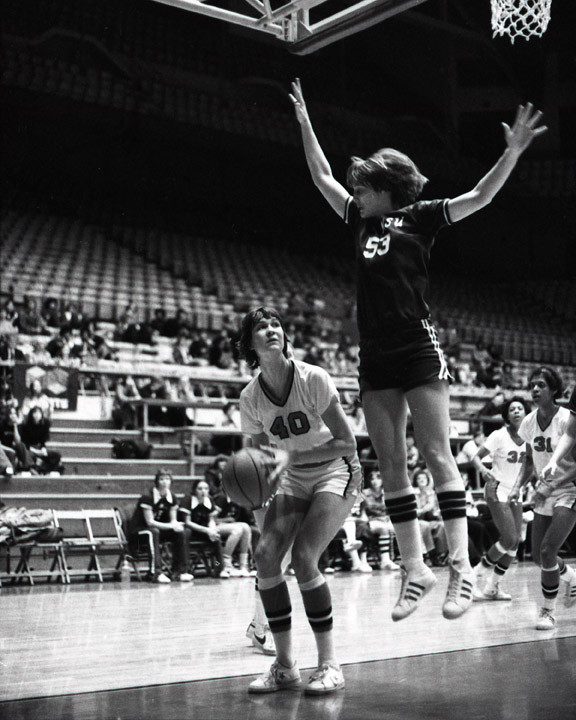
In 1972 U.S. President Gerald Ford signed legislation that required all schools, colleges and universities receiving federal funding to offer equal educational opportunities for men and women. The institutions had three years to comply with the law, known as Title IX, or lose funding. For Ohio State, this meant significant changes.

Title IX’s initial impact would be felt greatly by the Department of Athletics because the law required not only equal opportunity to play sports, but also equal facilities, travel expenses, scholarships, coaching, tutoring, scheduling, and expenditures. Title IX made one exception in that it never required schools to allow women to play contact sports.

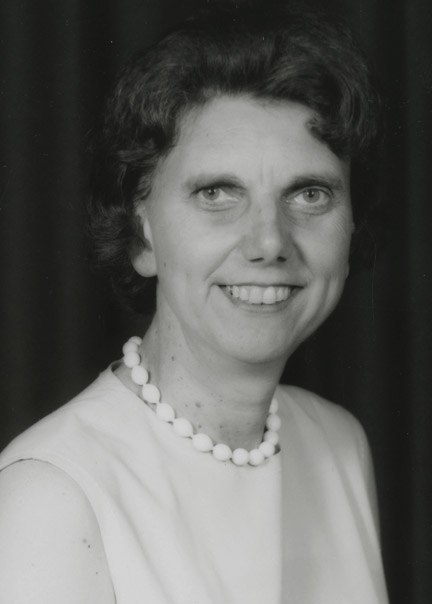
Phyllis Bailey, 1974

Because of the law, 12 women’s sports were added, women’s locker rooms were installed at the French Field House, and a women’s athletics director – Phyllis Bailey – was hired to oversee the women’s programs. Women also received scholarships, were recruited, received priority scheduling for classes and facilities like the men, and could get tutoring, uniforms and help with travel expenses, none of which they had had before Title IX.

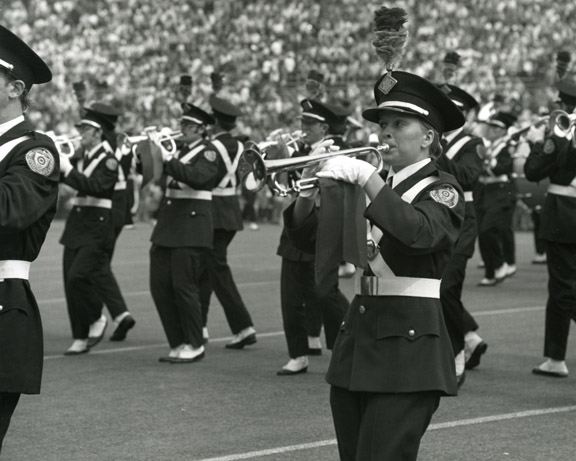
Marching Band, 1973

However, organized sports were just one area of student life that was affected. For instance, the OSU Marching Band had to add women to its ranks; Mortar Board, the honorary society for female students, had to allow men to join; and the freshman honoraries for men and women were combined into one co-ed organization.

On the academic side of University life, the impact also was pronounced: OSU and other universities could not discriminate against women in hiring, promotion and tenure. At OSU, a number of grassroots groups for women faculty and staff were founded, which eventually led to the formation in 1996 of a task force to create an organization that would ensure women would be able to succeed and advance at OSU. The Women’s Place was formally founded in 2000, and it still works to improve the climate for women on campus.

Trimmings from the delicious OSU-Michigan rivalry

Michigan game action (from left to right), 1928, 1932, 1952

For more than 100 years OSU has been playing the University of Michigan in football, and from that long rivalry, the Archives has accumulated a lot of stories, from the mundane to the unexpected to the downright dangerous.

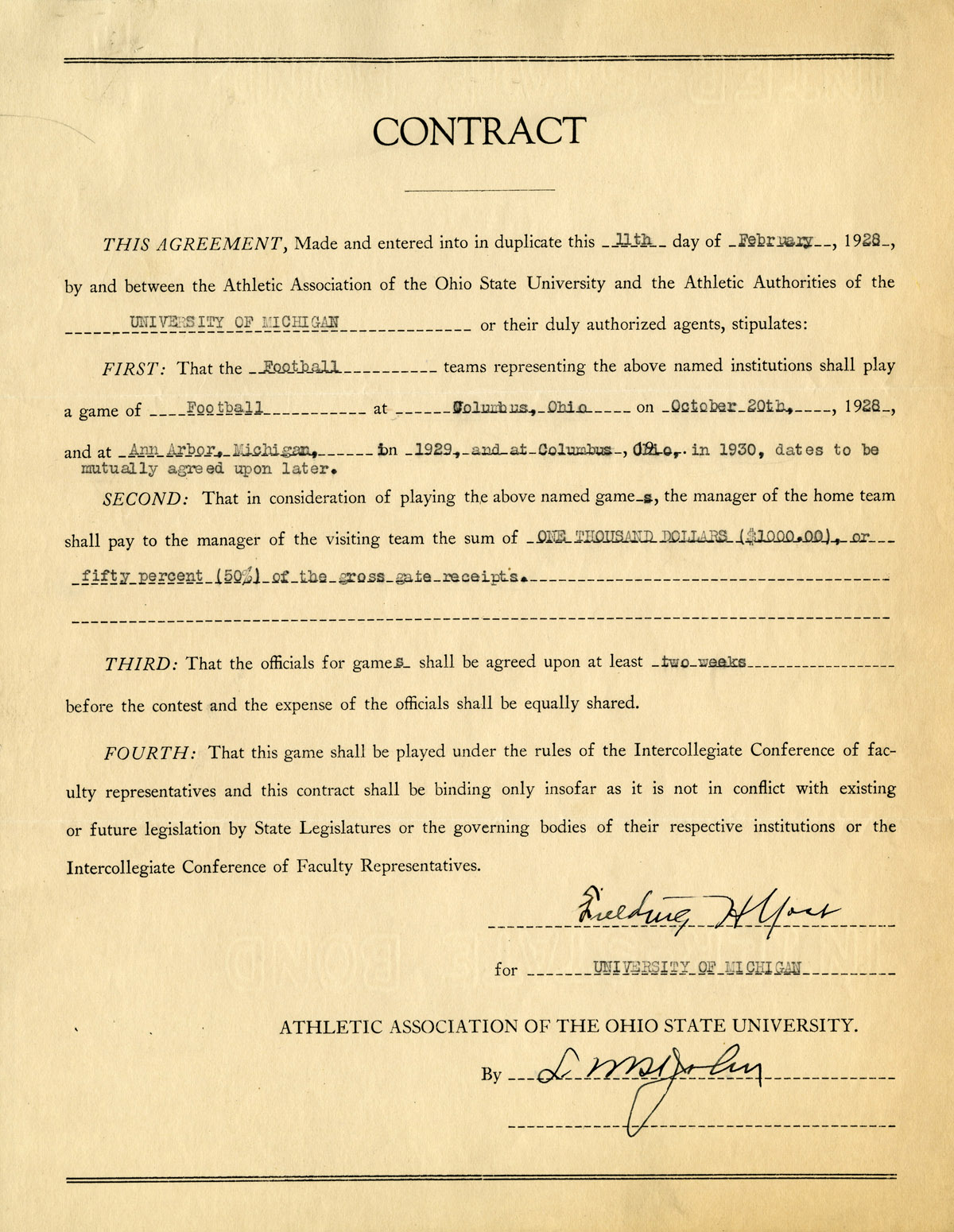
#1 – Contract, 1928

First the mundane: Click on the first image and you’ll see how the contracts outlining how gate receipts would be distributed looked in the old days. We particularly love the clause that starts: “THAT the Football teams representing the above named institutions shall play a game of football…” Well, what else were they going to play – water polo? But these things must be specific in order to be legally enforceable, we suppose. Can you imagine how such a contract might read today?

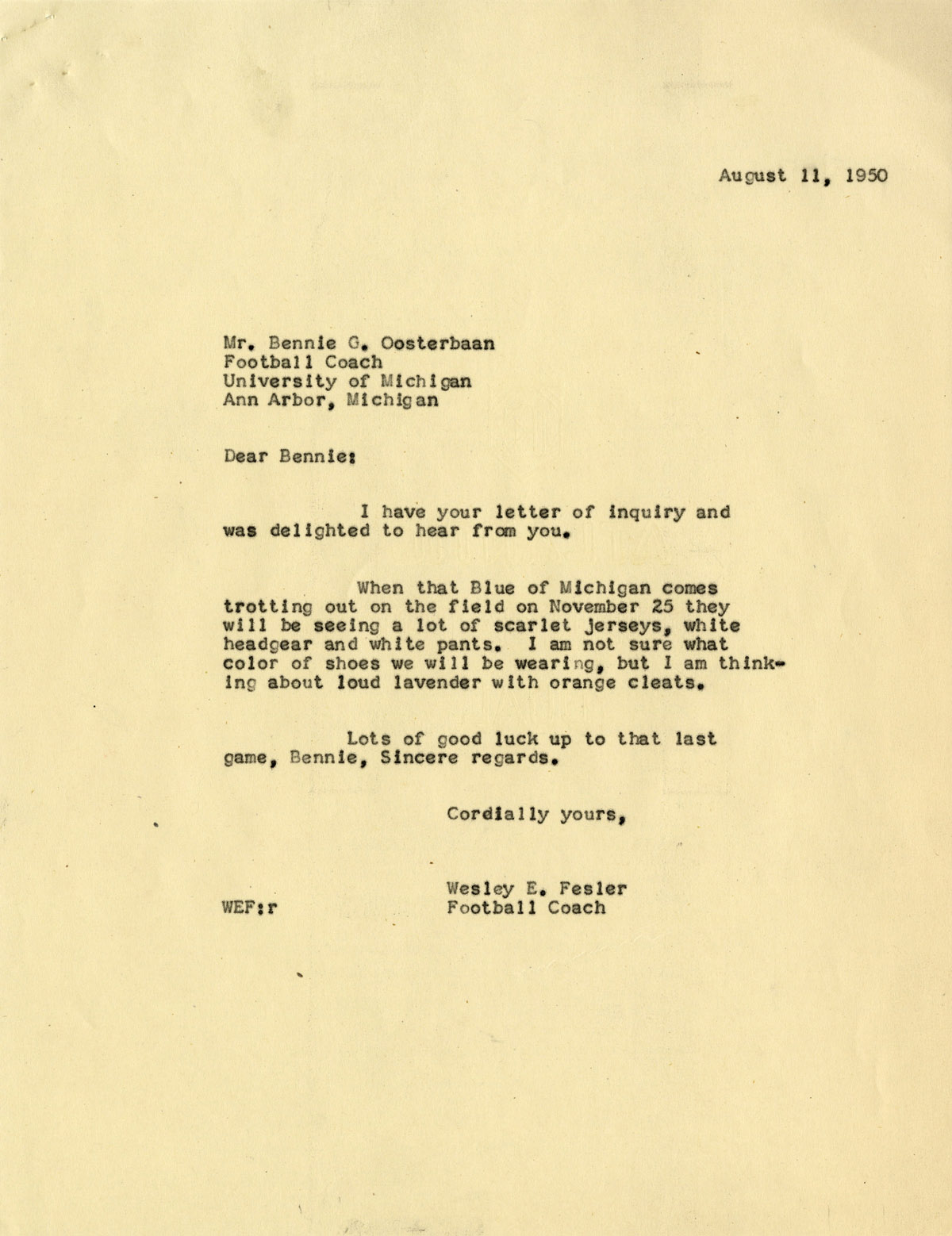
Now for the unexpected: Some of the game preparations by the coaches that were very ordinary for the time, would seem downright bizarre now. Today’s example is in a 1950 letter, (#2 on right), from then-OSU Coach Wes Fesler to then-University of Michigan Coach Bennie Oosterbaan, a letter that seemed quite lighthearted, considering it concerned the biggest game of what would be Fesler’s last season with the Buckeyes.

#2 – Letter, 1950

In any case, in the letter, Fesler describes the color of each article of clothing the OSU players will be wearing at the game. You might ask, why in the world would he do that? Remember that in 1950, television was relatively new, and programs were still broadcast exclusively in black and white. So each team’s uniform combinations had to contrast sufficiently enough with the other team’s for the home audience to be able to tell which team was doing what on the field.

And now, for the dangerous: We all know the rivalry between The Ohio State University and “That State Up North” can become heated, but in 1926 the rivalry took a backseat to a dangerous incident in the stands. During the November 13 game, a defective pyrotechnic bomb was shot off by the military department. The shot was supposed to explode in the air and reveal a flag with Ohio State’s emblem; instead, it fell into temporary bleachers. Three people were seriously injured and remained in the hospital for an extended period of time, while several others experienced minor burns to their skin and clothing. The University reimbursed each spectator for his or her clothing and medical expenses, totaling more than $12,000.

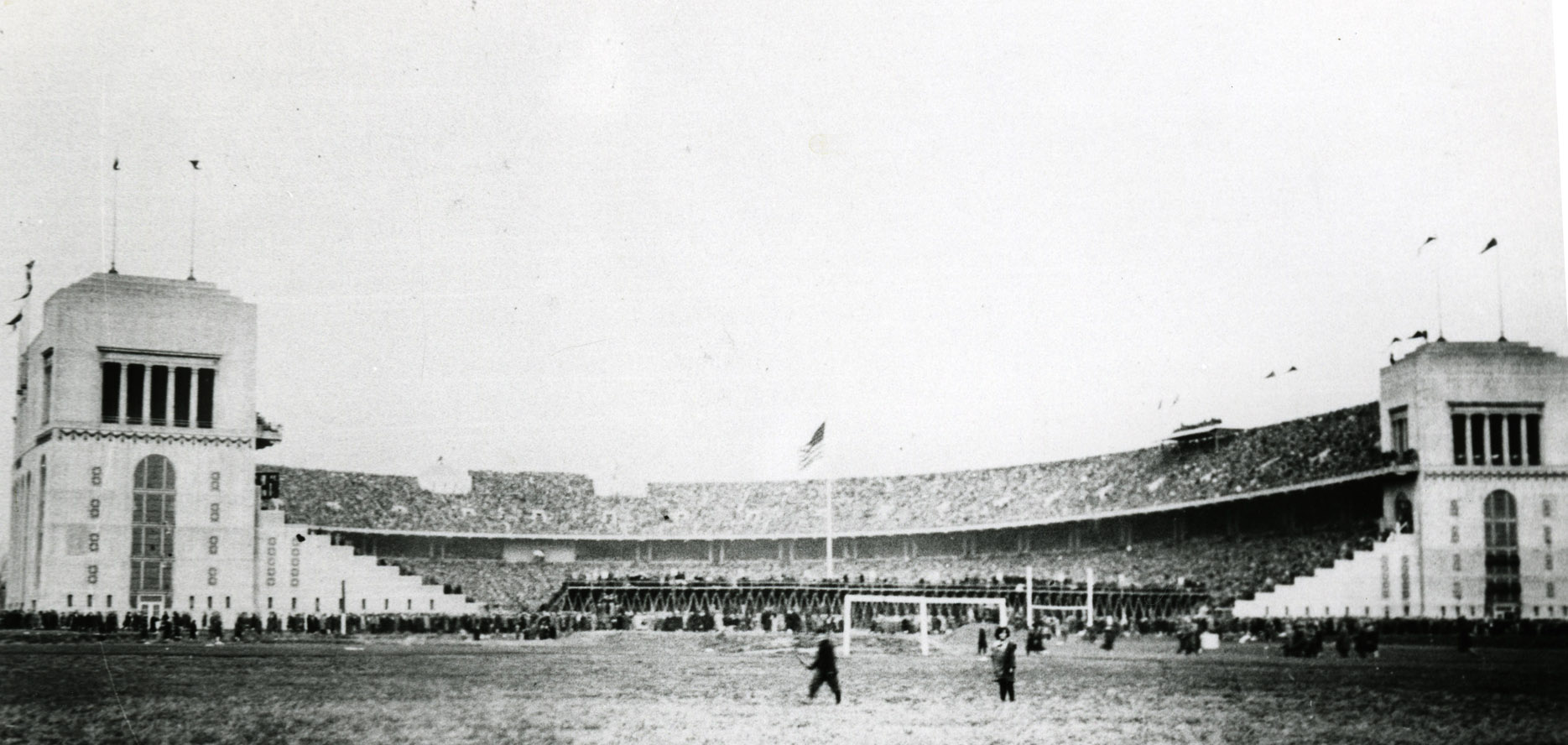
The Stadium is shown here during the 1926 Michigan game. The temporary bleachers are in the foreground of the photo.

And the last item really has nothing to do with the OSU-Michigan game, but it does have to do with Thanksgiving weekend, and both teams were involved:

In 1931 President Hoover thought he would help tackle the unemployment issues of the day by asking colleges and universities to donate their profits to local charities from a football game played on Thanksgiving. According to athletic director Lynn St. John’s papers, the Western Conference schools were not in favor of scheduling charity games. Pressure was placed on the schools, however, and the decision was made to add extra games at the end of the 1931 season. A round-robin game between Chicago, Iowa, Indiana, and Illinois was scheduled for Thanksgiving Day at Staff Field in Chicago. The remaining teams played head-to-head on the Saturday after Thanksgiving: Northwestern versus Purdue, Wisconsin versus Michigan, and Ohio State versus Minnesota.

The Buckeyes, unfortunately, lost the game to the Golden Gophers and in doing so, lost a chance at a piece of the Western Conference title. The games did raise more than $137,000 for the unemployed, though, with more than $30,000 donated to the Ohio State Relief Commission.

Read more about the OSU-Michigan rivalry in our web exhibit:

http://library.osu.edu/projects/OSUvsMichigan/index.htm

Older posts Newer posts