From Woody's Couch

Our Playbook on OSU History

Category: Polar Archives (page 11 of 11)

Frozen Fridays: ‘B’ is for Byrd!

byrd7640_4

Richard Byrd had a crucial impact on
Polar exploration.

This blog post is part of the Frozen Friday Series, an A-Z journey of the Polar Archives.  Each week, we will feature some aspect of the history of polar exploration with a blog post written by our student authors.

By the early 1920s, nearly all the great “firsts” were gone from polar exploration. Carsten Borchgrevink had spent the long winter on Antarctic soil 1899-1900. The North Pole had been discovered in 1908.  Roald Amundsen had reached the geographic South Pole in 1911.  Robert Falcon Scott and Ernest Shackleton became household names.  During the latter part of the 1920s, polar exploration would shift from the “heroic age” to the “mechanical age.”  Richard Evelyn Byrd would come to be known as the first explorer to fully realize the value of mechanized exploration.

Beginning his career in the United States Navy, Byrd turned to flight and to the excitement of exploration. He first ventured into the Arctic in 1925, when a broader Navy-run expedition was launched. There he gained a reputation as a good leader and excellent organizer, as well as developing a taste for publicity. Upon his return, after only one trip into the Arctic, Byrd boldly asserted that “Aviation will conquer the Arctic—and the Antarctic, too.”[i] He would make it his life’s work to prove this claim.

byrd7639_3

Byrd as an aviator in the navy.

A year after his first journey, Byrd was back in the Arctic—this time to fly to the North Pole. Byrd was far from the first to envision greatness as the ‘Conqueror of the North Pole’ (a title later given to him by American newspapers). Human footprints had marred the Pole for over a decade and only the year before had the Norwegian explorer, Roald Amundsen, and American sportsman Lincoln Ellsworth tried, unsuccessfully, to fly to the North Pole. As Byrd prepared for his own attempt, Amundsen had returned for a second try. Byrd, however, did not see his efforts just as part of the race to be the first, but rather as a way to prove the usefulness and reliability of airplanes in the air space above the Arctic.

pa-2012-12_493

The ‘Josephine Ford’ in the Antarctic.
More images from Byrd’s Arctic Expedition
of 1926 can be found online here.

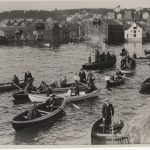
After some very skillful fundraising, Byrd arrived at King’s Bay, Spitsbergen on April 29th, 1926, with all the equipment he needed for an attempt at the Pole. His plane, a massive Fokker tri-motor, was named the Josephine Ford in honor of the daughter of one of his chief benefactors, Edsel Ford.    Amundsen, already at King’s Bay, was less than thrilled. Upon arrival, Byrd was unable to dock at the pier, blocked by the Norwegian gunboat Heimdahl, with no place to unload the Josephine Ford.  A creative Byrd had his men cut a path through the ice-choked waters and load his plane onto a make-shift raft crafted from rowboats and wooden planks. It was a rather dangerous, if ultimately successful, endeavor (a phrase applicable to most of Byrd’s adventures).

In his first attempts at flying the Josephine Ford, Byrd broke the skis twice without leaving the ground.  One of Amundsen’s men, Bernt Balchen, suggested repairing the broken skis with oars from Byrd’s ship and taking off at midnight, while the snow would be more firm. On May 9, 1926 Byrd and his pilot, Floyd Bennett set off for the North Pole. Aided by nearly perfect weather and a tailwind, Byrd and Bennett reached the Pole, circled, and returned in sixteen hours. They were greeted by their euphoric friends and rivals. Even Amundsen participated, crying and hugging the returning pilots.

Byrd received the Medal of Honor for this flight.  However, the validity of the achievement was questioned almost immediately, though not vocally until after Byrd’s death in 1957.  Critics say that it was impossible to complete a journey of fifteen-hundred miles in such a short time, even with a tailwind. Balchen,came forward to cast doubt on Byrd’s claim and would eventually publish a rebut of Byrd after the explorer’s death. Balchen also claimed that pilot Floyd Bennett, having died several decades before, had admitted the fraud, although this contradicted Bennett’s own published statements. The controversy continues even today.   Scholars have continued to  study Byrd’s flight diary, discovered amongst the explorer’s papers during the processing of the collection in the 1990s.[ii]
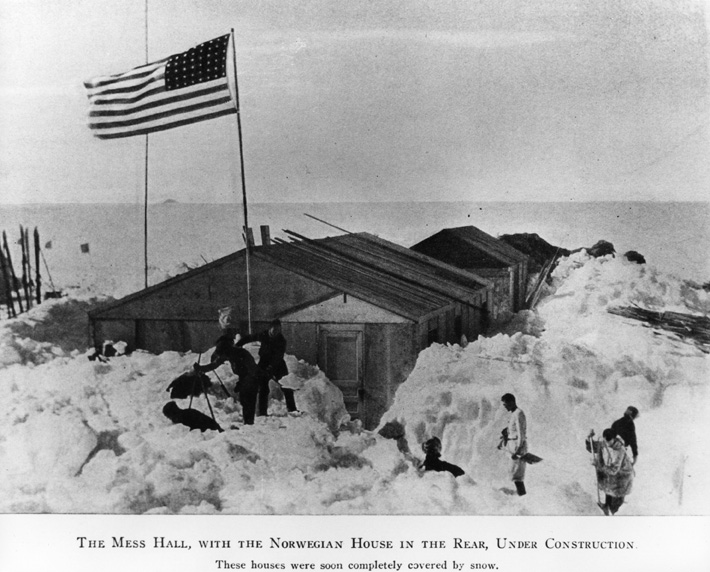
byrd7803_2

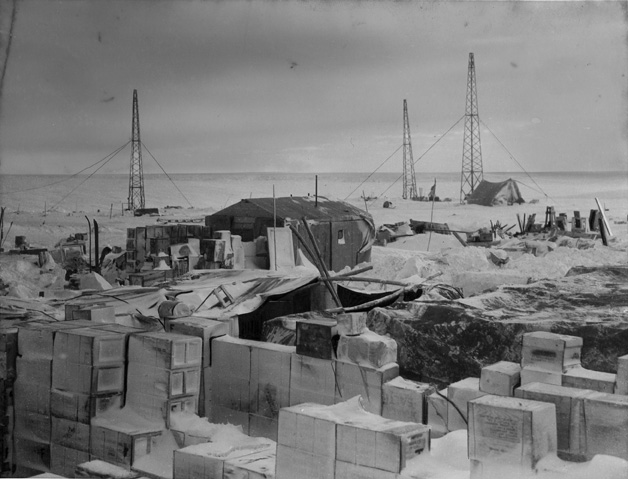
A view of Little America’s mess hall, under construction.

Regardless, Byrd’s reputation does not depend solely on his North Pole flight. In 1928, Byrd led his first expedition to Antarctica.  After establishing the camp Little America, Byrd prepared to take to the air once again. Byrd’s flight to the South Pole became the second successful visit to the pole after Amundsen’s journey on foot in 1911.What took Amundsen over three months, took Byrd a mere sixteen hours in the airplane Floyd Bennett.  (For a man who loved danger and publicity, Byrd’s comment about his trip to the South Pole is rather short and bland: “One gets there and that is about all there is for the telling.”[iii])
byrd7802_2

Another view of the iconic ‘Little America’.

Byrd’s desire to advance science fueled his second trip to Antarctica in 1933. This trip would set the bar for scientific research in the polar regions.  Returning to Little America, equipment was set up to study the weather and the upper atmosphere. Many branches of science were represented on this expedition, including biology, forecasting, geology, mapping, and communication via radio. This trip also proved the usefulness of motor vehicles in the polar regions.  The expedition was not without drama, however.  Byrd suffered from carbon monoxide poisoning from his stove and generator during the four months he spent alone at his remote hut Advance Base, one hundred and twenty-three miles from his base camp, Little America.  Though he survived this ordeal, it is believed that the experience weakened his health over the remaining course of his lifetime.

Nick-named the “Mayor of Antarctica,” Byrd would return to the continent 3 more times before his death 1957.  By the time of Byrd’s final expedition, he had seen over 1.5 million square miles of the frozen continent and photographed over sixty percent of the coastline.

The Ohio State University acquired the Papers of Admiral Richard E. Byrd in the mid-1980s in a competitive bid process with several other institutions of higher education.  The University’s Institute of Polar Studies was renamed the Byrd Polar Research Center in 1987 as a permanent tribute to the explorer.  The Polar Archival Program was officially established in 1990, with the Byrd collection as it’s cornerstone.


It is nearly impossible to encompass the life of Richard Byrd into one short blog post.  To learn more about Admiral Byrd and his collection, please visit: https://library.osu.edu/find/collections/byrd-polar-archives/byrd/.


Written by  Autumn Snellgrove and edited by John Hooton.


[i] Explorer, page 99

[ii] For a published version of this incredible document, please see To The Pole: The Diary and Notebook of Richard E. Byrd, 1925-1927.  Edited by Raimund E. Goerler and published In 1998 by the Ohio State University Press, the book is available online here: https://ohiostatepress.org/books/Complete%20PDFs/Byrd%20To/Byrd%20To.htm.

[iii] Reader’s Digest Antarctica, page 243

Frozen Fridays: ‘A’ is for Antarctica!

This blog post is part of the Frozen Friday Series, an A-Z journey of the Polar Archives.  Each week, we will feature some aspect of the history of polar exploration with a blog post written by our student authors.

Known for its penguins and the aurora australis, Antarctica is a cold, snowy land so inhospitable that its most numerous resident is a species of wingless fly. These unlikely tenants inhabit a land largely covered in ice. Without ice, Antarctica would be about 2.7 million square miles; with its icecap, however, it

cook34_6b

Penguins, photographed by Dr. Frederick Cook

doubles in size. Throughout the year, water along its edges freezes into ice, and then melts into liquid water once again, creating an ice floe moat guarding the continent. Trapped within the ice is about ninety percent of the world’s fresh water.  Antarctica is the world’s southernmost desert, receiving only about two inches of precipitation a year. This precipitation falls as snow, which has accumulated over the course of Earth’s history to cover much of the continent. This snow ensures cold temperatures and, although Antarctica receives more sunlight in its summer than the equator, most of this sunlight is reflected by the snow.

Such a landscape challenges anyone who dares to set foot on the frozen continent, yet it is that very challenge that attracts explorers, scientists and researchers. Early explorers faced very real risks including starvation, freezing, or going mad during the long winter. The snow causes its own problems, making travel through some areas nearly impossible by occasionally causing ‘whiteout,’ removing all shadows and the ability to perceive depth.

byrd9252

Antarctica and the South Polar Regions, Byrd 1933

Before it was first explored, it was believed that Antarctica consisted of rich, arable land. It was Sir James Cook, who disproved this idea in the late eighteenth century. Cook unknowingly spent three years circling the continent without actually seeing it. He determined that if there was a southern continent, it was at the very center of the Antarctic Circle. Cook also noted the extensive numbers of whales and seals in southern waters. Whalers and seal hunters flooded south, seeking new seal colonies and mapping the coastline of Antarctica.


cook34_7a

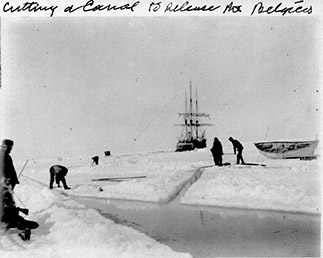
Cutting a canal to release ‘the Belgica’


After the profit-seeking era of sealers came “the Age of Heroes,” a time when men used their own determination and luck to penetrate the unseen interior of Antarctica. Though many would die in their attempts to explore this last unknown frontier, some would achieve fame.  In 1897, a multinational crew including the Norwegian Roald Amundsen and the American Dr. Frederick Cook sailed to Antarctica on board the ship Belgica. Arriving in Antarctica late in the exploring season, they soon found themselves trapped in the ice for over a year before they were able to cut a channel to open water and return to Europe.  This experience was not enough for Cook and Amundsen, who both continued their quest of polar exploration.  Amundsen would later be known as the first to the South Pole in 1911.

wilkins33_4_49

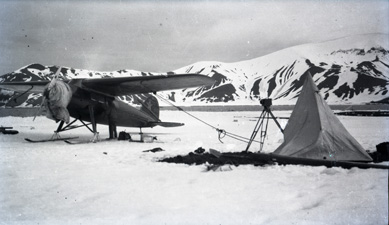
One of Wilkins’s Antarctic planes, 1928

Even as recently as the 1920s, most of Antarctica was still unseen by human eyes. That all changed with the arrival of modern technology on the continent. In 1928, Sir Hubert Wilkins used airplanes to explore and map more than one thousand previously unknown miles of the continent. He noted that “it had taken us three months, on foot, to map forty miles; now we were covering forty miles in twenty minutes.”  Richard E. Byrd was the first to fly from the Antarctic coastline to the South Pole in 1929.  In 1933, Byrd sent the first radio broadcast from Antarctica back to the United States.  Byrd would make several more expeditions to Antarctica in his lifetime; many other explorers would follow.

radarsatantarctica

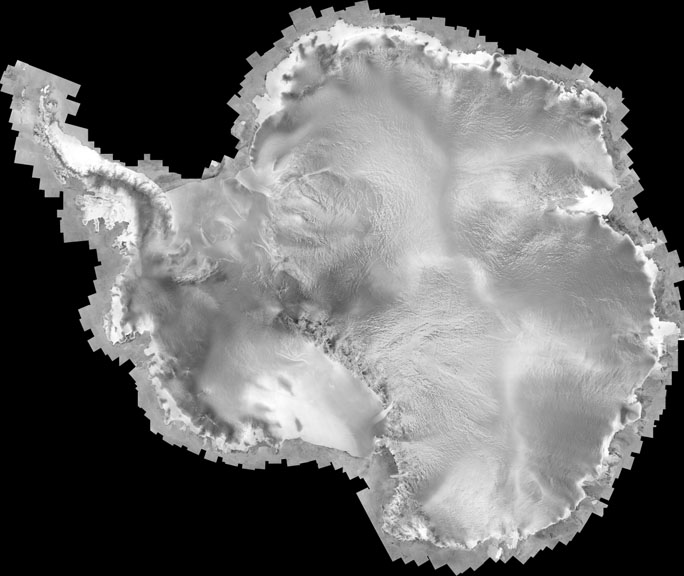
RADARSAT map of Antarctica, 1997

The work in Antarctica is ongoing.  Modern expeditions study the impact Antarctica has on global weather patterns, as well as the effects of global climate change. The Ohio State University’s Byrd Polar and Climate Research Center (previously known as the Institute of Polar Studies) has sent numerous expeditions to Antarctica, including an all-woman team led by Lois M. Jones and expeditions which found the first vertebrate and mammal fossils in Antarctica.

The Byrd Polar and Climate Research Center Archival Program documents the history of polar exploration within this active research environment.  Visit us at go.osu.edu/polararchives to learn more about the history of polar exploration.  To learn about the current science conducted by OSU’s Byrd Polar and Climate Research Center, visit : http://bpcrc.osu.edu/


Text written by Autumn Snellgrove and edited by John Hooton

A Journey Under the Ice: Hubert Wilkins and the Nautilus, Part II

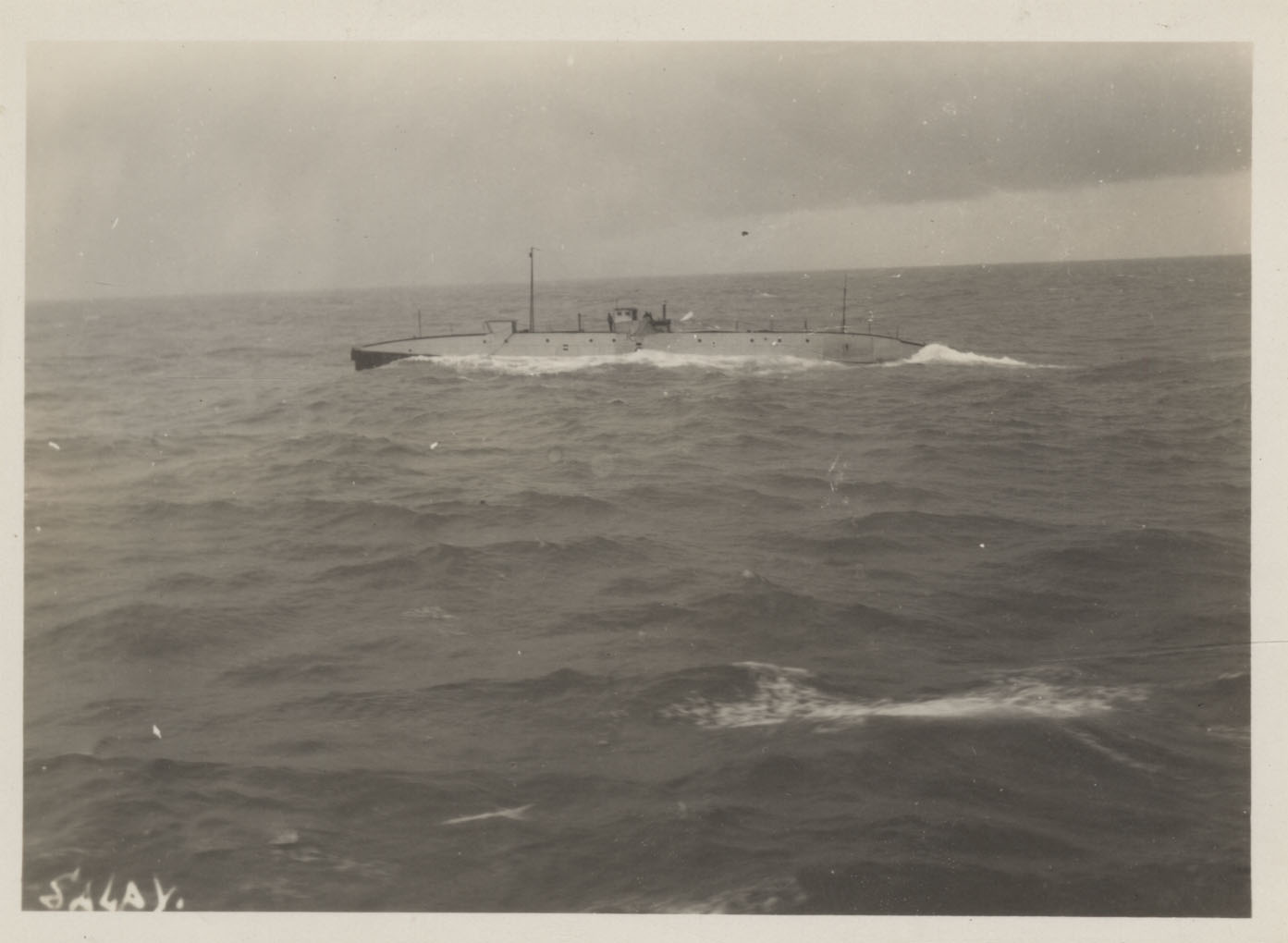
At the beginning of June, 1931, the Nautilus began its trip across the Atlantic towards the Arctic. Only three days into the journey, a storm hit. The Nautilus, however, was never designed for the fury of the open ocean.

The Nautilus in open water.

The Nautilus in open water.

As a result she pitched and rolled to the point that even Wilkins, the most experienced explorer on board, became seasick. During this expedition, the Nautilus and its crew barely escaped death on several occasions. At one point, water seeped into one of the engines. Left unchecked, the engine would have punched a cylinder through the side of the submarine, sinking the ship. With no lifeboats on board, the sunken sub would have served as a tomb for the entire crew. This crisis was averted due to the quick reflexes of the chief engineer, Ralph Shaw.

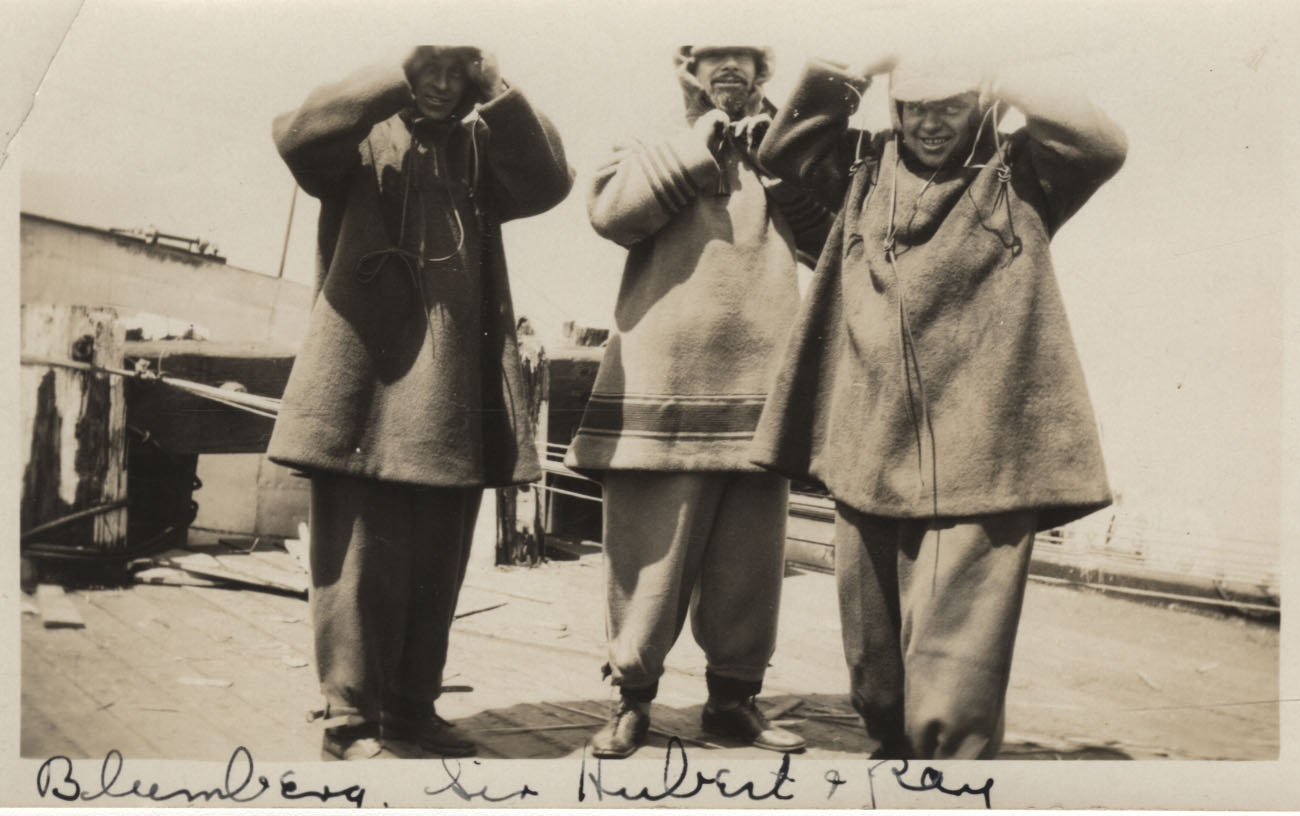
Wilkins posing for a funny picture with his crew members, Ray Meyers and A. Blumberg.

Wilkins posing for a funny picture with his crew
members, Ray Meyers and A. Blumberg.

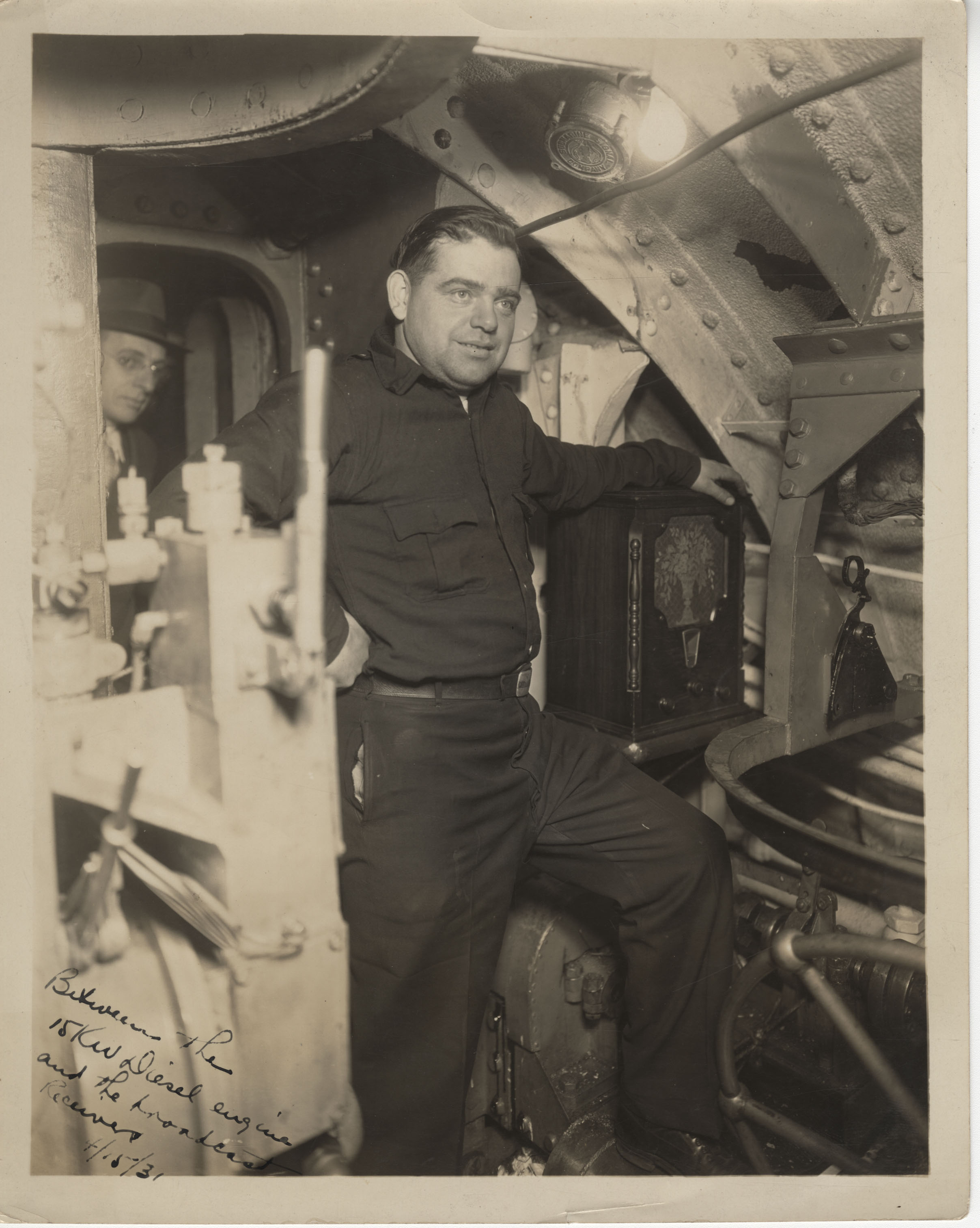
At another point, with the ship now running on only one engine, the crew nearly suffocated when a wave slammed the tower hatch closed, threatening to create a vacuum in the submarine. Fortunately, everyone on board survived, owing their lives to an open forward ventilator. Then the worst happened: the second engine stopped, stranding the submarine in the middle of the Atlantic Ocean. The crew was without the power to restart the engine or even send a distress signal and they had no fresh air. Given the nature of the submarine and the bad weather, they were also basically invisible to any passing ships. The radio engineer, Ray Meyers, had to cobble together some of his equipment into a make-shift transmitter to send out the SOS signal.

Chief Radioman, Ray Meyers.

Chief Radioman, Ray Meyers.

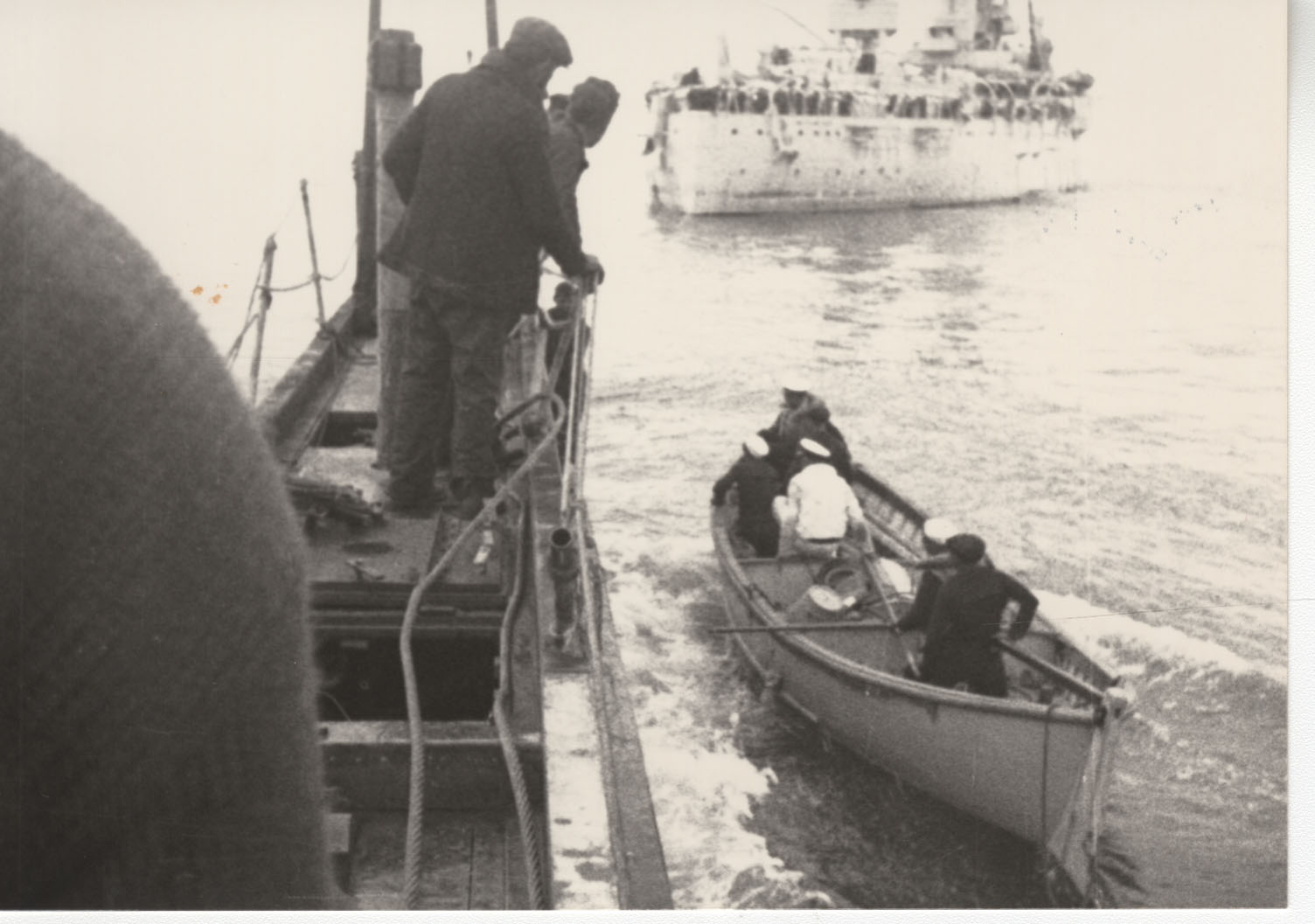
Nearly eighteen hours later the U.S.S. Wyoming came to rescue the stranded Nautilus, before towing it to Ireland. Four crew members subsequently quit.

The U.S.S. Wyoming arriving to rescue the stranded Nautilus.

The U.S.S. Wyoming arriving to rescue
the stranded Nautilus.

Repair on the submarine, expected to take two weeks, took a month. Ever the optimist, Wilkins hoped all of the misfortunes to date meant that the expedition had already encountered all of its bad luck. This was not to be. Almost immediately upon resuming the trip, the Nautilus was besieged by yet more storms. It became clear that the Nautilus was too unreliable to safely complete the trip. Yet Wilkins remained determined and decided to submerge in Arctic waters.

Image of Arctic waters, taken from the deck of the Nautilus.

Image of Arctic waters, taken from the deck of the
Nautilus.

While the ship was preparing to dive, Commander Danenhower realized that the submarine’s diving planes were gone. Without these planes the submarine could dive under the water, but could not be controlled while submerged. This made the planned journey to Alaska impossible. Wilkins never investigated how or when the planes were lost but he, along with Meyers and a few other crew members, believed the ship was sabotaged by several of the crew members.  Given that only the diving planes were lost, while the vertical plane and the propellers were untouched, this rumor of sabotage seems very likely. Floating ice would not have been so selective about the damage it did.

Wilkins, however, would not accept complete defeat. To do so would mean personal and financial ruin. Instead, he decided to continue north. Recognizing the potential scientific opportunities from the beginning, Wilkins had two well-known scientists on board to run experiments. Aided by the head scientist Harald Sverdrup, Wilkins collected some of the first data about the polar oceans, including mud samples and information about new ocean creatures.

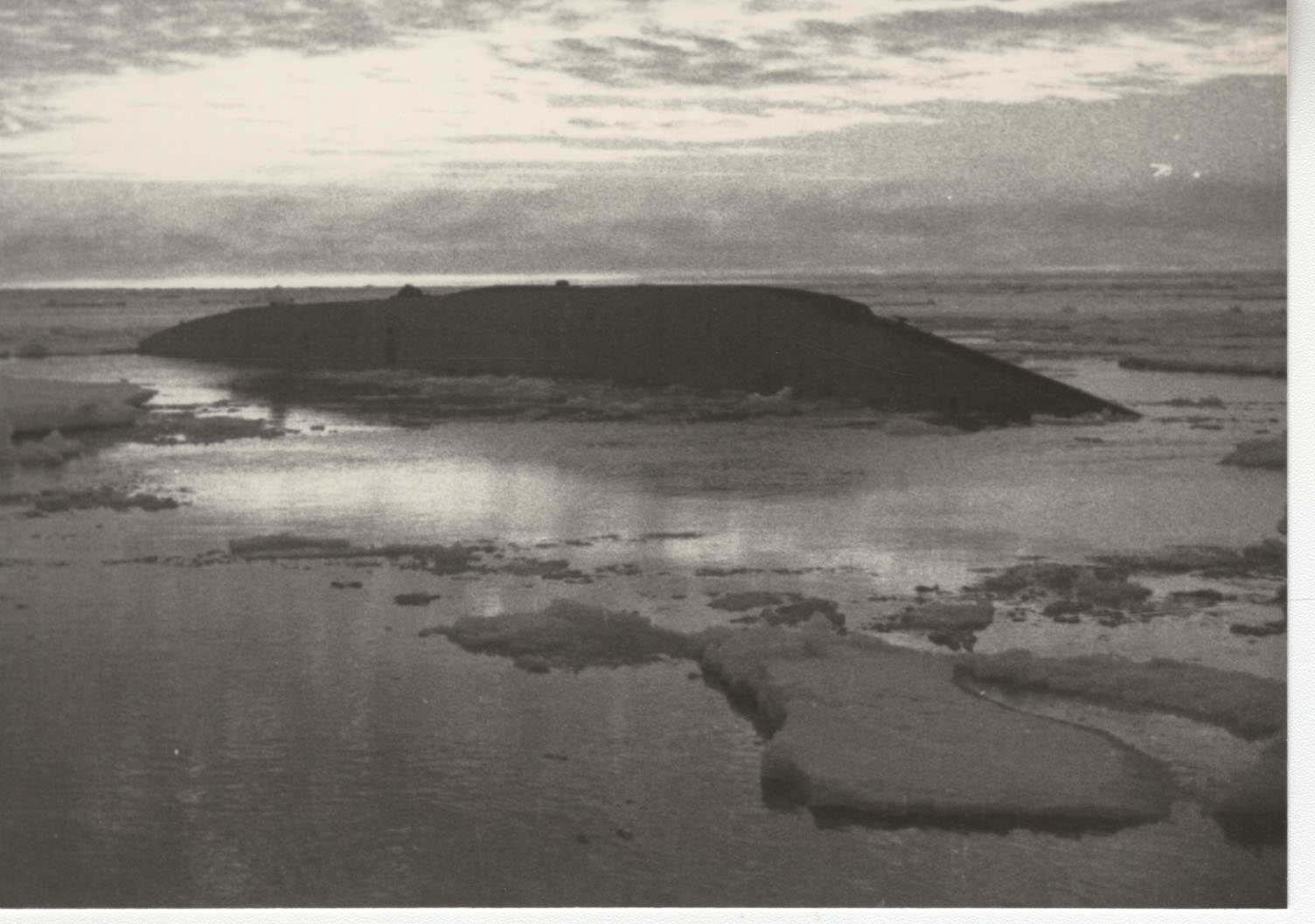
The Nautilus in a gap among the ice floes.

The Nautilus in a gap among the ice floes.

Wilkins did manage to force the submarine to dive to 37 feet by flooding part of the submarine and running into the ice, thus proving the possibility of under-ice travel, but the dive paled in comparison to his original plans. Later the expedition would be called “a landmark in science”[i] but it did not satisfy the donors and readers eagerly awaiting news of Wilkins’ success.

After completing only a few dives, Wilkins was forced to leave the Arctic due to the Nautilus’ continued deterioration and the worsening weather. Wilkins had to face the worst storm upon his return, however, as he met his supporters and critics. Although Wilkins did prove that travel by submarine under the polar ice was possible, his trip was largely perceived as a failure, as people focused on the incomplete trip and not the scientific experiments.

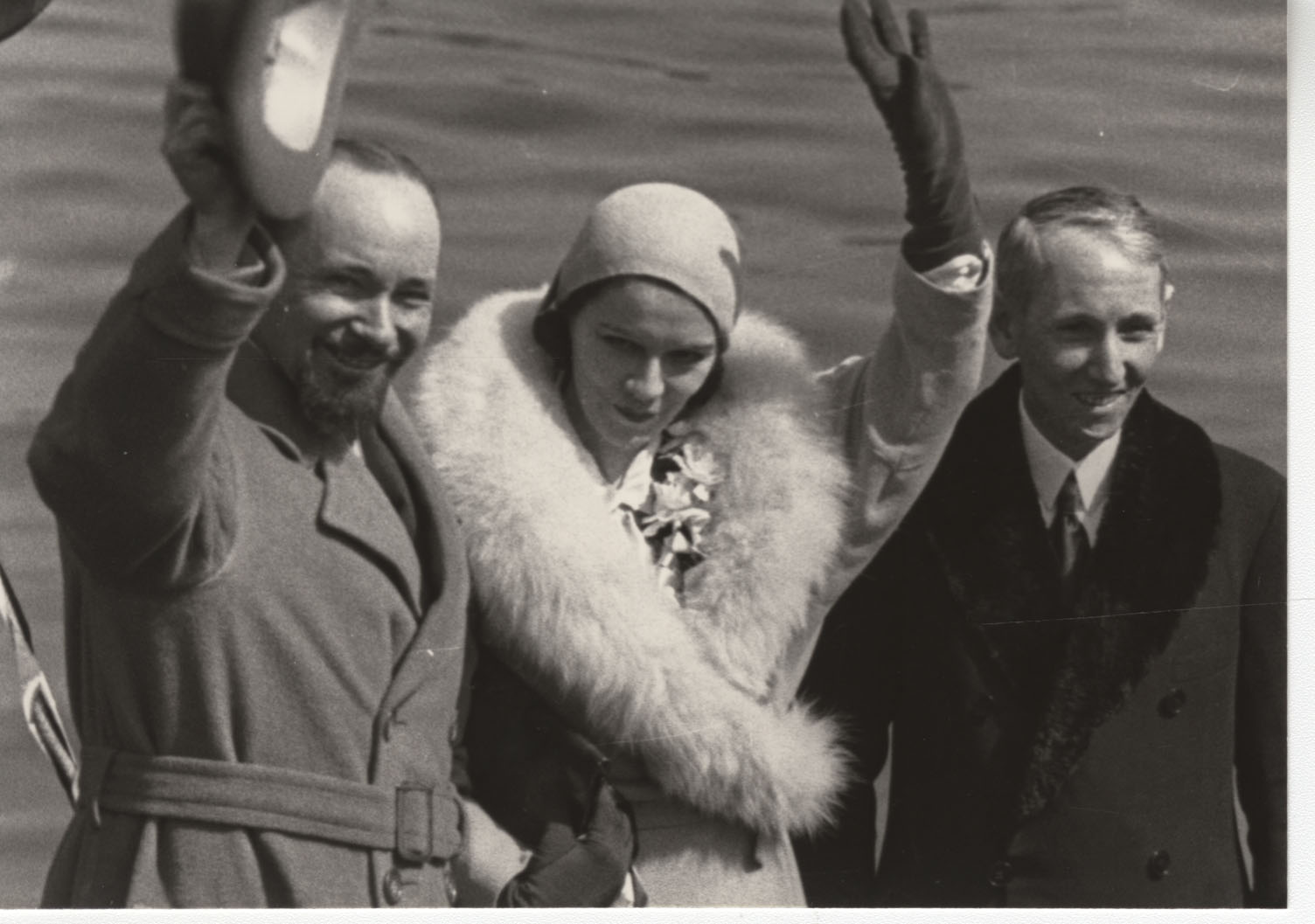
Sir Wilkins and his wife Lady Susan waving.

Sir Wilkins and his wife Lady Susan waving.

Recently, over one hundred images documenting the Nautilus expedition were acquired by the Ohio State University’s Polar Archives in 2015 and join the larger Wilkins Collection held by the repository. These images span the entire expedition, from Wilkins and his wife Lady Suzanne waving at crowds to images taken from under the ice in the Arctic. Most of the images are of the Nautilus in the Arctic, many likely taken after Wilkins realized that he would be unable to continue the journey as planned. These images tend to depict the Nautilus as it arises from the ocean or as it is banked against the ice.

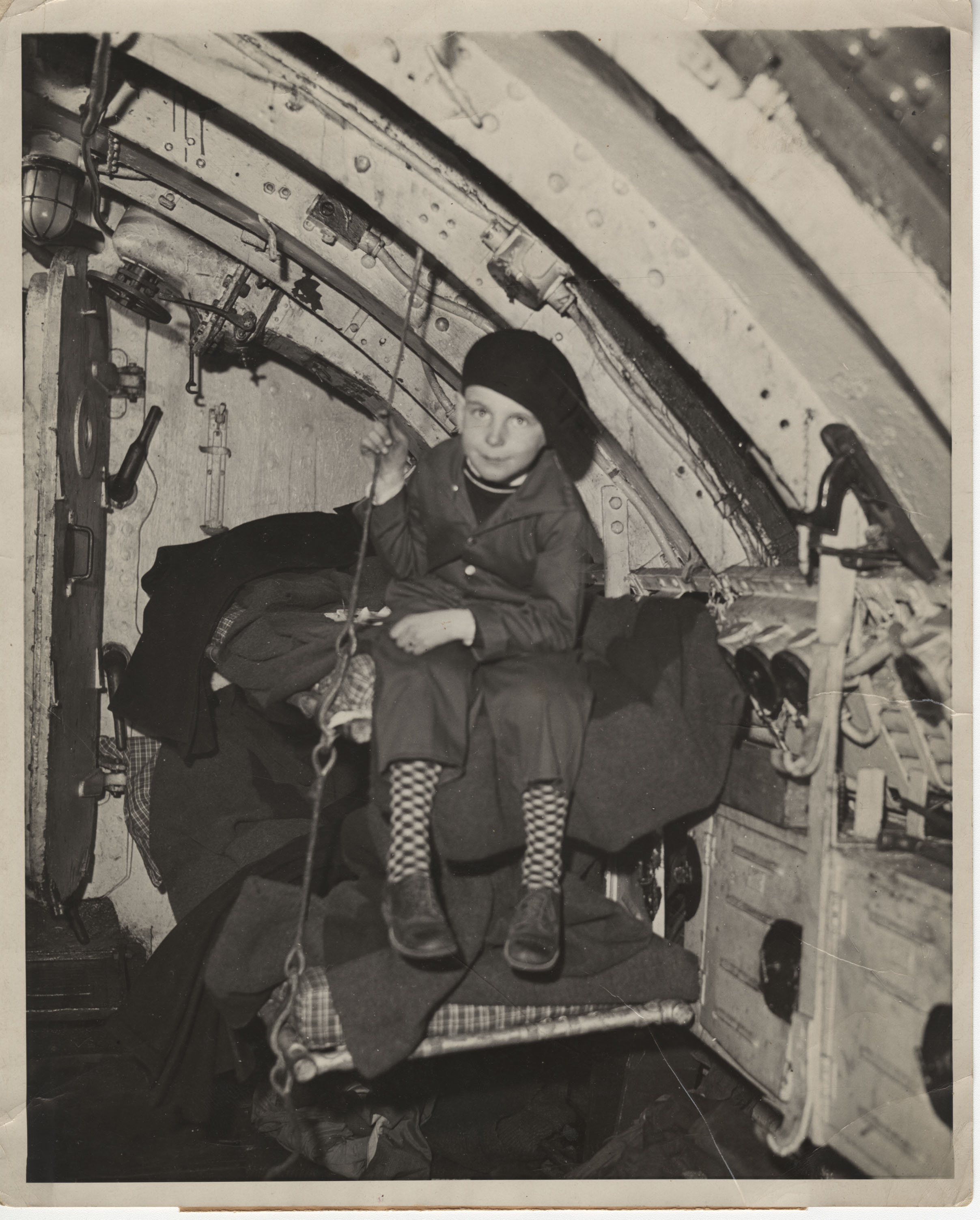
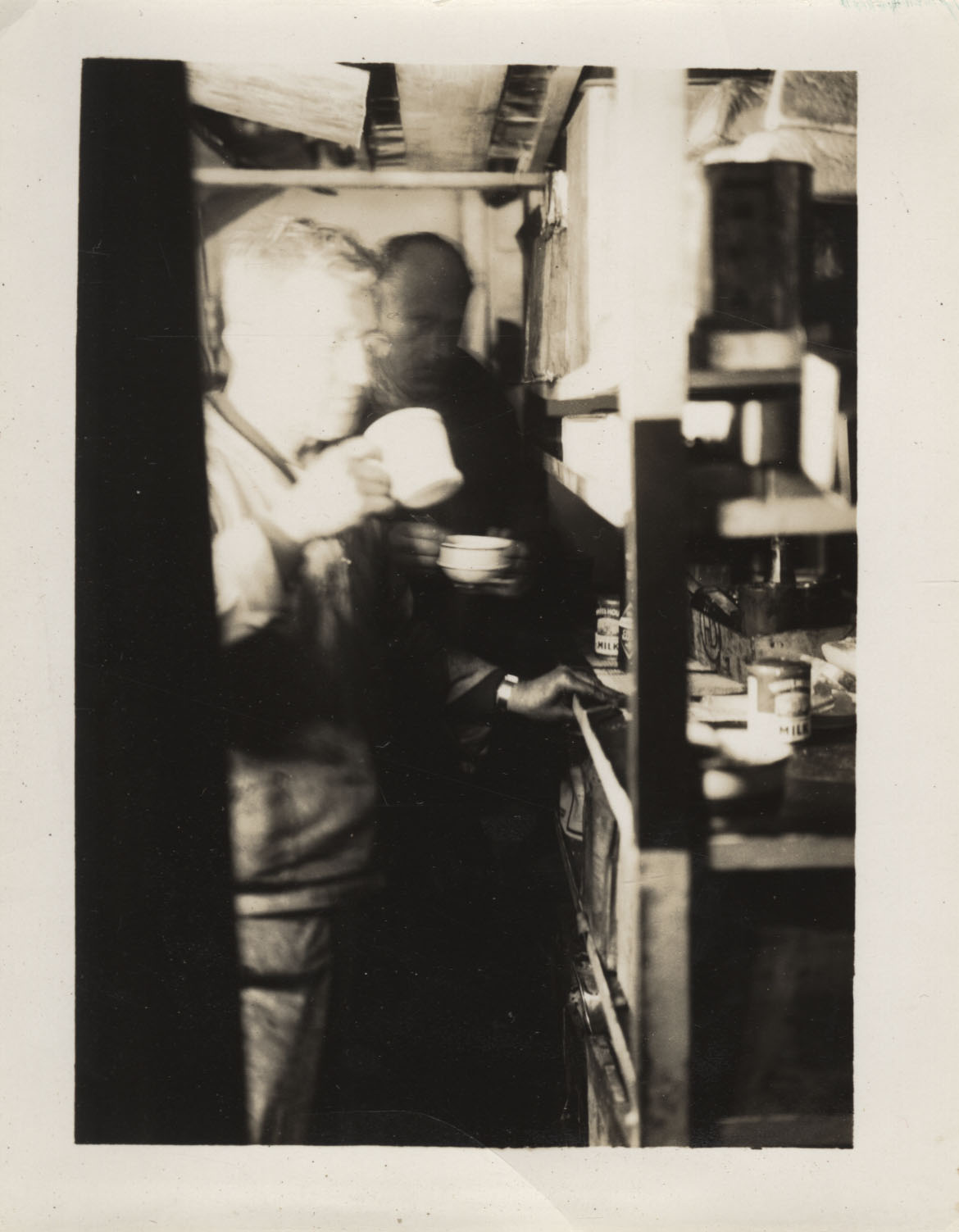
Other images show the crew, the people who risked their lives to adventure; one is of the chief radio operator Ray Meyers holding his young daughter as she appears to kiss him goodbye; another shows a child sitting on the beds in the submarine; Nautilus1_79one even shows Wilkins and some of his crew posing for a funny picture, each man clutching their hats and laughing. Some pictures showcase the very cramped conditions on the submarine, include what looks to be a picture of the dining area where there was so little room, that individuals had to eat standing up.

The dining room aboard the Nautilus.

The dining room aboard the Nautilus.

Perhaps some of the most remarkable of the images are those taken while the Nautilus was submerged under the ice. These pictures are the only ones in color, and they have short captions describing the situation and the ice. While these show little more than a deep blue sea and floating ice, they hint at the mystery and the danger the Nautilus and its crew faced while under the sea.

For more information about Sir George Hubert Wilkins or the Nautilus Expedition, please visit the Polar Archives: go.osu.edu/polararchives.


[i] Nasht, Simon. 2005. The last explorer: Hubert Wilkins: Australia’s unknown hero. Sydney: Hodder Australia.pg, 247

Newer posts