From Woody's Couch

Our Playbook on OSU History

Category: Buildings (page 22 of 25)

Bleeds Scarlet and Gray: James E. Boyd

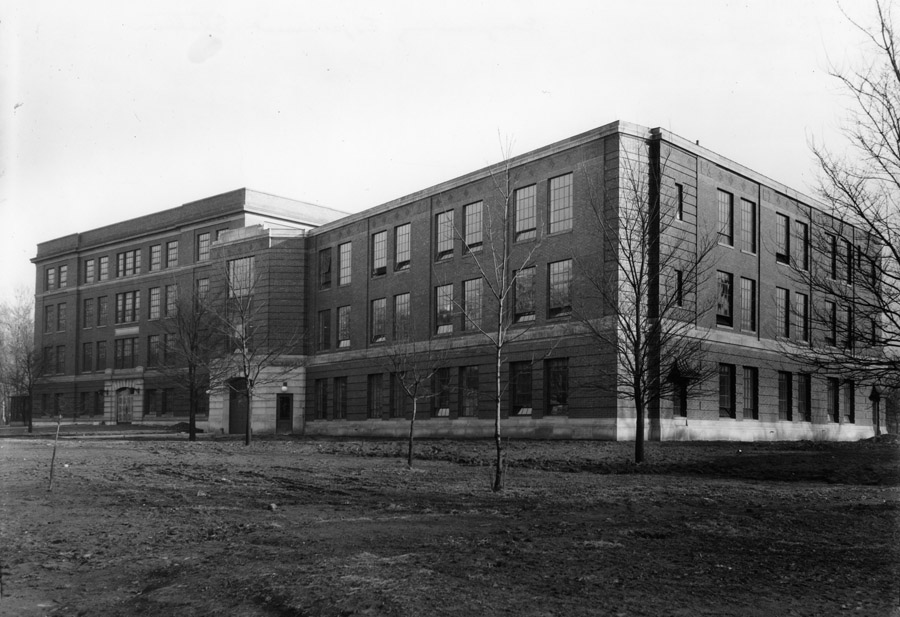
Boyd Lab (formerly known as the Highway Testing Laboratory), 1933

With progress comes change. As another Ohio State building falls to make room for a more modern version of itself, we wanted to remind everyone of the legacy behind Boyd Laboratory.

Completed in 1933, the building was the home to the Department of Engineering Mechanics. Its eponym was created in 1964 for the former chairman of the department, James Ellsworth Boyd.

James E. Boyd, n.d.

James “Jimmie” Boyd can be described as an Ohio State man. Boyd attended OSU from 1887-1891 earning his bachelor’s degree. Over the next forty-five years, except for a brief leave of absence in 1895-96 to study at Cornell for his Master’s degree, Boyd taught in various departments including Physics, Mathematics and Engineering Mechanics. His teaching style was described as strict but fair. Demanding students sit erect with both feet on the floor and that they knew their multiplication tables instead of depending on a slide rule were a few of more strict rules, but he was also known to change a grade if a student presented an interesting solution to a problem they misread.

Coming from a small farm in Muskingum County, Boyd stayed true to his small town roots. Even with his widely used textbooks, Strength of Materials and Mechanics, Boyd’s focus was on teaching. In 1938 Boyd received the Lamme medal, an award bestowed for outstanding engineering achievement. He then refused any honorary degrees from the university. Along with his work in the many scientific departments, Boyd was an alumni member of the Athletic Board, first secretary of the Entrance Board, and during World War I worked with the Bureau of Standards in Washington on airplane struts. While Boyd was widely known on campus for his distinctive goatee and powerful voice, his namesake is no longer a part of our landscape.

VIPs on Campus: Mrs. Roosevelt tours Stadium Dorms

In November 1938, Eleanor Roosevelt was on her way back to Washington, D.C., from California, when she stopped in Columbus to survey a Works Progress Administration project, right here at Ohio Stadium.

While she was not here long, she did have time to inspect the Tower Club, a student dorm located within Ohio Stadium. The Tower Club was a work study program, where students could work in the dorms (cooking, cleaning, etc.) in exchange for a reduced rate on room and board. Her positive outlook on the project appeared in her syndicated column the following day.

Although we had known of Mrs. Roosevelt’s visit, it was because of a recent patron request for an old Tower Club yearbook that led us to discover that she was on campus this week in 1938. The yearbook recounts news about various Club members and happenings. Below is a page of the yearbook that features Mrs. Roosevelt’s visit, and her column.

Eleanor Roosevelt's column

First Buckeye Village residents: WWII veterans

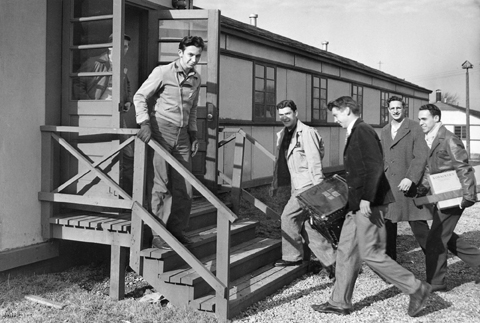
Veterans moving into GI Village, 1946

When World War II ended, young veterans taking advantage of federal financial support for getting a college degree, flooded university campuses, including Ohio State. The influx created a housing crisis here:

  • a huge debate raged over whether the women who occupied Baker Hall during the war should be kicked out for the men to live there again;
  • men were bunked all the way out at Port Columbus and were transported to campus by bus;
  • 185 trailers sat on the state fairgrounds, mostly occupied by married students who could not find accommodations elsewhere.

State Fairgrounds trailer park, 1946

Needless to say, OSU had a problem.

In honor of Veterans’ Day, we thought we would post something about the G.I. or Veterans’ Village, which we now recognize as Buckeye Village on Olentangy River Road. The G.I. Village got its start after WWII, when OSU was going through a housing crisis. There were already men bunked at the Stadium and at Port Columbus. There were arguments as to whether men or women would occupy Baker Hall and other dorms. There were also 185 trailers parked at the State fairgrounds as of May, 1947, mostly

The solution was a number of housing projects, the largest of which was the GI Village, which would house 810 men in barracks-like emergency housing units. Using federal grants, the T-shaped structures were built on University-owned farm land – where Buckeye Village stands today – and ready for occupancy before autumn quarter of

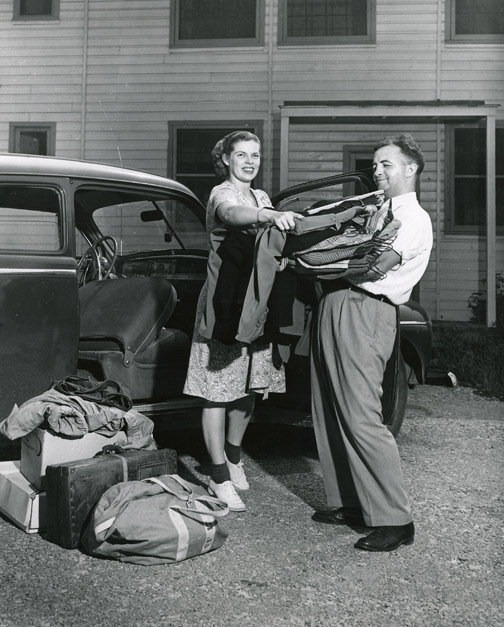
GI Village couple

1947. At the same time, another project to put student housing under the west side of Ohio Stadium was also in progress; that project added yet another 390 beds for men.

It was not until the autumn of 1948 that apartment-style accommodations for married veterans were available. These facilities were also built at the GI Village, and were in high demand: 800 applications were received for the 152 family housing units in 1947. An additional 200 units were available the following spring. Rent for the students was between $29 and $43 per month and was based on the size of the unit. The units also came partially furnished, and were awarded based on the veteran’s present housing conditions and number of years at the University and in service.

Filed by C.N.


Older posts Newer posts