From Woody's Couch

Our Playbook on OSU History

Category: Activities (page 12 of 16)

Stranger than Fiction

Herbert Atkinson, c1920

Atkinson, c1920

This April Fool’s Day, we bring you some bits of OSU history you’ll have to read about to believe!

Herbert Atkinson

Alumnus and Board of Trustee member Herbert Atkinson was so tied to the OSU campus that he requested Bricker Hall as his final resting place, and got his wish! Read more about it in a past blog post.


1981

1981

Marie the Elephant

Students often threaten to run off and join the circus, but how often do animals leave the circus for OSU? Well, Marie the elephant did. In 1981 she took ill and was transferred to the College of Veterinary Medicine’s clinic where she later died. The story just gets stranger after that! Read more about it in the transcript from then Physical Plant director Dean Ramsey’s oral history and our web exhibit for the 40th anniversary of the University Archives.
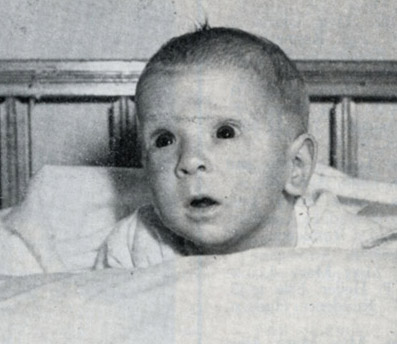


Home Ec baby, 1946

Home Ec baby, 1946

Home Ec Babies

You think your classes were stressful? Well, Home Ec students of the past were tasked with the care of a human infant, with all the responsibilities that come along with it! Read more about it in a recent blog post.


Maudine, 1926

Maudine, 1926

Queen Maudine

Perhaps one of the best pieces of OSU lore is Maudine Ormsby, the 1926 Homecoming Queen. And yes, she is the one with the spots. How did OSU end up with a cow as its Homecoming Queen? Simple: election fraud. In 1926 OSU’s student enrollment was less than 10,000, and for the election only 3,000 ballots were printed. However 12,000 votes for Homecoming Queen were submitted. Hmmmm…

Unfortunately, Maudine was unable to attend the Homecoming festivities; she was declared “too valuable” to risk an appearance. The Homecoming Committee had to settle for two boys in a cow costume.


Hand Grenades

Sneak preview: You’ll have to wait a few days to find out what hand grenades (but, alas, not horseshoes) had to do with track meets of old, but we think it’s worth the wait!

Filed by C.N. and L.S.

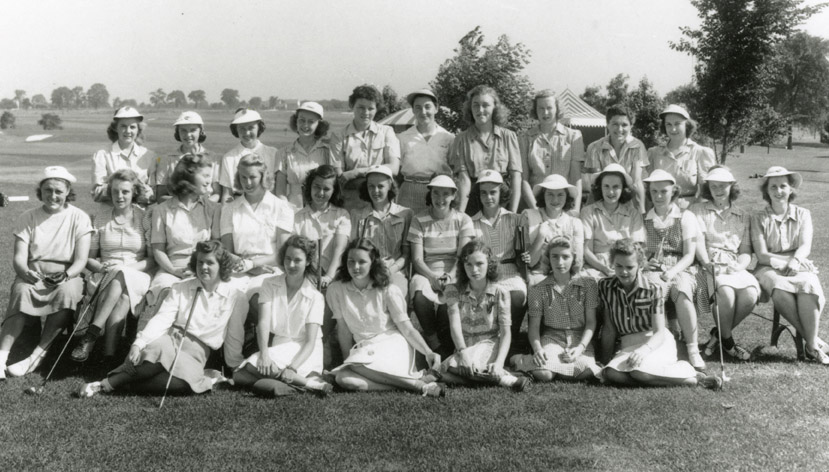
OSU first intercollegiate tournament ever for women golfers

Women golfers, 1941

Women golfers, 1941

In 1941, the OSU Golf Course had just opened the year before, so eight faculty members of the women’s division of the Department of Physical Education decided to hold a tournament there. Few options for competitive games existed at the time for women, and in fact, the very idea of an intercollegiate tournament offended some: The National Association of Directors of Physical Education for College Women deemed national tournaments for women “inadvisable” and claimed that there were better ways to allow women to compete against each other than in such tournaments.

OSU officials pressed on, nonetheless, even though the national association had basically blackballed the tournament. In an unidentified article here at the Archives, former Physical Education Professor Mary Yost remembered waiting for the entries for a tournament that seemed to have so little support.

Mary Yost, 1942

Mary Yost, 1942

“We didn’t have much response for a long time, and we were wondering whether we really would have a tournament. I remember the deadline passed over the Memorial Day weekend,” said Yost, a 45-year faculty member. “I came in after that to get the mail, and we had a whole stack of entries. I cried because we really were going to have a tournament.”

The first tournament, which started on June 30, began with a banquet the evening before the start of play. Delbert Oberteuffer, then the chairman of the men’s division of OSU’s Department of Physical Education, stressed the tournament’s historical significance:

“You young ladies in college playing in this, the first tournament, are going to begin the building of a great tradition of sportsmanship for young women,” he said, in a transcript of his remarks here at the Archives.

The five-day competition also included a picnic at the clubhouse, a tea at the President’s House (then occupied by the Bevises), and a mixed swim at the men’s natatorium. “Escorts will be arranged for any girls who would like to go dancing,” an itinerary said.

Eleanor Dudley of the University of Alabama bested 25 other golfers to win the first championship. With the start of World War II, the tournament was cancelled, but was resumed in 1946. At the time, the individual entrance fee was $5, which included transportation fees to and from the course, and greens fees.

1941 Women's Golf Tournament Group

1941 Women’s Golf Tournament Group

Ohio State continued to host the Women’s Collegiate Golf Tournament until 1953, when it was taken over by the Association for Intercollegiate Athletics for Women (AIAW), at which point colleges and universities took turns hosting the tournament. Ohio State held the tournament in 1966 when it celebrated its 25th anniversary.

In 1981, the National Collegiate Athletic Association established a new program of women’s championships; the AIAW ended its sponsorship of the intercollegiate tournament at about that time.

Filed by C.N.

OSU poured efforts into cleanup, reconstruction after 1913 flood

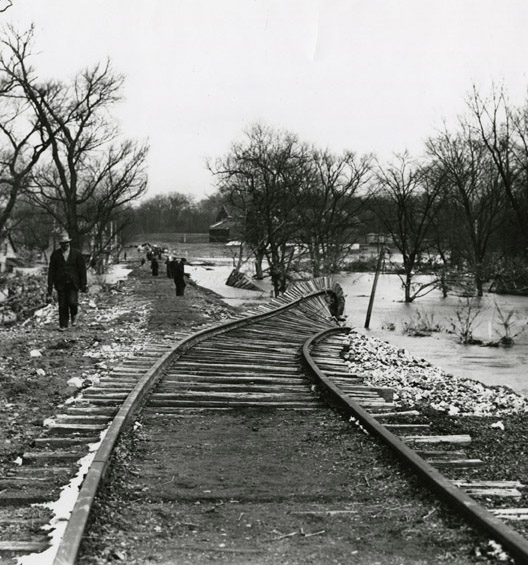
Railroad damage from flood, 1913

Railroad damage from flood, 1913

Cities with rivers flowing through them have always been subject to flooding, and with two rivers that meet downtown – the Olentangy and Scioto – Columbus is no exception. The year 1913 sticks out in particular, however, for the amount of destruction and loss of life caused by such a weather event. Statewide, the flood killed nearly 500 people and destroyed or damaged 40,000 homes. It is why it is still considered Ohio’s most significant weather disaster.

In Columbus, flood-warning bells began ringing on March 24, which was Easter Sunday. River waters had started rising the day before and did not start receding until March 27. All totaled, 88 Columbus residents died, and thousands were rendered homeless. Damage was extensive, with only one bridge (Rich Street) linking Columbus’ West Side to the rest of the city.

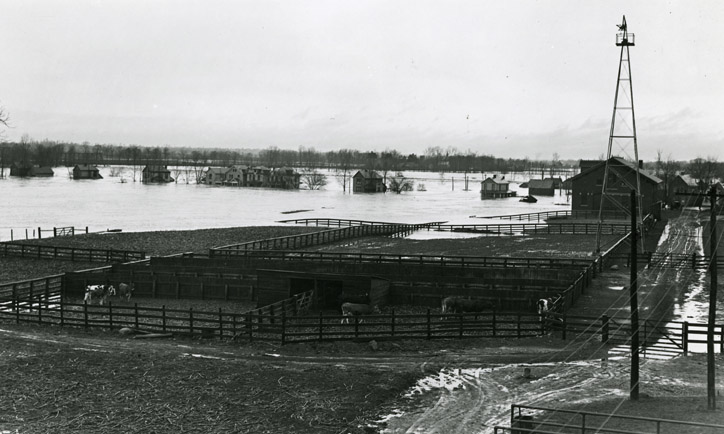
Campus came through relatively unscathed: The water reached the foundations of a few agriculture buildings at the corner of Neil and Woodruff Avenues, but all of the livestock survived, and overall damages were estimated at less than $10,000. The week after the flood, the University closed only that Wednesday – because of a lack of city water – but classes did not resume normally for at least another week after that because of ongoing relief efforts.

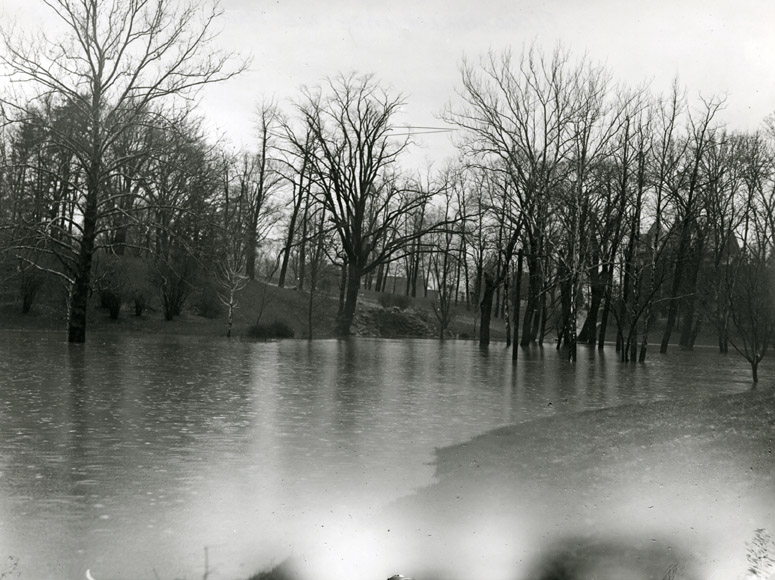
Flood waters on campus

Flood waters on campus

University President William Oxley Thompson first offered the service of the University students in the military science program, who would work under the supervision of University Commandant George L. Converse. The student cadets worked 24-hour shifts to evacuate families from their flooded homes, mostly on the West Side. In addition, University female staff members and students worked to prepare meals, gather and distribute clothing and necessities, and help organize relief efforts. Instead of holding classes, some professors took students to help with relief efforts

Indeed, President Thompson encouraged them by organizing two days devoted to volunteer work, saying that such circumstances only come about once in a generation, and that teaching civic responsibility was certainly one of the finer points of higher education. Students continued to volunteer after the floods had receded and the clean-up had begun.

Later, student arts groups, such as Strollers, organized performances to help raise money for those affected. Meanwhile, the College of Engineering faculty and students began making plans to aid in repairing the levee and rerouting the Scioto River. Faculty in the Department of Forestry also lobbied the state legislature to encourage forest conservation and reforestation to prevent future flooding.

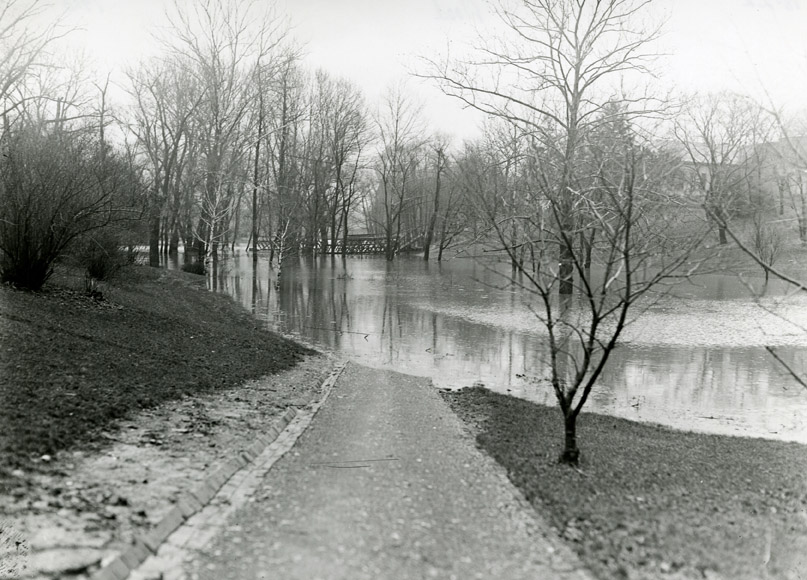
Flood covering pathway to Mirror Lake

Flood covering pathway to Mirror Lake

Mirror Lake flooding

Mirror Lake flooding

Damage to railroad, 1913

Damage to railroad

Filed by C.N.

Older posts Newer posts