

For many graduates, the commencement ceremony – particularly on a sweltering day in June – might seem like it lasts for days and days. There have been years when it actually did. That’s just one of the many interesting things you’ll learn about Commencement in Raimund Goerler’s history of the University, “The Ohio State University: an Illustrated History.” Tidbits from his history, and some others are:

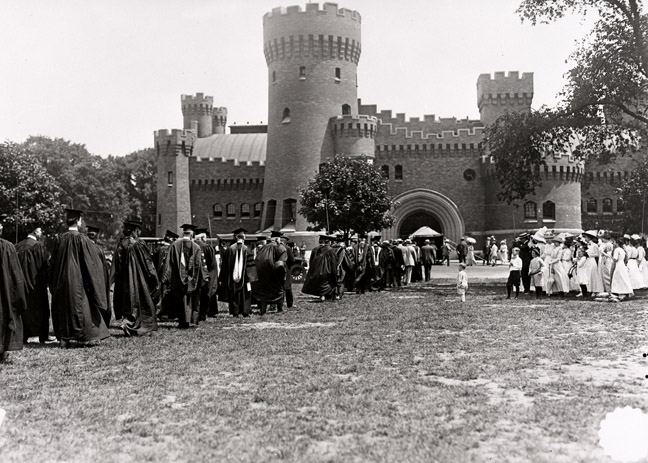
Helen Parkhurst, the first female commencement speaker, walks with Dean Wilbur Siebert, 1928
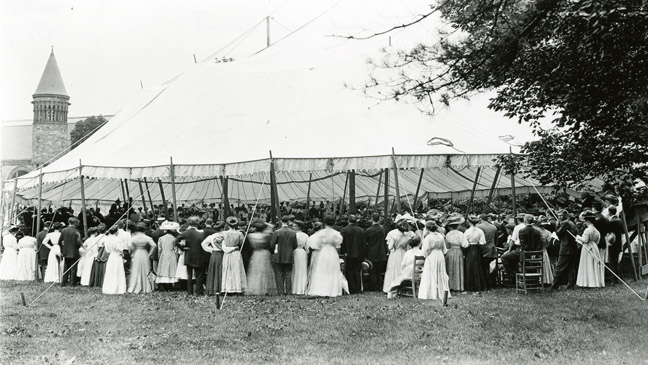
- In 1882, commencement took four days, beginning with a baccalaureate sermon and address by then-OSU President Walter Q Scott and including lectures, a parade, and a closing reception at the home of the President. In 1899, an event lasting several days included a sunrise ivy planting and accompanying address.
- “Pomp and Circumstance” was first played in 1928, but as a recessional. Two years later, it switched to a processional.
- That year, at the August 1928 ceremony, Helen Parkhurst became OSU’s first female commencement speaker. She was a nationally known educator focusing on alternative elementary-school instruction.
- World War II caused a four-year lapse in Commencement being held at Ohio Stadium. The war also had an effect on that spring’s graduation class: there were no candidates for degrees in veterinary medicine, the College of Medicine presented only one candidate, and dentistry presented two candidates, according to the June 1946 alumni magazine.
- WOSU first broadcast a commencement in 1949.
-

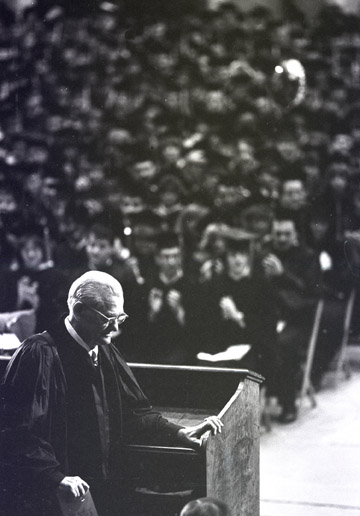
Branch Rickey, 1950
Commencement speakers have included not only astronauts and actors, as we recounted in our previous blog, “A Who’s Who of Speakers.” In 1950, Branch Rickey, then-general manager of the Brooklyn Dodgers, spoke to Spring Commencement graduates. He is most known as breaking the color barrier in Major League Baseball by signing African-American player Jackie Robinson.
- The conferring of honorary degrees also has been a feature of the ceremony, and recipients have included such notables as Robert Frost, Orville Wright, and Jesse Owens.





Recent Comments