From Woody's Couch

Our Playbook on OSU History

Author: drobik.5@osu.edu (page 21 of 62)

Twelve Days: Stone’s rock-solid support of OSU led to Lake Erie research lab

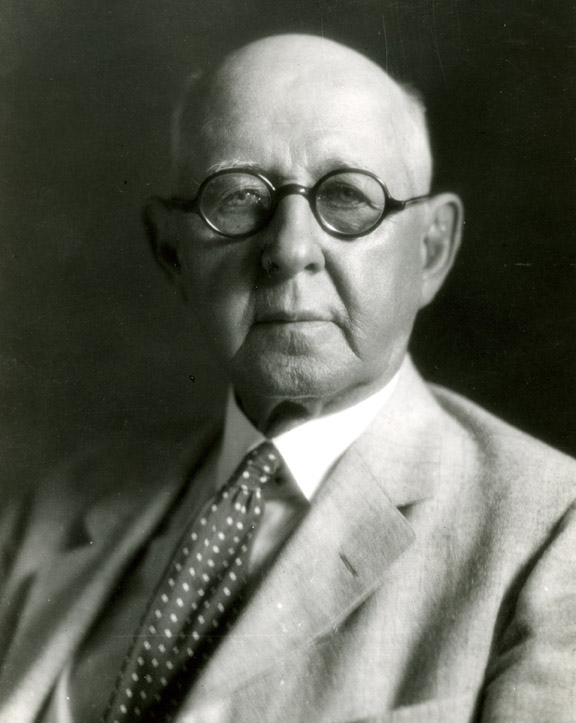
Julius Stone

Julius Stone

If you learn nothing else about Julius Stone, know that he laughed often, learned much, and shared both of these gifts with everyone he knew. He is also a wonderful example of the American archetype of the self-made man who tries to give back as much as he gets.

That was certainly true with his support of the University. He purchased Gilbraltar Island on Lake Erie and donated it to Ohio State to support the marine research conducted there by OSU faculty and students. He served two terms on the Board of Trustees for a total of 20 years. Even in small ways, his support had a long-lasting effect: He convinced a New York financier to build an observatory on OSU’s grounds.
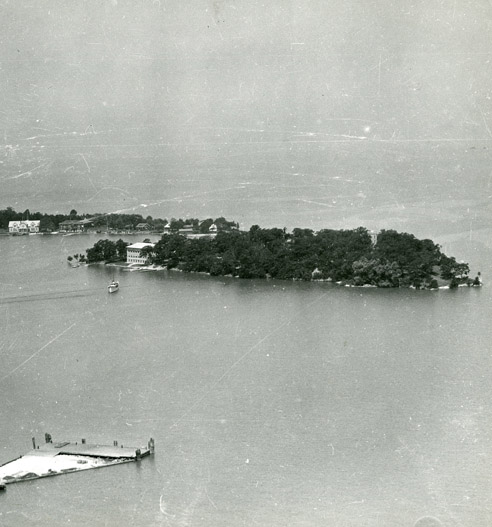
Gibraltar Island, 1926

Gibraltar Island, 1926

Stone was born on June 1, 1855, on a farm in Michigan to emigrant parents. As one of eleven children, though, Stone did his part to support the family. Julius left school at 13, working first for a grain purchaser. By the age of 16, he was a telegrapher for the railroad. He then worked in the coal industry and focused on manufacturing sometime around the turn of the century.

Besides having a great aptitude for business, Julius Stone also possessed both a keen scientific mind and a desire for adventure.  He was a fellow of the American Geographical Society, the Explorer’s Club of New York, and the Royal Astronomical Society in England. He lectured on astronomy and geology frequently. He traveled all over the globe, from the Galapagos Islands, to South Africa. He led the first major expedition through the Grand Canyon, and he went white-water rafting when he was 84 years old.

Stone Lab, 1958

Stone Lab, 1958

He was also an ardent philanthropist, although most of his work went unknown until his death. For the most part only he and his personal staff knew which charities he was supporting and how much he was giving. One of the few occasions on which he was publicly recognized was at the dedication in 1925 of the Franz Theodore Stone Laboratory on Gibraltar Island in Lake Erie. The lab was named for Stone’s father, after Stone purchased the island for the University.

Before the purchase, the fresh-water research institute was housed in temporary quarters on Put-in-Bay. OSU Zoology Prof. Raymond C. Osburn had heard that Gibraltar Island was for sale, so he wrote to Stone, then a former Board of Trustees member, what he thought of finding someone to buy the island, possibly as a memorial gift. Stone decided to buy it himself, which he did, but he had the deed made out to the university before he received the deed from the seller, then handed both over to Osburn. Stone Lab is now the oldest freshwater biological field station in the United States.
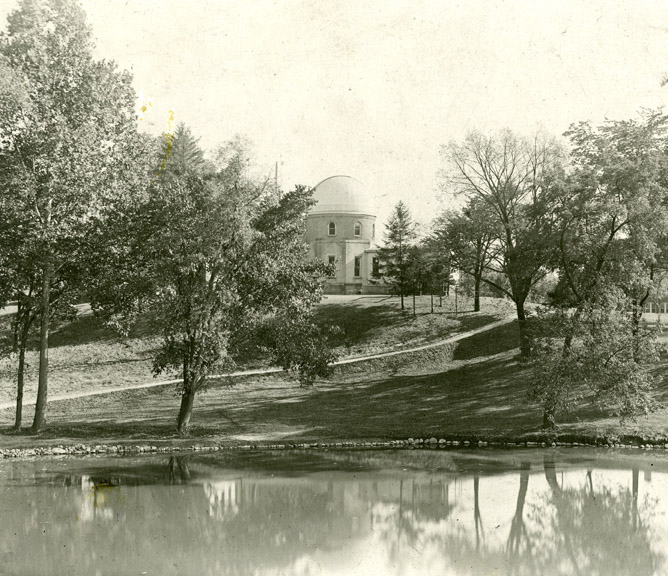
McMillin Observatory, n.d.

McMillin Observatory, n.d.

Long before he bought Gilbraltar Island, Stone was having dinner in New York one evening and struck up a conversation with Emerson McMillin, a New York financier. They both shared a love of astronomy, and when McMillin mentioned he’d like to build an observatory, Stone told him of the perfect place: Ohio State. So McMillin donated $10,000 to the University to build the observatory, which opened in 1895 near the Faculty Club. Before construction began, McMillin gave another $5,000 to beautify the area around the observatory, including Mirror Lake. Good thing he did: the University had been pondering laying a new road right through the Mirror Lake area. If Stone hadn’t convinced McMillin to build the observatory at OSU, who knows what the area might look like today.

Stone died on July 25, 1947, at the age of 92. According to the Columbus Dispatch, Stone instructed before he died that postcards to be mailed out on the day of his death. On the front was a picture of a snuffed-out candle; on the back was the following poem:

With a ripple of merry laughter,

A smile and a gay goodbye

To all who made life worth living;

Back to the dust go I
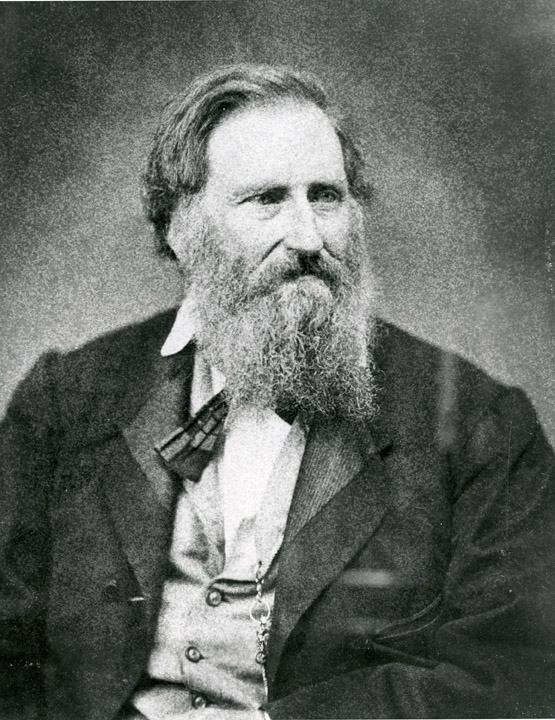
Twelve Days: For OSU supporter Sullivant, teach “all that is worth knowing”

Joseph Sullivant, 1878

Joseph Sullivant, 1878

We’d like to launch this year’s “Twelve Days of Buckeyes” celebration by focusing on one of OSU’s earliest and biggest support: Joseph Sullivant, a prominent citizen of Columbus whose influence on the University’s earliest development was strong and unwavering.

Sullivant was the son of Lucas Sullivant, one of the first settlers of Franklin County. Lucas Sullivant came to Ohio from Kentucky as a surveyor of military lands and stayed, building his home in Franklinton, on the western side of the Scioto River. Joseph Sullivant was the youngest of Lucas’ three sons, born in 1809. All of the boys received a quality education, and Joseph was sent to a boarding school in Worthington for a time, before he later followed his next-eldest brother, Michael, to Ohio University. He finished his studies at Centre College in Danville, Kentucky where he had family.

Throughout the rest of his life, Sullivant spent his time in a variety of services, public and private, that helped in the development of the city. For instance, before the age of 21, the state legislature appointed him to found the Philosophical and Historical Society of Ohio and was its curator and secretary for a number of years. He also served for many years on the Columbus Board of Education. As the years went by, he became known for his pronounced and liberal views on political questions such as education.

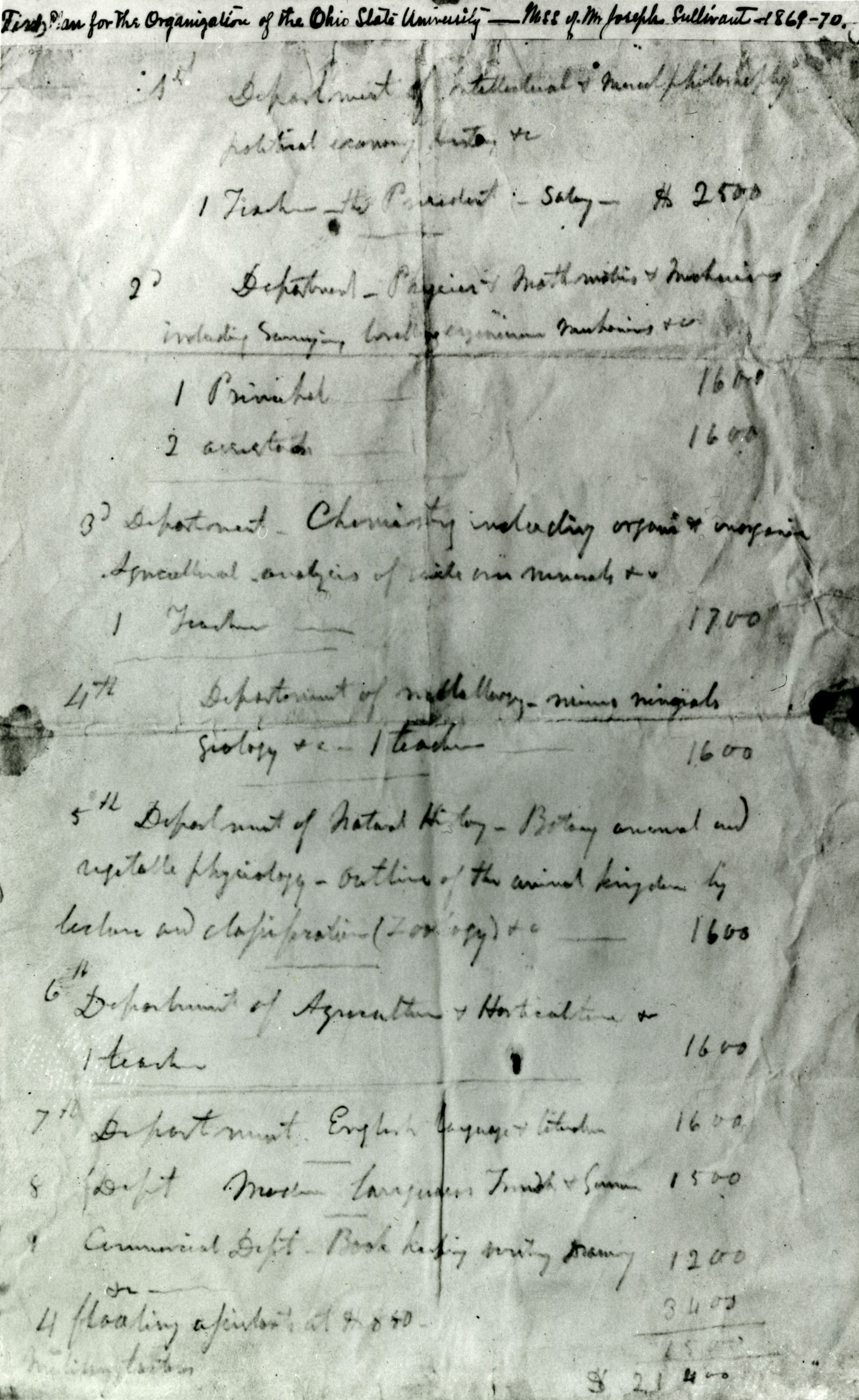
Sullivan's plan of organization for the school, 1869

Sullivant’s plan for the organization of the University, 1869

After the Oho state legislature passed the law to create the Ohio Agricultural and Mechanical College, Sullivant lobbied hard for it to be located in Columbus. He wrote an impassioned letter to the citizens of Franklin County, printed in a local newspaper, asking for their support of measure to approve the sale of bonds whose proceeds would be used to buy the land for the new college and build its first classrooms. The measure passed.

While Sullivant lived in Kentucky, he took an interest in agricultural education, and later in Columbus joined the state board of agriculture. As a member of that board, Sullivant would be a prime candidate to be selected for the new college’s first Board of Trustees. But when then-Ohio Gov. Rutherford B. Hayes nominated him for one of the seats, Sullivant at first asked Hayes to withdraw his name, knowing that his outspoken views and liberal positions on many issues would stir opposition in the Ohio Senate. Hayes refused, and the Ohio Senate ultimately confirmed Sullivant.

 As the Board of Trustees went about deciding the new college’s curriculum, Sullivant’s views on education became apparent. While some Trustees argued for the new college to focus solely, at least at first, on only those courses related to agriculture and mechanical arts, Sullivant advocated that the new college should “develop in all directions.” He went on to say, “If we had means, I would teach all that is worth knowing…What the farmer and mechanic need, like all other men, is a good education, and in proportion as that is general and liberal will they be best fitted for their special vocations.”

The University's original seal, designed by Sullivant, 1871

The University’s original seal, designed by Sullivant, 1871

Despite the controversy of his selection, Sullivant held great sway when it came to the final curriculum for the new college: his plan for ten departments of instruction was approved, although only six were in place when the college actually opened in 1873.

And if all that wasn’t enough, Sullivant designed the University’s original seal.

Sullivant died in 1882. In 1970, as the University celebrated its centennial, the Board of Trustees honored Sullivant by renaming the former Ohio State Archaeological and Historical Society Building (it had moved to its current home near I-71) after him.  

– Filed by C.N.


From founding, OSU community celebrated Thanksgiving with a day’s respite

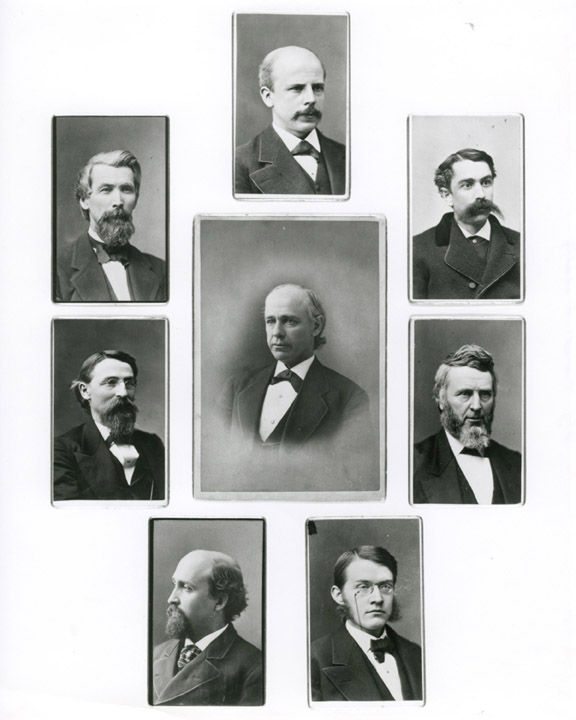
The first faculty of the University, 1873

The first faculty of the University, 1873

On Friday, November 21, 1873, just over two months after the University first opened its doors, the faculty were talking about taking a vacation.

In this particular case, it made sense: Not even a week later, Thanksgiving would be celebrated, so they needed to decide whether classes would be held that Friday. The faculty minutes for that date – the group’s 10th meeting ever – say “that Thursday Nov. 29 (Thanksgiving day) and the Friday following be allowed as holiday by the college, and that all college exercises be disbanded.” It was the only item of business for that meeting.

During World War II, Thanksgiving Day was a holiday for only civilians on campus. All Army and Navy-related classes were still in session on Thanksgiving. At that time, the Commencement ceremony for Autumn Quarter fell in early December, so classes on the Friday after Thanksgiving were considered a must.

In 1945, after the war was over, it was decided that no classes would be held from the Wednesday night before Thanksgiving until the following Monday – a first since before the war – to allow students to travel home for the holiday. In 1946 University faculty and staff were given both Thanksgiving Day and the following Friday off again in recognition for all of the overtime hours they had put in throughout the quarter with the record number of students enrolled that year.

President Bevis, 1948

President Bevis, 1948

In 1947 President Bevis ordered classes to be held the Friday after Thanksgiving, with the tradeoff that employees would get Christmas Eve, Christmas Day and Boxing Day, as well as the following weekend off. He stated that the University’s payroll deadlines, as well as orientation and fee payment deadlines necessitated the working Friday.

Classes were again eliminated for the Friday off as early as 1957, according to the Lantern, although OSU employees still had to show up to work. In the mid-1970s, during the nationwide energy crisis, the academic calendar was changed so that finals were completed by Thanksgiving. University employees still had to work the day after the holiday. By the mid-1980s, however, University classes were cancelled and University offices were closed both days.

–Filed by C.N.

Older posts Newer posts