

If there is one thing that makes us swell with pride more than our own pious treatment of comic art here at the Cartoon Library, it’s seeing the meticulous process by which these pieces are repaired over at our incredible Preservation & Reformatting studio. We are lucky enough to have the expertise of the amazing conservator Harry Campbell at hand, who regularly picks up worn and torn items from us and nurses them back to health.
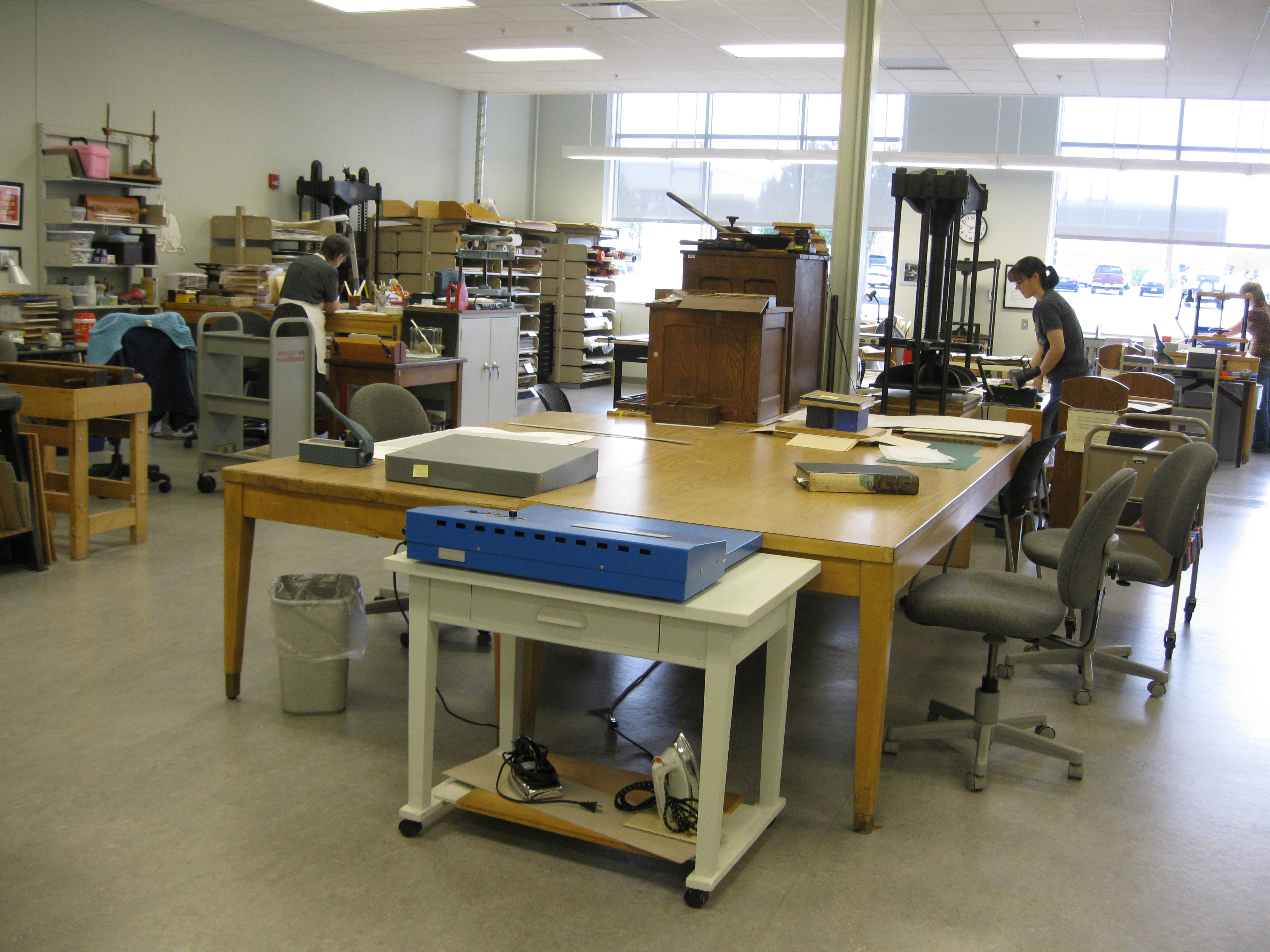
Recently, Harry and his staff worked on a series of old Puck magazines that needed rebinding. We took a trip over there to snap some photos, and take a look at the facility. There are few places in the world where comics get the kind of treatment that they do at the Billy Ireland Cartoon Library & Museum!

Like many of the old humor periodicals we collect such as Punch and Judge, issues of Puck magazine were collected and bound into hardcover volumes. The particular collection of Puck that we focused our photos around for today was from 1879, containing the issues from Volumes 5 & 6. As you can see in the images below (click to enlarge), the spine has been damaged severely and the sections had begun to separate from the rest of the text block.

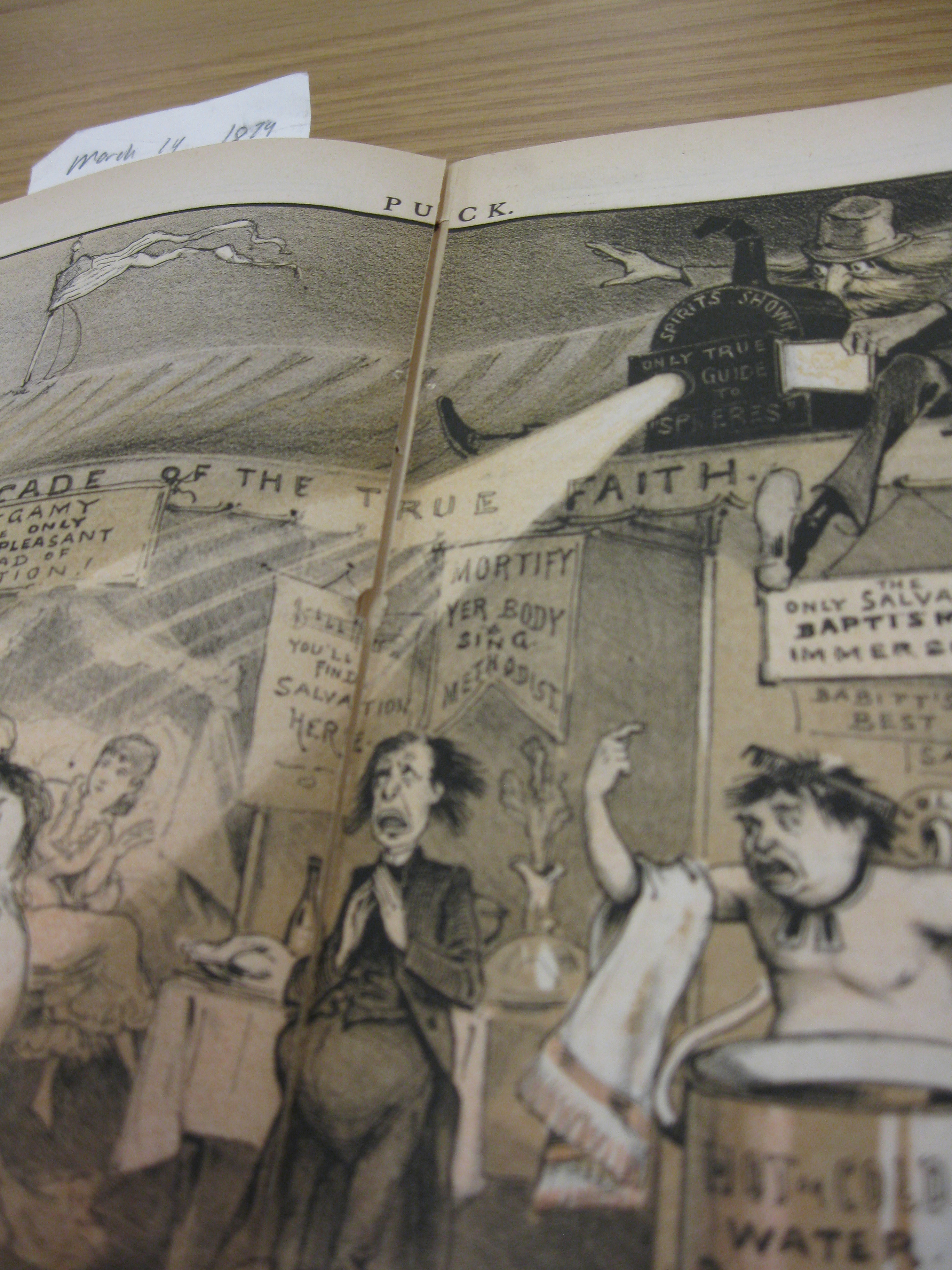
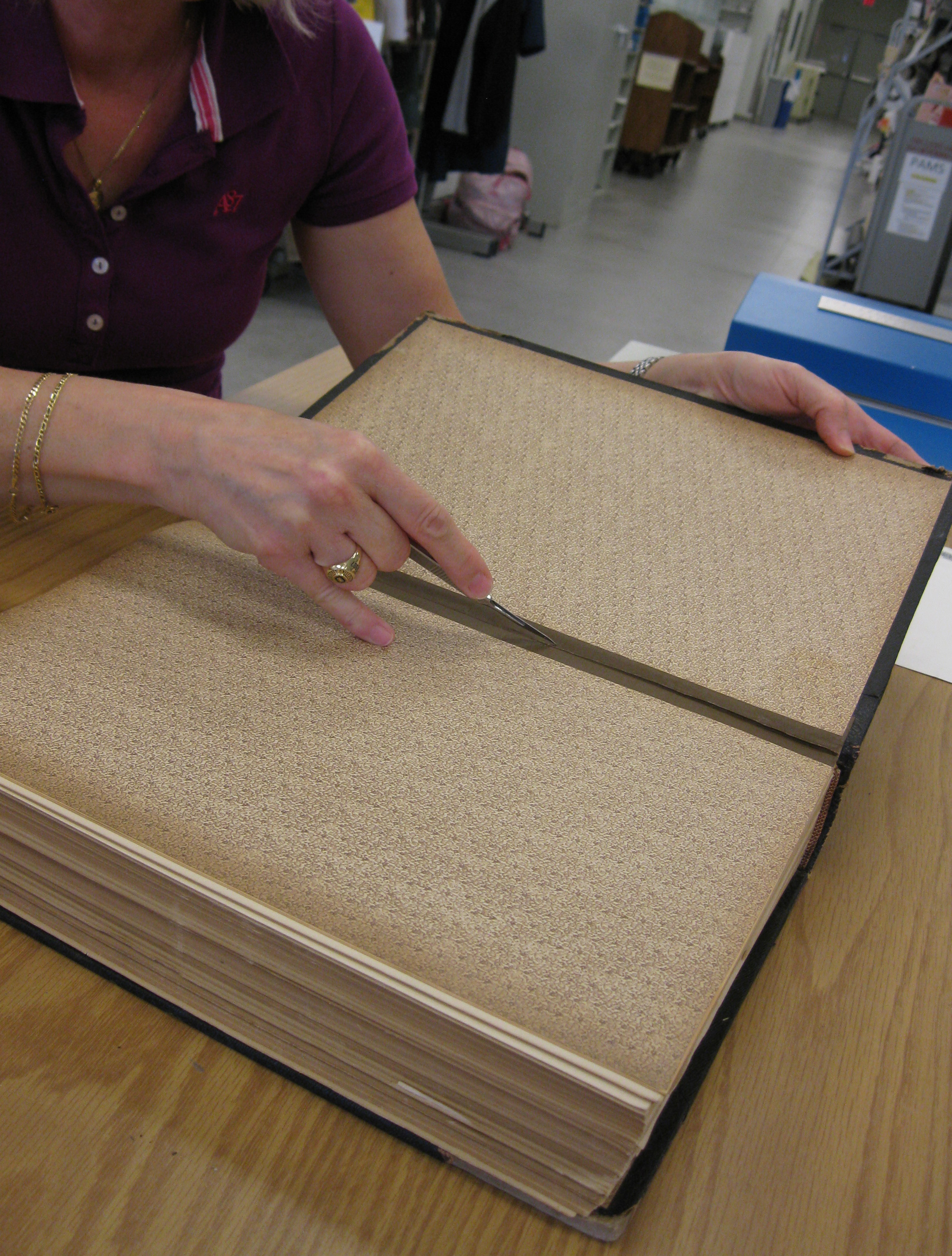
During our visit, we were able to watch Conservation Assistant Brenda Goodwin begin the careful work of deconstructing the volume in order to begin rebinding it with a new spine and casing. Below, an overview of the process through pictures:
With an x-acto knife and a steady hand, Brenda separated the textblock from the binding by slicing it out of the spine lining and endpapers.

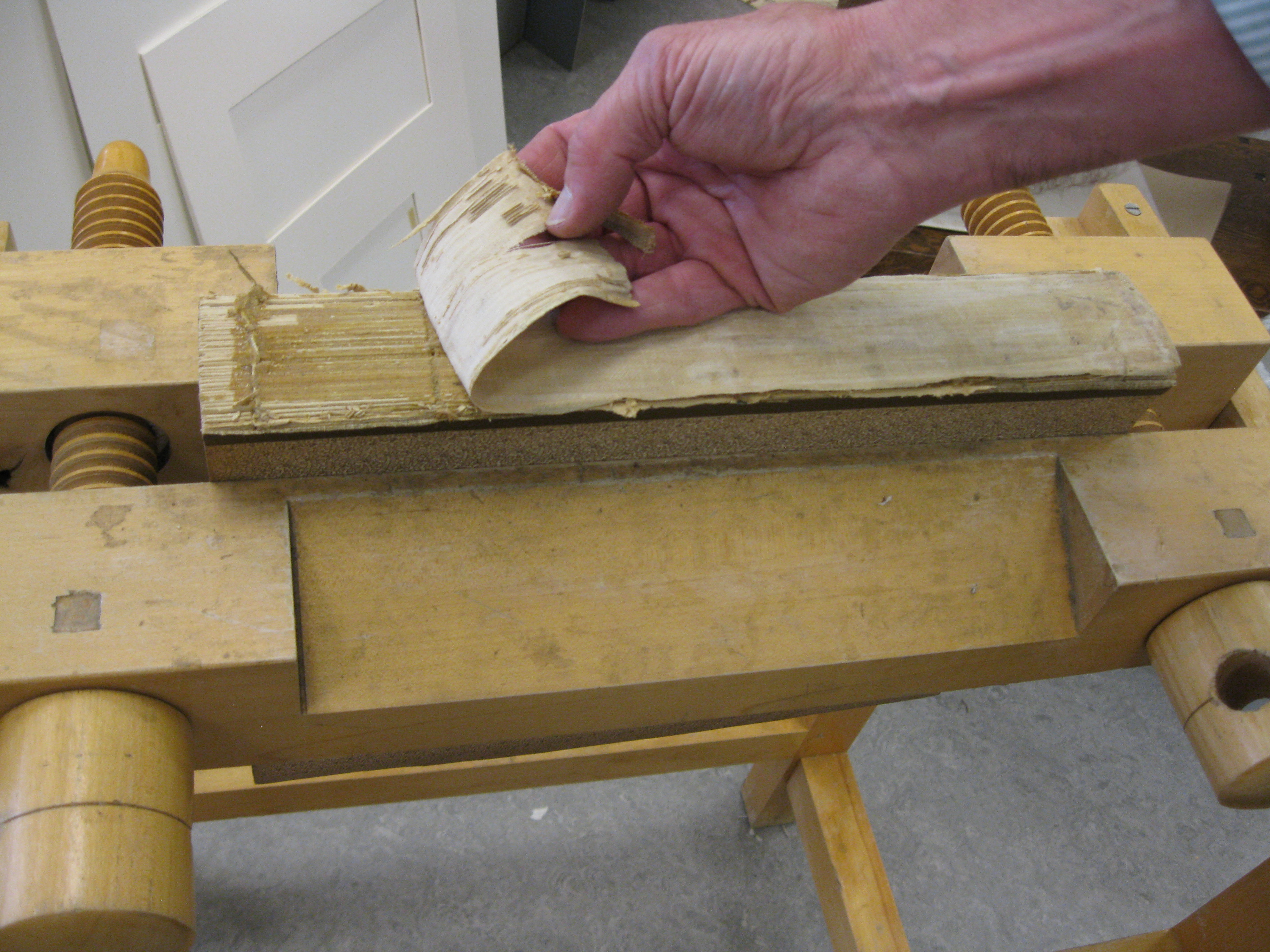
The text block is then placed in a vertical book vice (lying press) to hold it steady, while Brenda cleans the old spine off. Because of the strength of the old glue and brittleness of the paper, a softening agent is applied to the spine in order to more easily scrape away the old adhesive. Once the spine has been cleaned and exposed, a new cloth spine lining is applied.


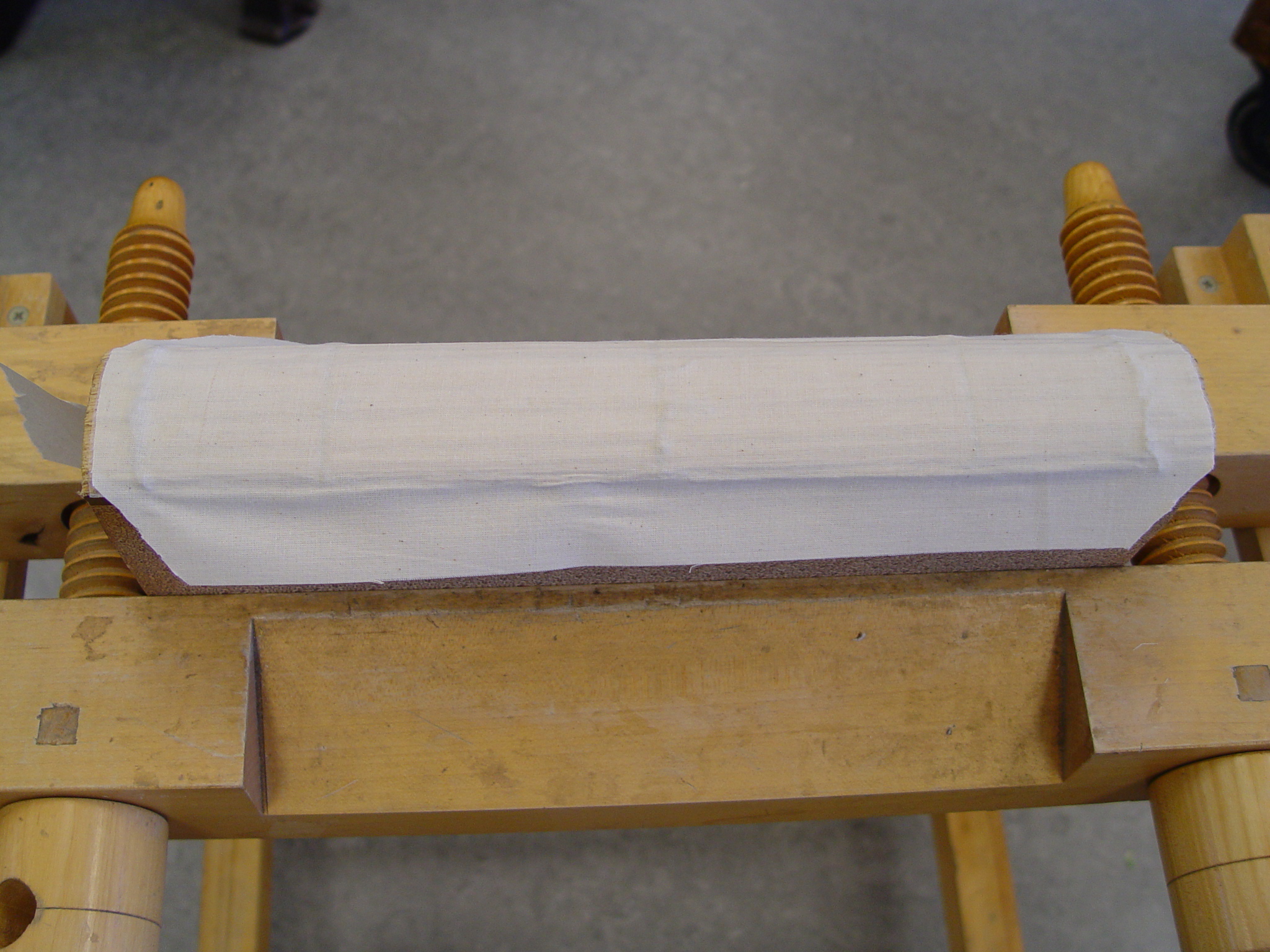
The loose sections from the volume, pictured earlier, are then re-sewn back into place through the new spine lining as seen below. Back in the vice, endbands chosen to match the original format as well as a hollow tube lining is then attached to the spine.


New endpapers are then attached and trimmed down, and the textblock is ready to be glued into its brand new case. The case has been made to the precise measurements of the original binding, with dyed book cloth and a fresh label to replicate the old one.


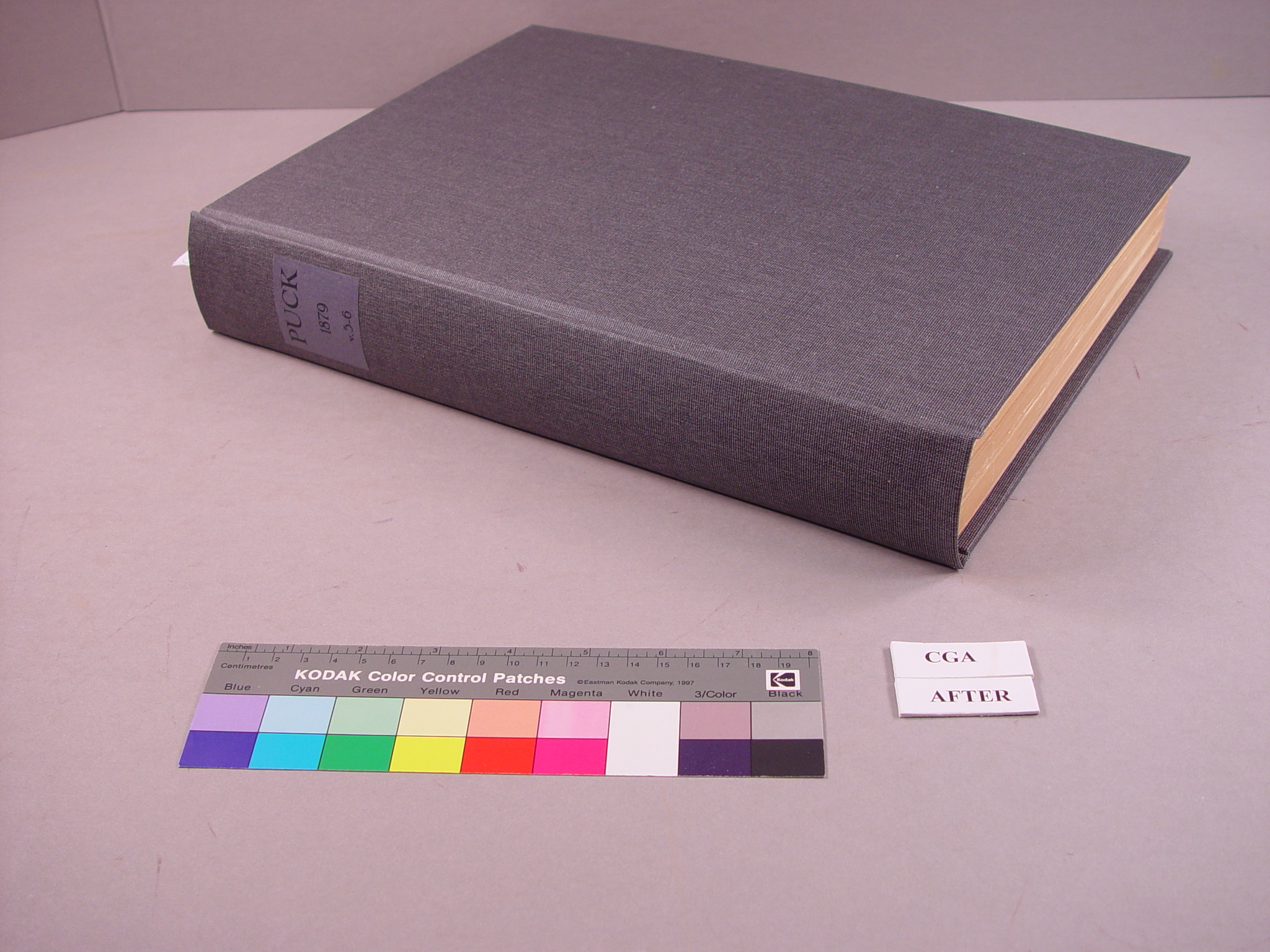
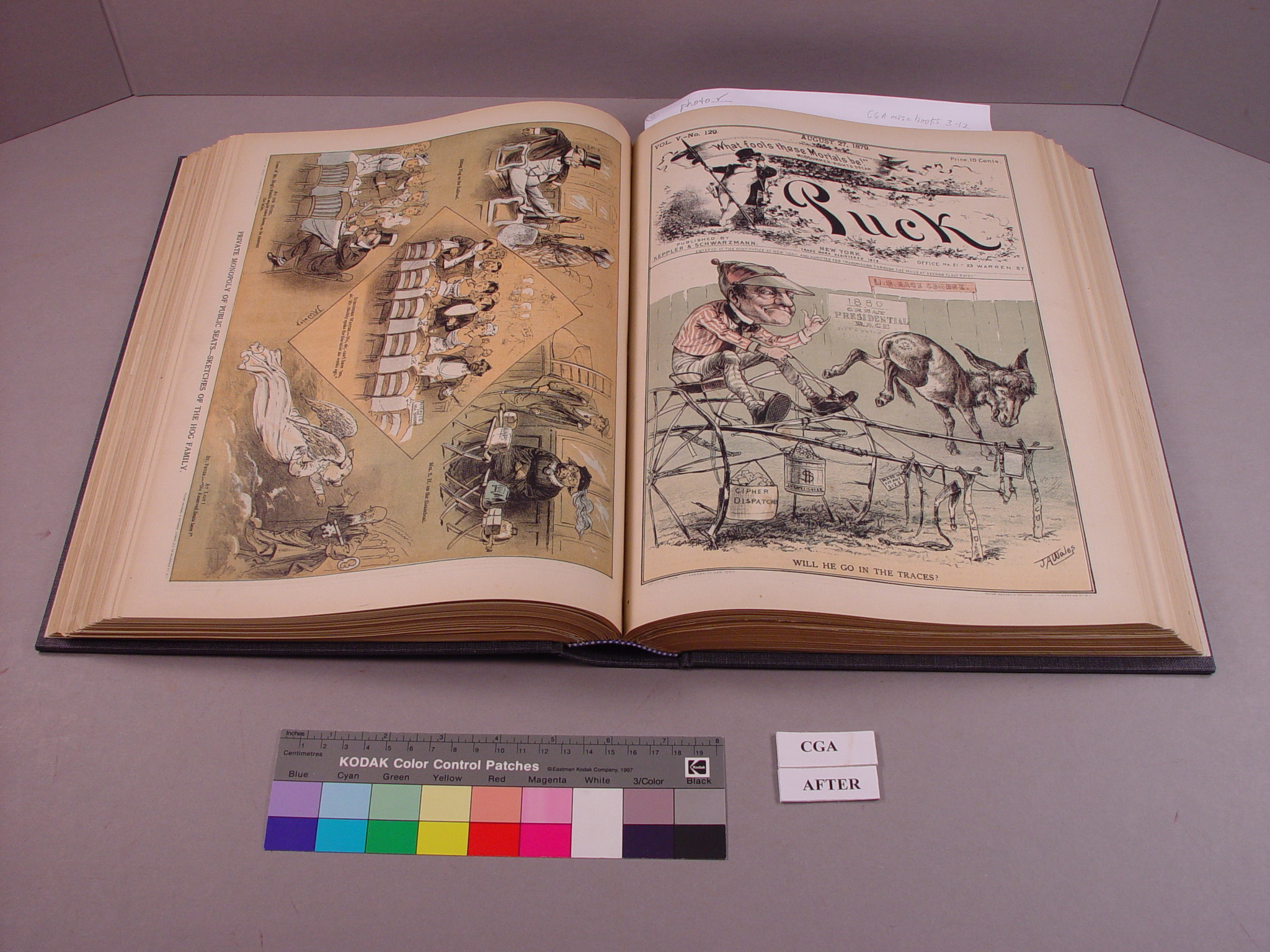
Once the adhesive has dried and the book has been pressed, voila! We’re left with a brand new version of the same old book, ready to be read without worry of further damage. Below, the finished volume, and a spread from the J.A. Wales cover of Puck V. 5, No. 129.
We are so thankful to have the help of Harry, Brenda, and the rest of the Preservation & Reformatting crew! They are always hard at work on our materials, so we look forward to posting more process updates as they continue to revitalize our collection.



Recent Comments