

Sebastian Martinez was one of two recipients of the 2026 Lucy Shelton Caswell Research Award. Martinez is from El Paso, Texas and is currently working on obtaining a Ph.D. in Rhetoric and Composition from The University of Texas at El Paso. He received an M.A. in Rhetoric and Writing Studies from UTEP in 2022. Sebastian began teaching in 2021 and currently works as an assistant instructor of First-Year Composition at UTEP. Sebastian’s current areas of research interest include comics studies, visual rhetoric, writing pedagogy, and digital rhetoric.
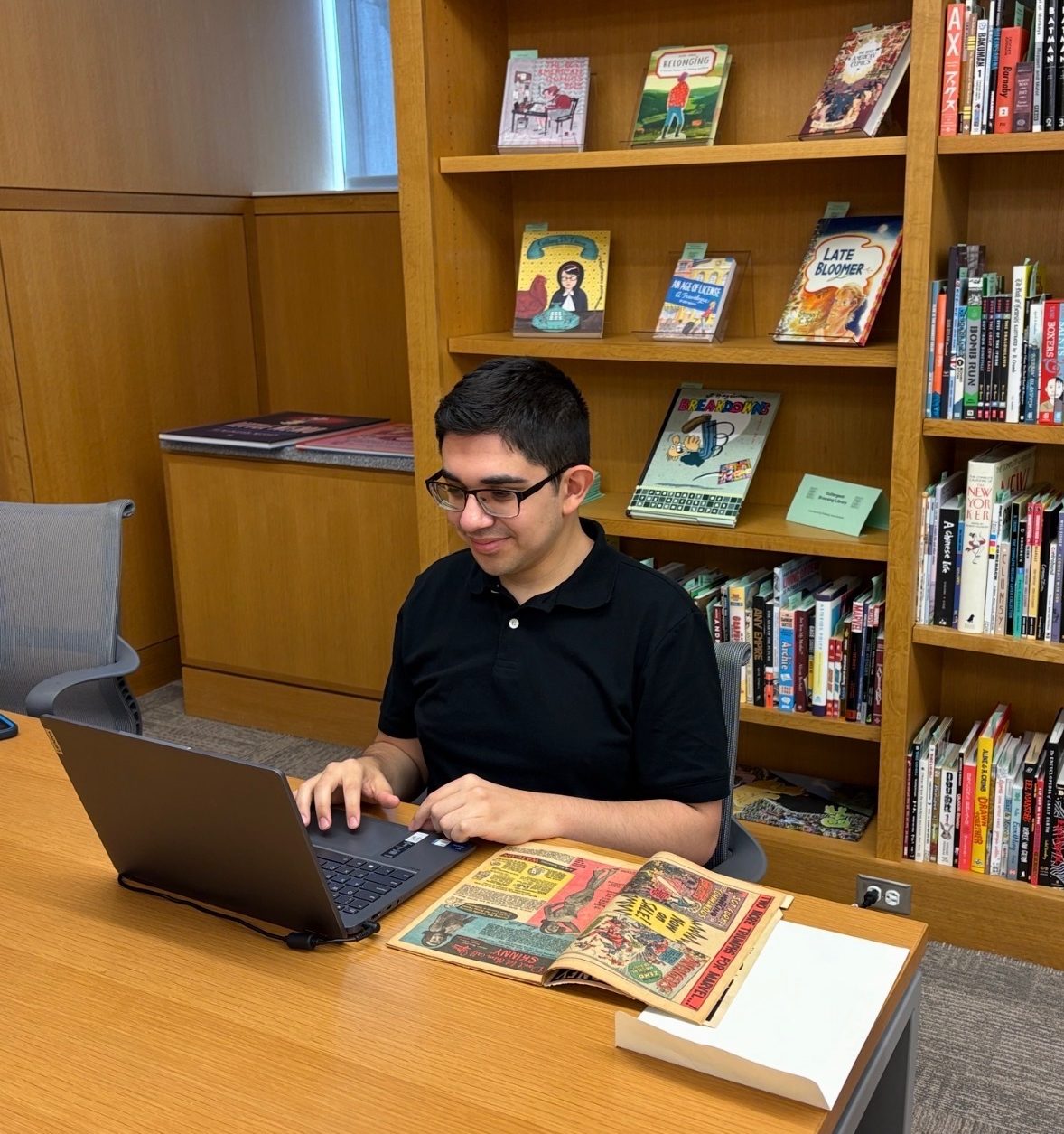
Sebastian Martinez in the Lucy Shelton Caswell Reading Room
This past summer, I had the wonderful opportunity to begin my research project, “Novelty Product Advertisements in Comic Books: Rhetorically Reflecting 1960’s and ‘70’s American Values and Fears” at the Billy Ireland Cartoon Library and Museum, having been awarded the 2026 Lucy Shelton Caswell Research Award. My research consisted of coding for the frequency of various novelty product advertisements in 1960’s and ‘70’s superhero comic books. The Billy Ireland Cartoon Library and Museum was the perfect location for conducting this research because of their comprehensive library of comic books from the 1960’s and ‘70’s. While all the comic books I looked at are available digitally, many of these reproductions have removed the advertisement pages from the original print runs, making the collections maintained by the BICLM invaluable.
For this research project, I requested to look at a range of ‘60’s and ‘70’s comic book issues from the following popular superhero series published by DC Comics and Marvel: Action Comics, Batman, Justice League of America, The Amazing Spider-Man, Fantastic Four, and X-Men. In total, I was able to work with 332 individual comic book issues across the six respective series. Further beneficial was that many individual issues within the BICLM’s collection were collected in sequential order, so patterns were easier to identify from issue to issue. Additionally, many of the issues were very well-maintained despite their age, making it very easy to flip through and distinguish between pages.
-
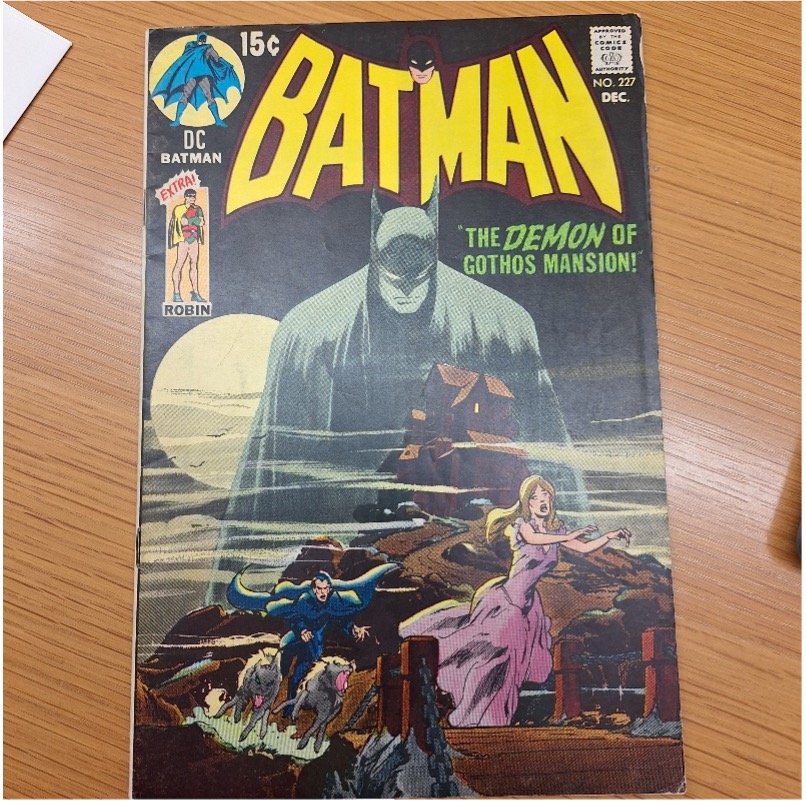
- Batman #227, 1970
-
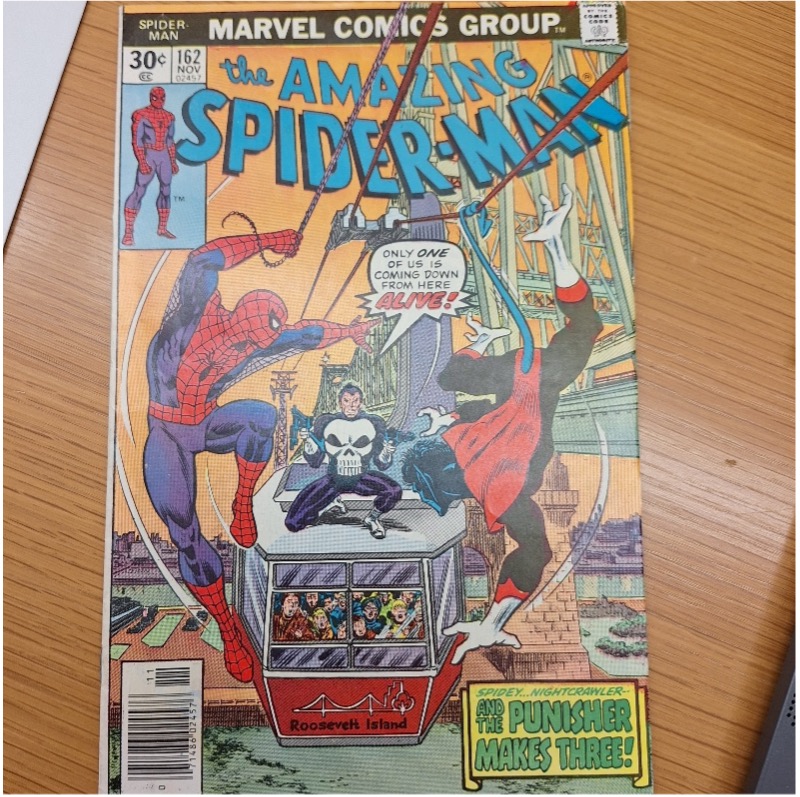
- Amazing Spider-Man #162, 1976
As far as my coding process went, I essentially developed six individual spreadsheets per comic book series with a list of the novelty products I expected to come across. Since my coding was centered on the frequency for which product advertisements appeared, for the most part, I pre-selected which products to look for, including: X-Ray Specs, Hypno-Coins, Voice Throwers, Fighting Secrets, Fitness Programs, Kung-Fu guides, Karate guides, Jiu-Jitsu guides, Ketsugo guides, Toy Soldiers, Mini Pistols, Mini Cannons, Nuclear Submarines, Spy Scopes, Spy Watches, Spy Cameras, Spy Pen Radios, Disguises (Wigs & Bald Caps), See-Behind Glasses, BB Guns, Toy Planes, Toy Tanks, Toy Battleships, Invisible Inks, Axe and Knife sets, Secret Microphones, Military Badges, Camouflage Paint and Too Skinny? Tablets. As is probably expected based on their titles, many of these product advertisements have much to say regarding American culture during the ‘60’s and ‘70’s, specifically reflecting attitudes toward the Cold War and the military, gender roles, and power/control. Once I had my list of products to look for, I simply entered numerical data for how many times a specific product appeared per comic book issue on my spreadsheets. In reflection of this coding process, I can say with near certainty that the advertisements for the X-Ray Specs and the various Fitness Programs were by far the most popular, accruing many appearances across every series, and even multiple times per individual issue (as much as eight times in a single issue alone!).
-
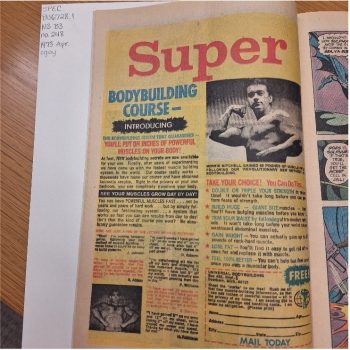
- One of many Fitness Program advertisement pages from Batman #248, 1973.
-
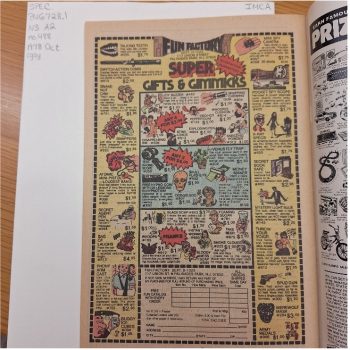
- Novelty products advertisement page from Action Comics #488, 1978.
-
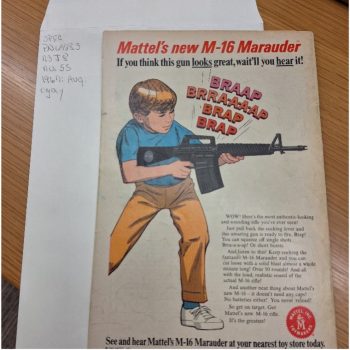
- Mattel M-16 Model Gun advertisement from Justice League of America #55, 1967
-
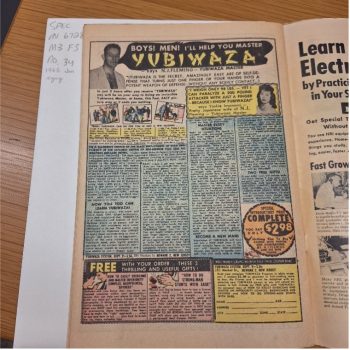
- Fighting secrets instructional advertisement from Fantastic Four #34, 1965
This project speaks to my research interests in visual rhetoric, rhetorical circulation, sociocultural rhetoric and, of course, comics studies. Comics have a long history of reflecting the culture and time period from when they were produced, and the same is true of the advertisements within those comics. I am very interested in unpacking what American ideals and anxieties were represented through these product advertisements with the benefit of hindsight and in postulating the potential impact of having engaged with these advertisements repeatedly across months and years if one were consistently reading any of these comic book series at the time they were originally published. Further, I’m interested in uncovering what became of many of the product advertisers, since many of these novelty products are well known for not living up to the promise of their claims and illustrations. Thus far, I have yet to unpack all of what can be said from these advertisements, though this is the next step of this research project. I plan on gathering all of my data and creating a series of digital humanities data visualizations, to accompany a research article detailing my final arguments and conclusions. Additionally, I plan on incorporating some of what I’ve learned from this project into the First-Year Composition courses that I teach at the University of Texas at El Paso, as the advertisements themselves serve as strong examples of visual rhetoric and signaling pressing issues in America at the time of their creation.
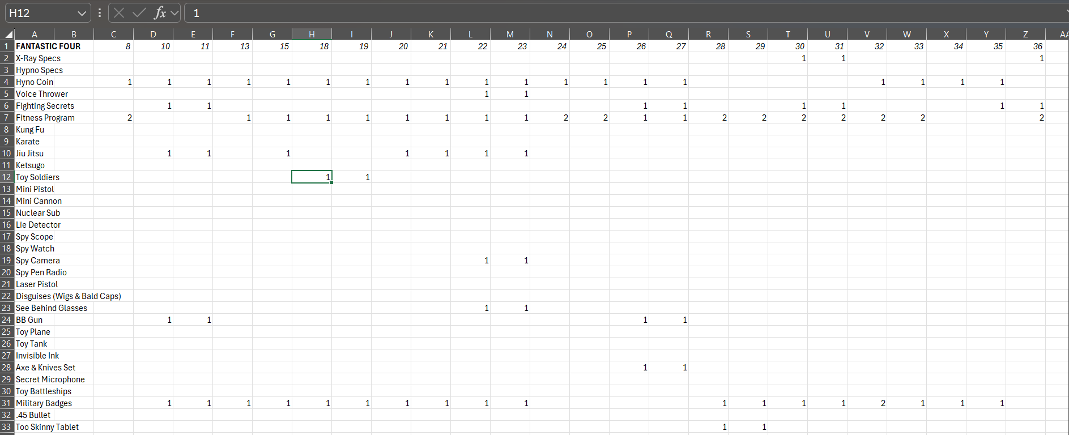
Some of my coding spreadsheet for the novelty product advertisement appearances from Fantastic Four.
I want to extend my gratitude once again to the Billy Ireland Cartoon Library and Museum, Susan Liberator, and the BICLM Reading Room staff for their assistance while working on this project. Now that my data collection has concluded, I know what a monumental task it must have been procuring all 300+ comic books for me to flip through and have ready for my visit. Thank you very much!!


Recent Comments