

SAVE THE DATES!
We have an exciting spring ahead, with a full schedule of exhibits and events to look forward to. All of the following programs are FREE and open to the public. Stay tuned for more information on each event as they approach, and be sure to follow us on Facebook, Instagram, and Twitter for regular updates. We hope to see you soon!
Cartoon Couture: Reception and Costume Party!

Friday, February 9
5 – 7pm
Will Eisner Seminar Room & Museum Galleries
You’re invited to a fashion-forward celebration and reception for our current exhibit, Cartoon Couture! This exhibit features original cartoon art as well as costumes from the OSU Historic Costume and Textiles Collection, and traces the history of fashion in cartoons and comics dating back through the 1700s.
We’ll be celebrating in style, and the costume theme is DECADES! Break out your bell-bottoms, fedoras, letter jackets, flapper dresses and more, and join us for:
- Light refreshments and a cash bar
- A paper doll-making activity
- Curators’ tour at 6 pm
Lynne Miyake, “Gender Flipped, ‘Cutie,’ (Non)Eroticized Subject/Objects of Consumption and Production: The Manga Comics Tales of Genji”

Wednesday, February 21
4 – 5:30 pm
Will Eisner Seminar Room
Written a millennium ago by Murasaki Shikibu, lady-in-waiting to Emperor Ichijō, The Tale of Genji is a story that has told many times over the centuries, in woodblock prints, novels, films, a symphony, and even an opera in English. It has appeared over 30 times in one of its newest iterations—Japanese comics—since the 1970s.
LYNNE K. MIYAKE, Professor of Japanese and Asian Studies at Pomona College and Core Faculty of the Intercollegiate Department of Asian American Studies at the Claremont Colleges, presents ways in which these comics, or manga, remediate male and female gazes, gently add humor, eroticize, gender flip, queer, and simultaneously re-inscribe and challenge heteronormative gender norms. “Pretty boy” heroes, dazzling, luminous (fe)male objects of desire, young men targeted “eye candy,” and more abound!
Presented by The Institute for Japanese Studies. Cosponsored by The Ohio State University Libraries, the Billy Ireland Cartoon Library and Museum, and by a U.S. Department of Education Title VI grant to The Ohio State University East Asian Studies Center.
Will Eisner Week: Ramzi Fawaz, “Legions of Superheroes: Multiplicity, Diversity, and Collective Action Against Genocide in the Superhero Comic Book”
Thursday, March 1
4 – 5:30 pm
Will Eisner Seminar Room
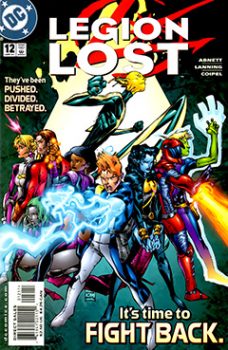
This talk explores how the speculative worlds of contemporary US superhero comics have addressed the problem of difference and human diversity through stories about the catastrophic threat of genocide. I focus on a classic storylines–The Legion of Superheroes’ Legion Lost from 1999–that depicts a diverse teams of teenage superheroes collectively struggling against the genocidal actions of a former ally and colleague. I show superhero comics in the late twentieth century visually presented multiplicity and heterogeneity–in the figure of the superhero team as a kaleidoscopic gathering of ethically motivated but widely divergent actors–not only as a quality of human difference but a set of values that actively work against forms of genocidal violence. In Legion Lost, the desire to obliterate or extinguish life that is different than oneself is linked to the experience of social isolation from friendship, camaraderie, and collectivity–it is loneliness, the narrative argues, that facilitates xenophobia and fear of difference, and friendship and trust that dispels them. Ultimately, I unpack how the visual and narrative conventions of American superhero comics offer fantasies of collective solidarity that exceed the demand for representational diversity that has so strongly shaped recent comics production, and have incredible utility in our political present.
Ramzi Fawaz is assistant professor of English at the University of Wisconsin, Madison. He is the author of The New Mutants: Superheroes and the Radical Imagination of American Comics (NYU Press, 2016). The New Mutants won the Center for Lesbian and Gay Studies Fellowship Award for best first book manuscript in LGBT Studies and the 2017 ASAP Book Prize of the Association for the Study of the Arts of the Present. His work has been published in numerous journals including American Literature, GLQ, Feminist Studies, Callaloo, and Feminist Review. He is currently co-editing a special issue of American Literature with Darieck Scott titled “Queer About Comics,” and co-editing Keywords in Comics Studies with Deborah Whaley and Shelley Streeby for NYU Press. His new book Queer Forms, explores the relationship between feminist and queer politics and formal innovation in the art and culture of movements for women’s and gay liberation. Queer Forms will be published by NYU Press.
Sponsored by Project Narrative
Will Eisner Week Research Forum
Thursday, March 8
4 – 7pm
Will Eisner Seminar Room
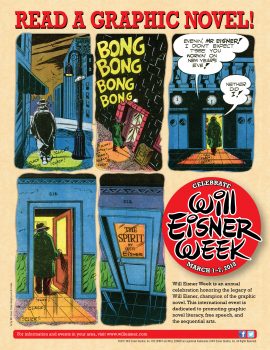
In honor of Will Eisner Week, visiting scholars Roy T. Cook and Mark Fertig will be joined by local presenters in a symposium devoted to recent comics scholarship.
Roy T Cook (University of Minnesota), “Multimodal metafiction in comics”
Mark Fertig (Susquehanna University), “Take that Adolf!: Comic Books During the Second World War”
Margaret Flinn (Ohio State University), “Popular Terroir: French Comics as Pastoral Ecocriticism?”
Rachel Miller (Ohio State University), “Plugs Pages: Women’s Mini Comics Networks of the 1990s”
Popular Culture Studies Program & the Department of English
Cartoon Couture: Paper doll workshop for kids!

Saturday, March 17
2 – 3:30 pm
Will Eisner Seminar Room
Paper dolls are a popular pastime in cartoon strips and comic books, giving young readers a chance to play “dress-up” and bring their favorite characters to life. In conjunction with our current exhibit, Cartoon Couture, kids aged 7-12 will have a chance to make their own paper dolls and clothing to take home.
This is a FREE workshop, but space is limited and registration is required. Email cartoonevents@osu.edu to register your child.
Looking Backward, Looking Forward: Contemporary Comics and Immigration

Tuesday, March 27
5:30 – 7 pm
Jean & Charles Schulz Auditorium
Cartoonists Khalil Bendib, Eric Garcia, Alberto Ledesma will discuss their work surrounding the topic of immigration, in conjunction with our current exhibit, Looking Backward, Looking Forward: U.S. Immigration in Cartoons and Comics. Book signing to follow.
Co-sponsored by Latinx Space for Enrichment and Research (LASER).
IJS Lecture: Mark MacWilliams, “Rethinking What’s Sacred about ‘Ano Hana’ Anime Pilgrimage”

Wednesday, April 4
4:30 – 6pm
Will Eisner Seminar Room
“Anime Pilgrimage” is a startling new spiritual phenomenon that is taking place throughout Japan. Visiting anime or a comic book (manga) related places is called “pilgrimage to the holy land” (seichi junrei) among contemporary anime fans. For my talk, I am looking at how this new form of pilgrimage is developing in a traditional sacred area, Chichibu in Saitama prefecture. Chichibu, located northwest of Tokyo, has for centuries been the destination of pilgrims traveling on the thirty-four temple pilgrimage route dedicated to the bodhisattva Kannon. In recent years, however, Chichibu has attracted a new type of pilgrim due to the popularity of the hit 2011 TV anime, Ano hi mita hana no namae o bokutachi wa mada shiranai (literally, “We Still Don’t Know the Name of the Flower We Saw That Day”), the story of which takes place in Chichibu. What is anime pilgrimage? What makes it sacred? Why would fans travel to a place that forms the backdrop of a cartoon fantasy? What’s the anime about anyway? Pondering these questions about Ano hana as part of the broader phenomenon of anime pilgrimage leads to the important question of whether the “sacred” is alive and well in contemporary Japan.
Mark MacWilliams is currently a professor of East Asian Religions at St. Lawrence University in Canton, NY. His interests and publications are focused primarily on contemporary Japanese spirituality—particularly, pilgrimage in all its forms, the Internet and spiritual life, and Japanese manga (and anime). His work most recently has gone into a whole new fields—how Shinto has been defined in the modern period and anime pilgrimage in Japan. He also serves as Executive Editor for the journal, Religious Studies Review.
Cosponsored by The Ohio State University Libraries, the Billy Ireland Cartoon Library and Museum, and by a U.S. Department of Education Title VI grant to The Ohio State University East Asian Studies Center.
Brazilian Comics with Luli Penna

Thursday, April 19
4 – 6pm
Will Eisner Seminar Room
Luli Penna is a Brazilian illustrator and cartoonist. She has contributed to a number of magazines, newspapers, and books, and is the author of the graphic novel Sem Dó (No Pity), a beautiful and tragic love story set in São Paulo in the 1920s. Following the time period of the story, Penna abandons speech balloons as an homage to silent films.
Sponsored by the The Department of Spanish and Portuguese and the Portuguese Graduate Student Organization at The Ohio State University.


Recent Comments