From Woody's Couch

Our Playbook on OSU History

Category: Student organizations (page 9 of 10)

Twelve Days of Buckeyes: A “Magic Mirror” of OSU history

(We’re still in the holiday spirit, so this post about OSU’s yearbook, the Makio, will open to the tune of “Santa Claus is Coming to Town:”)

It’s seen students when they’re sleeping

It’s seen them while they’re in class

The Makio has had photos of it all

But its time is about to pass
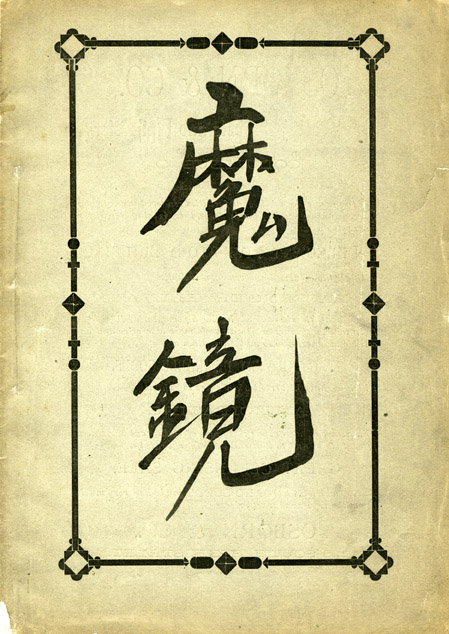
1880 Makio cover

After a day of classes and studying in 1878, three men discussed starting a collegiate annual for Ohio State. The three men were Sidney Short, John Ward and Willis Jones, and their initial idea became what we now know as the Makio.
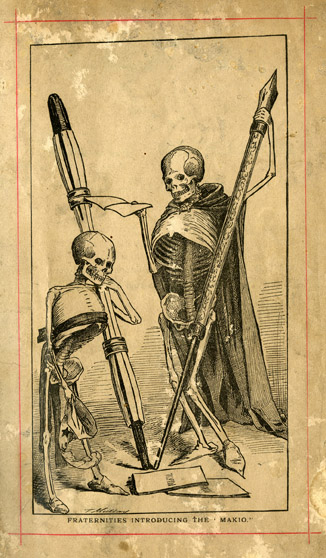
Drawing from 1882 Makio

Overseen by the two fraternities on campus, Phi Gamma Delta and Phi Kappa Psi, the Makio was worked on in secret and completed in the six weeks before commencement. The name Makio, meaning “Magic Mirror,” was translated from Japanese by Prof. Edwin Morse. Prof. Morse and Prof. Thomas Mendenhall collaborated in Japan on the study of such mirrors. The first issue, published in 1880, was 68 pages long, containing no photographs.

The Makio has been the subject of disputes among organizations on campus. In 1882, the Makio staff and the Lantern staff quarreled about it, and in 1883 the founding fraternities disagreed on allowing newly founded fraternities to participate in the publication of the Makio, resulting in two yearbooks being published. In 1896 the yearbook was known as The Scarlet and Gray, but in 1897 it returned to its original name. A junior class Makio Board was formed in 1906, taking over publishing responsibilities from the fraternities. The Makio Board progressed over the years allowing students from all classes to participate.
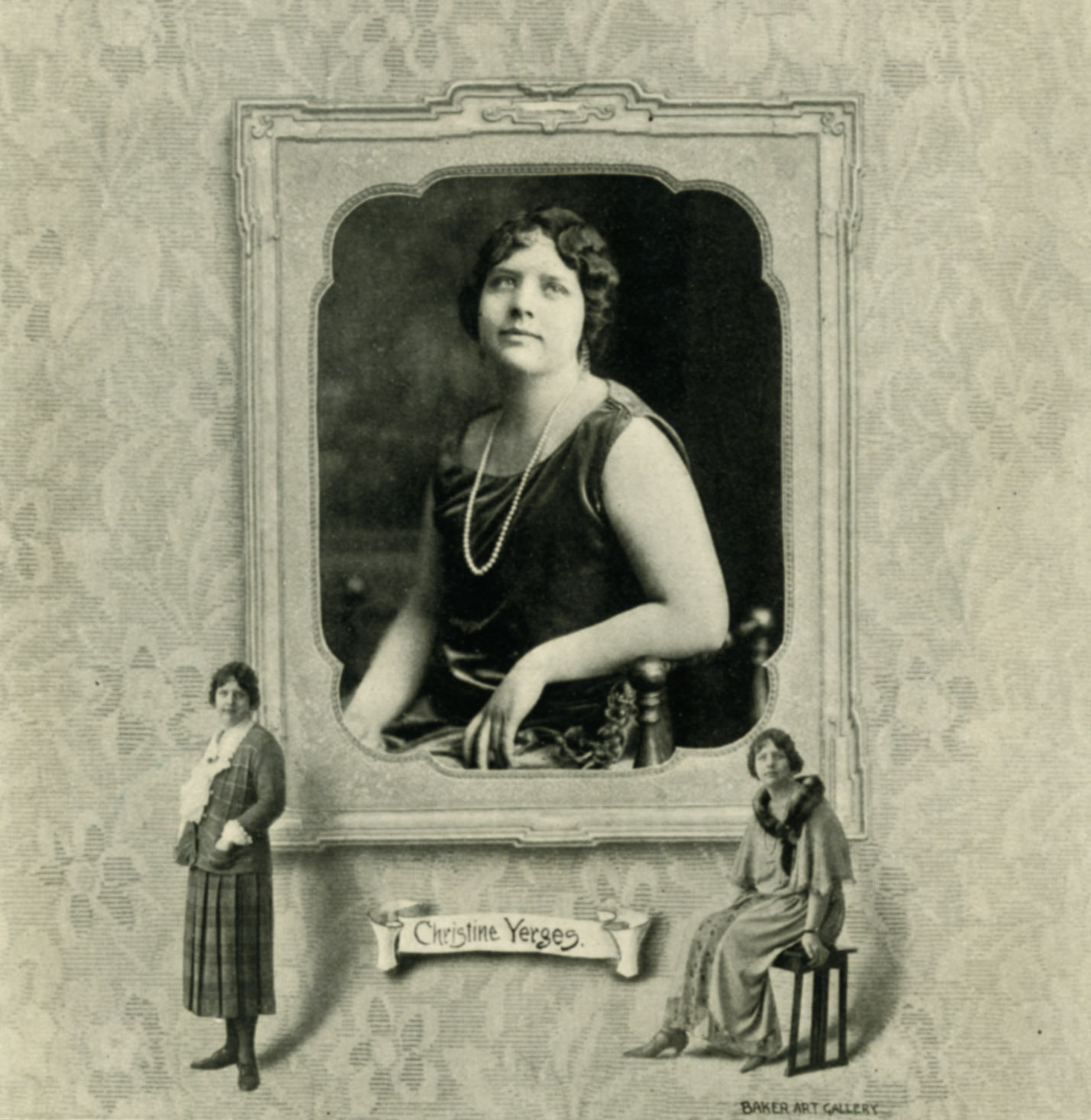
“Magic Mirror Girl”, 1923

The contents of the Makio have also evolved from the first publication. At first, the yearbooks focused on Greek affairs. Essays, satires and political cartoons were included as the popularity of the Makio grew. Photographs were first published in 1887 with the addition of color photos in 1920. Women were highlighted in sections such as “Rosebud,” “Magic Mirror” and Makio Queen when the student body voted for the prettiest and most popular girls on campus.  Audio recordings on vinyl records were included with the 1953 and 1959 Makios.

Since 1880 there have been several years the Makio was not printed. The 1881 issue was the first year the publication was skipped, but it was stopped altogether in 1995. Publishing restarted in 2000. As the article from The Lantern states, the Makio will once again cease to exist.
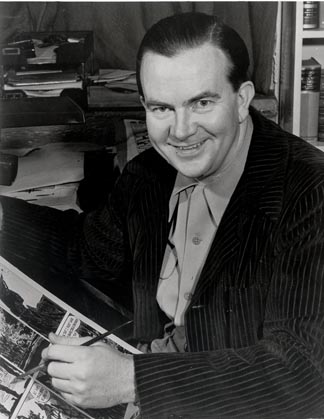
 

Bleeds Scarlet and Gray: Milton Caniff

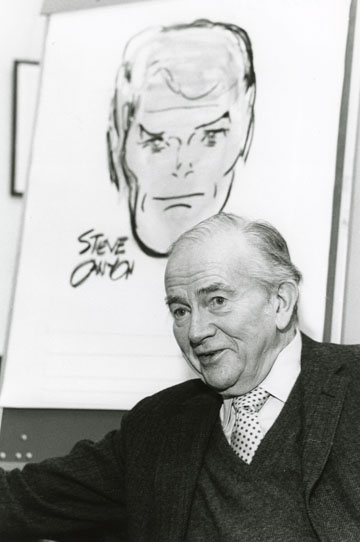
Milton Caniff, 1950

(Editor’s Note: This post is part of a series of profiles of life-long Buckeyes who have had a notable impact on the University. In other words, they bleed scarlet and gray.)

We’ve been talking lately about football season, and Homecoming, especially, which for alumni is always a great time to reconnect with other former students. One of OSU’s more famous alumni – and one of its most loyal – is Milton Caniff, sometimes known as the “Rembrandt of the comic strip.”

Caniff was born in 1907 in Hillsboro, Ohio, and he began drawing cartoons in grade school. One of his first professional jobs was at the Dayton Journal Herald. As an undergraduate at

Caniff in the Scarlet Mask show "Beau Kay", 1927

Ohio State he served as art director of the Makio and the Sun Dial, also creating football program covers and working as a cartoonist for The Columbus Dispatch. These projects also helped to fund his education.  Caniff was also a member of Sigma Chi, president of Strollers, and vice president of Scarlet Mask, a male acting troupe at OSU. He graduated in 1930 with a bachelor’s degree in Journalism. He later wrote that, “In my five years [at OSU], I have run up a debt I will never liquidate. But I shall try, even though there can be no price tag on brain surgery from within.”

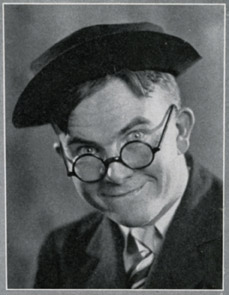
Caniff went on to become a world-renowned cartoonist. He is most famous for his two comic strips, “Terry and the Pirates,” and “Steve Canyon.” Caniff later said that he took inspiration for many of his “Terry” characters from real people he met at OSU, including his good friend Frank “Dude” Hennick (OSU class of 1925), who inspired the character of Capt. Dude Higgs. In 1947, Caniff launched “Steve Canyon,” a serial cartoon about an Air Force pilot for hire that was so popular, it spawned a short-lived television series in the late 1950s. Canyon wrote the strip for more than 40 years.

At the August 1974 Commencement, Caniff was awarded an honorary doctorate of Humane Letters and gave the Commencement address. Milton Caniff died on Easter Sunday in 1988 at the age of 81. He donated much of his work to the School of Journalism. His papers and artwork became one of the founding collections of the Billy Ireland Cartoon Library and Museum, named for Caniff’s good friend and fellow Columbus Dispatch cartoonist.

Filed by C.N.


The artistry of … football programs?

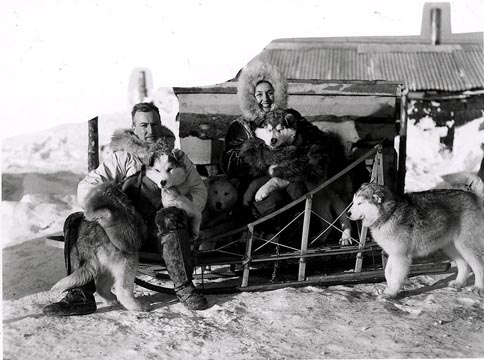
Fred Machetanz with his wife in Alaska, n.d.

With Homecoming season upon us, we decided to showcase the artistry of some of our old football program covers. Even better, some of the best were drawn by OSU alumni. One such artist was Fred Machetanz, an OSU alum. Between 1929, when he was still an undergrad, and 1942, Machetanz drew 37 football program covers.

Machetanz was born in Kenton, Ohio, in 1908, and he graduated from OSU with his bachelor’s degree in 1930. He earned a master’s degree in Fine Arts in 1935. He was also a member of Phi Kappa Psi, Scarlet Mask, and University Players.

Immediately after receiving his second degree, Machetanz went to visit his uncle in Alaska for short vacation. He loved the area so much, though, that he became a permanent resident, basing his artwork on the various scenes and people he saw. Shortly after arriving, he began making sketches, and he decided to illustrate a children’s book. He went to publishers in New York, only to be told that they wanted illustrations for a book about sky scrapers—if he wanted to do a book on Alaska, he would have to write it himself. Machetanz ended up publishing “Panuck, Eskimo Sled Dog,” the first of several books published for children about Alaska.

He served in the Navy during World War II, ending his service as a lieutenant commander in the Aleutian intelligence detail. He eventually made his home in Alaska, although he and his wife travelled the “Lower 48” extensively, showing documentaries and lecturing about their home state. Eventually, Machetanz became a full-time painter. He was awarded an honorary doctorate of Humane Letters at Ohio State’s Commencement ceremony in March 1984. He died at the age of 94 in 2002.

Filed by C.N.

To see some of the old football programs, go here: https://kb.osu.edu/dspace/browse?value=Ohio+State+University.+Athletic+Department&type=author

You can find more football cover art on our web site:  https://www.flickr.com/photos/ohio-state-university-archives/sets/


Older posts Newer posts