From Woody's Couch

Our Playbook on OSU History

Category: Professors (page 14 of 14)

Bleeds Scarlet and Gray: James E. Boyd

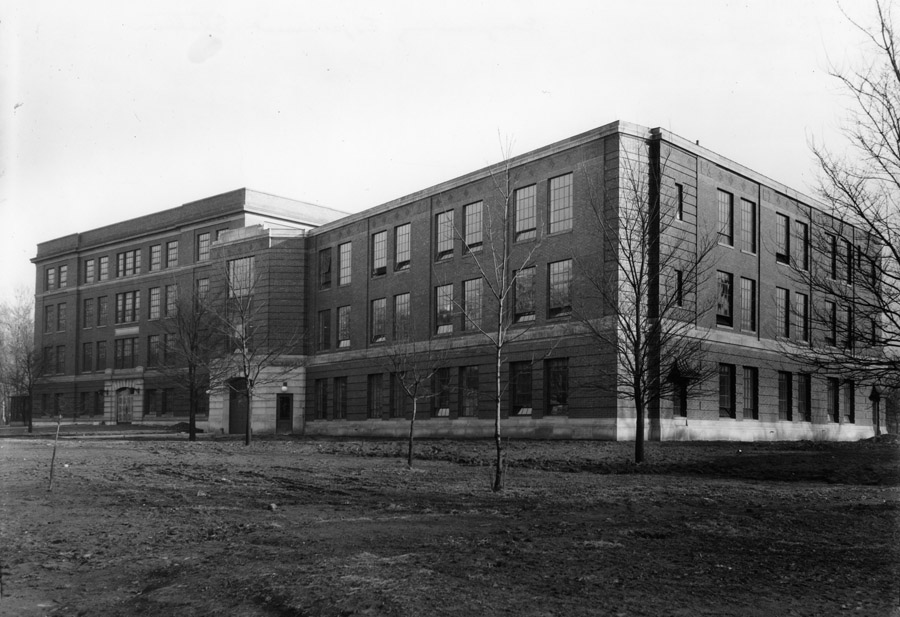
Boyd Lab (formerly known as the Highway Testing Laboratory), 1933

With progress comes change. As another Ohio State building falls to make room for a more modern version of itself, we wanted to remind everyone of the legacy behind Boyd Laboratory.

Completed in 1933, the building was the home to the Department of Engineering Mechanics. Its eponym was created in 1964 for the former chairman of the department, James Ellsworth Boyd.

James E. Boyd, n.d.

James “Jimmie” Boyd can be described as an Ohio State man. Boyd attended OSU from 1887-1891 earning his bachelor’s degree. Over the next forty-five years, except for a brief leave of absence in 1895-96 to study at Cornell for his Master’s degree, Boyd taught in various departments including Physics, Mathematics and Engineering Mechanics. His teaching style was described as strict but fair. Demanding students sit erect with both feet on the floor and that they knew their multiplication tables instead of depending on a slide rule were a few of more strict rules, but he was also known to change a grade if a student presented an interesting solution to a problem they misread.

Coming from a small farm in Muskingum County, Boyd stayed true to his small town roots. Even with his widely used textbooks, Strength of Materials and Mechanics, Boyd’s focus was on teaching. In 1938 Boyd received the Lamme medal, an award bestowed for outstanding engineering achievement. He then refused any honorary degrees from the university. Along with his work in the many scientific departments, Boyd was an alumni member of the Athletic Board, first secretary of the Entrance Board, and during World War I worked with the Bureau of Standards in Washington on airplane struts. While Boyd was widely known on campus for his distinctive goatee and powerful voice, his namesake is no longer a part of our landscape.
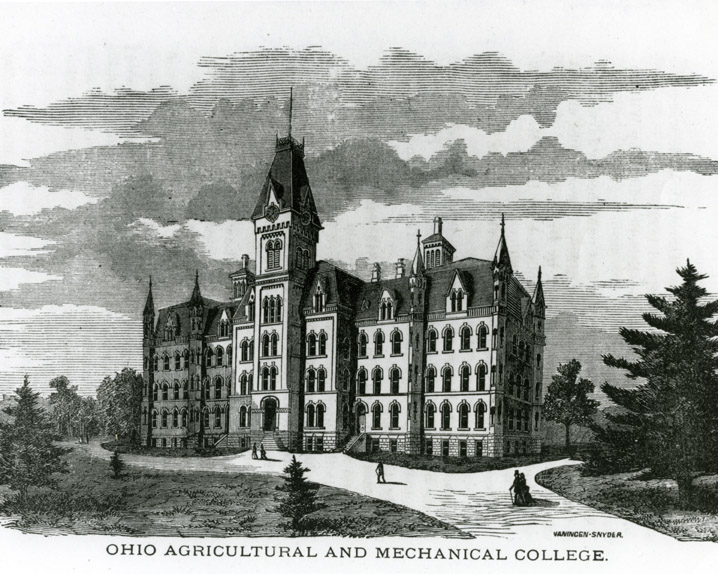
From our humble beginnings: Founder’s Day

University Hall engraving, 1873

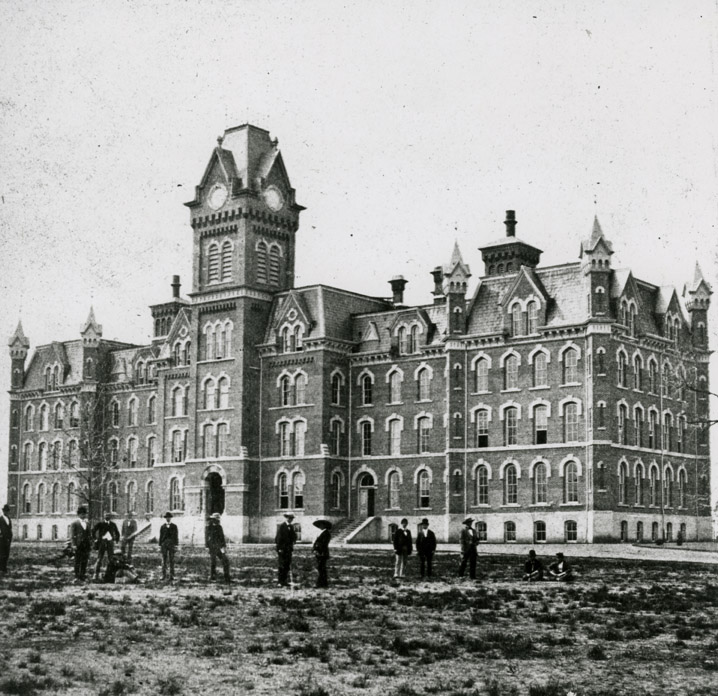
Nearly 140 years ago, the Ohio Agricultural and Mechanical College opened its doors.

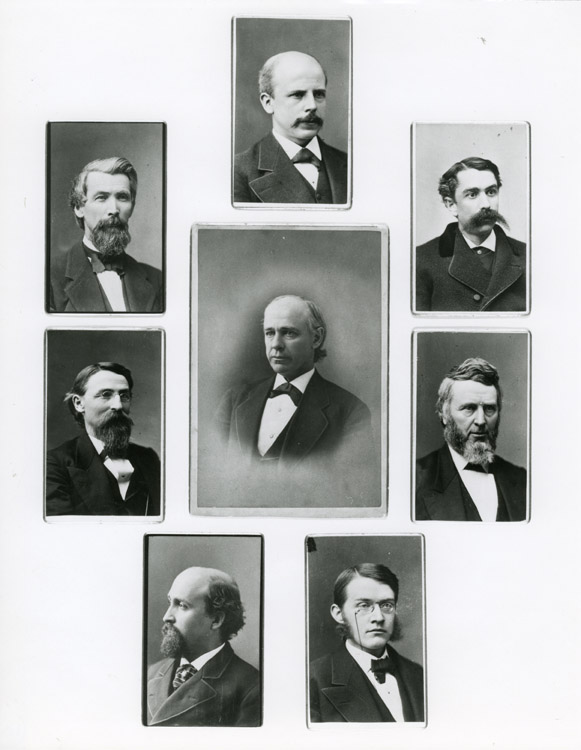
On September 17, 1873, seven faculty members greeted the roughly two dozen students who showed up to get a college degree. (Reports vary between 17 and 25 on how many students there actually were.) The college’s sole building—University Hall—was still under construction, with an unfinished roof, no interior doors, and no more than a few benches for students.

There was no formal opening ceremony, nor a dedication. Therefore, it is not surprising that its opening went mostly unnoticed. However, one Ohio newspaper did write, perhaps a bit prophetically, “They say a small beginning makes a good ending.” Several years later the college changed its name to The Ohio State University, and the rest is history, as they say.

First Faculty composite, 1873

Daily Ohio State Journal, announcing opening of college, September 19, 1873

University Hall, May 1874


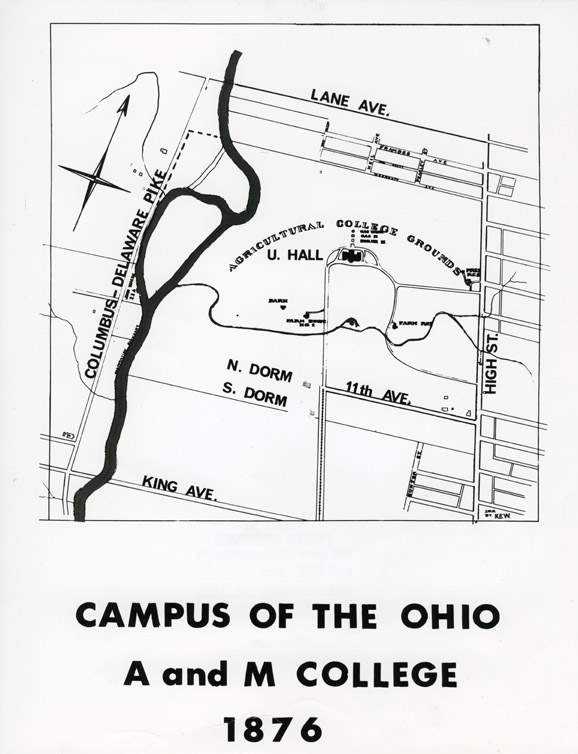
1876 Campus map


Bleeds Scarlet and Gray: Joseph Bradford

(This is the first entry in a series of profiles of life-long Buckeyes who have had a notable impact on the University, in other words they bleed scarlet and gray.)

When the University’s Board of Trustees decided on Aug. 2, 1911, to hire the University’s first-ever architect, they didn’t have to go far to find him: Joseph Bradford, referred to as the “grand old man of the faculty,” is an example of a life-long buckeye.

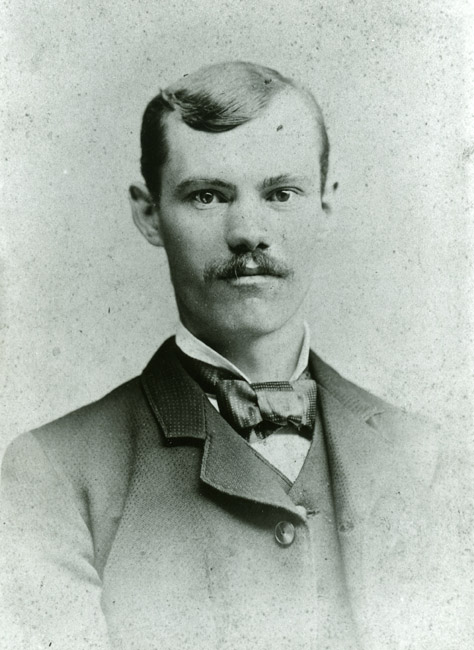
Joseph Nelson Bradford, c1883

Joseph Nelson Bradford, senior portrait, 1883

As a student of the University, Bradford was a member of the first marching band (then referred to as a military band). He organized and directed a fife and drum corps for the University’s military training program, which a year later incorporated brass instruments and became the brass band that we have today. He also prepared illustrations for some of President Edward Orton Sr.’s geography research. He graduated from Ohio State with a degree in Mechanical Engineering in 1883.

It is ironic that many of our best teachers never set out to teach: Bradford was a draftsman with the Pennsylvania Railroad when he was asked by the College of Engineering to organize a course in engineering drawing, which he declined as he did not want to be an instructor. Nevertheless, the Board of Trustees named him an instructor in mechanical and freehand drawing in 1885, with a salary of $1,000 a year. Whether he was happy at that moment is unknown, but he took the post. As a member of the faculty, he taught engineering drawing and architecture, and pioneered instruction in photography, with the first course in “picture-making” offered in the United States at OSU in 1890.

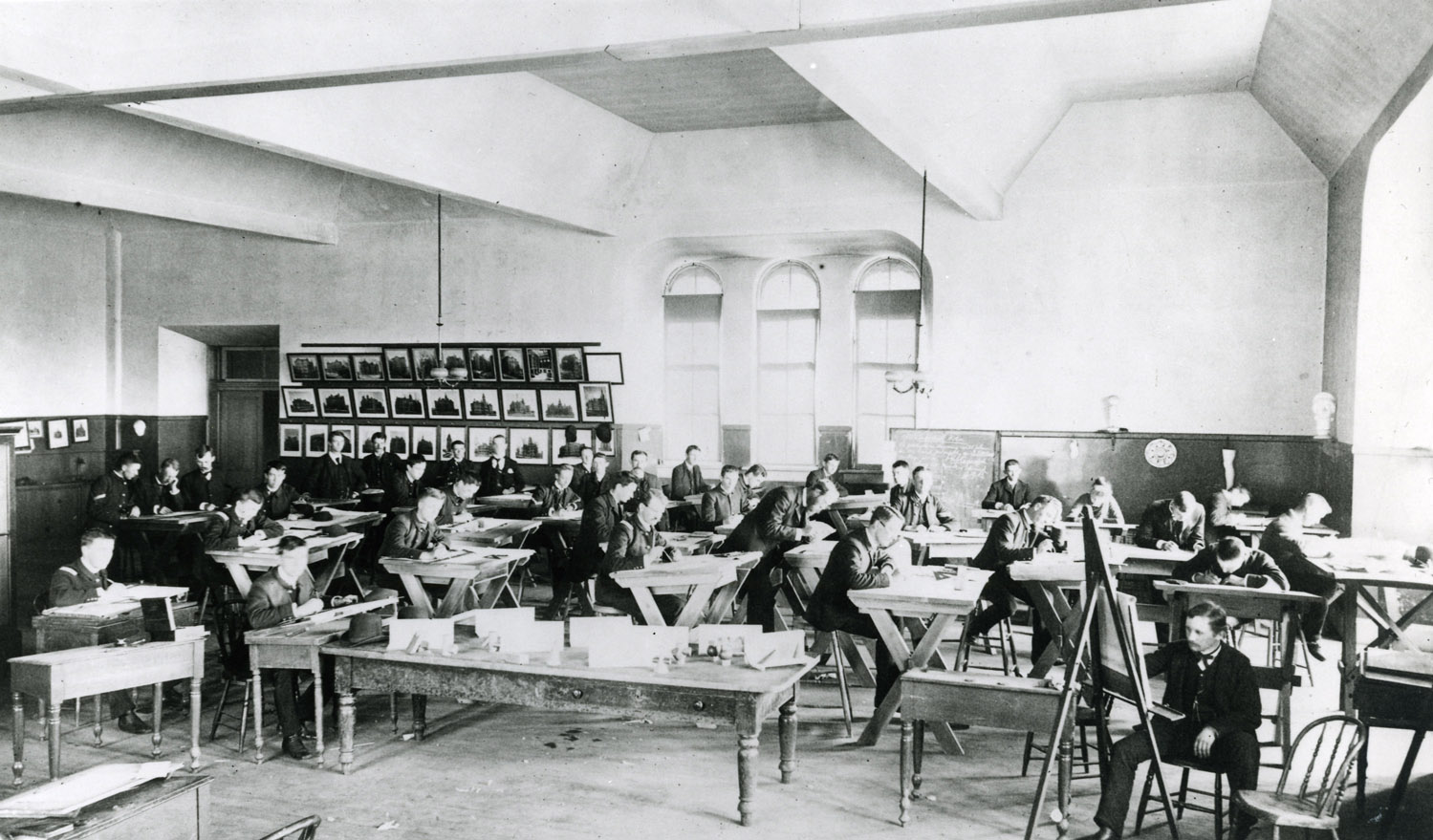
Engineering Drawing Class taught by Joseph Bradford, 1889

Bradford taught this Engineering Drawing Class in University Hall, 1889 (He appears in the rear left of this photograph.)

Joseph Bradford was named University Architect on Aug. 30, 1911, and he served in that capacity until his retirement in 1929. It is much of his work that we see today as he not only designed many buildings but planned the location of many future buildings he never saw built, with the goal of keeping all of a college’s buildings together. As University Architect, he oversaw the construction of forty new buildings, including Campbell, Derby, Hamilton, Lazenby, Lord, Pomerene, and Mack halls, the McCracken power plant, the Women’s Field House, Starling-Loving Hospital, and the Ohio Stadium. He also created the first accurate map of campus.

Campus Map from 1888, drawn by Joseph Bradford

Campus Map from 1888, drawn by Joseph Bradford

At the time of his retirement he had served the University for 48 years; he went on to compile a photographic history of the University and was named a professor emeritus in 1933.  (He also created a collection of hand-colored glass slides from University photographs.  A sampling of the collection has been digitized and can be found on the Photo Archives web site.)  He died in 1944.

filed by C.N.

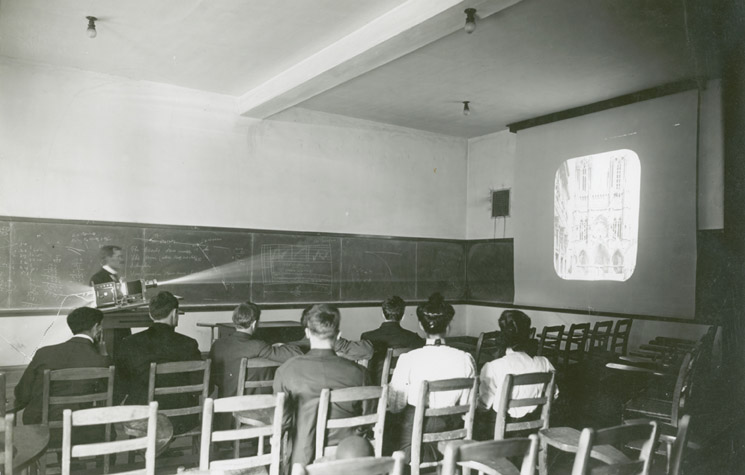
Architecture History Class, 1895

Bradford is shown here teaching a History of Architecture class using the first electrical lantern slide projector at OSU. This class was held in Hayes Hall, 1895

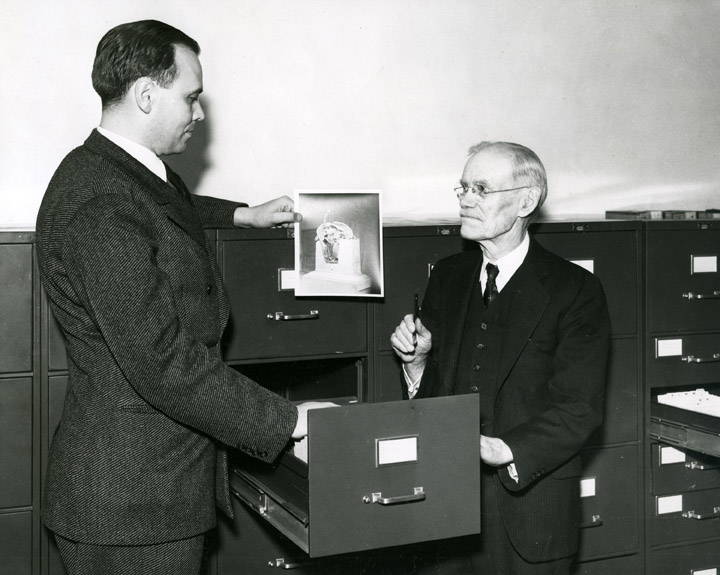
Joseph Bradford and F.W. Davis in Photo History vault, 1940

Joseph Bradford and F.W. Davis in Photo History vault, 1940

Newer posts