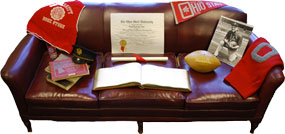
From Woody's Couch

Our Playbook on OSU History

Category: Frozen Friday (page 7 of 10)

Frozen Fridays: ‘K’ is for Konter!

This blog post is part of the Frozen Friday Series, an A-Z journey of the Polar Archives.  Each week, we will feature some aspect of the history of polar exploration with a blog post written by our student authors.

A life in the Antarctic is a life most difficult. Penguins spend every moment of their lives fighting the conditions, beating the worst nature can throw at them, all with the singular purpose of surviving just long enough to successfully produce the next generation. That generation, in turn, does the same. Penguins and other Antarctic animals have not one moment to spare.

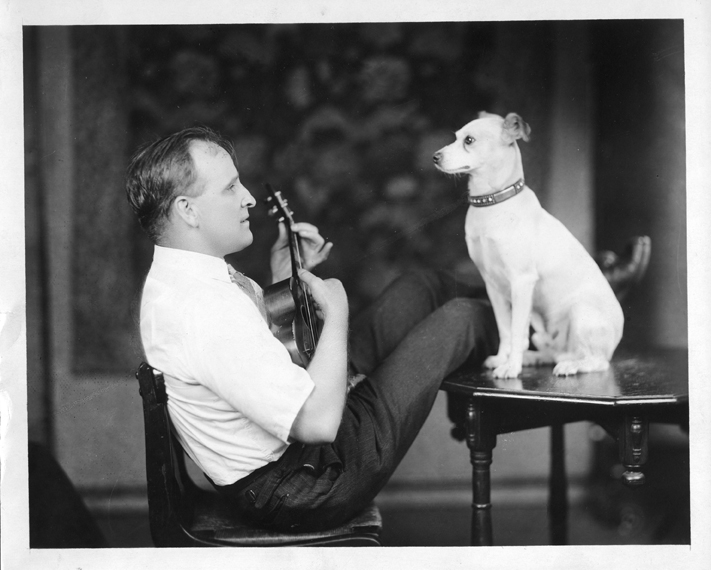
‘Ukulele Dick’ and his famous
instrument.

Humans, on the other hand, developed the ability to create tools that allow ourselves to adapt to even the harshest of environments, including the mighty Antarctic realm. As humans developed more and more tools, free time became more and more abundant. Even as polar explorers worked on difficult, tedious, and vital tasks necessary to survive in the freezing conditions of Antarctica, there was down time as well. Relaxation time is considered critical to the functioning of humans; something to do to unwind and feel the familiar feelings of the warmer climate back home.
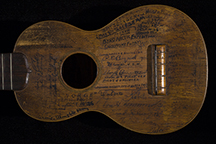
Canon 5D Mark II with Coastal Optics 60mm APO UV-VIS-IR lens

The top of Konter’s ukulele.

That is where our friend, Richard Konter, or, as another Richard would know him, ‘Ukulele Dick,’ comes in.  Konter was primarily a crewman on several of Admiral Byrd’s expeditions, but also happened to play the ukulele.  Admiral Byrd, Roald Amundsen, Calvin Coolidge, Thomas Edison, and many other contemporary celebrities would sign this ukulele by the end of Konter’s life. [1] Konter used his musical skill to do his best to entertain his fellow crewmembers, playing into the larger history of Antarctic entertainment practices.
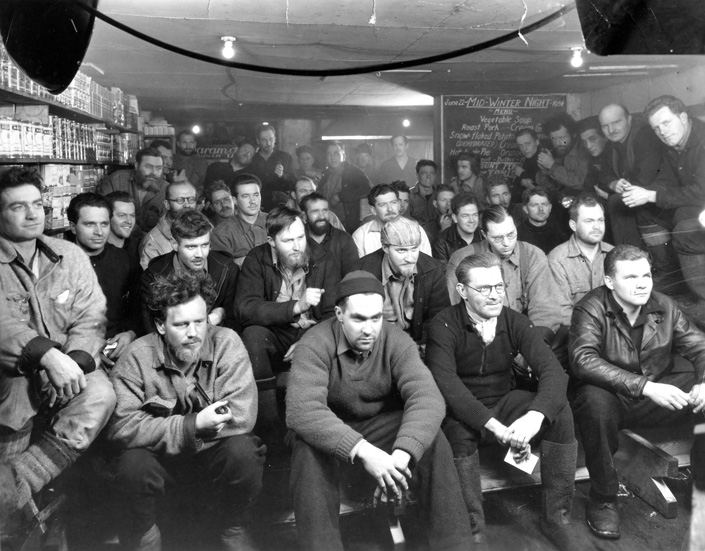
7891_1

Movie Night during the Second Byrd Antarctic
Expedition (1933-35).

Unlike most entertainment industries, this one focuses on a small audience, yet it serves perhaps the greatest non-life-sustaining role in the lives of said audience. Boredom is known to drive men mad, or, at best, cause them to make mistakes. The men and women who dare brave the Antarctic winds and freezing temperatures have taken many strategies to combat the isolating conditions they face. As might be expected, card games, darts, and books are staples of Antarctic life.[2] Of course, not all expeditions have been so fortunate to even have a single book. Gunnar Andersson of the Swedish Antarctic Expedition (1901-1904) remarked that, in the absence of any books, the crew began to recount literature that they had read previously.[3] That was, of course, after they grew weary of reading the labels of their food containers.[4] Crew cabins could become something of a salon, where men would gather around and discuss the great issues of the day. Dr. James Hunter Harvey Pirie of the Scottish National Antarctic Expedition (1902-1904) wrote that the crew would sit near the stove and discuss such topics as evolution, the “Irish Question,” art, and even socialism.[5] These sorts of activities, while fulfilling the need for some kind of entertainment, also created further bonding and camaraderie among the crewmembers. Demonstrating this community building was the ‘Fourth of July Talent Quest,’ a kind of talent show put on by the men of Admiral Richard Byrd’s First Antarctic Expedition (1928-1930).[6] The show featured a variety of acts, including a musical comedy made up of crew in costume.[7] Four men dressed in drag for the act, while three others donned blackface, a practice which was considered acceptable at the time*.[8]
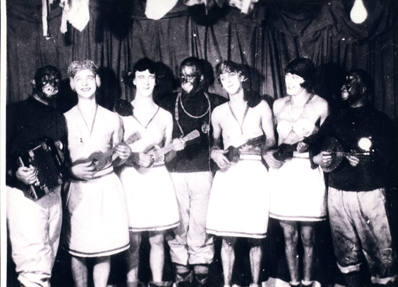
The chorus "girls" of the Antarctic Follies. Left to right: Jack O'Brien, Freddie Crockett, Eddie Goodale, Norman Vaughan, Ken Bubier, Jim Feury and Pete Demas

The chorus “girls” of the Antarctic Follies. Left to
right: Jack O’Brien, Freddie Crockett, Eddie
Goodale, Norman Vaughan, Ken Bubier, Jim Feury
and Pete Demas

Byrd’s expedition even had a singing and instrumental group known as the Knights of the Grey Underwear.[9] The Stuart D. Paine Papers at the Byrd Polar and Climate Research Center Archival Program contains issues of “The Barrier Bull,” a “noncontroversial, nonpolitical, and nonsensical” magazine published and written by the men of Little America.  The BPCRCAP also has in its vaults images of Byrd putting records on the turntable for his men, as well as evidence of a movie night. Of course, alcohol was also a common pastime, although there is a great discussion among polar historians as to whether the drinking reached problematic levels. These sort of activities gave the crew some semblance of the norm, allowing them to feel, at least for a moment, that they were not on the loneliest continent.
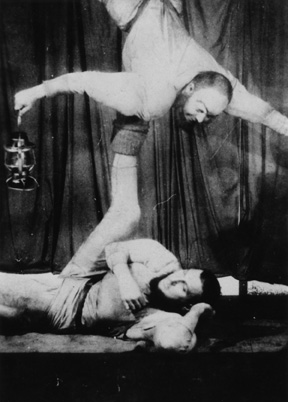
byrd7808_22

Two men of Byrd Antarctic Expedition
I (1928-30) demonstrate their
strength.

Conditions for modern Antarctic explorers have improved since the very first trips to the continent. Even in the 1970s, just four decades after Admiral Byrd’s historic flight over the South Pole, the Amundsen-Scott South Pole Station was complete with a station store that offered such items as beverages (both alcoholic and not), tobacco, toiletries, candies, and even tourist items. Modern explorers often have the luxury of a well-stocked library and have been known to even play golf out on the frozen terrain.[10]

As time has gone on and expeditions gain more advantages in funding and technology, they have become equipped with greater numbers of resources to keep the crews entertained. The earliest explorers relied on each other’s company and, to some degree, this has not changed. Group activities remain essential to the wellbeing of not only individual crewmembers, but also the very expedition itself.


*As archivists, we hold and protect historical materials to insure that they are available to the public. Regardless of today’s cultural expectations, the archivist’s job is to provide primary sources for research and education and to encourage discussion about events of the past.

Written by John Hooton.

[1] “The Konter Ukulele,” The Smithsonian Museum Conservation Institute Imaging Studio, accessed January 23, 2017. https://si.edu/MCIImagingStudio/KonterUke

[2] Antarctica, 2nd ed., s.v. “Passing the Time.” (Surry Hills: Reader’s Digest, 1990).

[3] Antarctica, “Passing the Time.”

[4] Antarctica, “Passing the Time.”

[5] Antarctica, “Passing the Time.”

[6] Antarctica, 2nd ed., s.v. “Conquest by Air.” (Surry Hills: Reader’s Digest, 1990).

[7] Antarctica, “Conquest by Air.”

[8] Antarctica, “Conquest by Air.”

[9] Lisle A. Rose, Explorer (Missouri: University of Missouri Press, 2008), 351.

[10] Antarctica, “Passing the Time.”
Frozen Fridays: ‘J’ is for Jones!

This blog post is part of the Frozen Friday Series, an A-Z journey of the Polar Archives.  Each week, we will feature some aspect of the history of polar exploration with a blog post written by our student authors.

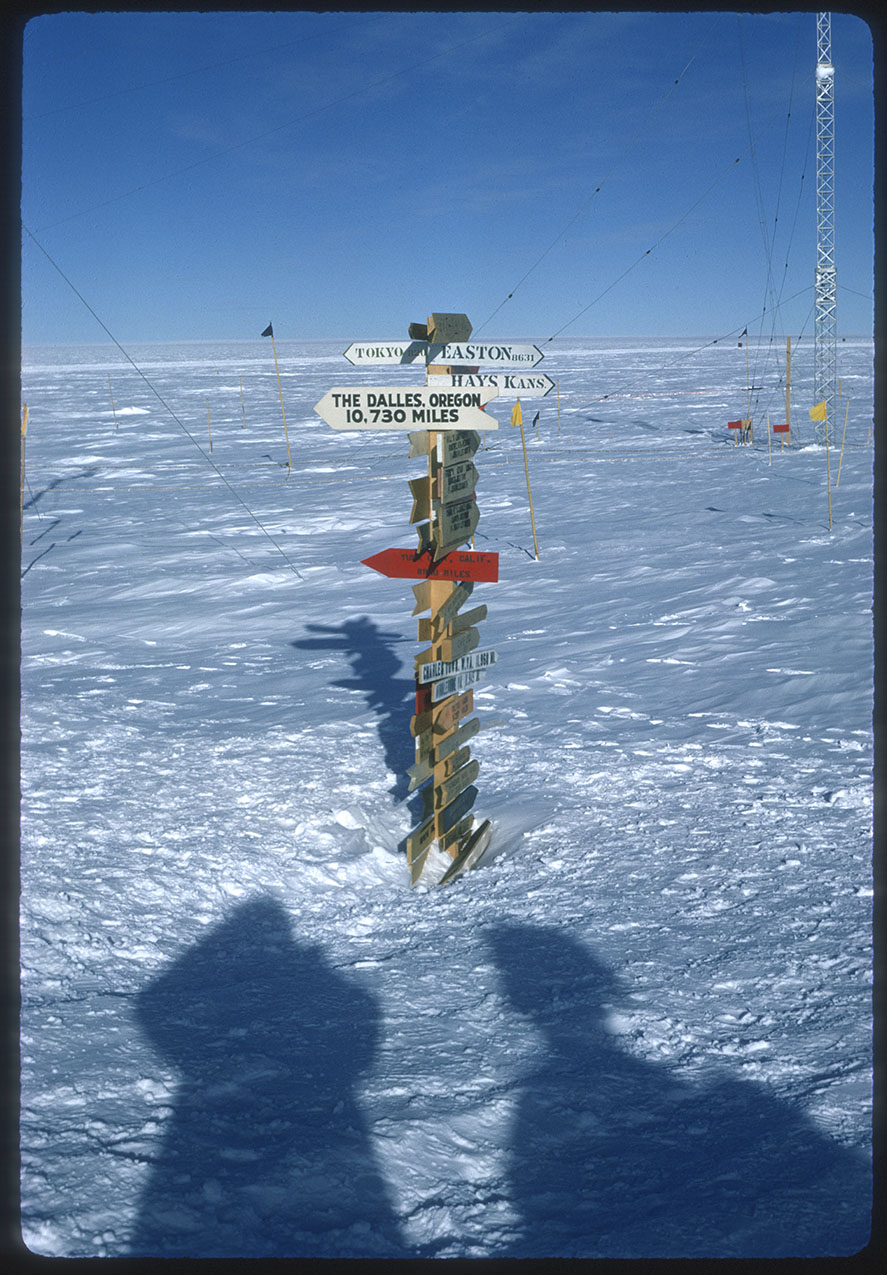
spec-pa-56-0213-0583

The South Pole in 1969.

The year is 1969. It is winter in the northern hemisphere. It has been a year since the assassination of Doctor Martin Luther King Junior and the fight for civil rights still rages. Feminist groups have fought for a nearly a decade to expand the role of women in American society. Only a few short months ago, Neil Armstrong took his giant leap for mankind. However, in Antarctica, an almost forgotten history is being made. Four women, pioneers and explorers in their own right, step off a United States helicopter and onto the cold, frozen earth at the South Pole. One of these women was Lois Jones, leader of the first all-woman expedition to Antarctica.


spec-pa-56-0213-0925

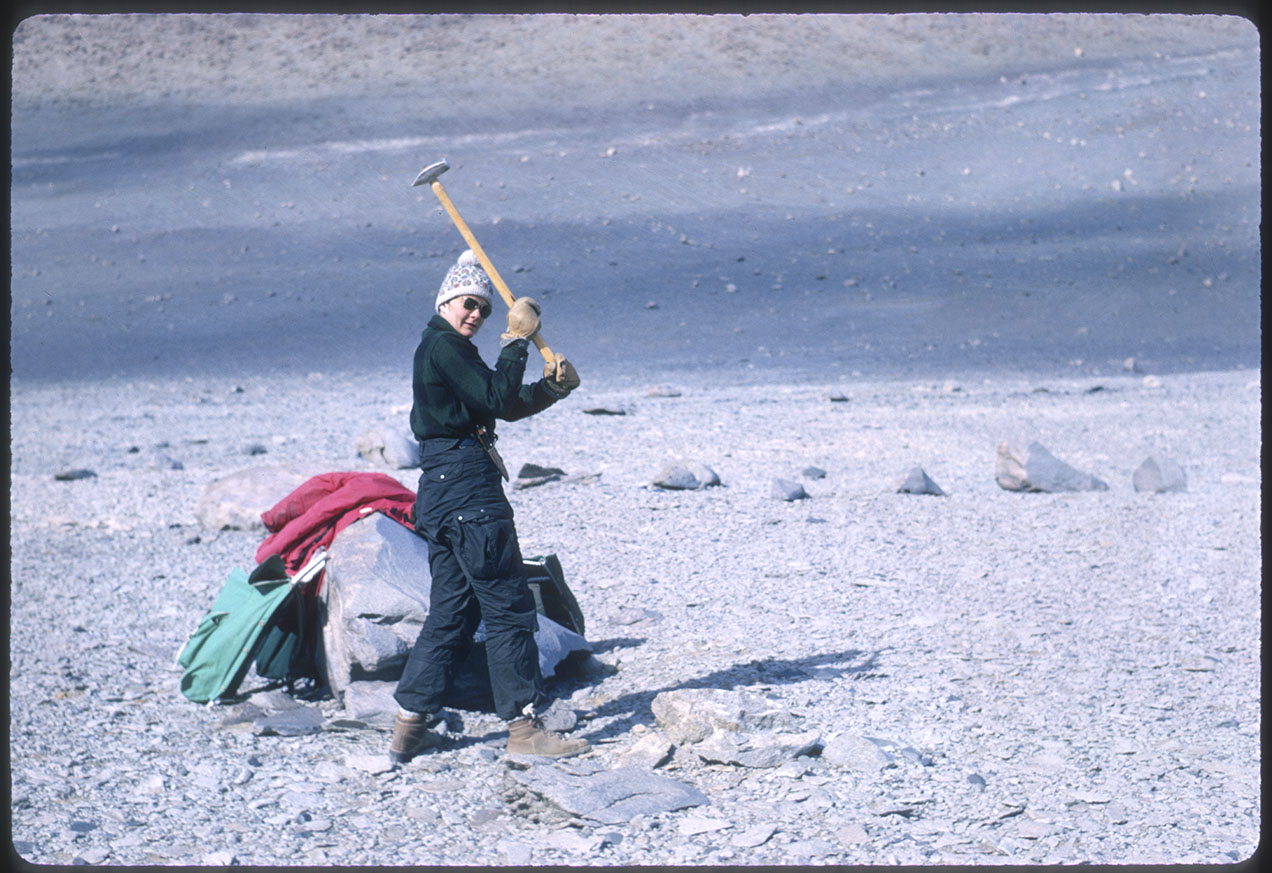
Young Terry Tickhill takes a swing at a boulder for a
sample while smiling for a picture.


Man has been exploring Antarctica for centuries or, to put it another way, men have been exploring the southern continent for centuries. While there had been women on the continent before Jones, the women in Antarctica had been few in number and always under the leadership of men[1]. Indeed, Antarctica has been referenced as the ‘last bastion of male supremacy’[2]. The National Science Foundation had been prepared to bring women into field for at least a decade. However, the United States Navy, and thus its logistical support, felt that women were best kept in the ‘cold’ (so-to-speak)[3]. Colin Bull, the director of what was then the Institute of Polar Studies at The Ohio State University (now the Byrd Polar and Climate  Research Center), had been trying for years to get an all-female team sent to Antarctica[4]. “‘The Navy refused adamantly. They wouldn’t even contemplate the possibility. I couldn’t see any reason at all for this,’” he later said on the issue[5]. In the Navy’s view, Antarctic bases were like their ships, and they did not let women on ships[6]. Fortunately, mounting pressures managed to convince the Navy to change policy, if only for one experimental expedition[7].


spec-pa-56-0213-0991

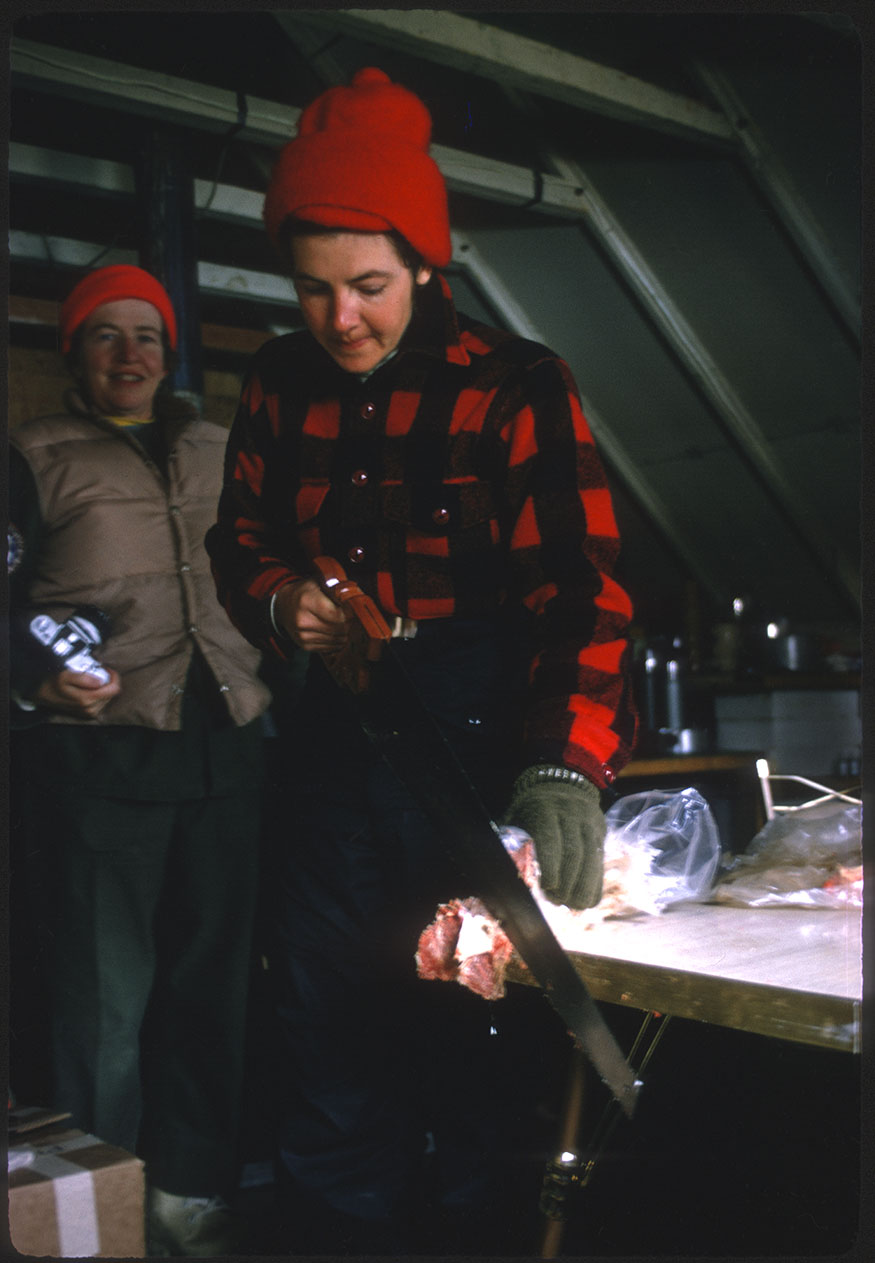
Kay Lindsay in the process of
preparing the night’s meal: steak.

Though the Navy seemed willing to test the presence of women in Antarctica, Jones and her crew of three women received a very short leash. Terry Tickhill, who served as cook and field assistant on Jones’ team, visited the Ohio State University in 2015 and recalled the experience. The women were required to be out in the field[8]. They had to be at least two hundred miles away from McMurdo, the main American base in Antarctica[9]. The severity of the difference between the Navy’s treatment of men and its treatment of women can perhaps most easily be seen in the medical examinations required by the Navy before one could go to Antarctica. According to Tickhill, the all-woman team had to be “sent to Bethesda Naval Hospital, probed, sampled” and examined by “a clinical psychologist for an entire day” whereas a subsequent male colleague’s “physical consisted of going to his local doctor and talking about dive watches for thirty minutes.”[10]

spec-pa-56-0213-0894

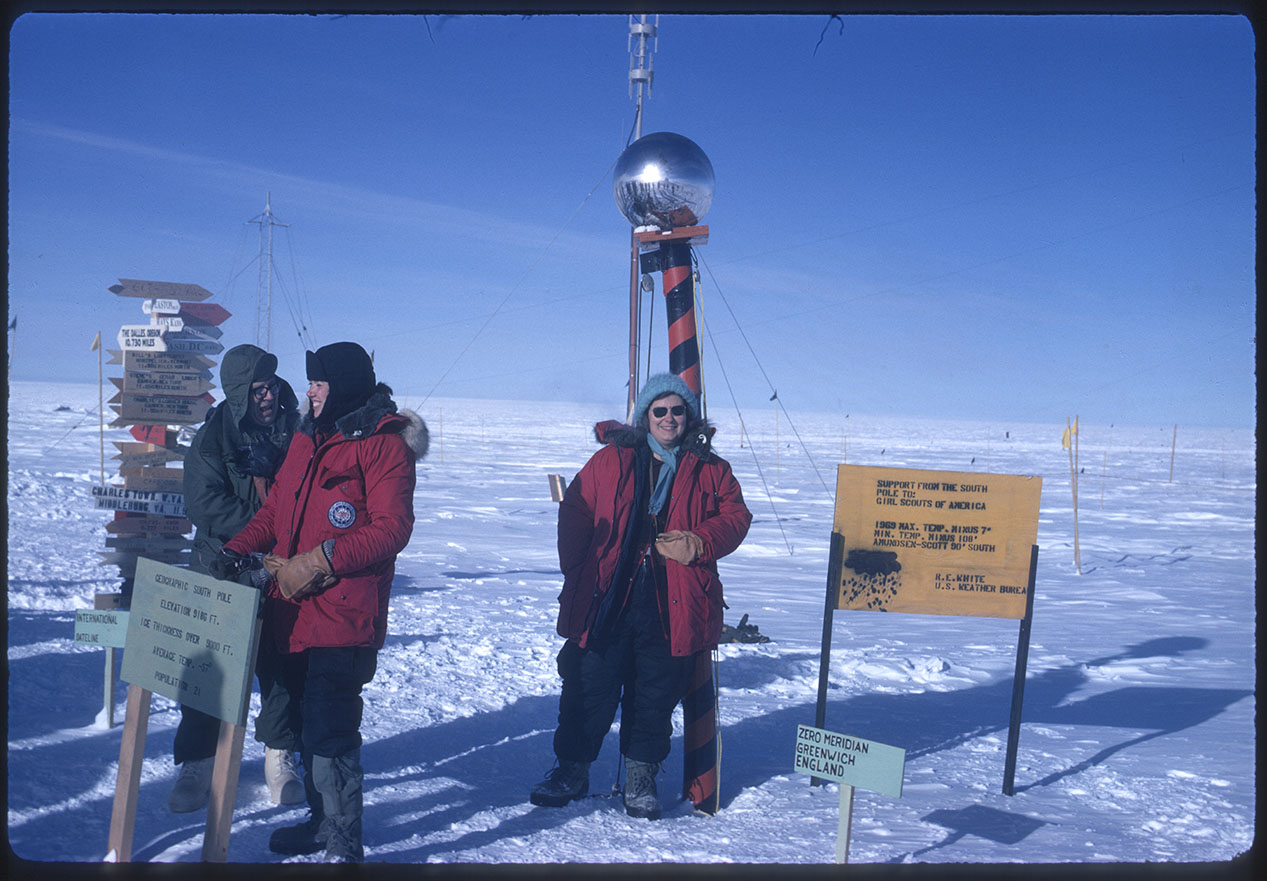
Lois M. Jones (center) stands in front of the South
Pole.

Sexism did not stop once the team reached Antarctica. Tickhill can remember one instance where, as the women prepared to go out into the field, supplies they had selected had been “replaced with holey tents and defective sleeping bags”[11]. Tickhill also recalls how “there were a large number of people who were very happy to see us… On the other hand, there were a few people who were not happy to see us.”[12] Navy officers harshly punished enlisted men who used poor language around the women. Many men saw the women as delicate in mind and body. When one man proved unable to lift a heavy container of rock samples that had been carried by Terry Tickhill, he had to be transferred out of Antarctica because of the ridicule he faced from the other men for having been ‘bested’ by a ‘girl’[13]. Sexist stereotyping that women were somehow less suited to the work had also been present in news media regarding the expedition, such as the head line “‘Powderpuff explorers to invade South Pole’” and questions such as “‘Will you wear lipstick while you work’” by reporters[14].

spec-pa-56-0213-0587

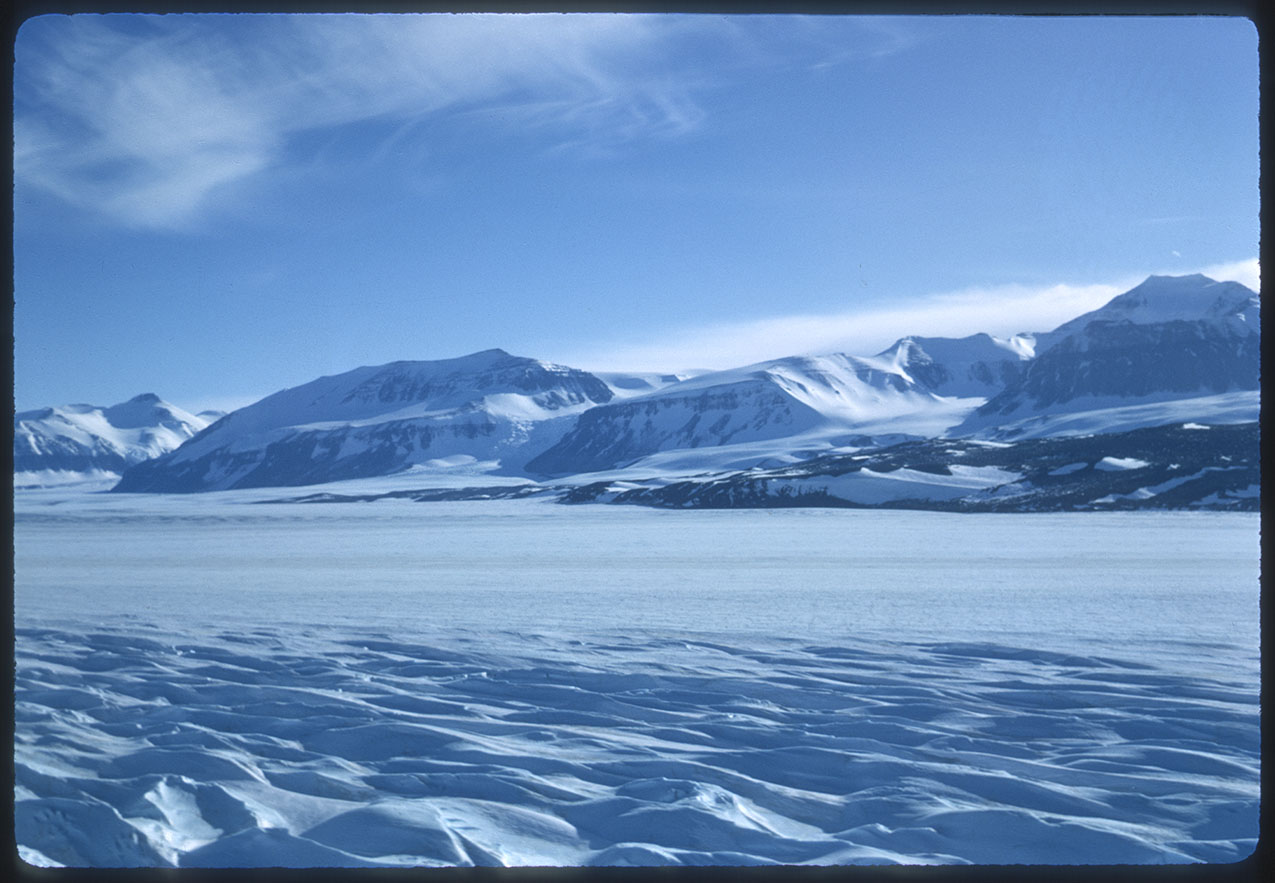
This landscape was taken on the way to the South
Pole from McMurdo Station in Antarctica.

Despite the skeptics, Jones and her team succeeded in not only their scientific mission, but also in proving once and for all that women are no less able to weather the conditions of the frozen continent. According to Bull, “‘It was a highly successful little expedition.’”[15] The efforts and dedication of Jones have opened up Antarctica to women. Today, about one third of the American population of Antarctica are women.[16] Pam Hill, a field support coordinator for the United States Antarctic Program, recently stated “‘as equal opportunity has become the norm versus the exception in America, the same is true for here on the Ice’”[17]. Though the issue of gender equality is still an issue discussed in American politics, what cannot be dismissed is the universal beauty of Antarctica. Terry Tickhill described Antarctica and its McMurdo Dry Valleys as “‘a beautiful, wild place. There aren’t enough adjectives for beautiful.’”[18]. Luckily, Jones and her team took a great number of photographs during their time there. The groundbreaking Jones expedition is very well documented and an extensive collection of 35mm slides is held by the Byrd Polar and Climate Research Center Archives. We are currently in the process of digitizing the slides for public viewing. Check them out!

Written by John Hooton.

[1] Peter Rejcek, “Breaking The Ice,” The Antarctic Sun, November 13, 2013, https://antarcticsun.usap.gov/features/contentHandler.cfm?id=1946.

[2] Peter Rejcek, “Breaking The Ice.”

[3] Terry Tickhill, “OMG We’re Not in Ohio Anymore,” Vimeo, 01:03:06, Byrd Polar and Climate Research Center, 2015, https://vimeo.com/147969386.

[4] Peter Rejcek, “Breaking The Ice.”

[5] Peter Rejcek, “Breaking The Ice.”

[6] Marlene Cimons, “Forty Years of Women Researchers in Antarctica,” U.S. News, December 2, 2009, http://www.usnews.com/science/articles/2009/12/02/forty-years-of-women-researchers-in-antarctica.

[7] Terry Tickhill, “OMG We’re Not in Ohio Anymore.”

[8] Terry Tickhill, “OMG We’re Not in Ohio Anymore.”

[9] Terry Tickhill, “OMG We’re Not in Ohio Anymore.”

[10] Terry Tickhill, “OMG We’re Not in Ohio Anymore.”

[11] Terry Tickhill, “OMG We’re Not in Ohio Anymore.”

[12] Terry Tickhill, “OMG We’re Not in Ohio Anymore.”

[13] Terry Tickhill, “OMG We’re Not in Ohio Anymore.”

[14] Peter Rejcek, “Breaking The Ice.”

[15] Peter Rejcek, “Breaking The Ice.”

[16] Peter Rejcek, “Breaking The Ice.”

[17] Peter Rejcek, “Breaking The Ice.”

[18] Peter Rejcek, “Breaking The Ice.”

Frozen Fridays: ‘I’ is for Igloo!

This blog post is part of the Frozen Friday Series, an A-Z journey of the Polar Archives.  Each week, we will feature some aspect of the history of polar exploration with a blog post written by our student authors.

g733c985r

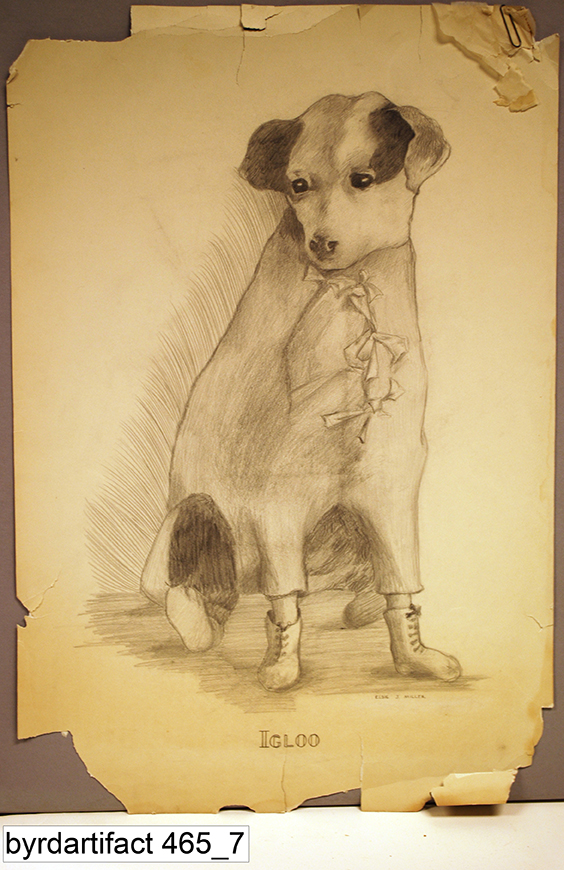
A sketch by Elsie J. Miller of Igloo
in his signature jacket and booties.

A decade before the Second World War, America’s second most famous contemporary polar explorer passed away, leaving a loving nation and a heart broken family in grief[1]. This little American polar explorer had gone to the farthest reaches of the Earth, travelling with his companion, Admiral Richard E. Byrd, experiencing all of the hardships associated with polar expeditions. He was a fox terrier and his name was Igloo.

While dogs were a common sight on polar expeditions in the early twentieth century, fox terriers were not. Put simply, one would not want to rely on such a small animal for transportation. Sled dogs have been used throughout history for transportation purposes in cold, snow covered areas of the world, particularly in Siberia and Alaska[2]. They often resemble their wolf ancestors and have several traits that make them particularly useful in exploring the Arctic and Antarctic regions[3]. Sled dogs have thick coats with greasy long hair for better insulation as well has fluffy, curly tails for the purpose of covering their paws and noses while sleeping[4]. Sled dogs also have an arrangement of blood vessels in their limbs to protect against freezing. Interestingly, they have also developed webbed feet that act as a sort of snowshoes in addition to the habit of eating practically anything provided to them[5]. One could say, quite aptly, that these sled dogs were bred to pull sleds.

byrd7780_5

Two sled dogs take a break during
Admiral Byrd’s first Antarctic Expedition (1928-1930).

The value of dogs in Antarctic expeditions was exemplified in Roald Amundsen’s expedition to the South Pole in 1911 [6]. He utilized ninety-seven dogs, including fifty-five Eskimo dogs (considered to be the best breed for use in the Antarctic), and used Inuit methods (methods deemed most efficient for the Antarctic and allowed extreme efficiency for the use of the dogs’ energy) to achieve a whopping seventeen miles per day[7].  Dogs would continue to be used as a necessary part of Antarctic expeditions until around the 1960s[8].

As all dog lovers are sure to understand, there is a certain comfort to be gained from the presence of man’s proverbial “best friend”.

byrd7785_1

Igloo makes a new friend.

This is their secondary function on polar expeditions. The dogs themselves, while often aggressive towards one another, are “very tame and affectionate towards humans”[9]. Indeed, “dogs continued to have a valued place on Antarctic bases, where the companionable dogs made the sometimes hard life more bearable”[10]. This was the purpose of our little Igloo. He was small, not like the sled dogs. He didn’t have the fur or the blood vessel arrangement necessary to survive unaided in the cold. He had to wear little shoes and a little dog jacket[11]. Igloo served as an object of adoration, not only for the crew on Byrd’s expeditions, but for millions of Americans[12]. One can plainly see the creature of joyful curiosity that was Igloo upon his discovery of the sort of snow that exists up north:

byrd7676_3

Igloo gladly meets his adoring public.

“The soft, yielding resistance of the snow was delicious to his paws. He sniffed it gingerly, then a red tongue emerged for a tentative lick. The sharp coldness took him by surprise… he emerged in a flurry of crystals, made a bee-line dash to the shack at the crest of the slope, then swept into a series of concentric circles that ultimately ended in his becoming a whirling dervish, enveloped in a minor snow storm of his own making.

He rolled in this delicious substance; he burrowed in it until his eyes were rimmed with frost.”[13]

So while not a sled dog, Igloo does serve as the example for non-transport related roles of dogs on Antarctic journeys. Boosting crew morale was essential to an expedition’s success during the isolation of a long expedition at the bottom of the world.

byrd7676_4

Igloo is serenaded by Richard Konter
(“Ukulele Dick”), a veteran of numerous Byrd
expeditions.

The use of dogs in the Antarctic was drastically reduced in the latter half of the twentieth century. By the 1960s, the dog sled teams had been replaced with “tin dogs”, more commonly known as snow mobiles and other mechanical methods of transport[14]. In fact, the use of dogs was banned from Antarctica by the Protocol on Environmental Protection to the Antarctic Treaty in 1992[15]. Despite this, our canine friends have certainly had a deep and lasting impact on mankind’s exploration of one of our planet’s most challenging environments.

Written by John Hooton.

[1] “Igloo, Byrd’s Pet Dog, Dies in Boston,” Lewiston Evening Journal, April 21, 1931, 2.

[2] William James Mills, “Dogs,” Exploring Polar Frontiers, (Santa Barbara: ABC-CLIO, 2003).

[3] William James Mills, “Dogs.”

[4] William James Mills, “Dogs.”

[5] William James Mills, “Dogs.”

[6] Antarctica, 2nd ed., s.v. “Sled Dogs.” (Surry Hills: Reader’s Digest, 1990).

[7] William James Mills, “Dogs.”

[8] Antarctica, “Sled Dogs.”

[9] Antarctica, “Sled Dogs.”

[10] William James Mills, “Dogs.”

[11] Jane Brevoort Walden, Igloo (New York: G.P. Putnam’s Sons, 1931), 54.

[12] “Igloo, Byrd’s Pet Dog, Dies in Boston,” Lewiston Evening Journal.

[13] Walden, Igloo, 54-55.

[14] Antarctica, “Sled Dogs.”

[15] William James Mills, “Dogs.”

Older posts Newer posts