From Woody's Couch

Our Playbook on OSU History

Category: People (page 41 of 52)

Summer School: At OSU, the “practice” of baby-rearing

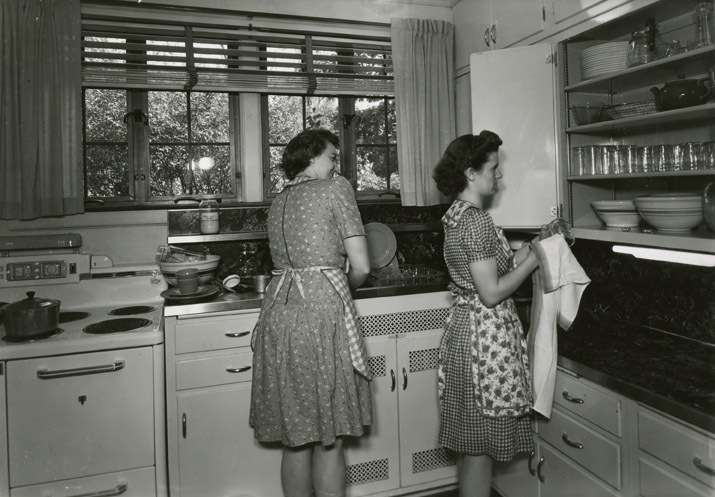
Home Management House, 1942

OSU could never be called an orphans’ home, but it did once include a program through the Department of Home Economics that focused on the care of orphaned babies.

The Home Management House, run by the Department of Home Economics, was established to teach young women how to run an efficient home and life skills, such as finances, nutrition, and child care. At first these courses were mandatory for all senior women, in place of cadet training required of male students.

Eventually, this requirement was dropped, and the Department of Home Economics established an apartment, and then a house, in which these practical experiences could be taught. The house moved to several locations; its last site was the Alumni Scholarship House on 11th Avenue near Canfield Hall.
OSU Alumni Monthly, November 1946

These practical experiences included the care of real children: In the early days (1918-1920s), the department ran a nursery school on weekdays and at large events on campus, such as agricultural fairs. Many students also were sent to help out at the homes of married students or graduates of the department who had young children.

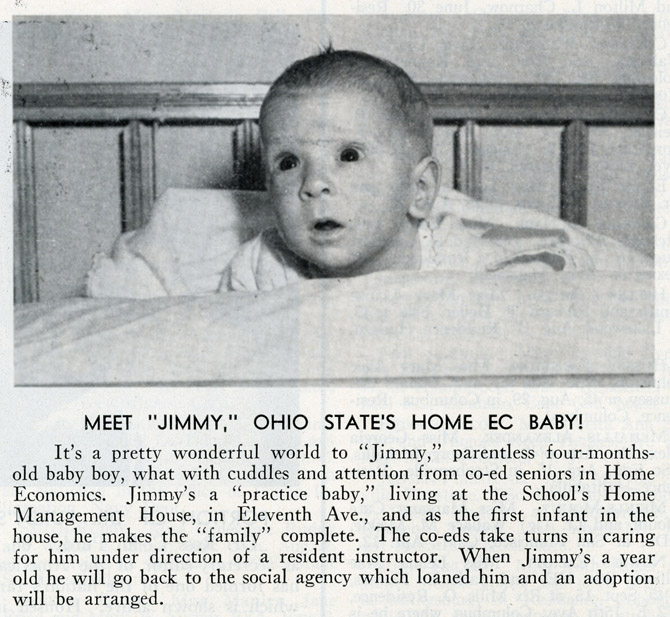
During the 1930s, as at many colleges across the country, OSU’s Home Management House introduced a program in which young women could learn mothering skills using a “practice baby.” At that time, groups of young women lived in the Home Management House for half a quarter as part of the coursework for all Home Economics majors.

Every few days, each resident rotated duties: cook, assistant cook, laundress, household manager, and “baby director.” So, for about a week each quarter, students had to change diapers and provide everything else the baby needed. The babies apparently came to the House when they were about three months old and were returned to the adoption agency when they were a year old, to be put in foster care or to be adopted.

The practice of having students take care of practice babies was discontinued sometime around 1958 at which time babies belonging to OSU students were dropped off during the day, as a sort of day care center.

Learn more:

“Coeds In Management House Provide Cozy Home And Family For Orphan Babies” The Lantern, August 21, 1947

“What Were Practice Apartments?” Cornell University Division of Rare and Manuscript Collections 

“‘Practice babies’: An Outdated Practice, Rediscovered” NPR, January 6, 2011

“A Controversy at Eastern Illinois State Teacher’s College” Eastern Illinois University

Filed by C.N.
Summer School: Since 1896, learning happens all year long

1977

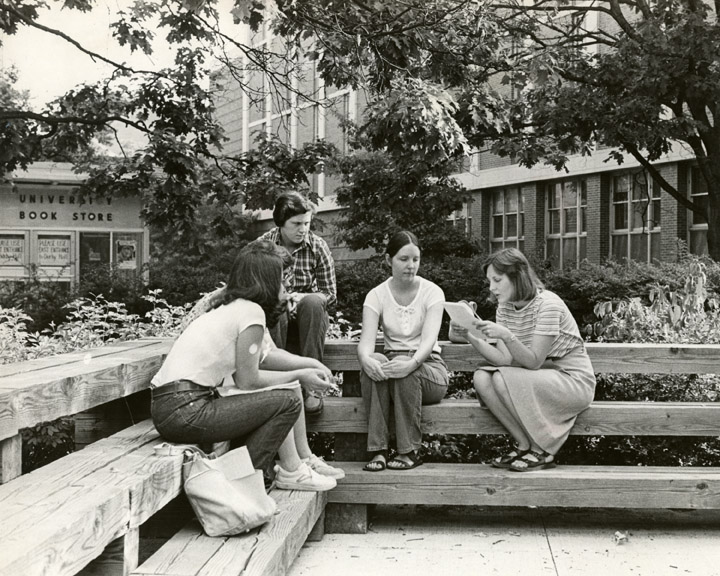
It’s that time of year again: While some of you might be lolling around for the next nine weeks before the fall semester begins, a significant number have gone back to school.

OSU students have been taking classes during the summer for more than 115 years. In 1896, a Summer School was formally established at the University. A summer school catalog told students, “the grounds of the University are large and delightful, and in summer especially attractive and restful.” By 1937, the number of summer school students had reached 5,000. The onset of World War II also caused more courses to be offered, and in new subjects, such as pre-flight aeronautics and Japanese.

Last year, a total of roughly 21,000 students were enrolled at all the campuses, according to the Office of the Registrar’s quarterly enrollment highlights (http://registrar.osu.edu/serrs/intadobe.asp). This year, however, those summer enrollment figures are expected to drop by about 30 percent. Find out why in this article in the Columbus Dispatch:

http://www.dispatch.com/content/stories/local/2012/06/17/summer-enrollment-at-osu-down-30.html

Filed by C.N.

Commencements past: Held at fairgrounds, fortresses and football fields

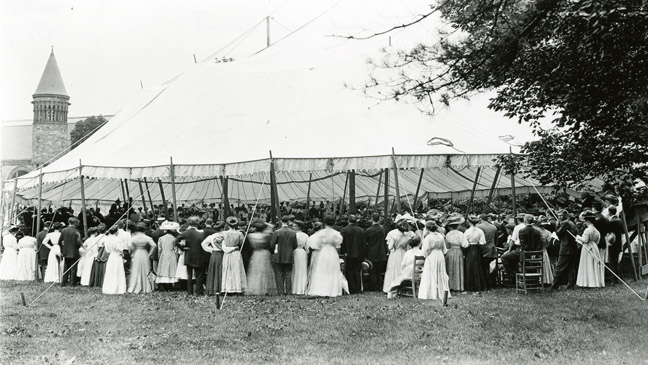
Oval, 1909

Because there were so few students, the University’s first commencement ceremonies were held in University Hall’s chapel, from 1878 when the first class graduated, to 1908. That venue grew too small, so the University tried going outdoors, first in 1909 with a tent on the Oval. (Exercises also were held under a tent there in 1918 and – sans a tent – in 2001, when the Stadium was under renovation.) In 1910, a tent was erected again, this time next to Mirror Lake.

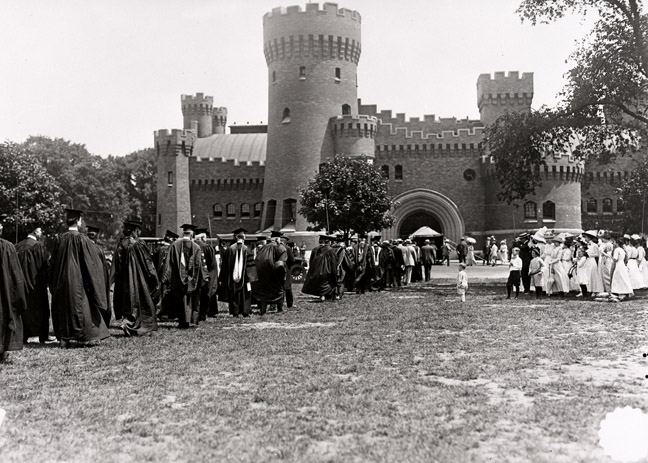
Next up was the Armory, a fortress-like building that once stood where the Wexner Center is now located. Exercises were held there from 1911-1912 since the interior of the building consisted mostly of one huge gymnasium.

Armory, 1912

By 1922, however, the number of students graduating had outgrown even that facility, so for the next five years, the ceremony was held off-campus at the Coliseum on the Ohio state Fairgrounds.

Finally, in 1928, Ohio Stadium became home, at least to the spring Commencement ceremony where thousands receive their diplomas. It has been home to nearly every spring commencement ceremony since then, and has witnessed a variety of pageantry, firsts and unusual student displays.

In 1986, graduating dentists, doctors and optometrists got a little too rowdy during the spring graduation ceremony. The dentists, with high-flying balloons announcing “We ain’t afraid of no teeth” were seemingly outdone by the optometrists, who had hired an airplane to fly over the Stadium, hauling the message “Optometry ‘86, You Look Mahvelous”. The horseplay caused OSU President Ed Jennings to advise the College of Dentistry to have a separate ceremony the next year, with hopes to avoid the disruptive behavior. (They apparently behaved the next year.)

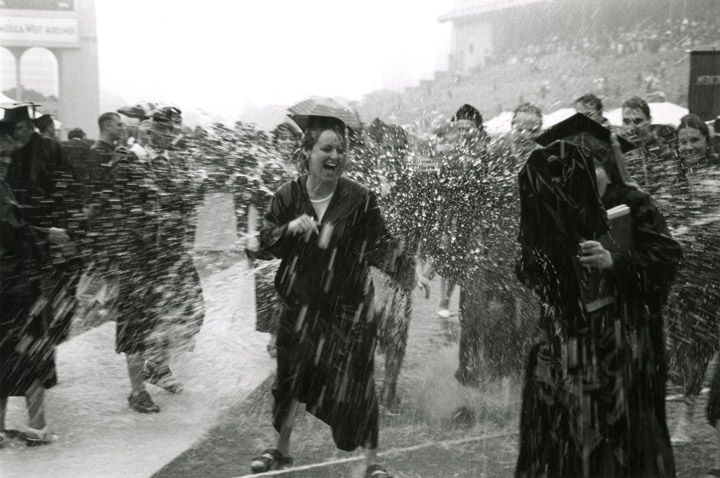
Ohio Stadium, 1997

But sometimes, the outcome of an outdoor ceremony is beyond anyone’s control. Shortly after commencement exercises started on Friday, June 13th, 1997, a downpour caused the ceremony to be cancelled – for only the second time in University history (The first rain cancellation was in 1941.) Soaked graduates waded in knee-deep water in the end zone before relocating to the French Field House to receive their degrees. In a follow-up letter to the graduating students, President E. Gordon Gee noted that “One graduate remarked that she wasn’t sure she had graduated, but was certain she had been baptized.”

Older posts Newer posts