From Woody's Couch

Our Playbook on OSU History

Category: People (page 37 of 52)

Not so long ago, in an OSU engineering lab nearby…

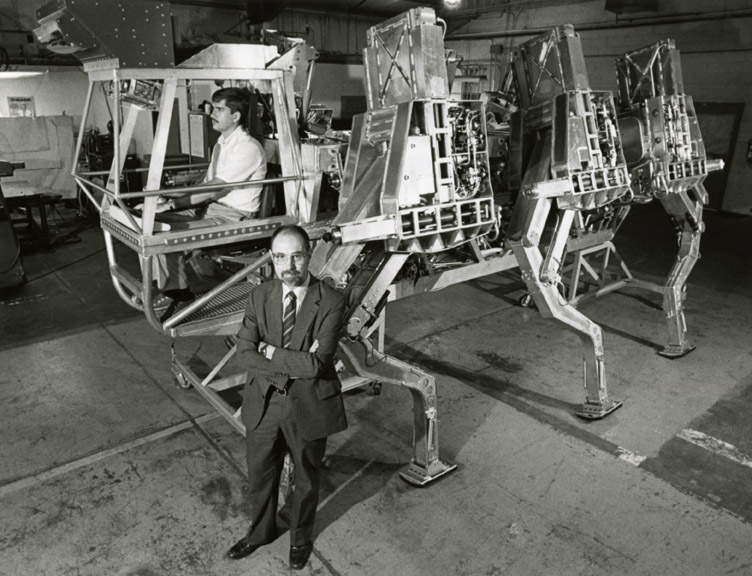
What do you get when you combine 20 years of research, $5 million, and a Star Wars Imperial all-terrain vehicle? Ohio State’s Adaptive Suspension Vehicle (ASV), nicknamed the “Walker.”   Developed by electrical engineer Robert McGhee and mechanical engineer Kenneth Waldron, along with a 60-member team of students and technical assistants, the ‘Walker’ was developed under a research contract from the Defense Advanced Projects Research Agency (DARPA).

Robert McGhee with the “Walker”, 1985

The ASV was 17 feet long, 8 feet wide, and 10.5 feet high, and had six legs to support its three-ton aluminum body.  It was designed to carry cargo for industrial and military applications over rough, mountainous, icy or muddy terrain, and was capable of crossing 9-foot-wide ditches or 7-foot-high walls.  A forward mounted radar system scanned the terrain ahead, and fed that data, along with instructions from the operator’s joystick, into the 16 onboard computers that coordinated and controlled the ASV’s legs. From there, the computers moved each leg individually across its individual axes of motion (up and down, forward and back, and closer or farther from the ASV’s body).

According to press clippings here at the Archives, McGhee, the developer, had long held an interest in the relationship between living creatures and machines, and the inspiration for the ASV came from the legs of a horse named Teddy he had bought for his daughter’s 10th birthday. Much of what McGhee learned from his time as an engineer and from Teddy went into the design of the ASV.

Research testing, 1986

After difficulties with cold-weather tests, DARPA began to lose interest in the ASV.  After failing to win a competition for an autonomous rover for NASA, Ohio State later began exploring the vehicle’s use in the logging industry. Unfortunately, that’s where the paper trail ends here at the Archives. If anyone knows the rest of the story, give us a shout!

OSU professor: ‘Not how to make a living, but how to live’

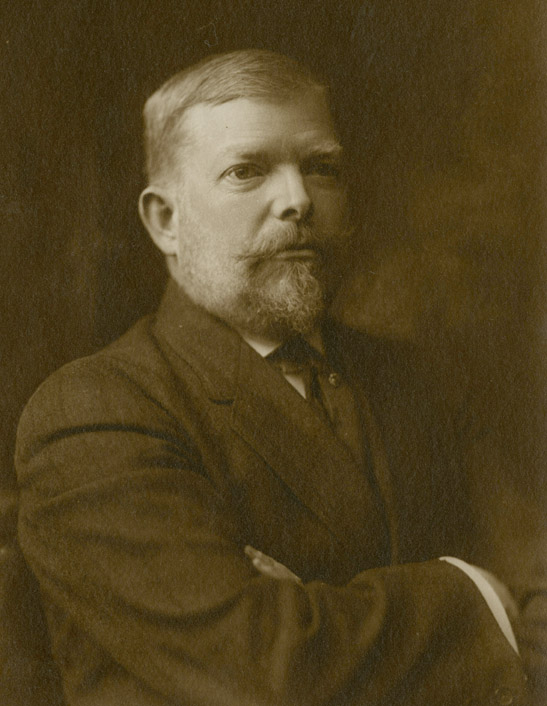
Joseph Taylor, circa 1910

They say you should write what you know. Joseph Russell Taylor wrote and drew what he felt and remembered. Nearly 50 years at Ohio State left Taylor with an abundance of memories of campus life, activities, and traditions to fill his writings, which are crammed full of memories and emotions. His art, which favored watercolor scenes of local landscapes, is on display at the Faculty Club.

An English professor and art instructor, Taylor graduated from Ohio State in 1888 and immediately became an assistant of drawing. With the exception of one year of graduate work at Columbia University, he would remain at Ohio State until his death. He moved from drawing to rhetoric, then to English literature, eventually becoming professor of English in 1908, a position he would hold until his death on March 30, 1933.

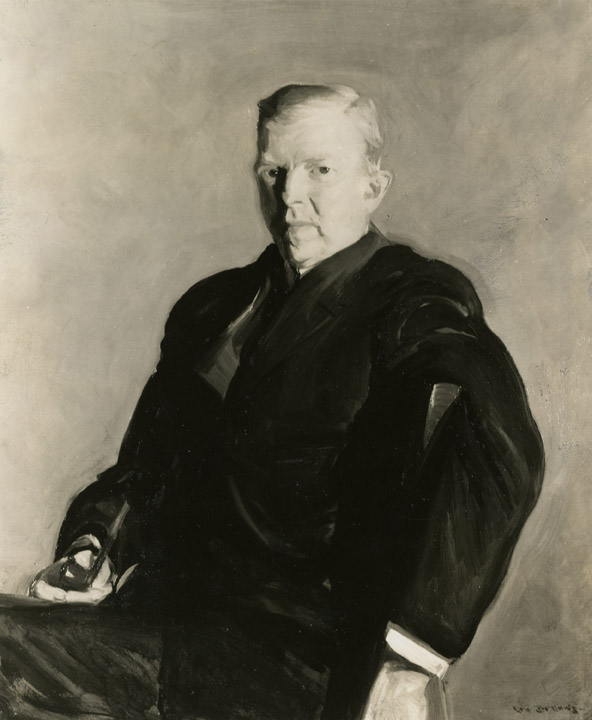
Taylor left an indelible impression on both the students and faculty of Ohio State University. One of his students when he was an art instructor was George Bellows; OSU alumnus James Thurber named Taylor one of his three most important teachers. In fact, Thurber was one of three people to speak at a commemorative program in 1933 for Taylor at the Faculty Club (then located on the third floor of Bricker Hall.) Also speaking were OSU Pres. George Rightmire and OSU English Prof. Billy Graves. After Taylor’s death, the art shown at the commemorative program was given to his family. They were returned to the Faculty Club after the recent death of Taylor’s granddaughter.

Others noted Taylor’s close connection with nature, his enthusiasm, and the value he put on student opinions and perceptions. Most of all, they noted his love for, as Thurber described it, “a more graceful way of living, a finer care for the quieter glows and gleamings in life”. Taylor’s own words, however, provide the best summation of his views on life. Thurber once described how Taylor told his students that “we are not here to teach you how to make a living, but how to live.”

The exhibit of his artwork is on display Nov. 1 – Dec. 14, 2012. A reception and presentation about the artist will be held this Friday from 6-8 p.m. For more information go to the Faculty Club’s web site:

A portrait of Joseph Taylor by George Bellows, 1920s

In Memory of Robert M. Duncan

Robert Duncan

Robert M. Duncan, who passed away Friday at the age of 85, made many contributions to the local community. But we’d like to focus on his long and impressive commitment to the University, his alma mater.

Duncan was born in Urbana, Ohio, and entered The Ohio State University to study education in the 1940s. In an oral history interview he gave to the Archives in 2011, Duncan remembers wanting to come to Ohio State because his aunt and uncle lived in Columbus, so he would have a place to live. Like many African-Americans of the time, he lived in east Columbus and rode a street car to campus. While at OSU, Duncan was a member of the Kappa Alpha Psi fraternity; he graduated in 1948 with a bachelor’s degree in education.

After graduation Duncan had a difficult time getting a job, so he moved to Chicago in search of better opportunities. After working as a bellman and sometimes as a substitute teacher, Duncan decided to return to Columbus and pursue a law degree at The Ohio State University. While pursuing his law degree, Duncan was elected president of his class and worked at the statehouse for fellow OSU alumnus William B. Saxbe, who later served as U.S. Attorney General.

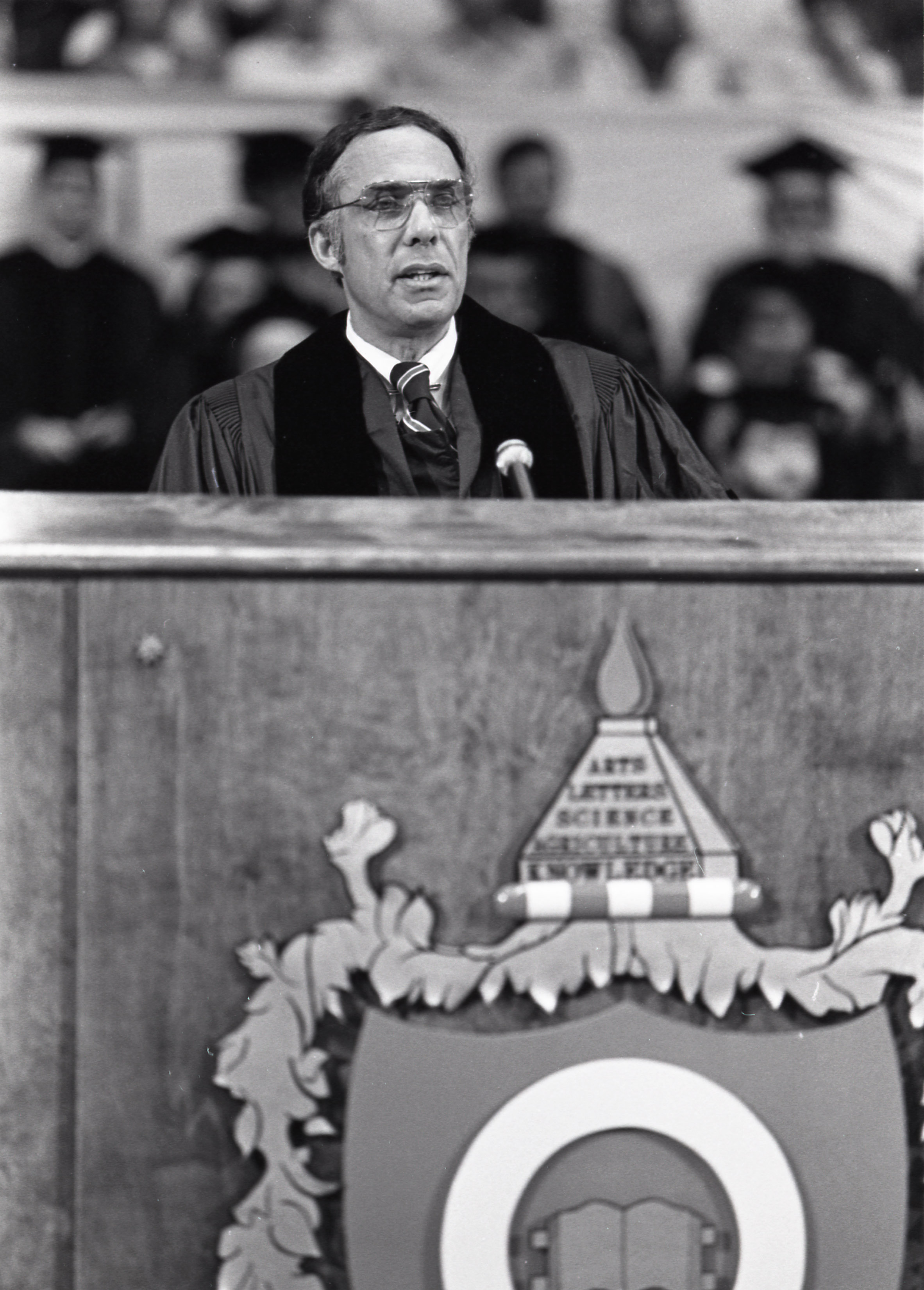
Duncan giving commencement speech in Dec. 1979

Following law school Duncan served during the Korean War for two years, then returned to Columbus. He went into private practice, but didn’t like it, so he started on a long career of public service, first as a state assistant attorney general, then as a Franklin County judge, then as a member of the Supreme Court of Ohio, the first African American to do so. In 1974, President Richard Nixon appointed him to the U.S. District Court for the Southern District of Ohio. He was the first African-American judge to be appointed to the federal bench in Ohio, and in this position Duncan wrote the order ending segregation in the Columbus Public Schools.

During his jurist career, Duncan maintained a close relationship with OSU, using law school students as externs in his office and teaching at the law school as an adjunct professor. His relationship solidified in 1992, when he was appointed vice president and general counsel to The Ohio State University. During that time he established the University’s first Office of Legal Affairs.  He also served as secretary to the Ohio State University Board of Trustees and served a nine-year term on the Board of Trustees. In addition, Duncan was on the Executive Committee of the Presidents Club and was chairman of the University Hospital Board.  He was a past president of the law school’s Alumni Association, was a former Distinguished Jurist in Residence at Moritz, and served as an honorary member of the College’s National Council.

The awards and recognitions Judge Duncan received also reflected his numerous endeavors in Columbus and beyond during his lifetime of service. Among the honors was the Ohio State University Distinguished Alumnus Award. In his oral history interview, he helps explain his lifelong attachment to the University:

I remember the first day I came on campus.  …  My first class was in University Hall, which was a history class.  People were extremely friendly.  … I met another African American guy from Ironton, a guy named Marty Gibbs, who is still a friend of mine.  …  After class we walked across campus to the old Ohio Union, which is now Enarson Hall. I remember walking into the grill room on the ground floor.  There was a jukebox.  And I remember hearing the Nat King Cole Trio on the juke box, playing “Route 66.”  And I looked around the room and there were all these coeds around there and said, “This is where I need to be.  This is a wonderful place.”  It was a great first day. And I suppose that sort of emotional effect of being at the University has never left me through all the subsequent 65 years. 

To learn more about Judge Duncan in his own words please read his oral history in the Knowledge Bank. (https://kb.osu.edu/dspace/handle/1811/49703)
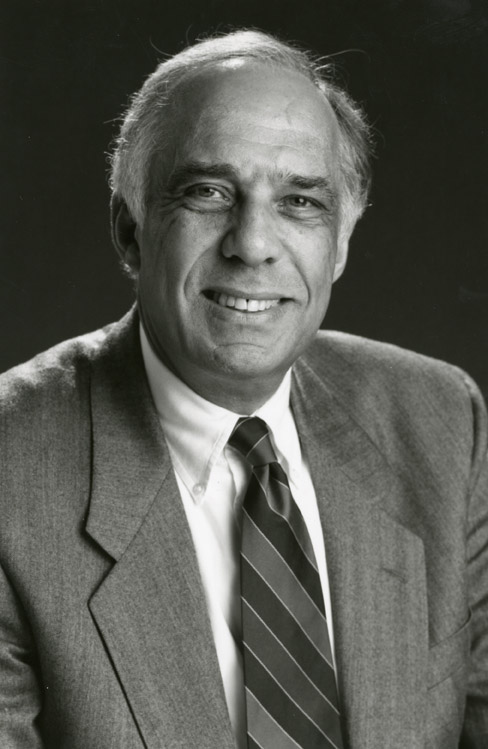
Duncan in 1993

Older posts Newer posts