From Woody's Couch

Our Playbook on OSU History

Category: People (page 36 of 52)

Twelve Days of Buckeyes: OSU’s 8th President left lasting legacy

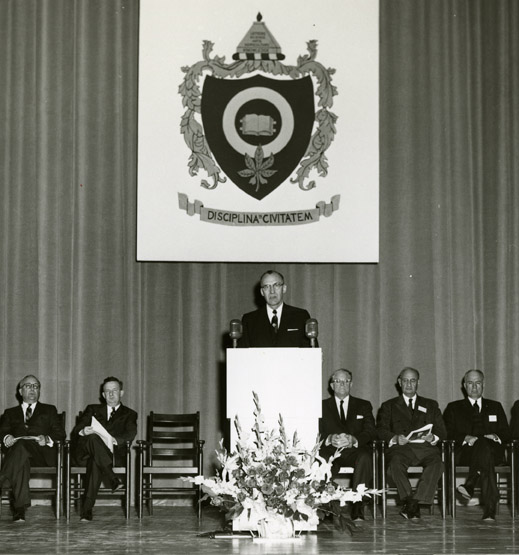
Fawcett speaking during his Inauguration, 1957

President No. 8 for Ohio State was Novice G. Fawcett, a native of Gambier, Ohio, who was born in 1909. He had never served in higher education until he was tapped as president in 1957, but his skills as a public school system administrator helped him move the university forward significantly and allowed him to weather a number of significant crises during his 16-year term.

After attending Kenyon College (where he graduated in 1931), Fawcett earned a master’s degree in education from OSU in 1937.  At the same time, he served as the superintendent of schools in Gambier. A year later, he became superintendent of schools for Defiance, Ohio, then for Bexley, Ohio, in 1943.  In 1947, he became assistant superintendent for Akron and became superintendent for Columbus Public Schools in 1949. Fawcett served with then-OSU President Howard Bevis on the Ohio Committee on Expanding Student Population before his inauguration as OSU President on April 29, 1957.

When Fawcett assumed his duties as president of OSU, 21,000 students attended the Columbus campus, $2 million was spent on research annually, and buildings and equipment were valued at $88 million. In his inaugural address, “Toward a New Level of Greatness,” he laid out an ambitious plan to move the University forward in a number of ways, such as research, continuing education, administrative improvement and the use of new technologies in the classroom. When he retired in 1972, 50,000 students attended OSU’s main and new regional campuses, $26 million was spent annually on research, and the value of buildings and equipment neared $400 million.

Fawcett’s term was also a time of significant social disruption and turbulence on campus.  Among the subjects of student demonstrations were discrimination in university housing and off-campus housing, the “Speaker’s Rule,” which restricted who could speak on campus, and was considered an abridgement of free speech. Women’s rights, minority rights, and the Vietnam War also were key topics of dissent.

Speaker’s Rule Demonstration, 1965

One of the highlights of Fawcett’s tenure was the creation of the Office of Continuing Education, which was originally housed at the Center for Tomorrow on Olentangy River Road. To honor Fawcett’s role in creating this division, and for his legacy at the University as a whole, the building was renamed the Novice G. Fawcett Center for Tomorrow in June 1972, two months before Fawcett left office.

Fawcett Center, 1975

Fawcett died in 1998; he was 79 years old.

1970
Twelve Days of Buckeyes: Title IX’s impact still felt at OSU

Since its passage was 40 years ago this year, we would like to focus on Title IX legislation, which had a huge impact on OSU and other universities across the nation.

In 1972 U.S. President Gerald Ford signed legislation that required all schools, colleges and universities receiving federal funding to offer equal educational opportunities for men and women. The institutions had three years to comply with the law, known as Title IX, or lose funding. For Ohio State, this meant significant changes.

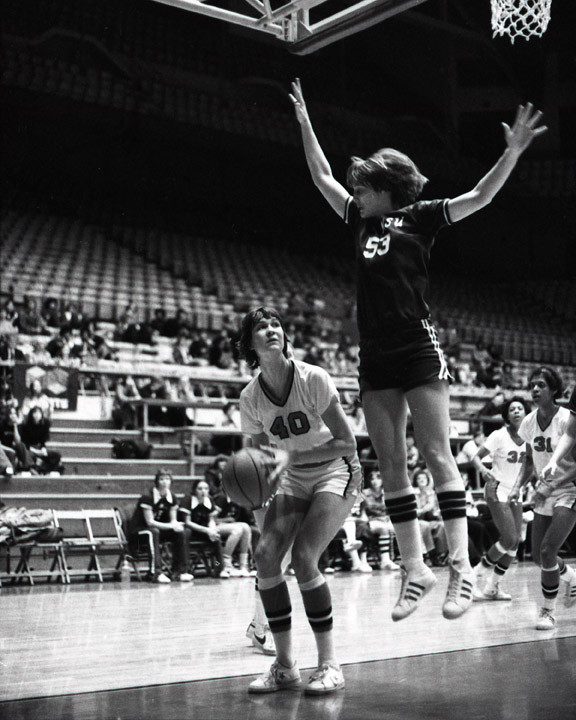
Title IX’s initial impact would be felt greatly by the Department of Athletics because the law required not only equal opportunity to play sports, but also equal facilities, travel expenses, scholarships, coaching, tutoring, scheduling, and expenditures. Title IX made one exception in that it never required schools to allow women to play contact sports.

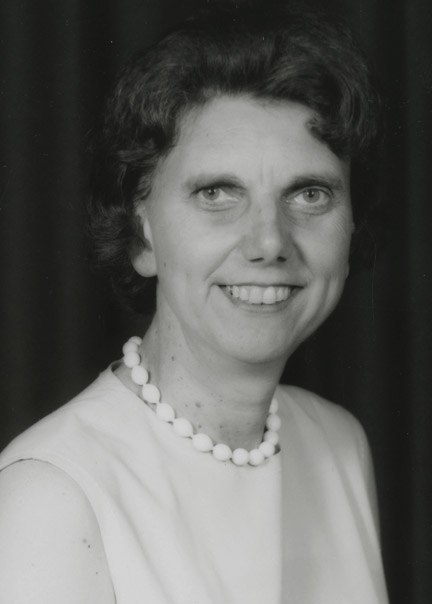
Phyllis Bailey, 1974

Because of the law, 12 women’s sports were added, women’s locker rooms were installed at the French Field House, and a women’s athletics director – Phyllis Bailey – was hired to oversee the women’s programs. Women also received scholarships, were recruited, received priority scheduling for classes and facilities like the men, and could get tutoring, uniforms and help with travel expenses, none of which they had had before Title IX.

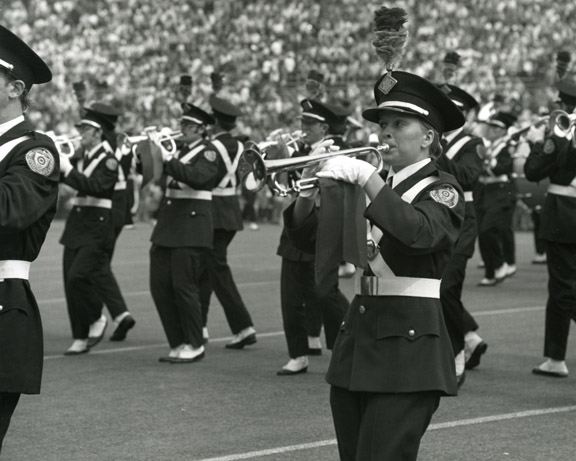
Marching Band, 1973

However, organized sports were just one area of student life that was affected. For instance, the OSU Marching Band had to add women to its ranks; Mortar Board, the honorary society for female students, had to allow men to join; and the freshman honoraries for men and women were combined into one co-ed organization.

On the academic side of University life, the impact also was pronounced: OSU and other universities could not discriminate against women in hiring, promotion and tenure. At OSU, a number of grassroots groups for women faculty and staff were founded, which eventually led to the formation in 1996 of a task force to create an organization that would ensure women would be able to succeed and advance at OSU. The Women’s Place was formally founded in 2000, and it still works to improve the climate for women on campus.

Twelve Days of Buckeyes: In OSU history, this alum is a bona fide “10”

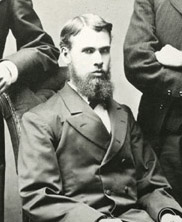
Curtis Howard, 1878

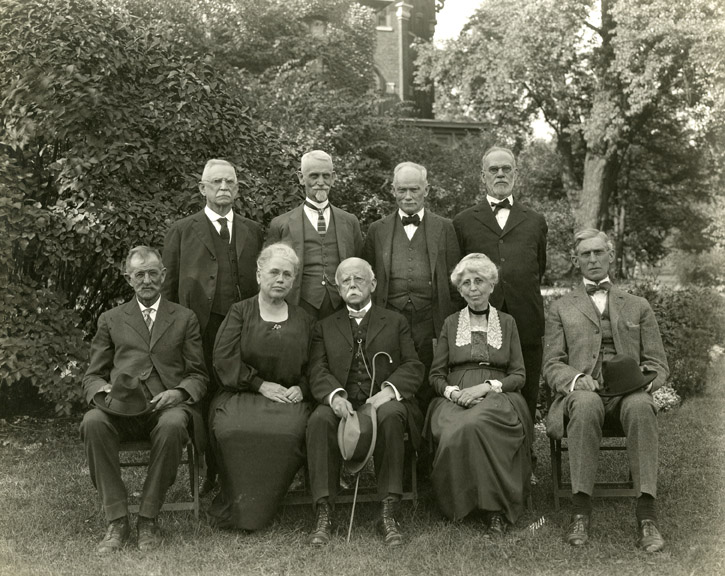
Born not far from Columbus, Curtis Clark Howard was among the first group of students to apply for admission to the then-Ohio Agricultural and Mechanical College. In fact, he was No. 10 on the list of names entered in the official Registrar’s Book.

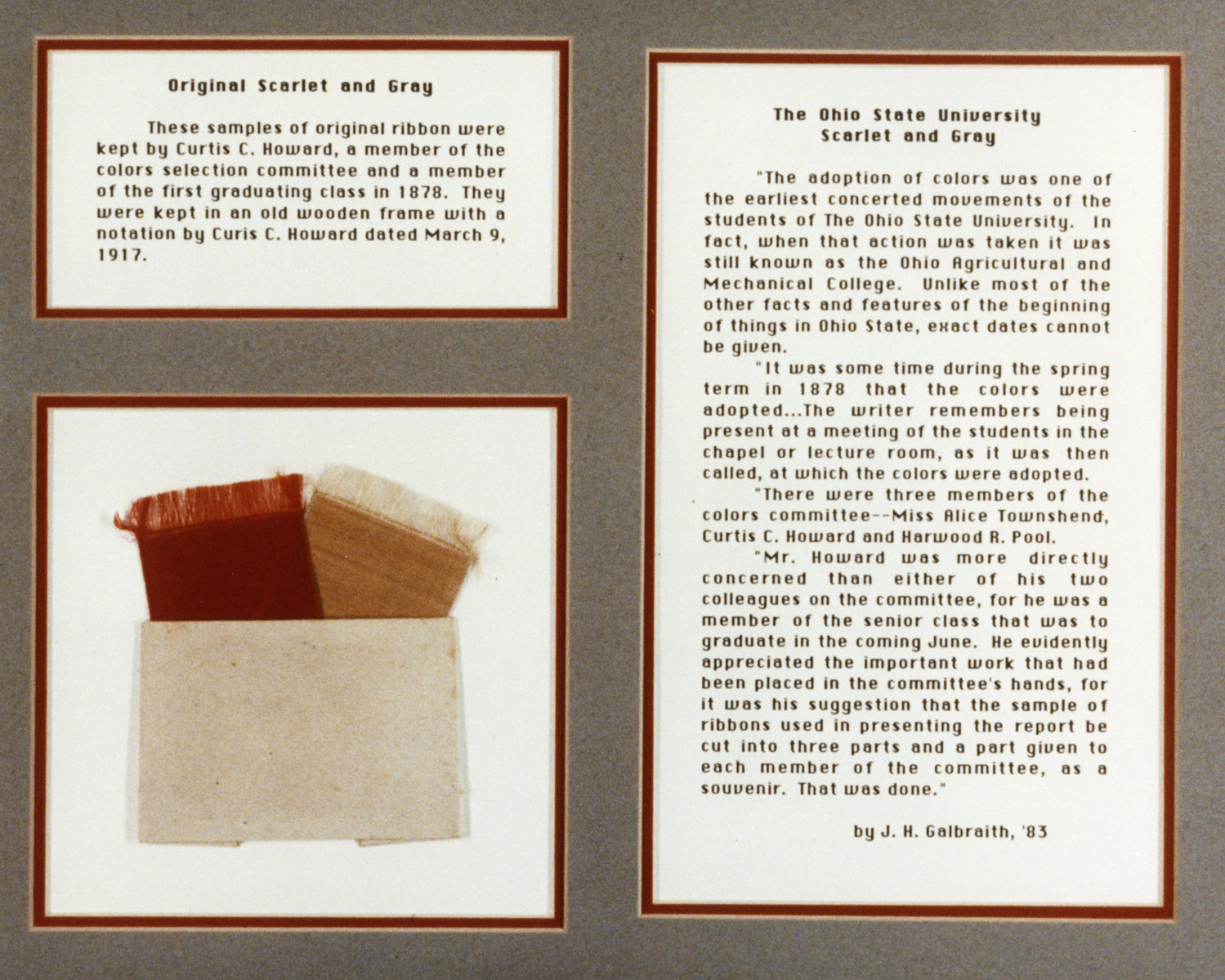
While he was a senior, Howard and fellow students, Alice Townshend and Harwood R. Pool, formed the committee responsible for selecting the college’s colors. Howard in particular was motivated by the upcoming commencement, and wished to have college colors to display at graduation.  The committee originally settled on orange and black before discovering that those were the Princeton colors.  Subsequently, scarlet and gray were chosen, a decision that still affects Buckeyes today.

Howard graduated with the first class in 1878 and received a master’s degree in 1881 from Johns Hopkins University.  He then returned to Columbus and became the professor of chemistry and toxicology at Starling-Loving Medical College, which would become the OSU College of Medicine in 1914.  He also was involved in founding the University alumni association and was elected its first president.  In 1896, Howard traveled to the University of Berlin and studied there until 1899, when he returned to the College of Medicine, where he remained until 1916.  He died on October 23, 1932, in Columbus.

At the time of his death, he was the president of the Century Chemical Company of Columbus, a Fellow of the American Association for the Advancement of Science, and according to the OSU alumni magazine, he was an expert on “minerals and mineral waters”, “sanitary analyses of waters”, “natural and artificial gases”, “organic compounds, pharmaceutical compounds and poisons.”  He was also the author of several books in both English and German.

The original, framed, scarlet and gray ribbons


Reunion of Ohio State’s first graduating class, 1923. (Howard is on the far right in the second row.)

Filed by C.I.


Older posts Newer posts