From Woody's Couch

Our Playbook on OSU History

Category: People (page 2 of 52)

Spotlight on the Past: Wilbur Henry Siebert, a Pioneer in History at Ohio State University

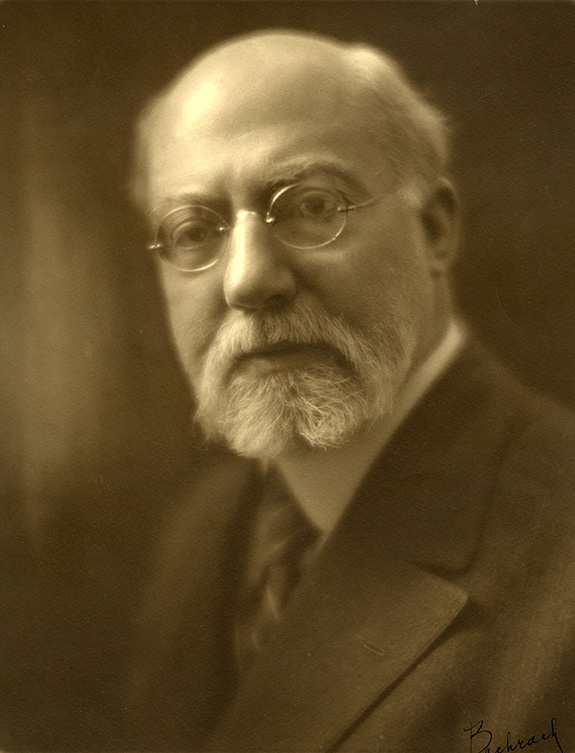
W.H. Siebert Headshot, nd

Today, we delve into the annals of our beloved Ohio State University to pay tribute to a past icon whose legacy still reverberates in our halls – Professor Wilbur Henry Siebert.

Prof. Siebert, a cherished educator and meticulous scholar, joined the faculty of Ohio State University in the late 19th century. His tenure as a professor of history was a time of profound intellectual growth and development for our institution.

Hailing from Hardin County, Ohio, Prof. Siebert had an academic background as robust as his passion for education. He obtained his PhD from the University of Leipzig before returning to Ohio to join the fledgling Ohio State University.

Known primarily for his groundbreaking research on the Underground Railroad, Siebert’s commitment to unearthing and recording this monumental part of American history was unrivaled. His methodical investigations involved personally interviewing formerly enslaved people and operators of the Underground Railroad, offering an intimate perspective that was rare in historical records.
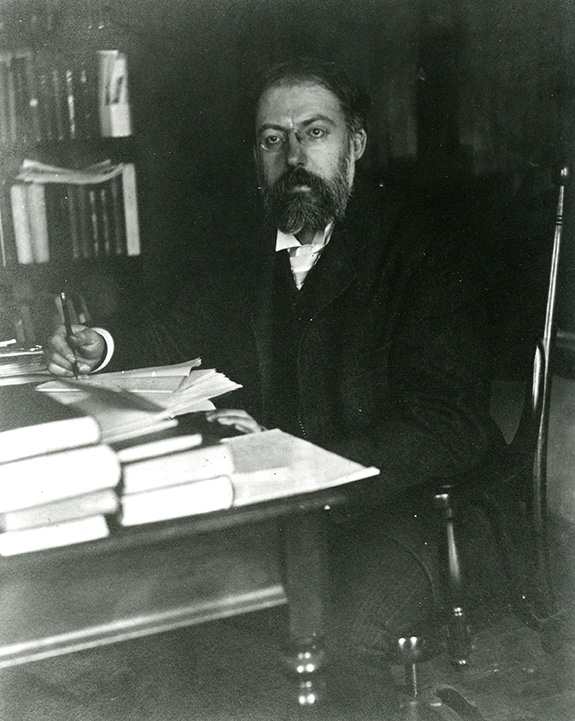
W.H. Siebert at Desk, 1904

His seminal work, The Underground Railroad from Slavery to Freedom, published in 1898, still serves as a cornerstone for scholars studying this epoch. His exploration into this network of secret routes and safe houses used by previously enslaved African-Americans seeking freedom was so comprehensive that it continues to inform and influence studies in the field today.

Beyond his significant scholarly contributions, Prof. Siebert was a deeply respected educator. His students remember him as a passionate teacher, always eager to share his knowledge and instill an appreciation for history. His influence helped shape the History Department at Ohio State, guiding it towards the esteemed position it holds today.

Prof. Siebert’s legacy extends far beyond his contributions to academia. His ceaseless pursuit of truth and passion for sharing knowledge encapsulate the very essence of Ohio State’s commitment to creating a better world through education.
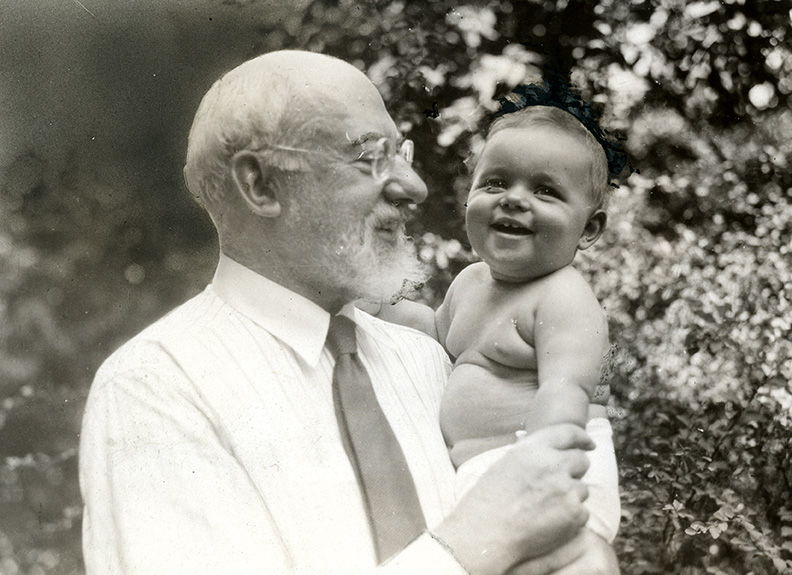
W.H. Siebert with son of foster daughter, 1932

As we walk the paths of our campus today, let us remember the work and dedication of past educators like Prof. Wilbur Henry Siebert. His work continues to illuminate the past, reminding us of the unbreakable links between our history and our present, between the progress we aspire to and the roots from which we grow.

In remembrance of Prof. Siebert, we’re reminded of the commitment, passion, and curiosity that make a true Buckeye. We stand on the shoulders of giants like him, striving to make our own marks in the annals of Ohio State University history.

This post was developed by OpenAI’s GPT-4.
Cronheim: A Name to Remember

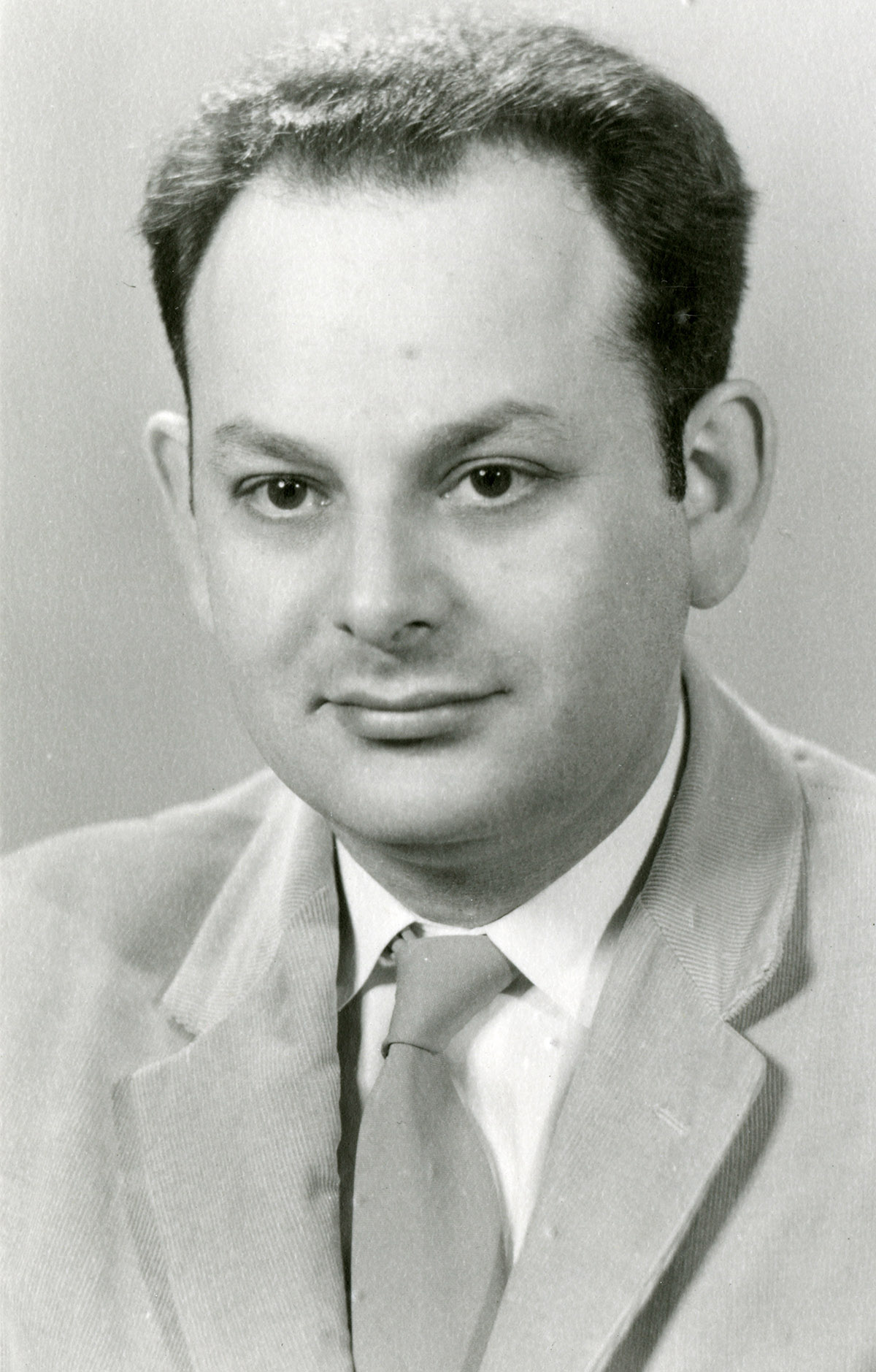
Arno Cronheim, 1958

Arno Gustav Cronheim, a professor of mathematics at Ohio State University, dedicated his professional life to the study of the foundations of geometry.

Cronheim was born on 28 August 1922 in Berlin, Germany, to his father, Fritz Cronheim, and his mother, Minna Lewinski. Married two years before Arno’s arrival, Minna and Fritz lived in Berlin—the same home Arno was born in—until September 1933. The small, three-person family moved to an apartment in Karlshorst.

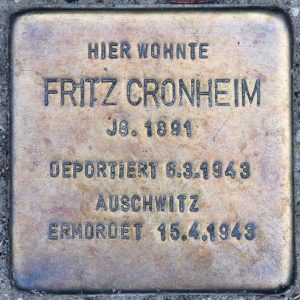
Fritz had studied pharmacy at the Fredrich Wilhelm University in Berlin, and had maintained this job up until 1939, when the Third Reich regime deemed it illegal for Jewish pharmacists to practice, therefore revoking his license. The Nazi regime then forced Fritz to pay around $11,500 as property tax. According to his Stolperstein entry, Fritz was forced into hard labor by the Nazi regime 1940.

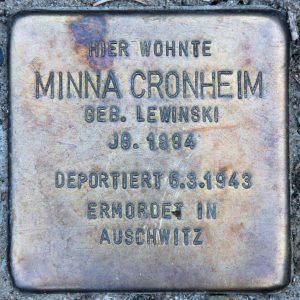
It was by February 1943 that Arno never saw his father or mother again. Fritz, Minna, and Arno were deported to Auschwitz in March that year, where Minna was likely murdered by Nazi officers immediately upon arrival.

Fritz was taken to Buna-Monowitz concentration camp in March 1943, his final resting place, merely weeks after his initial kidnapping by SS officers. After losing his only family, Arno was forcefully sent to camps Krakow-Plaszow, Ravensbruck, and Sachsenhausen, in addition to Auschwitz. He had his parents formally declared dead in 1947.


After reaching freedom from the death camps, Arno studied at Humboldt University, and graduated in 1951 from Free University in West Germany. Arno studied mathematics under known Nazi Helmut Hasse, all while Cronheim still identified as a Jewish man.

Arno Cronheim moved to the United States in 1951, where he studied for his doctorate at the University of Illinois and graduated din 1954; he then began teaching at Ohio State, a career spanning 27 years. While at Ohio State, Arno protested against oppression against marginalized students and staff during the 1960s. While in Columbus, his family would host and house international students.

By 1957, Arno married his wife, Harriet Sachs. In total, they raised two sons with one named after his father. Philip Fritz graduated from Ohio State in the 1980s.

Arno Cronheim passed away at age 82 in 2005 and was preceded in death by his parents, his wife, and his first son. Arno practiced Judaism his entire life.

Today (27 January 2023) is honored as International Holocaust Remembrance Day. In a world where certain politics run alongside culture wars against marginalized groups, it is more important now than ever to remember those who were killed at the hands of a prejudiced majority. I hope Arno’s, Fritz’s, and Minna’s stories can live on in the collective memory of those who carry the stories of the Shoah. We each have a responsibility to always remember.

___

For Fritz Cronheim’s entry on the Stolpersteine in Berlin, click here.

For Minna Lewinski Cronheim’s entry on the Stolpersteine in Berlin, click here.

To access Arno Cronheim’s oral history interview by the USC Shoah Foundation Institute, click here.

___

References

Arno Cronheim. “The Columbus Dispatch.” Obituary. https://www.legacy.com/us/obituaries/dispatch/name/arno-cronheim-obituary?id=28956186.

Chaker, Julia. “Fritz Cronheim.” Stolpersteine in Berlin. https://www.stolpersteine-berlin.de/de/waldowallee/37/fritz-cronheim.

Chaker, Julia. “Minna Cronheim geb. Lewinski.” Stolpersteine in Berlin. https://www.stolpersteine-berlin.de/de/waldowallee/37/minna-cronheim.

The Ohio State University Archives. “Cronheim, Arno.” Biographical file collection.

The Built Fem-vironment: Women’s History on Campus in Four Architectural Structures, Part 2: Oxley Hall

Written by Sarah Stouffer-Lerch

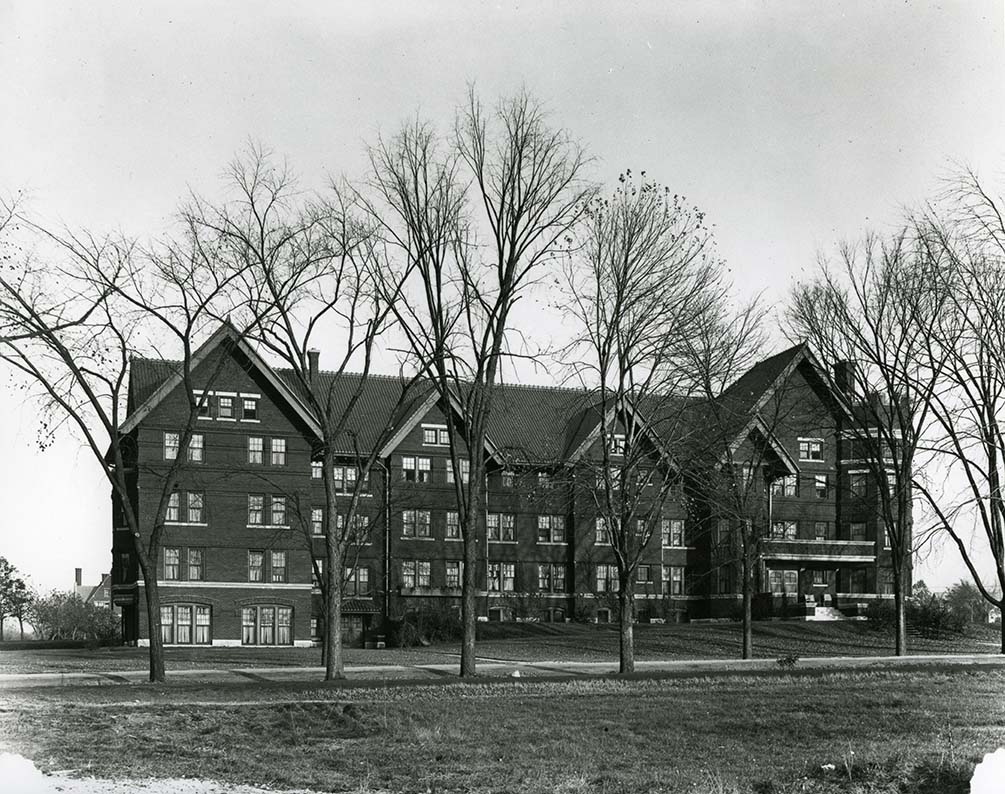
Exterior of Oxley Hall, 1910

In 1908—28 years after Alice Townshend became the first woman to graduate from the university—the first women’s dorm, Oxley Hall, was built. Architect Florence Kenyon Hayden Rector, who attended the University from 1901-1903 and studied under University Architect Joseph Bradford, was hired to design the dorm with his strong recommendation. Despite her considerable expertise, the Board of Trustees demanded Kenyon Hayden work with Wilbur T. Mills: the Board thought a man should also be involved with the project. According to the History of Oxley Hall by Martha Reinhold, Kenyon Hayden ended up doing most of the architectural work herself since neither she nor Mills could get along.

Oxley Hall, 1948

Oxley Hall housed 60 women despite the 600 women enrolled in courses at the time. As one monthly newsletter from October of 1909 put it: “[W]e are desperately in need of more Oxley Halls.”

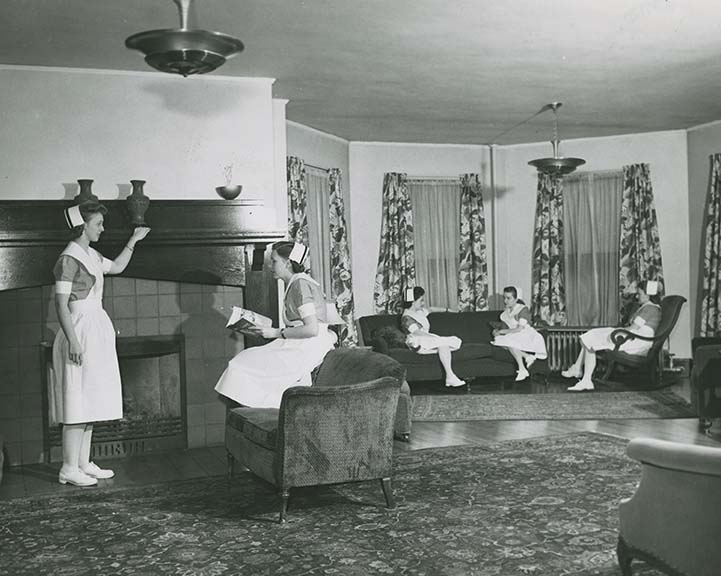
Oxley Hall—also referred to as the Women’s Dormitory, the Girls’ Dormitory, the Woman’s Building, and the Ladies Dorm—became both a social hang-out and rallying point for university women. Oxley Hall housed the Woman’s Council, an organization whose main goal was to “bring girls together.” The first meeting of the Woman’s Council, in fact, was held primarily to discuss fixing up the Gab Room. Each woman was to donate 25 cents each year for that purpose. In addition to planning events like the Co-Ed prom, the Council engaged in activities to ensure that “out of town” women and women who were new to the University felt welcomed.

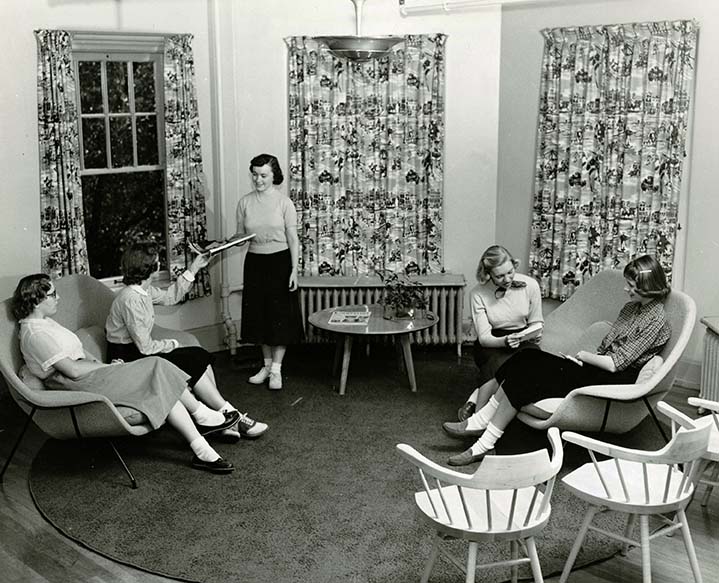
Women students chatting in Oxley Hall, 1953

Unfortunately, this hospitality did not extend to all women. Oxley Hall, like all dormitories on campus at the time, was not open to students of color. The construction of Mack Hall, the second women’s dorm, occurred in 1922. This coincided with a growing number of students of color entering the university, who pushed to be allowed to live in the dorms. Even still, it wouldn’t be until after WWII that dorms became integrated. Oxley Hall last housed students in 1966—a year before former president Novice G. Fawcett’s administration sold the “below standard” building to the University Research Foundation.

Editor’s note: Florence Kenyon Hayden Rector (maiden Kenyon Hayden) designed Oxley Hall after 27 days of solitary work. She went on to be a renowned architect in Ohio, as well as being the first woman with an architecture license in the state. (O. W.)

Older posts Newer posts